Relic point Vietnam
Việt Nam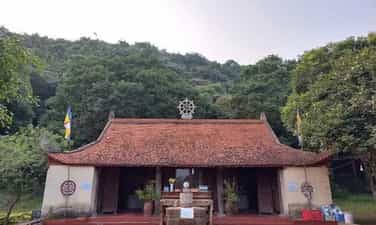
Am Cac Pagoda Complex
Am Cac Pagoda is located on the eastern slope of Cac Mountain, in Dinh Hai commune, Tinh Gia district, Thanh Hoa province. Ranked as a provincial-level historical site in 2013, it is considered one of the most significant and valuable ancient Buddhist complexes in Thanh Hoa. The Am Cac pagoda complex includes Trinh Pagoda, Ha Pagoda, Trung Pagoda, Thuong Pagoda, Ngoc Son Palace, and many ancient relics and artifacts such as foundations, tombs of monks, ancient wells, stone gongs, stone bells, and stone slabs carved with Buddha images. Ha Pagoda is the center of the complex, while Thuong Pagoda sits atop Cac Mountain – considered the "gateway to heaven." Over time, many ancient structures have been damaged, but the remaining relics and artifacts contribute to illuminating the history of Buddhism in this region. Some structures have been restored and renovated, making Am Cac an attractive pilgrimage, sightseeing, and cultural-historical destination in Thanh Hoa. Source: Thanh Hoa Newspaper
Thanh Hoa
5 view
Rating : Provincial-level historical site
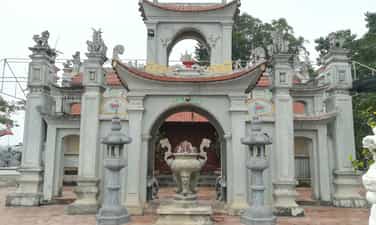
Chùa Đót Tiên
Chùa Đót Tiên (Đót Tiên tự) nay thuộc xã Hải Thanh, tỉnh Thanh Hóa, nằm trên sườn núi Tiên, trong không gian cảnh quan ven biển Lạch Bạng. Cùng với đền Lạch Bạng và đền Quang Trung – Nguyễn Huệ, chùa tạo thành một quần thể di tích lịch sử, văn hóa và thắng cảnh đặc sắc của vùng biển xứ Thanh. Chùa có từ thời Lê, trải qua nhiều lần tu bổ, trong đó kiến trúc còn lại chủ yếu mang phong cách thời Nguyễn. Chùa được xây theo hình chữ “Đinh”, gồm Tiền đường và Hậu cung. Trong chùa hiện còn 26 pho tượng Phật cổ, cùng nhiều di vật có giá trị như bia đá, đại tự, câu đối và hai chuông đồng cổ. Nằm giữa không gian núi và sông biển hài hòa, chùa Đót Tiên vừa mang vẻ cổ kính, thanh tịnh, vừa gắn bó với đời sống của cư dân vùng cửa biển Lạch Bạng. Đây là nơi sinh hoạt tín ngưỡng của nhân dân và điểm đến phù hợp để tìm hiểu giá trị kiến trúc, nghệ thuật và văn hóa Phật giáo truyền thống của Thanh Hóa. Chùa Đót Tiên thuộc cụm di tích thắng cảnh Lạch Bạng, có giá trị trong bảo tồn di sản và phát triển du lịch văn hóa – tâm linh địa phương. Nguồn: Chốn Thiêng – Danh bạ tâm linh đất Việt
Thanh Hoa
8 view
Rating : Di tích cấp tỉnh
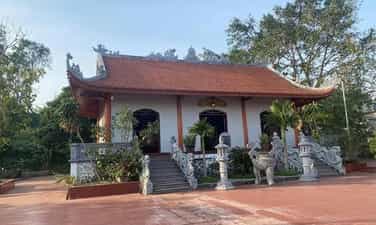
Temple of the Grand Scholar Le Nhan Quy
The temple dedicated to Grand Scholar Lê Nhân Quý, now located in Mai Lâm ward, Thanh Hóa province, is a historical site associated with a prominent figure of the early Lê dynasty. Lê Nhân Quý, originally from Kim Cốc village, held the positions of Grand Scholar of the Đông Các and Commander-in-Chief of the Imperial Guard. He played a key role in suppressing the Lê Nghi Dân rebellion, securing Lê Thánh Tông's ascension to the throne in 1460, and participating in the Champa campaign in 1471. Beyond his contributions to the court, he was also known for organizing the construction of the Hoàng Các dike, reclaiming coastal land, and contributing to the stability of production and the lives of the people. After his death, he was revered as the tutelary deity by the people, and a temple was erected in his honor. The complex includes the temple, his tomb on Tháp Mountain, and remnants of the Hoàng Các dike. The temple, built in the late 15th century, features traditional architecture and still preserves many valuable horizontal plaques, couplets, imperial decrees, and ceremonial artifacts. His tomb, located on Tháp Mountain, is where the local people maintain the tradition of offering incense and paying respects. The Hoang Cac dike is an important historical site associated with the water management and land reclamation achievements of Le Nhan Quy. It played a crucial role in preventing saltwater intrusion, leaching acidic soil, and creating arable land for coastal residents. With its historical, cultural, and architectural value, this complex of relics is a suitable destination for learning about the historical figure Le Nhan Quy, the scholarly tradition, and the process of developing the coastal areas of Thanh Hoa province. Source: Hanoi People Magazine
Thanh Hoa
7 view
Rating : Provincial-level historical site
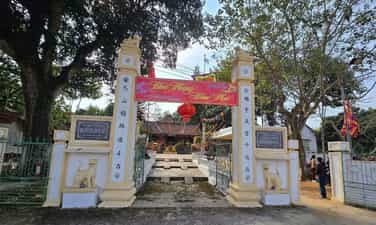
Tran Khat Chan Temple
The Tran Khat Chan Temple is located at the foot of Don Son Mountain, in Vinh Loc town, Thanh Hoa province, more than 2 km from Ho Dynasty Citadel. The Tran Khat Chan Temple is a national historical monument, associated with the life and career of General Tran Khat Chan – a famous general of the late Tran Dynasty. In 1390, during the war against the Champa army, Tran Khat Chan commanded the Dai Viet army to defeat Che Bong Nga's army at Hai Trieu, contributing to the defense of the borders. However, when the Tran Dynasty weakened, he participated in the resistance against Ho Quy Ly. The plot failed, and in 1399, Tran Khat Chan and many others were executed at Don Son. In remembrance of this talented and loyal general, the local people erected a temple in his honor around the late 15th – early 16th century and revered him as the tutelary deity. The temple features traditional architecture with main components such as the entrance gate, front hall, middle hall, and rear hall; it still preserves many valuable artifacts, including imperial decrees from the Nguyen Dynasty. Every year, the Trần Khát Chân Commemoration Ceremony is held on the 23rd and 24th of April in the lunar calendar, providing an opportunity for locals and tourists to remember the contributions of this renowned general, while also learning about and preserving the historical and cultural values of the Vĩnh Lộc region. Source: Thanh Hóa Newspaper and Radio & Television
Thanh Hoa
165 view
Rating : National Monument
Set village communal house
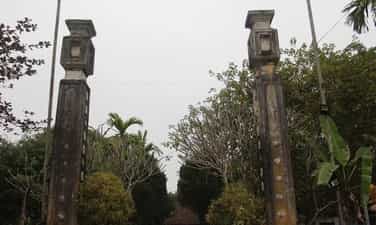
Set village communal house is located in Set village, Dinh Tan commune, Thanh Hoa province, a land formed around the 14th - 15th centuries. According to village history, Mr. Truong Canh Tuong, a native of Yen Vuc, Hoang Hoa, was the first person to reclaim land and establish a hamlet at Quy Son mountain. From the original land named Ap Sat, residents gradually expanded to the plain, forming Sat village, now Set village. Prominent in the cultural space of the village is Set village communal house, built in 1595, under the reign of King Le The Tong. After more than 400 years with many historical changes and restorations, the communal house still retains many ancient architectural features. The communal house gate stands out with two nearly 10m high columns and a pair of parallel sentences, creating a majestic look for the monument. Set village communal house is the place to worship Admiral, Duke and General Truong Canh Phuc, Truong Dinh Le and Ngoc Goddess Truong Thi Phuong - figures revered by local people. Not only is it a place for religious activities, the communal house is also closely associated with community life and the development history of Set village. Every year, from the 10th to the 12th of the third lunar month, local people organize the Ky Phuc festival, praying for good weather and a peaceful and prosperous life. Source: Thanh Hoa radio and television newspaper
Thanh Hoa
287 view
Rating : National monument
Phu Dien Communal House
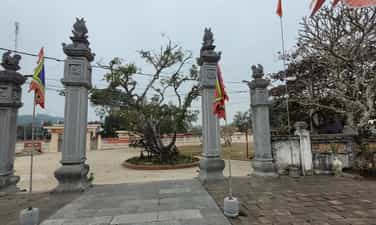
Phu Dien Communal House is a typical ancient architectural work located in the Ba Trieu Special National Monument Complex, imbued with the traditional village culture of Thanh Hoa. The relic is associated with the worship of Trieu Thi Trinh - Ba Trieu, the national heroine who stood up against the Ngo army in the 3rd century. According to legend, after Ba Trieu sacrificed on Tung Mountain, Phu Dien people built a temple to worship her and honored her as the village's tutelary god. By the 18th century, the communal house was built in the traditional village communal house architectural style. Over the centuries, the project has been preserved relatively intact by the people and has become a place for cultural and religious activities of the community. Phu Dien communal house includes main items such as Nghinh gate, Great communal house, front hall and harem. The highlight of the relic is the sophisticated wood carving art with many images of the four sacred animals: dragon, lyre, tortoise, phoenix, along with motifs of plants, flowers and images of elephants, horses, deer, chickens... The carvings not only create artistic beauty but also express the people's desire for a peaceful, prosperous life. In particular, the communal house still preserves 64 ancient decrees from feudal dynasties, which are considered precious documents reflecting the history and beliefs of the local community. Every year in the second lunar month, a traditional festival is held in Phu Dien to commemorate the merits of Ba Trieu, with sacrificial rituals, palanquin processions and many cultural activities and folk games. Source: Thanh Hoa radio and television newspaper
Thanh Hoa
284 view
Rating : Special national monument
Dong Son archaeological site
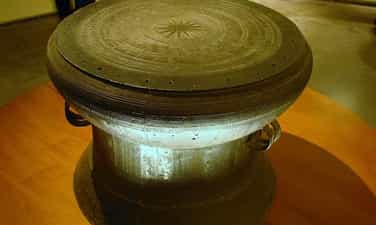
Dong Son archaeological site - a place where the quintessence of ancient Vietnamese culture is deposited. Located on the Ma River, in Ham Rong ward, Thanh Hoa province, Dong Son archaeological site is one of the most important sites of Dong Son culture, dating back more than 2,000 years ago. The site was discovered in 1924 when people accidentally found bronze artifacts on the banks of the Ma River. Through many surveys and excavations, a series of precious artifacts have been discovered such as production tools, weapons, ceramics, jewelry and especially bronze drums. These artifacts show that Dong Son residents have achieved high levels of metallurgy, agricultural production, handicrafts and spiritual life. In particular, Dong Son bronze drums are considered one of the typical symbols of ancient Vietnamese civilization, demonstrating sophisticated bronze casting techniques and the religious and festive life of ancient residents. Not only has archaeological value, Dong Son relics also contribute to clarifying the formation and development process of ancient Vietnamese culture in the Ma River basin, while affirming the position of Dong Son culture in the history of Southeast Asia. According to: Thanh Hoa Newspaper and Radio and Television
Thanh Hoa
428 view
Rating : National monument
Ngoc Trao war zone
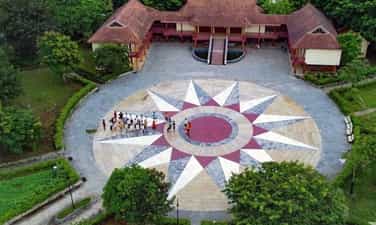
Ngoc Trao War Zone is located in Ngoc Trao commune, Thanh Hoa province, and is one of the typical red addresses associated with the revolutionary movement in Thanh Hoa. In early June 1941, the Thanh Hoa Provincial Party Committee selected the Ngoc Trao area to build a war zone. On September 19, 1941, at Hang Treo, the first 21 guerrilla soldiers took an oath to fight and sacrifice for the cause of national liberation. From here, the Ngoc Trao Guerrilla Team quickly developed, attracting patriotic youth from many localities, becoming an important revolutionary armed force of Thanh Hoa. At dawn on October 19, 1941, the French colonialists organized an attack on the war zone. The guerrilla soldiers fought heroically, engaged in hand-to-hand combat and proactively retreated to preserve their forces. Although it existed for a short time, Ngoc Trao War Zone contributed to laying the foundation for the armed struggle movement, leaving many valuable experiences for the revolution before the August General Uprising in 1945. Today, Ngoc Trao War Zone Relics is an educational address for revolutionary traditions, helping today's generation better understand the patriotism, strong will and sacrifices of revolutionary soldiers during difficult years. Source: People's Army Newspaper
Thanh Hoa
489 view
Rating : National monument
Phu Trinh National Historical Site
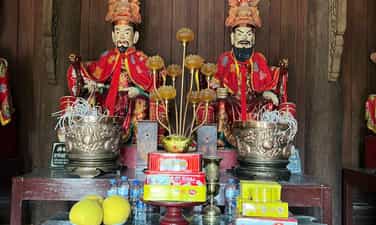
Phu Trinh National Historical Site - The mark of the Le - Trinh Dynasty in Thanh Hoa. Located in Vinh Hung commune, Thanh Hoa province, Phu Trinh National Historical Site is a destination rich in historical value, associated with the Le - Trinh dynasty and the period when the Trinh lords played an important role in running the country. This is not only a place to worship the Trinh lords but also a work imbued with cultural, architectural and historical imprints of the land of "kings and lords' palaces". Trinh Palace was built on the hometown of the Trinh family, used to be the headquarters and place to worship the ancestors of the Trinh lords during the period of "supporting Le and destroying Mac". Experiencing many historical events, the relic has been preserved, restored and embellished with many architectural items in the traditional royal style, contributing to recreating the majestic space of the ancient lord's palace. Visiting Trinh Palace, visitors will not only admire works of artistic and architectural value but also have the opportunity to learn about the nearly 250-year historical period of the Trinh lords. Every year, the death anniversary of Minh Khang Thai Vuong Trinh Kiem takes place on the 18th day of the second lunar month, attracting a large number of people and tourists to offer incense and commemoration. Today, Phu Trinh is one of the typical historical destinations of Thanh Hoa. When combined with a visit to the Ho Dynasty Citadel, Ho Cong Cave and neighboring landscapes, this place contributes to a journey to discover the unique culture and history of the Thanh Hoa region. According to: Thanh Hoa Tourism Newspaper
Thanh Hoa
583 view
Rating : National monument
Phu Na historical relics and landscapes
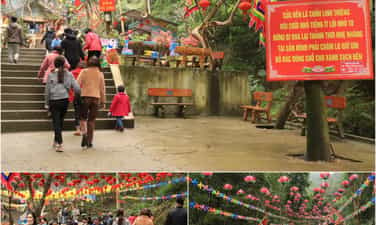
Phu Na historical relics and landscapes - A spiritual destination among the mountains and forests of Thanh Hoa. Located at the foot of Nua Mountain, in Xuan Du commune, Thanh Hoa province, Phu Na (Na Son Dong Phu) is one of the famous spiritual tourist destinations of Thanh Hoa. The relic is associated with the belief in Mother Goddess worship and preserves the unique interference between Vietnamese and Muong beliefs, attracting a large number of tourists and Buddhists to worship and sightsee all year round. Built during the Nguyen Dynasty, Phu Na includes many architectural items such as Co Ba temple, Mother Goddess main temple, Ba Chua Thuong temple, Co Chin temple, Quan Hoang temple and Co and Cau floors. The most prominent is Mau Nghi Thien Temple with traditional architecture, solemnly decorated altars and exquisite carvings, creating a sacred space in the middle of the mountains and forests. Not only has historical and religious value, Phu Na is also attractive because of its pure natural landscape with lush green forests, rolling mountains and clear underground water flowing year-round from the heart of the mountain. The charming mountain scenery and peaceful atmosphere give visitors a feeling of relaxation when visiting and pilgrimage. Today, after being restored and embellished, Phu Na is increasingly spacious and has become a typical cultural and spiritual destination of Thanh Hoa. This is an ideal place for visitors to learn about historical values, folk beliefs, and enjoy the harmonious beauty between traditional architecture and majestic nature. According to: Thanh Hoa Tourism
Thanh Hoa
315 view
Rating : National monument