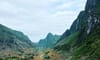
Tourist destination
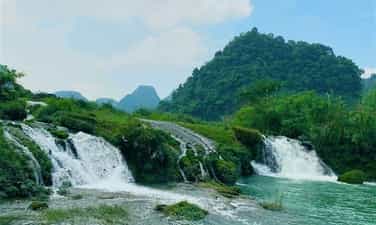
Thong Loc Waterfall
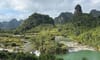
Thác Thồng Lộc – Vẻ đẹp hoang sơ giữa núi rừng Trùng Khánh. Nằm tại xóm Hồng Lộc, xã Đoài Dương, huyện Trùng Khánh, cách trung tâm huyện khoảng 18 km, thác Thồng Lộc là một điểm đến còn giữ được vẻ đẹp hoang sơ, yên bình của núi rừng Cao Bằng. Dòng thác nằm ở đầu nguồn sông Bắc Vọng, được tạo nên bởi nhiều tầng đá tự nhiên nối tiếp nhau. Từ trên cao, dòng nước len qua những vách đá rồi nhẹ nhàng đổ xuống, tạo thành những tầng thác nhỏ giữa không gian núi non xanh mát. Bao quanh thác là những ngọn núi có hình dáng độc đáo, cùng cây cối và thảm cỏ xanh, tạo nên khung cảnh vừa hùng vĩ vừa thơ mộng. Thác Thồng Lộc đẹp quanh năm, nhưng thời điểm lý tưởng nhất là từ tháng 4 đến tháng 6, khi dòng nước trong lành, cảnh vật xanh tươi và tiết trời mát mẻ. Theo cách gọi của người dân địa phương, “Thồng Lộc” mang ý nghĩa là dòng thác đem đến nhiều may mắn, tài lộc. Nguồn nước từ thác cũng góp phần cung cấp nước phục vụ sản xuất của người dân và tạo nên dòng sông Bắc Vọng. Đến Thồng Lộc, du khách có thể hòa mình vào thiên nhiên, tận hưởng không khí trong lành, nghe tiếng thác nước, tiếng chim và tiếng cây lá giữa núi rừng. Những bãi cỏ rộng dưới chân thác cũng là không gian thích hợp để nghỉ ngơi, dã ngoại và khám phá cảnh quan. Với vẻ đẹp nguyên sơ, không gian thanh bình và giá trị gắn bó với đời sống địa phương, thác Thồng Lộc là điểm đến hấp dẫn trên hành trình khám phá vùng đất Trùng Khánh, Cao Bằng.
Cao Bang
9 view







Thong Hue
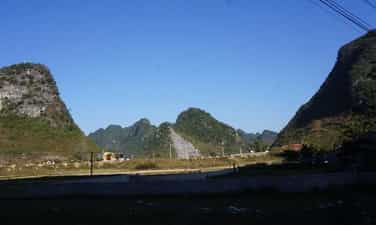
Thông Huề – Điểm đến giàu bản sắc vùng cao Cao Bằng. Nằm trên tuyến đường đến thác Bản Giốc, Thông Huề là một điểm đến mang đậm bản sắc vùng cao Cao Bằng, hội tụ những giá trị đặc sắc về cảnh quan, lịch sử, văn hóa và du lịch cộng đồng. Điểm nhấn của Thông Huề là không gian phố cổ gắn với lịch sử hình thành và phát triển của vùng đất Trùng Khánh. Những nếp nhà, con phố và đời sống sinh hoạt của người dân tạo nên một không gian bình dị, mang dấu ấn riêng của vùng biên viễn. Đến Thông Huề, du khách có thể khám phá chợ phiên truyền thống của đồng bào Tày, Nùng. Chợ họp 5 ngày một phiên, vào các ngày 2 và 7 theo lịch dương, bày bán nhiều sản vật địa phương như rau, củ, cá, thịt, bánh khảo cùng các sản phẩm do người dân tự trồng, hái và chế biến. Không chỉ là nơi mua bán, chợ còn là không gian giao lưu cộng đồng, thưởng thức bánh cuốn nóng, rượu men lá và tìm hiểu đời sống văn hóa bản địa. Bên cạnh đó, cảnh quan Thông Huề cũng rất hấp dẫn với sông Bắc Vọng, núi Cô Tiên, ruộng nương, guồng nước và những bản làng yên bình. Du khách có thể trải nghiệm cuộc sống vùng cao, tìm hiểu phong tục, ẩm thực và những nghề truyền thống của người Tày, Nùng. Với sự kết hợp hài hòa giữa cảnh quan thiên nhiên, không gian phố cổ và những giá trị lịch sử, văn hóa đặc sắc, Thông Huề là điểm đến phù hợp cho những ai muốn khám phá một Cao Bằng mộc mạc, giàu bản sắc và gần gũi với đời sống cộng đồng.
Cao Bang
9 view











Khau Coc Cha Pass
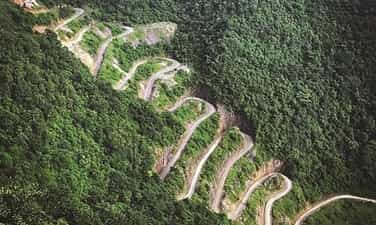
Khau Coc Cha Pass – a majestic road amidst the mountains and forests of Cao Bang. Located on National Highway 4A, in Xuan Truong commune, Cao Bang province, Khau Coc Cha Pass is one of the most impressive and treacherous mountain passes in the northern mountainous region. The pass is approximately 2.5 km long, notable for its 14 hairpin bends forming 15 layers of steep slopes, winding around the slopes of Coc Cha mountain. Viewed from above, the continuous curves make Khau Coc Cha resemble a giant snake coiling itself amidst the lush green mountains. One side is a cliff, the other a deep ravine, and in the distance, towering mountain ranges create a scene that is both majestic and challenging. To fully appreciate the beauty of the pass, visitors can hike up to the viewpoint on the mountainside. After about 30 minutes of travel under the green forest canopy, a spectacular view unfolds: all 14 bends of Khau Coc Cha are clearly visible amidst the pristine natural landscape. Not only is Khau Coc Cha captivating for its majestic beauty, but it also bears the mark of humanity's journey in conquering rugged terrain. Today, it has become a favorite check-in spot for adventure enthusiasts, especially those who love traveling to mountainous regions.
Cao Bang
197 view







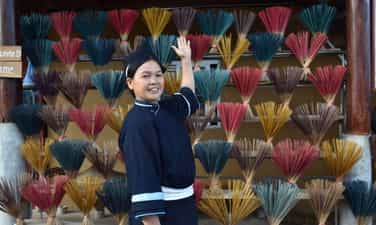
Phja Thatt incense village
Phja Thap Incense Village - A traditional craft in the mountains and forests of Cao Bang. For more than 100 years, Phja Thap incense village has still preserved the traditional incense making profession of the Nung An people. The incense sticks here are handmade from natural materials such as gourd leaves, rice plants, apricot trees and sawdust. Through the skillful hands of the people, each incense stick is shaped, sun-dried and perfected with its characteristic color and fragrance. Coming to Phja Thap, visitors can not only learn about the process of making incense, but can also directly experience the craft steps and chat with families who have been preserving the craft for many generations. The profession of making incense today is associated with community tourism, creating more livelihoods for people, while contributing to preserving a traditional profession and the spiritual cultural values of the Nung An people. Amidst the mountains and forests of Cao Bang, the red color of incense bundles drying along the village path and the natural fragrance spreading in the wind create a very unique image of Phja Thap. Returning to Phja Thap is returning to a hundred-year-old craft village - where each incense stick not only carries the fragrance of the mountains and forests, but also contains the story of the craft, culture and the continuity of generations.
Cao Bang
485 view






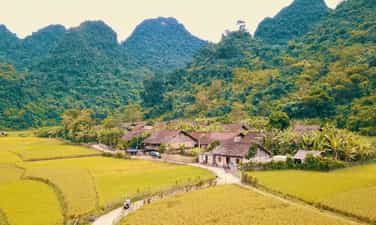
Ban Giuong Tay Village
Tay Ban Giuong Village - Peaceful beauty in the middle of Cao Bang mountains and forests. Located in the middle of a green valley at the foot of the mountain, Ban Giuong is a village of the Tay people with rustic beauty, peace and rich identity. Traditional stilt houses nestled next to fields, surrounded by mountains and forests create a close space, where people's lives are still closely linked to nature. Coming to Ban Giuong, visitors can explore ancient stilt houses, traditional costumes, weaving, indigo dyeing, wickerwork and learn about the life of the Tay people. Dishes such as five-color sticky rice, stream fish, sausage, and wild vegetables also bring typical flavors of the highlands. In particular, Then singing activities, cultural exchanges and traditional festivals help visitors better feel the cultural life of the community here. With its pristine landscape, unique culture and intimate experiences, Ban Giuong is becoming a suitable destination for community tourism, where tourists not only admire the scenery but also directly immerse themselves in the lives of indigenous people. Ban Giuong - return to the mountains and forests, explore Tay culture and feel a peaceful rhythm of life in the heart of Cao Bang.
Cao Bang
482 view









Hoai Khao Hamlet
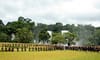
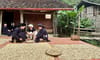
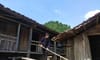
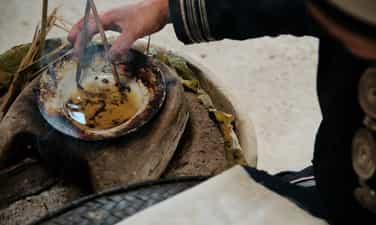
Hoai Khao Hamlet - Community tourism village in the mountains and forests of Cao Bang. Hoai Khao hamlet is located in Quang Thanh commune, Cao Bang province, in the buffer zone of Phja Oac - Phja Den ecotourism area, about 60 km from Cao Bang city center. This is a community tourism village of the Dao Tien people, outstanding with peaceful scenery, traditional houses and nature that still retains its wild character. Coming to Hoai Khao, visitors will immerse themselves in the fresh space of the mountains and forests, admire the green or golden terraced fields according to the season, and the clean and beautiful small roads winding around the village. The ripe rice season from July to September is the ideal time to explore the poetic beauty of this place. Not only possessing an attractive landscape, Hoai Khao also preserves many unique cultural values of the Dao Tien people. Visitors have the opportunity to learn about silver carving, the technique of printing patterns with beeswax on traditional costumes, enjoy the Pao Dung song and explore traditional rituals such as the Sac Ceremony. Many households in the village develop homestays, providing a close resting experience and the opportunity to enjoy local cuisine. With a community tourism model associated with nature conservation and cultural identity preservation, Hoai Khao hamlet is an ideal destination for those who love to explore highland life, seek peace and experience the unique traditional values of Cao Bang.
Cao Bang
1193 view








Phuc Sen forging village
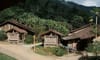
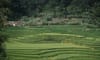
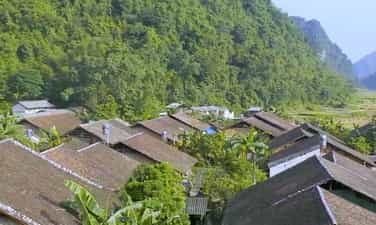
Phuc Sen Forging Village - Famous traditional craft village of Cao Bang. Phuc Sen forging village is located in Phuc Sen commune, Quang Hoa district, Cao Bang province, about 30 km from the city center on the route to Ban Gioc waterfall. This is one of the oldest traditional craft villages of the Northeast region, famous for the hand-forging craft of the Nung ethnic people. Blacksmithing in Phuc Sen has existed for many generations and is still preserved by the people today. Almost every family in the village has a forge, which creates products such as knives, scissors, axes, hammers, hoes, sickles and many types of agricultural tools for production. The products are forged entirely by hand, going through many stages such as steel heating, shaping, tempering and sharpening. Thanks to family secrets and the experience of the craftsmen, Phuc Sen products are famous for their durability, sharpness and high quality, and are trusted and chosen by consumers in many provinces and cities. Visiting Phuc Sen forging village, visitors will see with their own eyes the traditional working space with the steady sound of hammers, red coal furnaces and skillfully tempered steel bars. Local people are always friendly, ready to introduce the forging process and share stories associated with the traditional craft of their homeland. In addition to learning about blacksmithing, visitors can also buy authentic handicraft products as gifts and enjoy Cao Bang's famous specialties such as roasted duck with honey, grilled meat or sausage. With unique cultural values, unique blacksmithing craft and peaceful village space, Phuc Sen forging village is an attractive destination, contributing to enriching the journey to explore UNESCO Non Nuoc Cao Bang Global Geopark.
Cao Bang
1254 view










Khau Lieu Pass
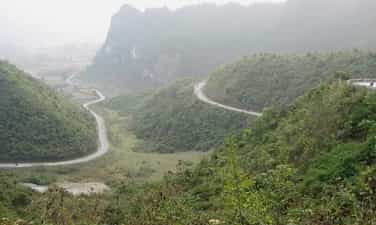
Khau Lieu Pass - Legendary road between Cao Bang mountains and forests. Khau Lieu Pass is one of the beautiful and impressive passes of Cao Bang province, located on the route connecting Quang Hoa district with Trung Khanh district. This is the route that most tourists pass when visiting famous tourist destinations such as Ban Gioc waterfall, Nguom Ngao cave or Truc Lam Ban Gioc Phat Tich Pagoda. Although not as famous as Ma Phuc Pass, Khau Lieu still leaves a deep impression with its pristine beauty, winding curves between mountains and forests and special historical value. In the Tay language, "Khau Lieu" means Lieu pass. Looking down from above, the pass appears like a soft silk strip across the rolling mountains of the Northeast. The successive bends hugging the mountainside create a scene that is both majestic and poetic. On clear days, standing on the top of the pass, visitors can have a panoramic view of the green valley, small villages nestled at the foot of the mountains and winding roads like silk strips in the middle of the jungle. Khau Lieu is a favorite stop for many tourists and exploration enthusiasts. Fresh, cool air all year round and pristine natural scenery make this place an ideal place to sightsee, take photos and feel the typical beauty of Cao Bang mountains and forests. Each season of the year, the pass has its own beauty: spring is brilliant with flowers, summer is covered with green leaves, autumn is clear under the golden sunlight and winter is shrouded in mist. Not only attractive by the landscape, Khau Lieu Pass is also associated with many folk stories of the Tay and Nung people living around the area. Since ancient times, this has been an important trade route between villages. Before there were motorable roads, people had to follow steep paths to transport goods across the pass. Life attached to the mountains and forests has created many legends and memories about a road that was once considered the most dangerous in Chongqing. Khau Lieu Pass is also a historical place. During the war to protect the Northern border in 1979, this place was an important defense position with many fierce battles. At the top of the pass, there is still a stele marking the Khau Lieu victory in February 1979, reminding of the resilient spirit of Cao Bang's army and people during the war years. Today, this location not only has historical significance but also contributes to educating patriotic traditions for younger generations. Currently, traffic through the pass is more convenient than before, but Khau Lieu still retains its natural beauty. Soft curves, deep green mountains and peaceful space make this place an indispensable stop on the journey to explore UNESCO Non Nuoc Cao Bang Global Geopark. From the pass, visitors can continue their journey to Ban Gioc waterfall - one of the most beautiful waterfalls in Southeast Asia, or explore Nguom Ngao cave with its magnificent stalactite system. Khau Lieu Pass is not only a road connecting famous destinations but also a convergence of natural beauty, cultural identity and historical values of Cao Bang. Every turn, every mountain slope gives visitors a feeling of conquest and discovery. If you have the opportunity to come to Cao Bang, take the time to stop at Khau Lieu peak to admire the majestic nature, enjoy the fresh air and fully feel the beauty of one of the most memorable passes in the Northeast.
Cao Bang
1301 view





Non Nuoc Cao Bang Geopark
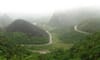
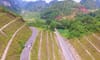
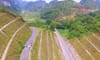
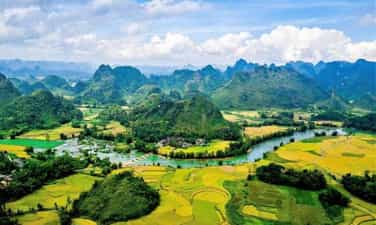
Non Nuoc Cao Bang Geopark has an area of more than 3,275 km², accounting for nearly half of the area of Cao Bang province, spread over 6 districts and parts of 3 other districts. This is a land that preserves a history of geological development spanning more than 500 million years, while converging many outstanding values in landscape, biodiversity, history and culture. On April 12, 2018, UNESCO officially recognized this place as a Global Geopark. Not only does it possess a unique system of limestone mountains, caves, waterfalls, lakes and underground rivers, the park also has more than 130 surveyed geological heritage sites, fully reflecting the process of geological evolution and tropical karst terrain in Northern Vietnam. Paleozoic fossils, volcanic rocks, minerals and many rare geological traces have contributed to the special scientific value of this land. This is also home to 8 ethnic groups including Tay, Nung, Mong, Dao, Kinh, San Chay, Hoa and Lo Lo, with rich traditional cultural treasures. Within the park, there are more than 215 historical and cultural relics, notably the Pac Bo Special National Monument, Tran Hung Dao Forest and the 1950 Border Victory Site. In addition, there are many famous landscapes such as Ban Gioc Waterfall, Nguom Ngao Cave, Thang Hen Lake and Phia Oac - Phia Den National Park. To promote the values of the geopark, Cao Bang has built three typical experiential tourist routes. The Northern route "Journey to the Origins" takes visitors to explore revolutionary historical relics and geological vestiges formed hundreds of millions of years ago. The Western route "Discovering Phia Oac - the mountainous region of changes" stands out with high mountain landscapes, primeval forest ecosystems, biodiversity and cultural heritage of the Dao Tien people. The Eastern route "Experience indigenous culture in a wonderland" connects famous landscapes such as Ban Gioc Waterfall, Nguom Ngao Cave, Thang Hen Lake, Than Mat Mountain along with traditional craft villages, festivals and unique cuisine of the Tay, Nung, Dao and Mong people. With a harmonious combination of geological, natural, historical and indigenous cultural values, Non Nuoc Cao Bang UNESCO Global Geopark is not only an attractive destination for domestic and foreign tourists but also one of the typical geoparks of Southeast Asia, contributing to promoting the image of the land and people of Cao Bang to international friends.
Cao Bang
895 view





Nghieu Son Linh historical site
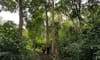
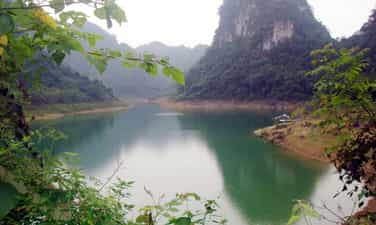
Nghieu Son Linh is a relic associated with the uprising against the Ming army in the early 15th century by two Tay leaders, Be Khac Thieu and Nong Dac Thai. After the Tran Dynasty weakened and Ho Quy Ly ascended the throne, the country fell into crisis. In 1407, the Ming army invaded and placed a brutal domination on our country. In Cao Bang, Be Khac Thieu and Nong Dac Thai gathered the insurgents and led the people to stand up against the enemy. The insurgents chose the Nghieu Son Linh mountain range, located on the right bank of the Bang Giang River, as a resistance base. With rugged terrain, high mountains, dense forests and many deep ravines, this place is convenient for building defense lines, training troops and organizing ambushes. The Phuc Tang - Ky Chi area was exploited as a food production area, ensuring logistics for the insurgents during the battle. According to historical documents and local traditions, the insurgents repeatedly attacked the Ming army, causing many losses to the enemy. The climax was the ambush in Na Khuoi valley at the end of 1426, contributing to the disintegration of the Ming army in Cao Bang. After this victory, Cao Bang was liberated from colonial rule. To date, on the top of Khau Thuoc there are still traces of a rampart system with two defense lines surrounding the mountainside. These are evidence of an important military base in the local people's resistance war against the Ming army. Nghieu Son Linh relic not only has historical value but also has great significance in educating patriotic traditions, the spirit of solidarity and the will to fight to protect the homeland of the people of Cao Bang ethnic groups. With majestic mountain landscapes and remaining vestiges, this place is an attractive destination for those who love history and want to learn about the fighting traditions of the frontier lands.
Cao Bang
708 view