Relic point Vietnam
Việt Nam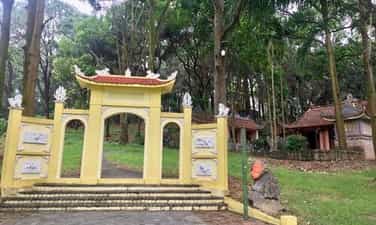
Hill 79 Spring
Hill 79 Spring - Memorial relic of President Ho Chi Minh Hill 79 Spring is a memorial monument of President Ho Chi Minh, built from the love of local people for him. According to Hanoi Landscapes and Monuments, in 1971, the people of Yen Lang district (now Tien Thang commune) donated many precious artifacts to cast a statue of President Ho Chi Minh weighing more than 800kg to place on the top of the hill. From the foot of the hill to the monument there are 79 stone steps, symbolizing 79 springs in Uncle Ho's life. In 2004, Hill 79 Spring was ranked as a provincial historical-cultural relic. In the following years, the relic was invested in and renovated with many items such as Lotus Tower, Memorial House, walkway system, trees and ecological landscape. With an area of nearly 100 hectares, possessing pine hills, natural lakes, forests and fresh space, Hill 79 Spring today is not only a traditional educational red address, a memorial place for President Ho Chi Minh, but also developed into an ecological - cultural - spiritual tourism area. Visitors can combine offering incense, visiting natural landscapes, walking along the lake, experiencing resort activities, camping, picnicking and enjoying cuisine. Source: According to Hanoi Landscapes and Monuments
Hanoi
4 view
Rating : Provincial level relics
Hill C1
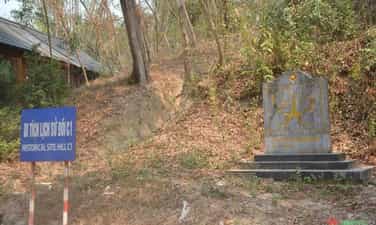
C1 Hill - Historical evidence of the Dien Bien Phu Victory C1 Hill (French military name is Éliane 1) is one of the important bases in the Eastern base group of the Dien Bien Phu Group of bases. Located on high point 493, the hill acts as a "shield" protecting the central subdivision and Muong Thanh airport, while controlling the direction of attack from the East and Northeast. According to the Dien Bien Provincial Monuments Management Board, the French army arranged elite forces including Company 3, Battalion 1, Moroccan Infantry Regiment 4 and reinforced parachute units to defend this base. As for the Vietnam People's Army, the task of attacking Hill C1 was assigned to Battalion 215, Regiment 98, Group 316. On the afternoon of March 30, 1954, in the second attack of the Dien Bien Phu Campaign, our army launched an attack on Hill C1. After breaking down many layers of barbed wire fences with explosives, the units quickly captured bunkers on top of the hill. Platoon leader Nguyen Thien Cai planted the flag "Determined to fight, determined to win" on top of C1, marking the mastery of the base. However, the French army continuously organized many fierce counterattacks to regain this strategic position. The tug of war lasted for 32 days and nights, with fierce battles on each trench and each gun emplacement. By the night of May 1, 1954, the 98th Regiment completely controlled Hill C1, creating favorable conditions for our troops to attack the remaining bases such as C2 and A1, opening the door to the center of the Dien Bien Phu base group. Today, C1 Hill is one of the component relics of the Dien Bien Phu Battlefield Special National Monument. This place still preserves the system of trenches, trenches and battlefield vestiges, becoming a red address for educating patriotic traditions and the resilient fighting spirit of the Vietnamese army and people in the resistance war against the French colonialists. Source: According to Dien Bien Province Monuments Management Board
Dien Bien
4 view
Rating : Special national monument
Vietnam - Laos International Martyrs Cemetery
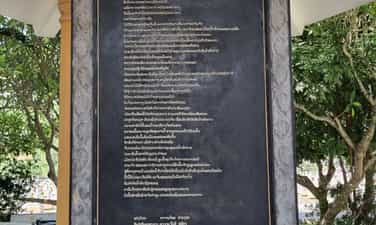
Vietnam - Laos International Martyrs Cemetery Vietnam - Laos International Martyrs Cemetery is located in Anh Son commune, Nghe An province, on National Highway 7 leading to Nam Can border gate. This is the only cemetery in Vietnam bearing the names of two countries, a symbol of the special solidarity and fighting alliance between Vietnam and Laos. The project was built in 1976. In 1982, the Party and State decided to gather the remains of Vietnamese volunteers and military experts who died in Laos to bury here. The cemetery has an area of nearly 7 hectares and is currently the resting place of nearly 11,000 martyrs, including thousands of unidentified graves. The cemetery consists of two areas A and B with solemnly planned rows of graves. The center is a memorial monument, a ceremony house and a stone stele engraved with blessings in both Vietnamese and Lao languages, praising the solidarity and noble sacrifices of the two countries' soldiers and people during the resistance wars. This is not only a place to commemorate the heroic martyrs of Vietnamese volunteer soldiers and military experts who performed international missions in Laos, but also a red address to educate on patriotic traditions, gratitude and special friendship between the two peoples. Every year, the cemetery welcomes thousands of relatives, veterans and tourists to offer incense and pay tribute to fallen heroes. Source: Vietnam - Laos International Martyrs Cemetery Management Board
Nghe An
4 view
Rating : National monument
Temple of King Hung
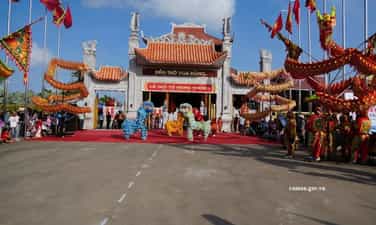
Temple of King Hung King Hung Temple is located along Highway 63, in Giao Khau hamlet, Tri Phai commune, Ca Mau province. The temple was built more than 150 years ago, initially it was just a small temple made of bamboo and leaves, known to local people as Ong Vua Temple. During the two resistance wars against the French colonialists and the American imperialists, the temple was repeatedly destroyed by bombs and bullets and had to be relocated to protect the place of worship as well as maintain the celebration of the Hung King's Anniversary. In 2006, the temple was built solidly with reinforced concrete, facing Highway 63 with a large gate and yard, meeting the religious needs of the people. By 2019, Ca Mau province implemented a project to renovate, embellish and upgrade the entire relic site with 13 items, including the main temple, green campus, guest house, kitchen, warehouse and temple gate. The project will be completed and put into use in 2022, becoming an important cultural and religious activity spot for local people. Every year, on the 10th day of the third lunar month, the Hung King's death anniversary is solemnly held at the temple with the participation of authorities, organizations and a large number of people inside and outside the province. This is not only an opportunity to commemorate the heroic contributions of the Hung Kings to building the country, but also to contribute to educating generations of patriotic traditions and gratitude for their roots. Source: Ca Mau province electronic information portal
Ca Mau
8 view
Rating : Provincial level relics
Temple of Mai Hac De
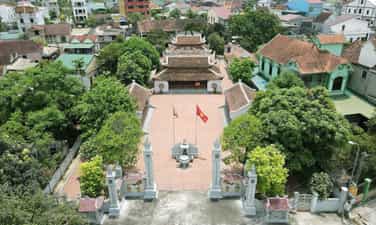
Temple of Mai Hac De Mai Hac De Temple in Nam Thai commune, Nam Dan district (now Van An commune), Nghe An province is a typical historical relic complex associated with the life and career of national hero Mai Thuc Loan. The relic consists of two main areas, the Temple and the Shrine - Tomb, forming a unified complex in a harmonious space of mountains and water. According to the Nghe An Department of Culture, Sports and Tourism, Mai Thuc Loan initiated the Hoan Chau uprising in 713, leading the people against the domination of the Tang Dynasty. After winning many victories, he ascended the throne, took the title Mai Hac De, named the country Van An and built an independent government. In 722, before a large-scale attack by the Tang army, the uprising failed and Emperor Mai Hac died in the Hung Son mountains. To commemorate the merits of the national hero, people built a temple in the ancient land of Van An. The temple was built during the Later Le period and was majorly restored in the 2nd year of Minh Menh (1821). The project is located on high land, facing the Lam River in front, including items such as gate, yard, lower palace, middle palace, upper palace, left vu, right vu, featuring traditional carving art with the themes of four sacred animals and four precious animals. About 200 meters west of the temple is the Temple - Tomb of Mai Hac De. The monument was built according to the layout of "front temple, rear tomb", the mausoleum is made of monolithic green stone, the front overlooks the Lam River, the back leans towards Dun mountain, creating a characteristic "mountain and water view" position. Currently, the relic still preserves many valuable artifacts such as worship statues, horizontal panels, parallel sentences, incense burners and many feudal dynasties for Mai Hac De and Mai Thieu De. Every year, the King Mai Temple festival is held from the 13th to 15th of the first lunar month with traditional rituals such as water procession, foot procession, incense offering and many folk cultural activities, notably the King Plum wrestling festival. Source: Nghe An Department of Culture, Sports and Tourism
Nghe An
7 view
Rating : Special national monument
E1 Hill
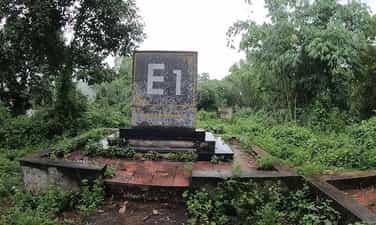
E1 Hill – Fierce evidence of the Dien Bien Phu Campaign Hill E1 is located in the northeast of Muong Thanh center, Dien Bien Phu city, Dien Bien province. During the Dien Bien Phu Campaign in 1954, this was an important base in the Dominique base cluster of the French army, with the task of protecting Muong Thanh center and Dien Bien airport. After our troops captured E1, this high point was used as an artillery observation post, mountain artillery battlefield and command post to control enemy targets. Due to its strategic location, E1 suffered thousands of artillery, bombs and tank fire from the French army for 36 days and nights. The terrain was plowed and the trees were completely destroyed, causing this place to be called "death hill" by the soldiers. Despite fighting in extremely fierce conditions, our units still stubbornly held the position, maintained the battlefield, contributed to destroying enemy firepower and supported the attacks into the center of the Muong Thanh stronghold group. E1 Hill is a testament to the brave fighting spirit of the Vietnamese army, contributing to the historic victory of the Dien Bien Phu Campaign on May 7, 1954. Today, E1 hill is one of the attractions in the Dien Bien Phu Battlefield Relics Complex, helping tourists and today's generations better understand the fierceness of the battlefield as well as the resilient fighting spirit of the Vietnamese army and people in the "illustrious victory on five continents, shaking the earth". Source: People's Army Newspaper.
Dien Bien
20 view
Rating : Special national monument
Tan Hiep Tien Thanh Communal House
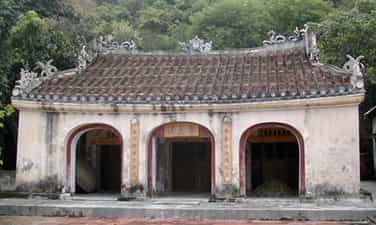
Tan Hiep Tien Hiep Communal House - A relic marking the merit of establishing the village on Cu Lao Cham Tan Hiep Tien Hien Communal House (local people often call Tien Hiep Mausoleum) is located in Bai Lang village, Tan Hiep commune (Cu Lao Cham), Hoi An city, Quang Nam province. This is a typical religious structure of the island's residents, built around the end of the 18th century to worship the ancestors and descendants who had meritorious efforts to destroy and establish villages, and at the same time worship the gods protecting fishermen in their lives and making a living at sea. According to historical documents, Cu Lao Cham has long held an important position at the sea gateway of Hoi An, where domestic and foreign ships often stop to get fresh water, firewood and shelter from the wind before continuing their voyage. The formation of the island community is associated with the process of reclamation, hamlet establishment and marine industry development. Therefore, building a communal house to commemorate ancestors as well as pray for a calm sea is a cultural beauty that has been passed down through many generations. The communal house was built in a typical arched architectural style, using local materials such as stone, brick, coral, lime mortar; The roof is covered with yin and yang tiles. The roof is decorated with the shape of "two dragons painting pearls", the blade's head is softly curved with floral motifs, dragon faces and fish tails, reflecting the interference between traditional architectural art and island culture. The space inside is spacious, divided into many worship areas. The main space has tablets worshiping Phuc Ba General and a number of gods related to the marine industry. According to ancient beliefs, "Phuc Ba" is a title given to generals who have conquered waves or are talented at navigation, and are worshiped by people as gods protecting fishermen on every trip to sea. With unique historical, cultural and architectural values, Tan Hiep Tien Hien Communal House was ranked a National Monument in 2006. Source: Hoi An Cultural Heritage Management and Conservation Center.
Da Nang
26 view
Rating : National monument
The tomb of King Quang Trung's concubine and Tay Son generals
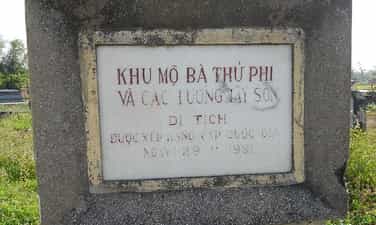
The tomb of King Quang Trung's concubine and Tay Son generals The tomb of King Quang Trung's concubine and Tay Son generals is located in Thanh Dong village, Cam Thanh commune, Hoi An city, Quang Nam province. The relic is located on Rung Ray mound, where concubine Tran Thi Quy and a number of generals and mandarins of the Tay Son dynasty of the Tran Thanh Chau clan are buried. According to the Tran family genealogy and local documents, Tran Thi Quy was from Thanh Chau village and was recruited by King Quang Trung to be his concubine. After the Tay Son dynasty collapsed, she returned to her hometown to live and was buried in Cam Thanh. In the tomb area there are also the tombs of Tran Cong Thuc - Grand Admiral, Grand General and many other members of the Tran clan who held positions under the Tay Son dynasty. The tomb area not only reflects the typical ancient tomb type of Hoi An but also demonstrates the role of Thanh Chau village and the Tran clan in the Tay Son movement. This is a valuable source of information for researching local history and the late 18th century. In 1991, the tomb of King Quang Trung's concubine and Tay Son generals was ranked as a national historical relic. Source: According to Hoi An Cultural Heritage Management and Conservation Center.
Da Nang
16 view
Rating : National monument
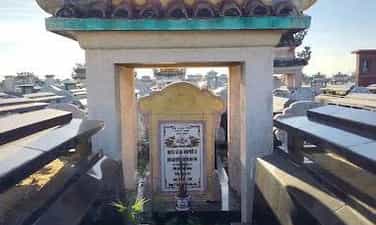
Le clan's tomb
Le clan's tomb - A relic marking the process of colonizing the land of Cam Thanh The Le clan's tomb is located in Thanh Dong village, Cam Thanh commune, Hoi An city, Quang Nam province. This is the burial relic of the ancestor of the Le clan - Mr. Le Duy Tri, a fifth-generation descendant of the Later Le dynasty, who came to Thanh Chau to settle down in the early 17th century. According to historical documents, Mr. Le Duy Tri is the eldest son of The Tong Emperor Le Duy Dam, brother of King Kinh Tong Le Duy Tan. In 1623, due to political upheaval and persecution by Lord Trinh Tung, he and his family went to the South, stopping in the Thanh Chau area (now in Cam Thanh commune). Here, he and his clan reclaimed land, established hamlets, developed production and became the sages who publicly reclaimed this land. The current tomb complex was built on a large scale in 1930 (the fifth year of Bao Dai). The tombstone is engraved with the names of the ancestors of the Le clan and recognizes their contributions to the exploration of ancient Thanh Chau lands. The monument is not only a place to commemorate ancestors but also an important testament to the process of migration and expansion of Dai Viet residents into Hoi An in the 17th century. With outstanding historical and cultural values, the Le ancestral tomb is a valuable source of material for researching the history of the formation of the Cam Thanh community in particular and Hoi An in general. The relic was ranked as a national historical relic in 1991. Source: According to Hoi An Cultural Heritage Management and Conservation Center.
Da Nang
25 view
Rating : National monument
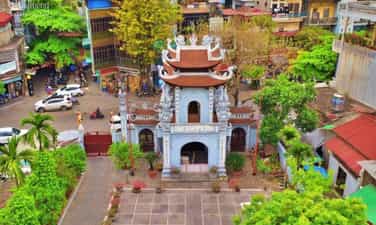
King's Temple
King Pagoda - Historical relic, unique artistic architecture in the heart of Hanoi King Pagoda is located at 17 Thinh Yen Street, Pho Hue Ward, Hai Ba Trung District (old), Hanoi. This is a relic complex including Hung Khanh Pagoda and Thien De Palace, famous not only for its historical and architectural value but also for being the cradle of traditional chess fighting in the ancient capital of Thang Long. According to historical documents, King Pagoda was built during the Early Le Dynasty (15th century). The relic is both a place to worship Buddha and De Thich - a god revered as the "king of chess" in Eastern culture. Legend has it that a prince of the Le Dynasty, admiring De Thich's chess playing skills, had a shrine built, from then on this place became the center of cultural activities and chess competitions of the capital. The relic complex is planned in harmony with the main pagoda, Mau palace, Tam Quan, corridor and Thien De palace including ritual gate, front altar, harem, stele house and flag yard. The highlight is the five-compartment altar building with traditional architecture, curved roof, and roof decorated with dragons flanking the sun, imbued with the style of ancient Vietnamese architectural art. The King Pagoda Festival takes place every year from the 6th to the 9th of the first lunar month. Besides Buddhist rituals and traditional beliefs, the highlight of the festival is the Chinese chess competition - a unique culture that has existed for many centuries. According to ancient custom, the person who wins the championship for three consecutive years will have their name engraved on a memorial stone stele at the monument grounds. With typical values of history, architecture and folk culture, King Pagoda was ranked a national historical and architectural and artistic relic by the Ministry of Culture and Information in 1992. Today, this place is an attractive spiritual and cultural destination, contributing to preserving and promoting the traditional values of Thang Long - Hanoi. Source: According to Hanoi Landscapes and Monuments.
Hanoi
66 view
Rating : National monument