Relic point Vietnam
Việt Nam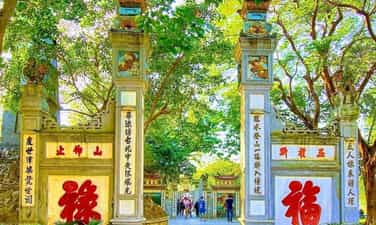
Ngoc Son Temple
Ngoc Son Temple - Typical historical and cultural relic on Hoan Kiem Lake. Ngoc Son Temple is located on Ngoc Island in the middle of Hoan Kiem Lake, Hoan Kiem District, Hanoi. This is one of the capital's famous historical, cultural and scenic spots, associated with the history of Thang Long and the legend of King Le Thai To returning the precious sword to the Magic Turtle after victory over the Ming army. The relic complex includes many unique architectural works such as Pen Tower, Dai Nghien, The Huc bridge, Dac Nguyet gate, Tran Ba communal house and the main temple area with an altar, middle hall, harem and auxiliary items. Among them, the Pen Tower was built on Doc Ton Mountain, prominent with three Chinese characters "Ta Thanh Thien" (Write on the blue sky), expressing the spirit of promoting knowledge and civilization. Dai Nghien made of green stone, created in 1865, engraved with a poem compiled by the famous Nguyen Van Sieu, is a valuable work of art. The Huc Bridge with its characteristic red color and soft curves leading to the temple has long become a familiar symbol of Hoan Kiem Lake. The main temple area is built according to traditional architecture with a consecutive system of front altar, middle hall and back palace. The items are decorated with many motifs of dragons, phoenixes, Tho characters, Long Ma Ha Do, Than Quy Lac Thu, reflecting the sophisticated carving art of ancient Vietnamese architecture. Besides, Tran Ba communal house located close to the lake has the meaning of "breaking waves", symbolizing the stability of national culture. Located adjacent to the temple is the memorial area of King Le Thai To with a ceremonial gate, a communal house and a bronze statue of the king in a sword-holding position. The project contributes to honoring the national hero who led the Lam Son uprising to win independence for the country and is associated with the accumulation of swords at Hoan Kiem Lake. Ngoc Son Temple and Hoan Kiem Lake have become inseparable symbols of the Capital, preserving the historical, cultural and spiritual values of the Vietnamese people. Source: According to the Department of Cultural Heritage
Hanoi
8 view
Rating : Special national monument
King's Temple
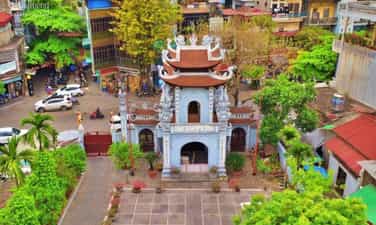
King Pagoda - Historical relic, unique artistic architecture in the heart of Hanoi King Pagoda is located at 17 Thinh Yen Street, Pho Hue Ward, Hai Ba Trung District (old), Hanoi. This is a relic complex including Hung Khanh Pagoda and Thien De Palace, famous not only for its historical and architectural value but also for being the cradle of traditional chess fighting in the ancient capital of Thang Long. According to historical documents, King Pagoda was built during the Early Le Dynasty (15th century). The relic is both a place to worship Buddha and De Thich - a god revered as the "king of chess" in Eastern culture. Legend has it that a prince of the Le Dynasty, admiring De Thich's chess playing skills, had a shrine built, from then on this place became the center of cultural activities and chess competitions of the capital. The relic complex is planned in harmony with the main pagoda, Mau palace, Tam Quan, corridor and Thien De palace including ritual gate, front altar, harem, stele house and flag yard. The highlight is the five-compartment altar building with traditional architecture, curved roof, and roof decorated with dragons flanking the sun, imbued with the style of ancient Vietnamese architectural art. The King Pagoda Festival takes place every year from the 6th to the 9th of the first lunar month. Besides Buddhist rituals and traditional beliefs, the highlight of the festival is the Chinese chess competition - a unique culture that has existed for many centuries. According to ancient custom, the person who wins the championship for three consecutive years will have their name engraved on a memorial stone stele at the monument grounds. With typical values of history, architecture and folk culture, King Pagoda was ranked a national historical and architectural and artistic relic by the Ministry of Culture and Information in 1992. Today, this place is an attractive spiritual and cultural destination, contributing to preserving and promoting the traditional values of Thang Long - Hanoi. Source: According to Hanoi Landscapes and Monuments.
Hanoi
8 view
Rating : National monument
Ba Tia Communal House (Vinh Ninh Communal House)
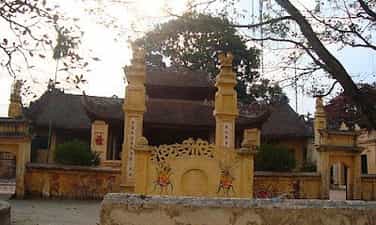
Ba Tia Communal House - Historical site associated with female general Hai Ba Trung Ba Tia communal house (also known as Vinh Ninh communal house) is located in Vinh Quynh commune, Thanh Tri district, Hanoi city. This is an ancient communal house worshiping Ba Tia (Truong Tu Nuong) - one of the female generals of Hai Ba Trung, who had meritorious service with the insurgents against the Eastern Han army in the years 40-43 AD. According to legend, Ba Tia was a talented martial artist who recruited insurgents to join the Hai Ba Trung uprising. After the Two Ladies committed suicide at Hat Mon, she continued to fight against the enemy until she transformed at Than Phu gate. To commemorate her merits, local people built a temple to worship her and honored her as the Tutelary God. Ba Tia communal house was built according to traditional architecture with items such as Nghi Mon, Phuong communal house, Great communal house and Harem. The relic also preserves many precious artifacts such as 23 ordinations (the earliest in the Canh Hung era in 1753), divine genealogy, gilded palanquin, horizontal scrolls, parallel sentences and agricultural extension copies of the Quang Trung period. During the resistance war against the French colonialists, Ba Tia Communal House was also an active location for revolutionary cadres, associated with the name of General Vuong Thua Vu, contributing to the historical value of the monument. Every year, Ba Tia communal house festival is held from the 8th to the 12th of the second lunar month, with traditional procession and sacrifice rituals to commemorate female general Truong Tu Nuong and educate patriotic traditions for generations. With outstanding historical, cultural and architectural values, Ba Tia Communal House was ranked a national historical and cultural relic by the Ministry of Culture and Information in 1980. Source: Hanoi – Sights and Monuments
Hanoi
9 view
Rating : National monument
Canh Nau Communal House
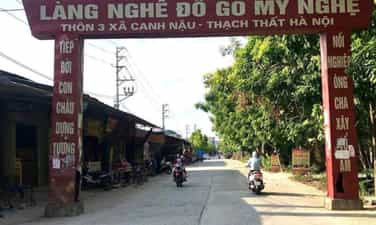
Canh Nau Communal House - A mark of Vietnamese village history and architecture Canh Nau communal house is located in Canh Nau commune, Thach That district (formerly), Hanoi city. This is a typical religious work of the Doai region, associated with the history of formation and development of Canh Nau village over many centuries. According to research documents, the communal house was built around the 17th century, then restored in the 18th and 19th centuries. The project has an architectural plan of "early, late" style, outstanding with a system of wood carvings in the artistic style of the Later Le period, especially dragon images and folk patterns with high aesthetic value. The communal house is a place to worship 5 village tutelary gods, including Do Vien - a figure credited with teaching Chinese characters to local residents. Not only is it a religious center, Canh Nau communal house is also a place where traditional festivals take place, contributing to preserving the cultural identity of the community. With typical historical, architectural and artistic values, Canh Nau Communal House was ranked a national architectural and artistic relic by the Ministry of Culture and Information in 1993. Source: Hanoi – Sights and Monuments
Hanoi
8 view
Rating : National monument
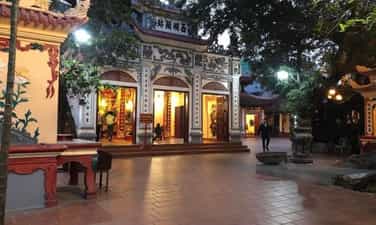
Phu Tay Ho
Phu Tay Ho - Typical historical, cultural and religious relic of Hanoi Located on the peninsula in Quang An ward, Tay Ho district, Hanoi, Phu Tay Ho is one of the famous religious relics associated with Holy Mother Lieu Hanh - one of the Four Immortals of Vietnamese folk beliefs. Located amidst the poetic space of West Lake, the relic has long become an important spiritual destination for the people of the Capital and tourists from everywhere. According to many research documents, Phu Tay Ho is associated with the legend of Poinsettia Phung Khac Khoan meeting Holy Mother Lieu Hanh while traveling to West Lake. However, the exact date of construction of the palace has not yet been determined by historical documents. The existing Sino-Nom documents at the site, such as stone stele, bronze bells, horizontal plates, and parallel sentences, mainly date to the late Nguyen Dynasty. Some epitaphs and artifacts show that this place is related to Bao Khanh temple of ancient Tay Ho village and has undergone many renovations and embellishments. Not only has historical value, Phu Tay Ho is also a center for practicing the typical Mother Goddess worship belief in Hanoi. Every year, especially on the occasion of early spring and the holidays of Saint Mother Lieu Hanh, a large number of people and tourists come to offer incense and pray for peace and fortune. With historical, cultural and religious values, Phu Tay Ho is one of the typical destinations, contributing to preserving and promoting the traditional cultural identity of Thang Long - Hanoi. Source: Hanoi – Sights and Monuments
Hanoi
9 view
Rating : National monument
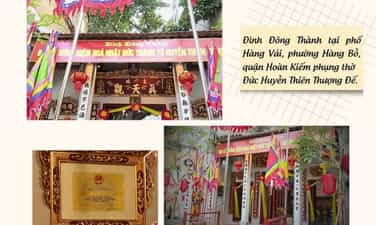
Dong Thanh communal house
Dong Thanh Communal House - Historical and architectural relic in the heart of Hanoi's Old Quarter Dong Thanh communal house, also known as Hang Vai communal house, is located at 7 Hang Vai street, Hoan Kiem district, Hanoi. This is one of the typical ancient communal houses of the old quarter, both a place for religious activities of the residential community and preserving many unique historical, cultural and architectural values of ancient Thang Long. The communal house was built to worship Saint Huyen Thien Tran Vu - a god revered by the people for his merits in guarding the North and protecting the country and people. Previously, the communal house was the common living place of two villages, Dong Thanh and Dong Thanh Thi, later merged into Dong Thanh village under the Nguyen Dynasty. Over the centuries, the communal house has still preserved many precious artifacts such as the bronze statue of Saint Huyen Thien Tran Vu, the system of stone stele of the Nguyen Dynasty recording the process of construction and restoration along with ordinations, horizontal panels, and parallel sentences with historical and artistic value. These are precious documents that contribute to reflecting the cultural and religious life of Hanoi's Old Quarter residents through many periods. Not only has architectural and religious value, Dong Thanh communal house is also associated with important milestones in the nation's history. During the early days of the National Resistance War at the end of 1946, the communal house was used as an ambulance station of Inter-Region I, contributing to the fight to protect the Capital for 60 historic days and nights. This event has increased the historical value of the monument, turning this place into a red address for educating patriotic traditions for generations. In 2014, Dong Thanh communal house was ranked as a city-level historical - architectural and artistic relic. Today, the communal house is not only a place for local people's religious activities but also an attractive attraction on the journey to explore Hanoi's Old Quarter. According to Hanoi New Newspaper
Hanoi
89 view
Rating : Provincial level relics
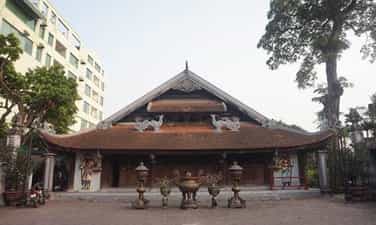
Yen Phu Communal House
Yen Phu Communal House Located in Tay Ho ward, Hanoi city (formerly in Yen Phu ward, Tay Ho district), Yen Phu Communal House is a typical historical - architectural and artistic relic, associated with the belief of worshiping Uy Linh Lang Dai Vuong and his two younger brothers, Vuong Duy Dai Vuong and Vuong Ba Dai Vuong. According to legend, Uy Linh Lang was a general who made great contributions in the resistance war against the Yuan army during the Tran Dynasty and was honored by the people as the village's Tutelary God. The communal house was built according to the traditional "Ding"-shaped architecture, including the Great Court and the Harem, featuring an ironwood frame system, ancient tiled roofs, and exquisite carvings of dragons, phoenixes, and four sacred animals in the 17th century artistic style. Inside the communal house, many precious artifacts such as ordinations, stone stele, bronze bells, horizontal plates, parallel sentences and ancient worship objects with historical and cultural value are preserved. Not only is it a place for local people's religious activities, Yen Phu Communal House is also one of the typical relics on West Lake, contributing to reflecting the history, traditions and long-standing cultural life of the land of Thang Long - Hanoi. In 1986, Yen Phu Communal House was ranked as a National Historical, Architectural and Artistic Monument by the Ministry of Culture and Information (now the Ministry of Culture, Sports and Tourism). Today, the monument is an attractive destination for tourists and those who love to learn about the history and traditional culture of the Capital. Source: Hanoi Sights and Monuments (compilation)
Hanoi
251 view
Rating : National monument
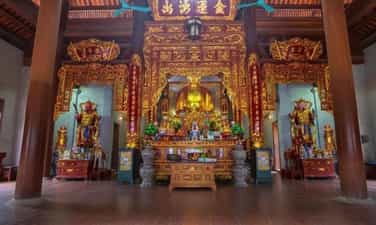
Linh Ung Pagoda
Linh Ung Pagoda (Kham Thien) Linh Ung Pagoda has the literal name Linh Ung Tu, located close to Kham Thien Street, number 290, Tho Quan Ward, Dong Da District, Hanoi. (Before merger) Linh Ung Pagoda was built in the 19th century and continued to be renovated in the early years of the 20th century; was majorly restored in 1951, adding Tam Bao with the current overlapping roof style. The pagoda was seriously damaged in the B.52 bomb attack on December 26, 1972. At the end of 1973, the pagoda was greatly renovated. Recently, in 1990, association owners and Buddhists again made merits to repair the pagoda, repair the Buddha hall, and pave the floor of the Mau hall and the Patriarch's house. The pagoda has a complete system of Buddha statues, especially two round statues dating back to the 19th and early 20th centuries and many other valuable statues such as Amitabha, Amitabha Tam Ton, and Cuu Long. Linh Ung Pagoda also worships Hung Dao King Tran Quoc Tuan. Statue of Saint Tran sitting on a dragon throne, wearing a royal hat, wearing a dragon robe, the throne touches the dragon's head, lacquered and gilded, carefully polished in the style of 19th century art. In the Mother Temple, the Ancestor's house has statues of the Three Holy Mothers, Hoang Bay, Hoang Muoi, Co statue, Cau statue... The pagoda has many horizontal panels, parallel sentences, and beautiful gilded vermilion doors. Linh Ung Pagoda was ranked a historical architectural and artistic relic by the Ministry of Culture and Information in 1993. According to Hanoi Landscapes and Monuments
Hanoi
248 view
Rating : National monument
Dong Bo Dau Temple
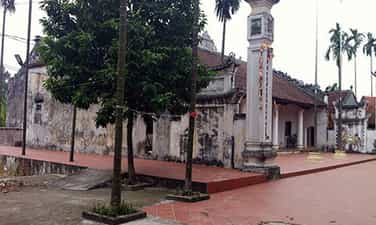
Dong Bo Dau Temple - Historical and cultural relic worshiping Phu Dong Thien Vuong Dong Bo Dau Temple (formerly in Dap village), now in Thuong Tin, Hanoi city, is a historical and cultural relic of special value, associated with the worship of Phu Dong Thien Vuong - the legendary hero of the Vietnamese people who fought against foreign invaders. According to legends passed down locally, the temple worships Dong Soc Thien Vuong Huyen Thien Dai Thanh to repay Mother's grace, that is Saint Giong. A special point in the legend in Dong Bo Dau is that Thanh Giong not only fought the enemy to save the country but also had the merit of destroying sea monsters, saving his mother and protecting the peaceful life of the people along the Red River. Therefore, people here also honor him as the god who governs water and protects the villagers. Dong Bo Dau Temple was formed a long time ago and was recognized by ancient books such as Dai Nam Nhat Thong Chi and Cong Du Ky Ky as one of the ancient temples and shrines of the ancient Ha Tay region. After many renovations, the monument still retains many architectural values, art and traditional beliefs. The temple has an architecture in the style of "before Buddha, after Saint", including a pre-sacrificial house and a harem. The temple also preserves many precious artifacts such as ordinations, worship statues, horizontal panels, parallel sentences and especially the 5.76m high ancient statue of Phu Dong Thien Vuong, representing the image of a majestic and strong deity in a position to protect the people. In addition, the system of Bat Bo Vajra statues are also unique and valuable works of folk sculpture. Every year, local people organize the Dong Bo Dau Temple festival on January 8 and September 8 of the lunar calendar to commemorate the merits of Saint Giong. The festival has many traditional rituals and unique folk games such as stick dancing and swimming, creating a cultural space rich in the identity of the land along the Red River. In 2011, the worship of Phu Dong Thien Vuong at related locations, including Dong Bo Dau Temple, was registered by UNESCO as a representative intangible cultural heritage of humanity. With outstanding values in history, architecture, beliefs and art, Dong Bo Dau Temple is a precious heritage, contributing to preserving the image of Saint Giong - a symbol of patriotism, the spirit of fighting against foreign invaders and the morality of the Vietnamese people when drinking water, remembering its source. According to the National Museum of History
Hanoi
337 view
Rating : Provincial level relics
Chu Quyen Communal House
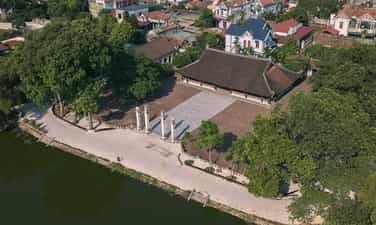
Chu Quyen Communal House - Unique architectural and artistic relic of Doai region Chu Quyen communal house (also known as Chang communal house) is located in Chu Minh commune, Ba Vi district, Hanoi city. This is one of Vietnam's typical ancient communal houses, built in the early 17th century and ranked by the State as a national architectural and artistic relic in 1962. In the past, the communal house belonged to Chu Chang village, Chau Chang district, Tien Phong district, Quang Oai district, Son Tay town. Later, Chu Chang village was separated into Chu Chang and Chu Quyen, but local people still call it Chang communal house. The communal house is located on the land along the Red River, facing Ba Vi Mountain, with a harmonious location according to traditional feng shui concepts. Chu Quyen communal house is a large-scale wooden architectural work, consisting of only one large communal house but with majestic and majestic beauty. The communal house has a structure of 3 main rooms, 2 wings, 2 porches and a system of 6 large columns. Architectural parts such as columns, beams, beams, corbels, and roofs are skillfully linked using traditional carpentry techniques. The large pillars of the communal house have become a familiar image among the people with the saying "as big as the pillars of Chang's communal house". Not only has architectural value, Chu Quyen communal house also stands out for its sophisticated wood carving art. Ancient artisans created many vivid works with images of dragons, phoenixes, flowers, clouds and everyday scenes such as farming, drinking wine, riding elephants, horses... The carved lines demonstrate the talent of folk artists and reflect the cultural life of contemporary society. According to documents preserved at the site, Chu Quyen communal house worships Nha Lang Vuong (Duc Thanh Chang), a character associated with the legend of the Later Ly Nam De period. Legend has it that Nha Lang Vuong was instrumental in defeating the enemy and protecting the country, so he was honored as a Tutelary God by many villages along the Red River. Every year, the communal house festival is held on the full moon day of the first lunar month with sacrificial rituals and many folk cultural activities such as wrestling, boating, and singing, attracting a large number of people and tourists. Currently, Chu Quyen communal house still preserves 13 ordinations of the Le Trung Hung, Tay Son and Nguyen dynasties along with many horizontal panels, parallel sentences, and artifacts of historical value. Through many renovations, especially a major restoration from 2007 to 2009, the communal house still retains its ancient beauty and original values. With typical values of history, architecture and art, Chu Quyen Communal House is a precious heritage of Thang Long - Hanoi, contributing to preserving the beauty of traditional village communal house culture and demonstrating the creative talent of our ancestors in the nation's history. According to Hanoi Landscapes and Monuments
Hanoi
347 view
Rating : National monument