Relic point Vietnam
Việt Nam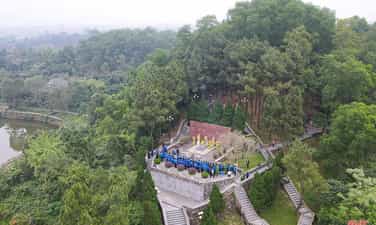
Tran Phu Memorial Site
The Tran Phu Memorial Site is located in Duc Tho commune, Ha Tinh province, the hometown of Comrade Tran Phu – the first General Secretary of the Party. This is a historically significant site, preserving the imprints of the life and revolutionary career of this steadfast communist fighter. Comrade Tran Phu was born on May 1, 1904, into a patriotic scholarly family. In October 1930, he was elected the first General Secretary of the Party and directly drafted the 1930 Political Thesis. In April 1931, he was arrested by the French colonialists and died on September 6, 1931, at Cho Quan Hospital in Saigon, at the age of 27. Before his death, he left behind the famous admonition: "Maintain your fighting spirit." In 1999, his remains were brought back to his hometown for burial. The tomb is located on Quan Hoi Mountain, facing Tam Soa Wharf – the confluence of the Ngan Sau, Ngan Pho, and La rivers. Within the grounds are a memorial stele and the tombs of the comrade's parents and younger brother. About 1km from the tomb is the Tran family ancestral temple and the Tran Phu Memorial Exhibition House, which houses many documents, images, and artifacts related to the comrade's revolutionary life. Today, the Tran Phu Memorial Site has become a destination for generations to come, offering incense, learning about history, and commemorating the first General Secretary of the Party – an exemplary figure of patriotism, unwavering will, and indomitable spirit in the face of the enemy. Source: News and Ethnic Minorities Newspaper
Ha Tinh
5 view
Rating : National Monument

Cao Thang Church
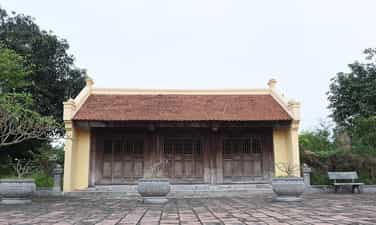
Cao Thang Church is located on a small hill in Son Tien commune, Ha Tinh province, and is a place to commemorate Cao Thang (1863–1893) - a talented general of the Huong Khe insurgent army and a close associate of Phan Dinh Phung in the anti-French colonial movement at the end of the 19th century. Cao Thang is famous for his military leadership and especially for researching and manufacturing French 1874-style rifles to serve the Huong Khe uprising. He died in 1893 when he was only 30 years old. After that, the Cao family's descendants and local people built a church to commemorate and pay tribute to the hero. The church was built in 1907, made of ironwood, has three compartments, four trusses, and a tiled roof, with bold traditional architecture. Inside, there are also dragon thrones, tablets, mirror stands and gilded lacquered worship objects. With historical values and artistic architecture, Cao Thang Cathedral was ranked a national historical relic in 1998. Source: Historical and cultural relics information page
Ha Tinh
53 view
Rating : National monument
Phan Dinh Phung Church
Relics of the Temple of Former Doctor Phan Dinh Phung - Imprint of the hero Can Vuong. The relics of the Church of Former Doctor Phan Dinh Phung located in Dong Thai village, Tung Anh commune, Ha Tinh province, is a place to commemorate the typical leader of the Can Vuong movement at the end of the 19th century. The relic was ranked as a national historical relic in 2006. Phan Dinh Phung (1847–1895), from Dong Thai village, passed the Dinh Nguyen Doctor's degree and served as a mandarin under the Nguyen Dynasty. In 1885, in response to the Can Vuong Edict, he stood up to gather followers and lead the resistance movement against the French colonialists in the Ha Tinh region and the North Central provinces. For more than 10 years, he used Vu Quang as a base and stubbornly organized the resistance. He died on December 28, 1895, becoming one of the typical leaders of the Can Vuong movement. The church campus is about 3 hectares wide, including the entrance gate, adoration yard, lower palace, upper palace and two rows of left and right vu. The lower hall worships generals and insurgents who once stood side by side with Phan Dinh Phung. The upper palace is the main place of worship, made mainly of ironwood and jackfruit wood, still retaining many exquisite carved details. Inside there is a bronze statue of Phan Dinh Phung and worship objects such as a bronze crane, incense burner, a set of precious bowls and parallel sentences. About 3km from the church is Phan Dinh Phung's grave on Ne Son hill. The tomb was built of Thanh stone, in front there is a stele recording his life, career and contributions to the Can Vuong movement. Source: Ha Tinh Newspapers and Radio and Television
Ha Tinh
146 view
Rating : National monument
Dr. Truong Quang Trach Church
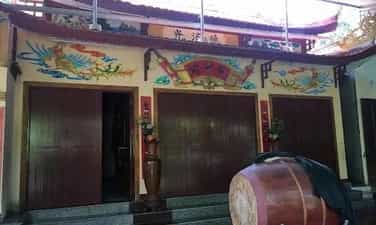
Dr. Truong Quang Trach Church - Saves the academic tradition. Dr. Truong Quang Trach Church is a historical and cultural relic associated with a typical academic celebrity of Ha Tinh region. The relic is currently located in Ha Huy Tap ward, Ha Tinh province, where traces of the life, career and studious tradition of the Truong Quang family are preserved. Truong Quang Trach was born in 1640 into a Confucian family. At the age of 20, he passed his Bachelor's degree; In 1670, when he was 30 years old, he passed the Third Rank of Dong Doctorate, and was listed on stele number 45 at the Temple of Literature - Quoc Tu Giam. After passing the exam, he held many positions, including Imperial Supervisory Institution and Cao Bang Governor. During his time as a mandarin, he was famous for being honest and resolute, daring to fight against corruption and flattery, and always promoting taking care of the people and the country. He died in 1677, when he was only 37 years old. After his death, the king ordained him, the people set up a temple and annually held sacrifices to commemorate him. This tradition has been preserved by families and people for many generations. The church currently has a compact but dignified architecture, including the entrance gate, church and surrounding grounds. Inside are placed dragon thrones, tablets, worshiping objects, horizontal panels, and parallel Chinese characters, expressing respect for the talented and virtuous doctor. In particular, the couplet "To the ancestors, honor the virtues of the millennium - Filial piety, respect the sages for great glory" conveys the wish for a good tradition to be passed down forever to future generations. Source: Ha Tinh Museum Electronic Information Portal
Ha Tinh
204 view
Rating : Provincial level relics
Phoi Phoi - Bai Coi archaeological site
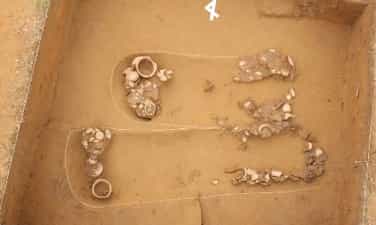
Phoi Phoi - Bai Coi archaeological site (Ha Tinh). The archaeological relic of Phoi Phoi - Bai Coi is located in Nghi Xuan commune, Ha Tinh province. This is one of Vietnam's typical archaeological sites, with special significance in studying the Early Historical period and the relationship between the two major cultures Dong Son and Sa Huynh. The relic was discovered in 2008 and underwent three major excavations in 2008, 2009 and 2012. Research results show that Bai Coi was the residence and burial place of ancient residents, with traces stretching from the Neolithic period to the monarchy period. In particular, this place is located at the intersection between the cultural space of Dong Son in the North and Sa Huynh in the South, becoming an important testament to cultural exchange and acculturation in history. Through excavations, archaeologists discovered 44 tombs, including earthen tombs, jar tombs, pot tombs and vase-pot tombs. Along with that are more than 200 precious artifacts made of stone, bronze, iron, glass and ceramic, reflecting the material life, beliefs and manufacturing skills of ancient residents more than 2,000 years ago. The outstanding value of Bai Coi is the simultaneous presence of Dong Son and Sa Huynh cultural elements and the influence of Chinese iron culture. This confirms that Bai Coi was once an important cultural exchange point for ancient residents in the North Central region. Source: National Museum of History
Ha Tinh
431 view
Rating : National monument
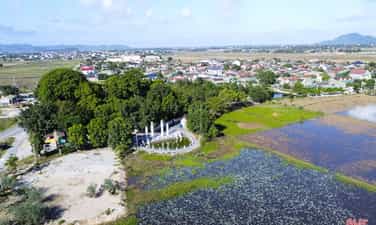
Ca Temple
Ca Temple, also known as Lon Temple or Three Toa Dai Vuong Temple, is located in Dong Kinh commune, Ha Tinh province. This is one of the typical historical and cultural relics of the locality, built in the 11th century under the Ly dynasty to worship Prince Ly Nhat Quang and the two princes Ly Dai Thanh and Ly Thai Giai, who were instrumental in recruiting people, establishing hamlets, and developing the ancient land of Hoan Chau. Later, the temple worshiped two more famous generals Tran Quang Khai and Tran Khanh Du, remembering their ancestors' contributions to the country. Over many dynasties, the temple was renovated and expanded, creating an architectural complex including lower palace, middle palace and upper palace. The buildings are mainly made of ironwood with a system of columns, rafters, diaphragms and intricate carvings of dragons, phoenixes and traditional patterns, reflecting the unique architectural art of many historical periods. In addition to its architectural value, Ca Temple also preserves 37 decrees of feudal kings and many precious artifacts. On the nearly 3-hectare campus, there is a population of hundreds of years old trees, many of which are recognized as Vietnamese Heritage Trees. The relic is also the site of secret activities of the Party organization in Ha Can region during the revolutionary movement of the period 1930–1931. With outstanding historical, cultural and architectural values, in 1992, Ca Temple was ranked a national historical and cultural relic by the Ministry of Culture and Information (now the Ministry of Culture, Sports and Tourism). Today, this place is a spiritual and sightseeing destination, contributing to preserving and promoting the traditional cultural values of Ha Tinh. Source: Ha Tinh Newspapers and Radio and Television
Ha Tinh
831 view
Rating : National monument
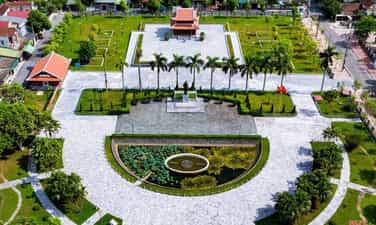
Ha Tinh ancient citadel
Ha Tinh Ancient Citadel - Witness of history in the heart of the city Located in Tan Giang ward, Ha Tinh city, Ha Tinh Ancient Citadel is a national historical-cultural relic, associated with the formation and development of Ha Tinh land. First built with earth in 1804 under the reign of King Gia Long, in 1833, King Minh Mang rebuilt it with laterite according to Vauban military architecture. In 1881, after Ha Tinh province was re-established, the citadel continued to be solidly built with brick and stone. The citadel has a unique hexagonal shape, about 3.2 m high, surrounded by a 20 m wide moat, along with a system of walls, city gates and solid defensive structures. This is one of the typical military works of the Nguyen Dynasty, demonstrating a harmonious combination of traditional Vietnamese architecture and Western citadel construction techniques. Experiencing many historical events, Ha Tinh Ancient Citadel was once an important administrative and military center and a witness of resistance wars to protect the Fatherland. Although many items are no longer intact, the remaining vestiges still hold great value in terms of history, culture and traditional education. Today, Ha Tinh Citadel is not only a symbol of the patriotic spirit and resilient will of the people of Ha Tinh but also an attractive destination, contributing to preserving and spreading historical values for future generations. Source: Ha Tinh Province Tourism Electronic Information Portal
Ha Tinh
1099 view
Rating : National monument
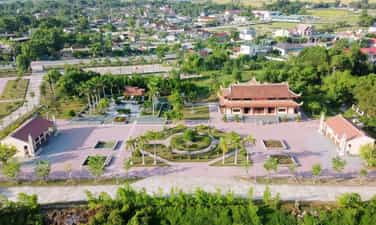
Hero Ly Tu Trong memorial area
Heroic Martyr Ly Tu Trong Memorial Area is located in Tan Long village, Viet Xuyen commune, Thach Ha, Ha Tinh. This is a project of the youth of the country and the people of the province to pay tribute to the heroic sacrifice of heroic martyr Ly Tu Trong - the first member of the Communist Youth Union. Heroic martyr Ly Tu Trong's real name is Le Huu Trong, born in 1914 in Ban May, Nakhon Phanom province - Thailand, originally from Thach Ha district, Ha Tinh province. He was born into a family whose parents were both patriotic overseas Vietnamese. Born in a situation of "losing his country and home", his family had to travel to Thailand to live, always carrying in his heart the longing for his homeland, which was being invaded by enemies. Since he was young, Le Huu Trong was hardworking, eager to learn and soon became enlightened about the revolution. He was one of eight children selected by Ho Tung Mau to take him to Guangzhou - China to study and work in the association. patriotic youth, here Le Huu Trong was renamed Ly Tu Trong by comrade Nguyen Ai Quoc. After returning home, work. In 1931, during a rally commemorating the first anniversary of the Yen Bai uprising held in Saigon, Ly Tu Trong shot and killed secret agent Le Grand to protect speaker Phan Boi who was giving a speech at Lareni Square. He was later captured by the enemy and sentenced to death when he was only 17 years old. Although he fell at a very young age, hero Ly Tu Trong left behind generations of Vietnamese youth a valuable legacy, which is patriotism, courage and youthful enthusiasm. Ly Tu Trong went down in history with his famous statement before the enemy's court, "The path of youth is only the revolutionary path, there can be no other path", which has become a guideline and a model. A shining example for Vietnamese youth to study and follow. On April 30, 2011, 80 years after his death, Anh's remains were found and brought back to be buried in his hometown. According to the earnest wishes of officers, soldiers, people of Ha Tinh and youth union members nationwide, the Secretariat of the Central Committee of the Ho Chi Minh Communist Youth Union has approved the investment project to build a memorial area. Ly Tu Trong in Viet Xuyen commune, Thach Ha district, Ha Tinh province. This is a tribute to the young communist man; has historical, cultural and spiritual significance; Traditional education for children nationwide. On October 20, 2011, on the occasion of the 97th birth anniversary of hero Ly Tu Trong, the Standing Committee of Ha Tinh Provincial Youth Union held a groundbreaking ceremony to build the Memorial Area. On October 20, 2014, the project was completed on the occasion of the 100th anniversary of Britain's birth. Source: Ha Tinh Province Historical Archives Center
Ha Tinh
6689 view
Rating : National monument

Dong Loc Junction Memorial Area
On December 9, 2013, Dong Loc Junction Relic Area was recognized as a Special National Historical Site. Dong Loc Junction relic area is a relic complex with many meaningful works, typically the following 12 items: 1. Dong Loc junction relic area has 3 entrance gates arranged on 3 routes towards the relic area, arranged according to the traditional three-entrance architecture including: Main door and 2 side gates. 2. Dong Loc Junction Victory Monument is an immortal symbol of the strength, determination to win, and the spirit of overcoming all hardships and dangers of the youth volunteer force, soldiers, and traffic workers. , police, militia... 3. The memorial stele of the National Youth Volunteer Martyrs. Registered nearly 4,000 heroic martyrs. The names of the heroic martyrs and young volunteers who sacrificed their lives at Dong Loc Junction will be remembered forever, for generations of children and grandchildren to admire, respect, and be proud of. 4. The grave site of 10 female heroic martyrs and young volunteers at Dong Loc intersection is 10 white graves register 10 young female volunteers of Platoon 4, Company 552. 5. The stele memorial for the heroic martyrs of the Transport sector who sacrificed their lives in Ha Tinh. Register and commemorate 842 Heroes and martyrs of the Transport sector who sacrificed their lives in the resistance war against the US to save the country in Ha Tinh area; 6. Transport industry symbol column. Located right in the middle of the three-way intersection: Lac Thien - Dong Loc, Khe Giao - Dong Loc, Ba Giang - Dong Loc. To honor the heroic victories of soldiers on the Transportation front; 7. Dong Loc Junction Bell Tower has majestic architecture, shimmering light, located on Mui Mac hill, and is considered one of the most beautiful bell towers in Vietnam today. 8. Dong Loc Junction Temple is located on Mui Mac Mountain (next to Dong Loc Junction Bell Tower). It is a place to worship the Gods and Spirits of the Heroic Martyrs and young volunteers who sacrificed their lives in the two national resistance wars, the Heroic Martyrs who sacrificed at Dong Loc Junction, 10 girls and officers. and people died at Dong Loc battlefield. 9. The statue of 10 girls at Dong Loc Junction recreates a realistic moment of 10 young volunteer girls on duty to level bomb craters and lead the way to the front line. They are arranged in different positions. 10. La Thi Tam Hill (Moi Mountain) is the place to witness the fierceness of the Dong Loc battlefield, witness the footprints, associated with the name of the daughter of Song La, Hero of the La People's Armed Forces Thi Tam. 11. Traditional house of the Vietnam Youth Volunteer Force, where the history of the Youth Volunteer Force appears most vividly and clearly. 12. Dong Loc Junction Traditional House There is a simulation table programmed with an electronic system, recreating the fierce and devastated battlefield scene of Dong Loc Junction during the war years, as well as the intention. the determination to open roads and traffic, the brave and courageous spirit of our army and people at this "death coordinate". Source: Ha Tinh province electronic information portal
Ha Tinh
8835 view
Rating : Special national monument

Thai Yen Temple
Thai Yen Temple was recognized as a National Monument on July 20, 1994. Thai Yen Temple is located in Thai Yen commune, Duc Tho district, Ha Tinh province, worshiping the Tutelary God Tam Lang Linh Ung (Snake God) and Chinh Dong Ngoc Nu (Mother). The temple was built in the 18th century (sometime before 1741). The temple is located on a land area of about 5,000 square meters at the beginning of the village, with a three-court structure: upper palace, middle palace, lower palace. In front of the temple is a semicircular lake with clear blue water - considered the dragon's eye, located in the village's dragon land. Passing through the large yard of the three-entrance gate, the middle gate is built with a Nghi Mon house with a structure of 2 pillars, 6 columns, the roof is covered with 4 winding dragons, the head raised high to the top of the roof. On the roof of the ritual gate is embossed a dragon's face stroking its mane, beard and fierce horns. The lower hall is made of ironwood with 4 trusses and 14 columns, the floor is tiled with red bricks, in front there are large Chinese characters embossed with pieces of porcelain on wood assembled together with the beams: "Van Co Anh Linh" ( middle room), "Chiem Nhu Tai" (right room), "Lai Nguyen An" (left room). In the middle of the room is a large incense burner made of lacquered wood and elaborately carved with gold. In front of the incense burner is a dragon sword stand and a sign with the two Chinese characters "Chinh Khi", two large cranes standing on turtle bodies on both sides; The two compartments on both sides hang two bronze bells, on the bell are embossed with 3 words "Thai Yen Tu" (Thai Yen Temple - left compartment) and 4 words "Vinh Phuc Tu Chung" (Vinh Phuc Pagoda Bell - right compartment) . The middle palace is adjacent and parallel to the lower palace, consisting of three rooms and two gables; Inside, there are many offerings such as incense burners, incense burners, candlesticks, and wooden vases. In particular, there are three massive gilded palanquins, elaborately carved with symbols, scimitars, nameplates, and symbols. The spirit master, dragon throne, and deity tablets are offered by the villagers. In the upper palace, in the hallway, there are two round statues made of jackfruit wood kneeling with arms folded in front of their chests supporting incense burners, with folk style (bulky belly, wearing long pants, short hair, big ears, wide face, biceps). tall, big nose, slanted eyes). The main door has four wings painted with dragon, glass, tortoise, and phoenix colors; The two armpit doors and one wing depict a crane standing on the back of a turtle swimming in a lotus pond. Inside the main hall above are the dragon thrones and tablets of the Tutelary Gods and gods of the village; Below is an altar with two rows of carved, painted and gilded tablets offered by many generations of villagers... Every year, in the spring, Thai Yen Temple holds a big festival, people in the commune organize cultural and sports festivals until the full moon of the first lunar month such as tug of war, football matches, volleyball, table tennis, and chess. generals, art competitions... Every two years, Thai Yen organizes a palanquin procession on the 7th day of the first lunar month. Source: Duc Tho District Electronic Information Portal
Ha Tinh
9563 view
Rating : National monument