Relic point Vietnam
Việt Nam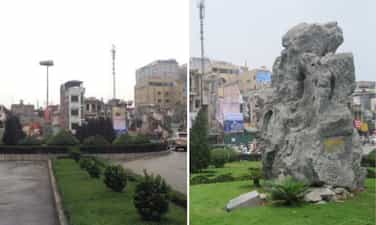
Xa Tac Dan
Xa Tac Dan - "special" historical relic of Thang Long Xa Tac Dan is an important historical relic of the ancient capital of Thang Long, built in 1048 during the reign of King Ly Thai Tong. This is where feudal kings held ceremonies to worship the Earth God (Xa) and the Nong God (Tac), praying for peace and prosperity in the country, good harvests, and prosperity. In the monarchy, the Xa Tac Dan is considered a symbol of national sovereignty and the stability of the dynasty. In 2006, during the construction of the new Kim Lien street in Nam Dong ward, Dong Da district, Hanoi, traces of Xa Tac Dan were suddenly discovered after more than 200 years of being buried. This discovery has special significance, contributing to clarifying the planning of Thang Long citadel and affirming the historical value of the monument. According to historical books, Xa Tac Dan was built with clean soil taken from many localities across the country, demonstrating territorial unity and the spirit of national cohesion. The altar consists of two square floors, built according to the five elements principle with five colors symbolizing the five directions. Surrounding it are walls, lakes, screens and a system of steps to serve the court's sacrificial rituals. Today, the area where Xa Tac Dan was discovered is marked with stone stele to remember the location of the relic. This is not only a valuable archaeological heritage but also an important testament to the history, culture and beliefs of Thang Long citadel, contributing to preserving and promoting the cultural traditions of the Vietnamese people. According to the Management Board of Thang Long Imperial Citadel
Hanoi
319 view
Rating : National monument
Ba La Khe Stele Temple
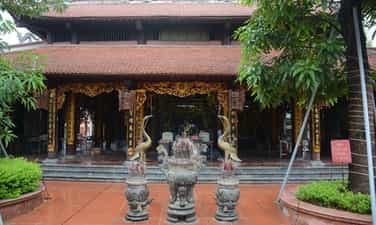
Ba La Khe Stele Temple - Historical and spiritual cultural relic of Hanoi Bia Ba Temple is a historical - cultural relic located in the Temple - Pagoda - Bia Ba Temple complex in La Khe ward, Ha Dong district, Hanoi city. This is a valuable work in history, architecture and folk beliefs, and is also a famous spiritual destination for the people of the Capital. According to local legend, the temple worships the Virgin Mary Tran Thi Hien (1511–1538), a native of La Ninh village (now La Khe). Legend has it that she was the concubine of King Mac Thai Tong, famous for her talent and kindness. After her death, people built a temple to commemorate her contributions and honored her as the protector of the homeland. Over the centuries, Bia Ba Temple has become an important place of religious activities, closely associated with the cultural life of local people. The relic is imbued with the traditional architecture of the Northern Delta region with the Tam Quan gate, temple yard, Great Pagoda and Hau Palace arranged harmoniously in an ancient space. The harem is where the ancient stone stele dedicated to the Holy Lady is located, which is also the origin of the name "Ba Stele". Together with La Khe communal house and pagoda, the relic complex creates a unique cultural space, reflecting the history of formation and development of Ha Dong land. Not only has historical and architectural value, Bia Ba Temple also preserves many traditional local customs and rituals. Every year, especially at the beginning of spring, the full moon day and the first day of the lunar calendar, a large number of people and tourists come to offer incense, pray for peace, fortune and express their respect. With typical values of history, culture and beliefs, Beer Ba Temple is one of the typical relics contributing to preserving Hanoi's cultural identity and is a meaningful destination for domestic and foreign tourists. According to Bachlien.vn summary
Hanoi
340 view
Rating : National monument
Ghenh Temple
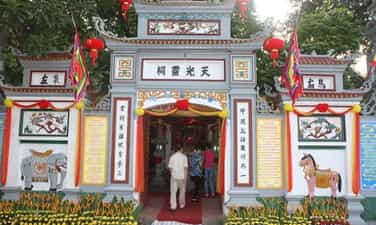
Ghenh Temple - Sacred temple worshiping Northern Palace Queen Le Ngoc Han Ghenh Temple, named Thien Quang Linh Tu, is located on the banks of the Red River, in Bo De, Long Bien, Hanoi. This is one of the famous temples of the Capital, not only because of its architecture and belief in worshiping the Mother Goddess, but also associated with the life of Northern Palace Queen Le Ngoc Han - the talented wife of Emperor Quang Trung. According to folk legend, after Queen Le Ngoc Han and her two children died, the remains of her mother and daughter were dug up by the Nguyen Dynasty and dropped into the Red River. The people of Ai Mo village quietly recovered, covered the grave and built a shrine to commemorate it. Over time, the temple was expanded into Ghenh Temple as it is today. In the people's consciousness, Queen Le Ngoc Han is revered as the reincarnation of Mother Thoai, the Holy Mother who governs rivers and waters in Vietnamese Mother Goddess worship. The temple was built in 1858 on a large plot of land next to the Red River. The worship system of Ghenh Temple has many unique features compared to other Mau temples. The main hall places the statue of Queen Le Ngoc Han in the center, along with many altars decorated according to traditional folk beliefs, creating a sacred space rich in cultural value. Every year, the Ghenh Temple festival is held from the 6th to the 12th of the eighth lunar month, highlighting the water procession ceremony on the Red River to pray for good weather and to commemorate Queen Le Ngoc Han. Besides, the custom of offering rice cakes and star fruit - a unique cultural feature of the temple - has been preserved by people for many generations. Not only is it a place for local people's religious activities, Ghenh Temple also preserves many valuable artifacts such as the Tu Duc bronze bell, the Long Dinh palanquin, the Mausoleum palanquin, along with the horizontal system, and parallel sentences praising the merits of Queen Le Ngoc Han and the beauty of the land by the Red River. Today, Ghenh Temple is a typical cultural and spiritual destination of Hanoi, attracting a large number of tourists and pilgrims to visit and worship. Source: Hanoi Landscapes and Monuments
Hanoi
329 view
Rating : National monument
Revolutionary relic house number 5D Ham Long
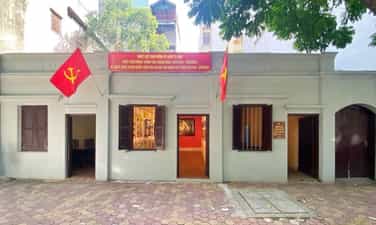
Revolutionary relic house No. 5D Ham Long is located in Phan Chu Trinh ward, Hoan Kiem district, Hanoi city. This is the location marking the establishment of the first Communist Party cell in Vietnam at the end of March 1929, an important milestone in our country's revolutionary history, paving the way for the birth of the Communist Party of Vietnam. According to the National Museum of History, since the end of 1928, the struggle movement of the working class and communist trends in Vietnam have developed strongly. Faced with the demands of revolutionary reality, advanced members of the Vietnam Revolutionary Youth Comrades Association secretly met at house No. 5D Ham Long to establish the first Communist Party cell. The meeting took place on a night in late March 1929 with the participation of comrades Ngo Gia Tu, Nguyen Duc Canh, Tran Van Cung, Trinh Dinh Cuu, Do Ngoc Du, Duong Hac Dinh and Nguyen Tuan. Comrade Nguyen Phong Sac was absent due to unexpected work, but sent his comments in favor of the resolution and was recognized as an official member of the cell. Comrade Tran Van Cung (alias Quoc Anh) was elected Party Cell Secretary. At the meeting, the Party Cell identified key tasks such as promoting the establishment of the Communist Party, developing trade unions and agricultural associations, and promoting the spread of Marxism-Leninism. The birth of the first Communist Party cell at 5D Ham Long created a direct premise for the establishment of the Indochina Communist Party on June 17, 1929 and moved towards the establishment of the Communist Party of Vietnam in early 1930. House number 5D Ham Long was originally a one-story house in the blocks 5A, 5B, 5C, 5D of a bourgeois family for rent. The house has an area of about 24m², in the back there is a small yard, kitchen and toilet area. In particular, the house is located close to a small alley leading to Le Van Huu street, creating favorable conditions for revolutionary cadres to secretly withdraw when necessary. At the end of 1928, the Northern Committee of the Vietnam Revolutionary Youth Association rented this house as a base for secret operations and assigned it to comrade Tran Van Cung and his wife, Nguyen Thi Lien, to directly manage. In the simple house, the sofa set, the double-bottomed chest used to hide documents, the oil lamp and many simple household items have become historical evidence associated with the process of preparing to establish the Party. On November 25, 1959, the house was restored into a memorial house, displaying many documents and artifacts associated with the birth of the first Communist Party cell. In 1964, the relic was recognized as a Hanoi Revolutionary Monument. In 2000, the building continued to be renovated to restore the appearance as it was at the time of the historic meeting in March 1929. Today, the 5D Ham Long relic, managed by the Hanoi Museum, is a red address with special significance in educating revolutionary traditions, contributing to helping today's generations better understand the process of forming the first communist organization and the birth of the Communist Party of Vietnam. Source: National Museum of History.
Hanoi
62 view
Rating : National monument
Chu Van An Temple
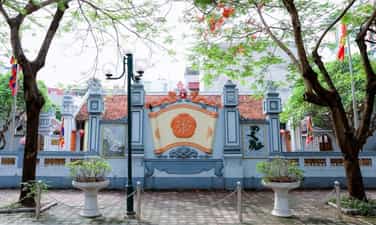
Chu Van An Temple is located on the To Lich river, in Thanh Liet commune, Thanh Tri district, Hanoi city. This is the place to worship Chu Van An (1292–1370) - a famous teacher and Confucianist of the Tran Dynasty, who was revered by generations as "Van The Su Bieu" (teacher of all generations). According to historical documents, after Chu Van An passed away, the people of Thanh Liet's hometown built a temple and honored him as the village's Tutelary God. During the reign of Le Trung Hung (1533–1789), the temple was added to worship local university graduates, so it also had the meaning of Literature - a place to honor those with education and contributions to the homeland. The temple was built according to the traditional "Cong" style architecture, including three main items: the altar house, the communal house and the harem. The harem is the most sacred space of the relic, where the gilded altar and the altar tablet of Chu Van An are placed. Having undergone many restorations, especially on the occasion of the 1000th anniversary of Thang Long - Hanoi, the temple was renovated spaciously but still retains its ancient architecture and solemn space. The temple still preserves many artifacts of historical and cultural value such as two robes, hammock doors, horizontal panels, parallel sentences, altars, copper tops, single vases, six stone steles, genealogies and five ordinations of the Le and Nguyen dynasties, reflecting the Vietnamese people's tradition of respecting teachers. Not only is it a place to commemorate teacher Chu Van An, the temple is also a place for religious activities of local people and a destination for many students, teachers and tourists from all over to offer incense and express gratitude to the exemplary teacher of Vietnamese education. With outstanding historical, cultural and educational values, in 1989, Chu Van An Temple was ranked as a national historical-cultural relic. Today, the monument not only contributes to preserving the heritage of Thang Long - Hanoi but is also a symbol of the nation's tradition of studiousness and respect for teachers. Source: Vietnam News Agency
Hanoi
394 view
Rating : National monument
HISTORICAL RELIC OF TRUNG LIET TEMPLE
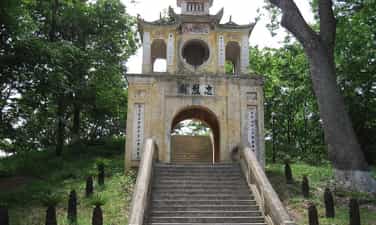
HISTORICAL RELIC OF TRUNG LIET TEMPLE Trung Liet Temple, solemnly located on top of Dong Da Mound, is an ancient structure built to commemorate the loyal mandarins and martyrs who had heroic deeds and sacrificed their lives to protect the capital. Through the Nghi Mon gate made of moss-covered bricks and a small brick yard, you will reach the sturdy Dai Pagoda, prominent with the three words "Central Liet Mieu" along with a system of horizontal lacquered and gilded couplets. The temple was built in the Dinh (\text{丁}) architectural style, with a closed gable, and an ancient tiled roof with bold architectural art of the Nguyen Dynasty from the 19th century (1856). Although located on the same campus, Trung Liet Temple has a completely independent worship function from Dong Da Mound. If Dong Da Mound is a testament to the 1789 battlefield associated with honoring Emperor Quang Trung and his victory over the Qing army, then Trung Liet Temple is a special place established to worship patriotic mandarins of the Nguyen Dynasty who heroically sacrificed their lives when the French colonialists attacked Hanoi citadel. Therefore, the worship center at the temple's harem contains tablets and statues of Governor Nguyen Tri Phuong, who went on hunger strike to death after the citadel fell for the first time in 1873, and Governor Hoang Dieu, who committed suicide under an ancient banyan tree when the citadel fell for the second time in 1882. In addition, the temple also worships King Nguyen Lam's Imperial Ambassador Nguyen Lam and the tablet of King Quang Trung to gather the sacred souls of the mountains and rivers. The project has been ranked as a national historical relic, and funding has been invested in restoration to preserve the integrity of the architectural values and steadfast atmosphere of its predecessors. Source: Hanoi – Sights and Monuments
Hanoi
190 view
Rating : National monument
Phung Hung Temple
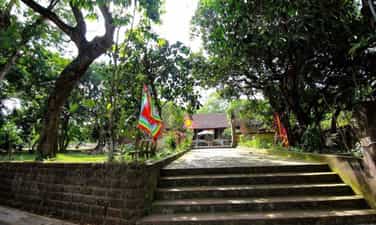
Phung Hung Temple (Bo Cai Dai Vuong) was established in many places in Vietnam, but the temple in Duong Lam (Son Tay Town, Hanoi City) has the largest scale, unique architecture and contains many historical and cultural values. Phung Hung is from Duong Lam hamlet. He is a virtuous man who loves people. Phung Hung has two younger brothers, Phung Hai and Phung Dinh. The three brothers all have extraordinary health: Phung Hung can fight tigers and wrestle buffaloes; The two younger brothers carried rocks weighing thousands of pounds. Therefore, people from near and far respected Phung Hung as Do Quan and Phung Hai as Do Bao. Born at a time when the country was invaded by foreign invaders, they soon formed the will to fight the invaders and gain independence and self-reliance. They recruited talented insurgents and rebelled in Duong Lam against the rule of the Tang Dynasty. When the insurgent army attacked Tong Binh citadel, enemy general Cao Chinh Binh failed and died of anxiety. Phung Hung held the citadel, organized political affairs, and built independence and autonomy for the country for 7 years. After his death, the people were grateful and honored him as Bo Cai Dai Vuong. In Phung Hung's hometown, Cam Lam village, Duong Lam commune, Son Tay town, Hanoi city, people have built a temple to worship him. The current scale of the temple was formed after a major repair and restoration in the 19th century, including items: ritual gate, left and right gate, great worship and harem. The gate was built simply, with the function of separating the spiritual world from mundane life. Through the gate are two left-right rows, each row has three compartments, the rafters are designed to be airy and convenient for community activities. The great pavilion consists of three rooms and two compartments, with two tiled roofs. The sets of pillars are structured on four rows of pillars, linked in the following way: "The upper part of the gong is the armpit, the lower part is the pass, seven porches". Decorative patterns on architectural structures are quite simple, mainly focusing on the ends, pliers carved in dragon shapes, armpits carved with rattan patterns, flipped leaves, stripes and planing levers carved with leaves combined with stylized rattan strips. The harem consists of three rooms, built in the style of a gable wall. Architectural structures favor durability, solemnity and respect for the hero being worshiped. The bronze statue of Phung Hung is placed in a solemn position in the harem (the statue was embellished in the early 21st century). Cam Lam's hometown not only has Phung Hung temple but also preserves many places associated with his life and career such as Vung Ham, Ho Gam hill, Xa Mau hill, Ngoc well and Duoi ridge. According to legend, these are the places where the Phung brothers used to fight tigers, practice martial arts and practice battles before uprising against the colonial army. Phung Hung Temple was ranked a national historical - architectural and artistic relic by the Ministry of Culture and Information in 1964. Source: Hanoi – Sights and Monuments.
Hanoi
395 view
Rating : National monument
Ngo Quyen temple and mausoleum
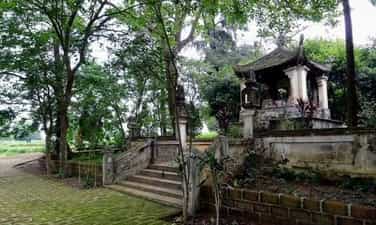
Ngo Quyen temple and mausoleum are located in Duong Lam commune, Son Tay town, Hanoi. Cam Lam village, Duong Lam commune, Son Tay town, Hanoi city is the land of "one hamlet, two kings" (Phung Hung and Ngo Quyen). Today this place still retains traces and temples associated with the names of the two men, especially Phung Hung temple and Ngo Quyen mausoleum. Ngo Quyen was born and raised in a family where his father was a Chau Muc. Ngo Quyen is handsome, handsome, has an unusual appearance, is intelligent and brave, and has superior health. He soon mastered martial arts, swordplay... and gained a great reputation. Born when the country was invaded by foreign invaders, in his youth, he did many virtuous deeds, helping the poor and recruiting talented and heroic men, building bases, waiting for the day of the uprising. In 938, the Nam Han invaders led by Hoang Thao brought warships massively into our country at Bach Dang gate. Using military tactics, using sharpened wooden stakes with iron tips, Ngo Quyen and his soldiers defeated the enemy's powerful navy along with enemy general Hoang Thao - son of King Nam Han. Ngo Quyen's glorious victory on the Bach Dang River ended the period of Northern domination, lasting more than a thousand years, opening a new page of independence and long-term freedom for our nation. Ngo Quyen rebuilt the country, adjusted politics, built citadels, established rituals... the government apparatus had a long-term monopoly. Ngo Quyen Temple was built a long time ago and has been restored many times. The major restoration was during the Nguyen Dynasty, Tu Duc Dynasty (1848 - 1883). At the end of the 20th century, the temple, mausoleum and surrounding landscape were renovated and upgraded. The scale of the temple currently includes the following items: Ritual gate, Left and right gate, Great altar and Harem. The great temple consists of 5 compartments, built in the style of a gable wall. The components of the wooden frame are mainly smooth planed and sharpened to ensure the stability of the project. The harem is in the style of a striker and a rear-guard, the frame is decorated with the theme of the four sacred animals, the four nobles... solemn, showing respect for the deity. Ngo Quyen Temple was built on the side of a hill. Worship objects such as: Ngo Quyen statue, dragon throne, incense burner, altar, etc. are arranged in the Harem. The Great Pagoda displays many artifacts, notably the underground stakes on the Bach Dang River... telling about Ngo Quyen's life and career. Right next to the temple, in front is Ngo Quyen's mausoleum, built in the shape of 4 roofs on a high pedestal, surrounded by brick walls. In the middle of the mausoleum is an altar, inside there is a stone stele "Tien Ngo Vuong Mausoleum", dated to the second Minh Menh period (1821). In front of the mausoleum are deep ponds, which are said to be the lotus pond where Ngo Quyen and his friends used to herd buffaloes, dive and practice exercises when he was a child. On the hillside are rows of bamboo trees. Legend has it that this is the place where Ngo Quyen tied a rope to tie an elephant to the tree trunk. Ngo Quyen temple and mausoleum were ranked historical, architectural and artistic relics by the Ministry of Culture and Information in 1964. According to Hanoi Landscapes and Monuments
Hanoi
517 view
Rating : National monument
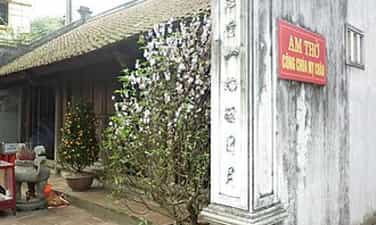
Am My Chau
Am My Chau is also known as Ba Chua am or My Chau temple, located west of Ngu Trieu Di Quy communal house. In front of the altar there is a banyan tree that is said to have been planted by Ngo Quyen. This banyan tree is so large that it is often called a thousand-year-old banyan tree. Now it is no longer there, only a brick arch is left, which is the vestige of the banyan roots from afar. The worship area is an architecture consisting of 2 main parts. The altar is a house built of wood with 3 rooms, gabled walls, and tiled roof. The turrets are made in the style of "high gong, low gong, and seven". All components do not have any engraved patterns, but are only planed. This architecture is of late date (late 19th and early 20th century). On the upper shelf, there is a line of Chinese characters clearly stating the date of renovation: Democratic Republic of Vietnam, year of Quy Suu (1973). The harem is a vertically rotating building, the main load-bearing structure is walls built on 3 sides, leaving only 2 side doors to connect with the altar. At the front of the altar, on both sides of the house's gable pillars, there are two parallel sentences: Faithful and single-minded to conquer the sun and moon; The spirit is as bright as the moon and stars; the spirit is as bright as heaven and earth forever. In the middle space there is an altar called "incense altar", above there is a letter with 4 Chinese characters: Ton Cung Dien Tuyen (the palace worshiping the girl) and there are 4 pairs of parallel sentences in this area talking about the loyalty of Princess My Chau. Pair of parallel sentences on the pillar next to the incense burner: faithfulness vows to fossilize body and mind; rise and fall, the hope of agarwood (the loyalty sworn in the heart turns the body into stone; tears crying about prosperity and decline turn into pearls in a deep well). In addition, there are a couple of other parallel sentences: The sect plays thousands of emperors, solemn and high, mysterious and ancient; Ba Truong Ngoc Tinh shines with pure light and pure heart (her descendants are Lac's children and Hong's grandchildren, her pure heart has been an example from far away; the jade well radiates sacred light, clearly showing her sincere heart). Continuing inside, in front of the harem there is an altar for the "twelve ladies" - the princess's servants. There are a pair of parallel sentences on the pillars on both sides of the altar: Thien Duc Thuong Thi Gia Phi Loi Nhang Biet Chi Quy Chao Co Co transmitting foreign history; Ngu Luan Chung's father kept the wife's husband and his wife's husband and wife together to open up the province with a deep love (thousands of years have passed, no one can justify what is right or wrong, the tortoise's claw used to make the magic crossbow bolt is just a legend; in the five roms, only the pearls and the water of the jade well can prove who is the father and the husband more closely). The harem is where the altar to worship Princess My Chau is located. Above is an altar throne. The innermost space is where stone statues are placed. This is the "My Chau stone statue" told in the legend. It can be added that: the place where My Chau was beheaded by her father was Mo Da pass in present-day Nghe An province, but according to the legend, the petrified statue drifted to the foot of Ngoai citadel. In Nghe An today there is also a temple worshiping An Duong Vuong, next to it is a temple worshiping My Chau. That place was called Cuong Mountain, now the temple is at the top of the mountain, also known as Cuong Temple. According to Co Loa Citadel Relics Management Board
Hanoi
432 view
Rating : Special national monument
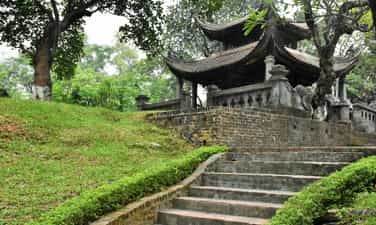
Temple of King An Duong Vuong
King An Duong Vuong Temple, also known as Thuong Temple, was built on a hill that legend says once had the king's palace. Thuong Temple relics have an area of about 19,138.6 m2, built in the south direction, the main architectural works of the temple are located on the Dung Dao (Shinto) axis. The lake in front of the temple area is quite large, circular in shape with a naturally curved bank embanked with stone, with paths and trees planted around the middle of the lake with a Ngoc well. Previously, the lake was connected to the moat of the two outer citadels and to the river wharf in the East - South of the Ngoai citadel. According to legend, this is the lake where My Chau - Trong Thuy often sailed from here before the war of invasion by Trieu Da. After the war, Trong Thuy jumped down here to commit suicide because he regretted causing the death of his beloved wife. In folklore, there is also the story of My Chau's bloodline, when her father's head was beheaded by her father, and she fell into the sea. The mussels that ate them turned into pearls. If they were washed in this well, the pearls would become even brighter and therefore the well in the middle of the lake in front of Thuong Temple is also called Ngoc Well. Thuong Temple has two ritual gates: the outer ritual gate and the inner ritual gate. The outer ritual gate is built of unplastered bricks, shaped like a city gate with two floors, the lower floor has 3 doors, built in a dome style, the upper floor is compact in the form of a 2-storey 8-roof gazebo. The entrance to the middle door has a pair of large stone dragons on both sides of the door steps, created in 1732. Past the outer Nghi gate is the lower dragon yard paved with Bat Trang tiles. In the middle of the yard there is a paved path running straight to the main door of the inner Nghi gate. Because there is a belief that the temple is built on the "dragon's head", people have created on both sides of the Dragon Yard 2 small wells called "dragon eyes" that match each other, next to them there are 2 high mounds of land called "dragon jaws". The inner gate is located higher than the yard, the entrance has 7 blue stone steps. On both sides of the steps are a pair of dragons made of compound mortar. Passing Nghi Mon inside is the dragon terrace paved with Bat Trang tiles. In the middle of the yard is a paved path leading to the Tien Bai house, also known as Dai Bai or Tien Bai. The front altar is a majestic structure, the roof is covered with funny-nosed tiles, has curved corners and is covered with Nghe statues. Two long corridors on both sides connect Tien Te and Middle Hall, between the two corridors is a Phuong communal house. The harem is a "mulpit" style building, roofed directly adjacent to the Central Hall. In the Harem there is a statue of King An Duong Vuong cast in bronze, weighing 200kg, dated 1897. The stele house is located in the overall architecture of the temple, built on a high area of land to the west of the terrace, facing the temple. This is a small architectural work in the form of Phuong Dinh, two floors and eight roofs - a quite harmonious and beautiful wooden architecture with a tiled roof. Based on the existing architectural pieces and artifacts, it is said that Thuong Temple was probably built around the 17th-18th centuries. According to the Loa Co Citadel Relics Management Board
Hanoi
319 view
Rating : Special national monument