Relic point Vietnam
Việt Nam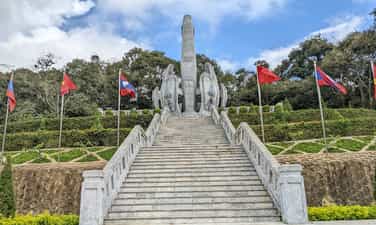
Vietnam - Laos revolutionary historical relic site
The Vietnam - Laos revolutionary relic site in Lao Kho village, Phieng Khoai commune, Yen Chau district, Son La province is a place, a beautiful symbol of Vietnam - Laos military and people love in the anti-colonial resistance war. France. This is also one of the first revolutionary bases along the Vietnam - Laos border, which left a strong impression on the help of the people in the region to the Commander of the Laos - North Volunteer Committee (Laos). ) is President Kaysone Phomvihane. Today, this relic has become a famous tourist destination attracting people from both countries to visit and learn. Located close to the border, Lao Kho village has a very important geographical position, bordering the West and South with Xieng Kho district, Hua Phan province (Laos); The rugged terrain, high mountains, many deep valleys, and dense forests, were favorable conditions for the stationing of troops and secret activities of guerrillas during the resistance war against the French colonialists. On May 20, 1948, the Northern Laos Assault Committee was instructed to establish by the General Command of the National Army and Vietnam Militia. The Northern Laos Campaign Committee was headed by comrade Kaysone Phomvihane (later General Secretary of the Lao People's Revolutionary Party, Prime Minister, and President of Laos). guerrilla movement to establish resistance bases against the French colonialists and train local cadres. The Northern Laos Volunteer Committee chose Phieng Sa village, Chieng On commune, Yen Chau district, Son La province as a base, preparing all conditions to carry out the mission. Here, the people of Phieng Sa village and Mr. Trang Lao Kho's family supported and shared food to feed the revolutionary cadres, helping comrade Kaysone Phomvihane and the Northern Lao Volunteer Committee step by step advance deeper into inland Laos, building bases, developing forces, contributing to the development of the resistance war of the Lao tribal people. Phieng Sa village, Chieng On commune, now Lao Kho village, Phieng Khoai commune, has become a place with many imprints of the fighting solidarity alliance, a symbol of the special relationship between the two countries and two peoples of Vietnam. - Laos. Another honor that the people in Lao Kho village as well as Mr. Trang Lao Kho's family are extremely proud of is that on March 19, 2010, the Lao People's Democratic Republic awarded the Medal of Freedom. III class and Friendship Medal. This has shown the deep gratitude of the Party, State and people of Laos to the Party, State and people of Vietnam in general, and Lao Kho village in particular. With international value and outstanding history of the revolutions of the two countries of Vietnam and Laos, on April 3, 2012, the Vietnam - Laos Revolutionary Historical Relic in Lao Kho village was recognized by the Ministry of Culture, Sports and Tourism. Vietnam Tourism is ranked as a National Historical Relic. By August 29, 2022, the Vietnam-Laos Revolutionary Historical Relic Area was ranked as a special national relic. In order to preserve revolutionary relics during the resistance war against the French colonialists, it is a place to review historical traditions, remember the gratitude of the generation of fathers and grandfathers in the process of liberating the people of Vietnam - Laos, contributing to stability. politics, maintaining security and border sovereignty, improving the lives of ethnic minorities. In order to promote relics associated with tourism development, the National Assembly of the two countries decided and directed the construction of the Vietnam - Laos Revolutionary Historical Relic Area in Lao Kho village. Since then, the relic site has been a place to introduce and honor great historical values, good traditional relationships between the two peoples, affirming the noble international spirit and great sacrifices. of the Vietnamese army and people for the Lao people. Source: Son La province electronic information portal
Son La
7073 view
Rating : Special national monument

Muong Bam Tower
Muong Bam Tower, also known as That Ban Lao, is an architectural and artistic relic in Lao village, Muong Bam commune, Thuan Chau district, Son La province, Vietnam. Muong Bam Tower was ranked as a national historical relic by the Ministry of Culture, Sports and Tourism on October 24, 2012. This is an architectural and artistic relic of the Lao people built in the 16th century. Muong Bam Tower is ancient, mossy, and quiet on a hill at the beginning of the commune. Located on a hill overlooking the Nam Hua River, which in Thai means "headstream" of the Ma River. The tower is 4 floors high, built in the shape of a 13 m high tower. Standing from the tower, you can see the entire Muong Bam commune with the Nam Hua stream winding like a big snake and the surrounding rolling mountains. The people in Muong Bam are mainly Thai, Kho Mu, and H'Mong ethnic people. According to the elders in the village, more than 500 years ago, this was a land with beautiful scenery, favorable geography, with a long mountain range, in front was the Nam Hua stream flowing through, rice fields following the stream. heating. According to feng shui theory, this is a beautiful and stable land. Here half a century ago, the Lao and Thai tribes lived together peacefully and worked hard to do business. Muong Bam Tower is also called "That Ban Lao" (That in Lao means Tower). The tower is located in the center of the village, where many Lao ethnic people in the commune live. The Tower's architecture bears bold architectural features of the Lao people. Therefore, people here often call it Lao Ban Tower. The tower consists of a complex of 5 towers, a large tower in the middle and 4 smaller towers next to the big tower. The Tower's face overlooks the confluence of the long, winding Nam Hua stream, with mountain blocks as a screen, mountains blocking both sides to act as thrones, behind the Tower there is a mountain range that looks like a person sitting "meditating". The Tower complex has a very quiet and majestic position. All 5 towers are built with a main material of red bricks, bonded together with lime, sand, and molasses. The patterns are made of embossed stucco, and in many places decorative terracotta shapes are attached. The big tower is also called the Mother Tower, 13 m high, divided into 4 floors. Decorated mainly with patterns of Elephants, Tigers and dancing Female Statues, leaves bent in the shape of clouds, chrysanthemum patterns, stylized lemon flowers, "rosary" patterns, Naga 5 "magic snake" images head, a downward-facing lotus shape, etc. All of these patterns are embossed on the gradually shrinking base. The entire body looks like a blooming lotus bud from afar. The small towers are 3.7m high, located 3m away from the big tower, built with identical architecture and decorative patterns. Small Tower, also known as Small Tower, is divided into 4 floors. Decorated mainly with leaf patterns alternating with cloud patterns, chrysanthemum strings and gerbera flowers. The 4 sides of the base of the tower are covered with 4 raised leaves, large enough to hug the 4 corners, inside there are 2 hidden threads running parallel. The top of the tower gradually shrinks, soaring into the sky. Currently, the relic remains a large tower (mother tower) and a small tower (child tower). Besides the big tower, there is also a statue of "gods" right at the foot of the tower that has been completely broken (only the pedestal remains). Muong Bam Tower along with the system of Pagodas and Towers in the Northwest region such as: Muong Luan Tower (Dien Bien Dong), Muong Va Tower (Sop Cop district, Son La province) Chien Vien Pagoda (Vat Hong Pagoda - Moc Chau district , Son La province) Muong Bam Tower (Thuan Chau district - Son La province) is a unique Buddhist pagoda and tower architecture belonging to the Theravada sect. According to the old people in the story, in the past, in the Tower area every year in April of the solar calendar, a "rain praying ceremony" was held for the new crop. Over the years, the Lao tribe moved to other places to live. Currently, there are no longer festivals held here. According to the assessment of the cultural sector, the uniqueness of the tower, in addition to its shape, also includes the materials used to build the tower. Source: Son La province electronic information portal
Son La
7349 view
Rating : National monument

Moc Ly Fort Historical Site
Moc Ly Fort was built by the French colonialists in 1951 in Moc Chau. The post is located on an independent rocky mountain, the terrain is dangerous, there are many vertical cliffs blocking the intersection from Hanoi to the Northwest, from Vietnam to Upper Laos with the purpose of preventing our troops from attacking. liberated the Northwest and Upper Laos. They were equipped with dense firepower, so Moc Ly station was nicknamed: "The iron armor" that was inviolable in the Son La division. Moc Ly Fort was commanded by the military officer Phap Vanh - Xang, who had more than one Thai battalion reinforced. In addition to being fully equipped with personal weapons such as submachine guns and rifles, the station is also equipped with a 94 mm cannon, 6 81 and 60 mm mortars, 3 machine guns, 27 medium machine guns, food, and weapons. Regularly replenished to ensure long-term combat. This is a very important key position, so General De-Ly-Na-Rate personally came here to check the defense arrangements and assign tasks to officers and soldiers to defend to the end when attacked. . The French military command also withdrew from Phat Diem (Ninh Binh) to reinforce Fort Moc Ly. Groups of commandos and villains were carefully selected and trained to launch operations in areas they suspected were hidden bases. my army. In early September 1952, our people's resistance war against the French colonialists began to enter a new phase. The Politburo and President Ho Chi Minh decided to open the Northwest campaign. The Party Central Committee's policy is "Avoid strong places, attack weak places, find the enemy's loopholes to attack" and the direction of attack is Northwest. With determination to destroy enemy forces and take advantage of the people's strength, destroy the fake "autonomous Thai land" of the French colonialists, liberate the Northwest, strengthen the Viet Bac base, maintain the Laos - Yunnan (China) international traffic route, and create conditions for developing network of Laos, isolating and disrupting the enemy's rear. Therefore, the capture of Moc Ly station for our army and people had a very important meaning, it determined the deployment of logistics for the campaign from Hoa Binh to the Northwest. At this time, our main troops had advanced deep into the enemy's rear area. Therefore, ensuring food, food, and weapons is one of the urgent issues of primary importance in deciding combat plans. Therefore, on November 17 and 18, 1952, units secretly dug fortifications and occupied the battlefield. Battalions 249 and 888 moved through the forest along the stream to the Northwest to form a siege to block enemy reinforcements from Son La. According to the plan of the Northwest Campaign Command, on November 19, 1952, our troops tightened the siege around Moc Ly post. After exactly 3 hours of extremely fierce fighting, the battle at Moc Ly post ended successfully. We destroyed and captured 350 people, including one (officer Vanh - Xang and a number of officers) and confiscated more than 500 guns of all kinds and the entire warehouse of weapons, military equipment, military supplies and food. , liberating over 1,000 people. Coordinating with the main army, the guerrilla teams of Tu Nang, A Ma, Chieng Khua, and Pa Hang organized a siege to attack Pa Khom and Pa Hang stations. The enemy panicked and quickly opened a retreat to Yen Chau and Laos. After liberating Moc Chau, Group 316 divided into 3 army wings to continue advancing to liberate Moc Chau and Son La. On December 10, 1952, the Northwest campaign ended with a decisive victory. The victory at Fort Moc Ly had a very important meaning in the resistance war against the French colonialists of our army and people. We have connected the road from Hoa Binh to Son La, creating favorable conditions for the liberation of the Northwest and Dien Bien Phu, preventing and cutting off enemy traffic to Upper Laos. Besides, the victory at Moc Ly Fort also has a strategic military significance. Our army and people learned from the experience of fighting fortified fortresses that they must attack from above and attack from above. During the battle at Moc Ly Fort, 53 soldiers of Regiment 174, Division 316 heroically sacrificed their lives. To commemorate the great contributions of the martyrs, the Party, State and people of all ethnic groups in Son La built a memorial stele house engraved with the names of 53 martyrs. Today, Fort Moc Ly Historical Site is a place of traditional education for the people, especially the young generation of Son La province. With that meaning and importance, Fort Moc Ly Historical Relic was ranked Nationally by the Ministry of Culture and Information on January 20, 1998. Source: Electronic information portal of the Ministry of Culture, Sports and Tourism
Son La
7524 view
Rating : National monument
Co Noi Junction historical site
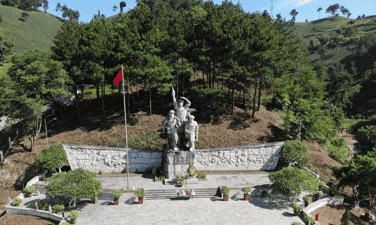
Co Noi intersection (Mai Son district, Son La province), a historical place, a brilliant milestone engraved with a period of heroic fighting of the Vietnam Youth Volunteer Force in the Holy Nineteenth Resistance War. years against French colonialism. During the Dien Bien Phu campaign, Co Noi intersection was the most important intersection for the advance of our army and people participating in the Dien Bien Phu campaign. This location became the "Red Spot" for the French colonialists to bombard most fiercely, in order to block and destroy the traffic arteries of our army and people. One day here, they threw about 69 tons of bombs to plow and destroy, but under the rain of enemy bombs, the armed forces and Youth Volunteers throughout the country bravely held on, day and night still ensuring communication. Traffic arteries still flow evenly on the fire line. During the Dien Bien Phu campaign at Co Noi Junction, 100 soldiers and Youth Volunteers sacrificed their lives. In December 1952, the Party Central Committee and President Ho Chi Minh decided to open the Dien Bien Phu campaign, expand and consolidate the liberated area to prepare for the campaign, tens of thousands of soldiers, citizens, and young people volunteered everywhere. Localities were mobilized to the Northwest battlefield. In this historic campaign, Son La played a very important role as both a large rear base near the battlefield and a gateway to the Northwest. Son La covers the main traffic routes connecting the Northern Delta and the Viet Bac war zone; Inter-region III and IV with Dien Bien Phu battlefield. Among them, Co Noi intersection is the most important intersection, considered a "throat" on the fire line. This intersection is the intersection of two national highways, 13A (current national highway 37) and 41 (current national highway 6), in Co Noi commune, Mai Son district. The terrain here is rugged, surrounded by rolling mountains, forming a narrow and deep valley more than 2 km long. All support activities of weapons, food, and food of our army and people from the rear of Viet Bac and inter-regions III and IV to the Dien Bien Phu battlefield must pass through this gate. In his memoirs, General Vo Nguyen Giap affirmed: "Co Noi intersection is a gate, all those who go to war must pass." With that important strategic location, Co Noi intersection has become a "bomb bag", one of the most fierce targets of the French air force in Son La area. They believe that blocking and cutting off transportation and supply routes in all aspects of the Northern rear for the Dien Bien Phu battlefield is a matter of survival for the French expeditionary army in Vietnam. With the spirit of the whole country serving the Dien Bien Phu campaign, the slogan throughout the campaign of our army and people was: "Everything for the front line" "Everything for victory". The people of the provinces took turns sending their children off enthusiastically to join the army, become youth volunteers and frontline civil servants. The battle on the supply, transportation, and mine clearance fronts to ensure transportation and communication took place urgently and fiercely from the opening day to the end of the campaign. To be eternally grateful to the heroic youth volunteers who fought and sacrificed for the independence and freedom of the Fatherland at Co Noi intersection. On April 21, 2000, the Central Committee of the Ho Chi Minh Communist Youth Union and the People's Committee of Son La province began construction of a group of monuments commemorating martyrs of young volunteers at the location of the "fire coordinates" in the past. area of 20,000m2. The project was inaugurated on May 7, 2002, the group of statues includes 3 young volunteers in different positions made from granite. The statue is 12 meters high, placed on a pedestal of a stone block weighing 280 tons. Along with the group of monuments, there are also two reliefs showing the image of the entire people going to battle against the French colonialists. Each relief has an area of 42 square meters, weighs 52 tons, and is covered with metal, recreating the image of our army and people enthusiastically supporting the Dien Bien Phu battlefield, demonstrating the indomitable will of the youth force. Vietnamese title "Determining to die for the Fatherland and deciding to live". On the occasion of the 50th anniversary of the historic victory of Dien Bien Phu (1954 - 2004), the relic was ranked as a national historical relic by the Ministry of Culture and Information (now the Ministry of Culture, Sports and Tourism). . Source: Mai Son district electronic information portal
Son La
7347 view
Rating : National monument
Ta Vai Bridge
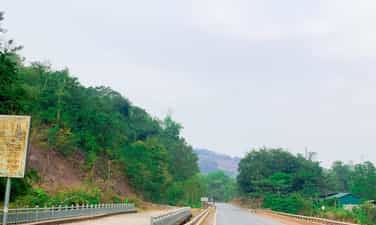
Ta Vai Bridge, located in Ta Vai village, Chieng Hac commune, Yen Chau district, is a famous historical relic of the province. During the resistance war against the French colonialists, the bridge not only had a meaning for people's livelihood but was also a historical relic. Ta Vai village has a bridge with 46 fierce attacks and suffered 1,272 bombs from American aircraft to cut off the main artery of Highway 6. But the bridge still stands, ensuring smooth traffic. In 1965, the American enemy used air force and commandos to frantically sabotage the North in order to prevent the North from providing support to the Southern people. On June 20, 1965, American planes dropped 6 bombs on Khau Day village (Chieng Hac, Yen Chau) and 20 rockets on Ta Vai bridge. . Starting from here, American aircraft continuously bombarded Yen Chau, but due to good preparation of plans to deal with America's destructive war, Yen Chau entered the war without being surprised. At this time, Ta Vai bridge became a place of fierce fighting between us and the enemy. With the determination to ensure smooth traffic flow in all situations, determined to stay at the traffic center of Ta Vai bridge, the militia and self-defense force and armed force units have always stuck to the road and bridge to ensure traffic is clear. Here, from March to December 1966, we arranged the 14th Battalion of anti-aircraft artillery to protect the Ta Vai bridge, in which Company 3, consisting of two 37mm artillery batteries, was positioned in the area of Ban Tat hill. , adjacent to Tai Vai bridge, Company 2, consisting of four 37mm guns, was arranged in a continuous position to the west of Ta Vai bridge. In addition to the two main battlefields with 37 mm cannons, there is also a secondary battlefield consisting of a 12.7 mm company located in lower terrain also near Ta Vai bridge. To arrange such a battlefield, the people of Ta Vai village and the soldiers dug fortifications to build a road around the hillside to pull up artillery. Each 37 mm cannon required 200 people to pull it. To encourage morale and help soldiers fight, the people of Ta Vai village enthusiastically participated in the fighting and produced rice to contribute to the front lines. During those years, the people of Ta Vai, along with other villages in Chieng Hac commune, contributed nearly 9 tons of vegetables, 500kg of poultry, tons of food... In addition, the commune's performance team also went to the battlefield in uniform. army and militia service. Many times having to move the battlefield, the people and the soldiers used forest rope to braid to pull the artillery; used bamboo to make shacks for the soldiers and helped the soldiers dig over 3,000 meters of shelters on the battlefield with the determination to protect the transportation artery for the battlefield. The enemy destroyed bridges and roads, but the spirit of the army and people here was undeterred. Despite the roar of bombs and bullets, they still enthusiastically repaired the roads for vehicles to pass, with the emulation movement "Singing over the sound of bombs" and "Singing over the sound of bombs" and "Singing over the sound of bombs" The enemy broke it, I'll fix it. If the enemy destroys me, let me go." On December 8, 1966, the enemy organized 3 groups of planes to drop bombs on the hill where there was an anti-aircraft artillery battlefield and bombarded the Ta Vai bridge. At this time, 2 bridge spans were hit by bombs and fell into the stream and traffic on Route 6. was cut. Because the bridge was in a dangerous location, the stream was wide, the water was deep, and the enemy fought day and night, so it was very difficult to rebuild the bridge. Faced with that situation, the bridge protection unit decided to build a bypass and underground road to ensure traffic at all costs. The underground tunnel of Ta Vai bridge was built by soldiers and civilians about 1km downstream, but the enemy still discovered it and continued to bombard it. With courageous fighting spirit, the army and militia units have well secured traffic arteries. Promoting the tradition of tenacious fighting and the spirit of solidarity, the people of Ta Vai village with a boiling spirit of hatred for the invaders turned into revolutionary actions in combat and production, making an outstanding contribution to the achievements in defeating the US imperialist plot to expand the war. At the Ta Vai battlefield, the army and people of Yen Chau shot down 2 F105 planes and captured American enemy pilots with rifles, the lifeline of support for the South was always running smoothly, that victory quickly spread throughout the world. place, known throughout the country. Today, the war has receded into the past, the people of Ta Vai work hard in production and continue to contribute human and material resources to their homeland, where the Ta Vai bridge marks the crimes of American imperialism during the war. war of invasion in Vietnam. Talking about Ta Vai bridge is talking about the heroic, resilient fighting spirit and glorious fighting of Yen Chau's army and people. Source: Son La province electronic information portal
Son La
10318 view
Rating : Provincial level relics

A Phu Cave
Tham Can Cave, also known as the "A Phu Couple" cave, was the 99th revolutionary base during the resistance war against the French in Son La province. The cave belongs to Hong Ngai commune, Bac Yen district, Son La province. The relic includes two caves: The first cave (dry cave) is located at the foot of U Bo mountain, surrounded by primeval forest, with a cool, airy climate. In front of the cave is the people's fields, covered in all four seasons with green flowers and fruits. The dry cave consists of 2 doors located on the East and West sides, connected to each other, dividing the cave into 3 compartments. The total length of the cave from West to East is about 200m. The western door is about 3m high, 1.5m wide, the entrance to the cave is small and narrow, limiting light. The deeper you go, the more the cave expands, with an average ceiling height of 20 to 40 meters and an average width of 15 to 30 meters. The cave floor is rough and slightly sloping, with many rocks scattered all over the cave floor. The ceiling of the cave has many beautiful stalactites shaped like animals, forests, etc. In the second and third chambers, there are also many narrow niches running along the cave walls, on average 10 to 15 meters deep. Go through compartment 3 to reach the east door. The oval cave entrance is about 50 to 60 meters high, about 20 meters wide at the bottom, and about 30 meters wide in the middle. This is where the Military Intelligence Company of the General Staff temporarily stayed for two days to find a way to cross the Da River to prepare for the 1952 Northwest campaign. According to local people, Tham Biet cave was also the place where soldiers and soldiers were stationed. storing weapons of our army and people in the resistance war against American invasion. In addition, Tham Bien cave is also known in literature as A Phu Couple Cave. According to legend, after escaping from Governor Pa Tra's family to reach the Phieng Sa guerrilla area, My and A Phu (the two main characters in the work) stopped here for a while to avoid being searched by the bandits. Governor. The second cave is a water cave about 20 meters south of the first cave. The entrance to the cave is about 5 meters deep underground. The road down to the cave is steep, has many bumpy rocks, and is very dangerous. The cave is about 300 meters long. The cave is dark, about 7 meters wide, from the cave floor to the ceiling is on average about 10 to 12 meters high, in some places it is only 4 to 5 meters high. The cave floor is a stream flowing along the cave from West to East. This is where the Military Intelligence Company came to get water for daily use during their temporary stay in the dry cave. Tham Can Cave - Resistance Base Area 99 was ranked as a Provincial Historical Monument on May 28, 2012. Source: Electronic information portal of Bac Yen district, Son La province
Son La
7908 view
Rating : Provincial level relics
Historical relic of Na San stronghold group
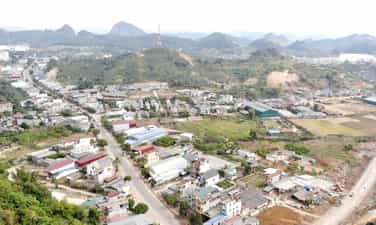
The Na San stronghold group is located on the Na San plateau, a basin in Chieng Mun commune - Mai Son district - Son La province with an area of about 10km2 surrounded by mountains over 700m high. There is an airport, a command post, a number of posts, a strong firepower system of four 105mm guns and many trenches surrounding the central area. Like the Dien Bien Phu base group, the most important part of this military base is Na San airport, which is responsible for supplying French troops on duty here. This airport was built in 1950 when the French army dominated and oppressed the people of the Northwest ethnic groups after taking control from the Viet Minh. Initially, Na San airport served the needs of travel with a short, small runway system and simple structure. It was later expanded, lengthened and upgraded with iron grate flooring, able to meet all types of traffic. Dakota planes take off and land. For nearly a month since the French army withdrew here, they have continuously reinforced food, weapons, ammunition, barbed wire and other necessary materials to reinforce this military base. . Because time was tight, the fortification system here was quickly made with rudimentary materials such as bamboo, wood, etc. and was temporarily built and covered for living and fighting. At the bases in the central area and around the airport, priority is given to being solidly built with cement, sand, and paved with iron sheets. The central command tunnel also has a relatively safe trench system to escape to the airport in case of need. The Northwest Campaign began on October 1, 1952 and ended on December 10, 1952. After 3 fierce attacks by our army and people, the campaign quickly ended 4 months earlier than the original estimate. We destroyed many enemy troops and captured many weapons and ammunition. The enemy had to withdraw to cluster at the Na San stronghold group. Faced with a completely passive and isolated situation, they knew they could not survive on this land, so they secretly fled by air from Na San airport. The Northwest Campaign ended in complete victory. Up to now, little is known about the Na San stronghold group because of its small scale and passive nature of response. However, this was the first origin for the form of attacking a group of strongholds of the French colonialists, the idea of forming the Dien Bien Phu stronghold group later, and the first form of defense with strategic significance that appeared. present during the Vietnam War. The Na San stronghold group is evidence of the heroic years of our army and people fighting against the French colonialists in the Northwest battlefield, a mark of the disastrous defeat of the French colonialists. Na San stronghold group was ranked as a national historical relic on January 24, 1998. Source: Son La province electronic information portal
Son La
8661 view
Rating : National monument
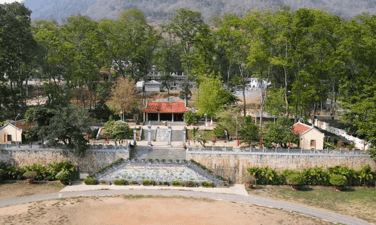
Thuan Chau Flag Tower historical site
Thuan Chau Flag Tower historical site is located in Pan village, Chieng Ly commune, Thuan Chau district. This place marks a historic event on May 7, 1959, when President Ho Chi Minh together with the Party and Government leadership visited the Northwest. During the resistance war against the French and after peace was restored in the North, despite being busy with thousands of national affairs, Uncle Ho, the beloved Father of the nation, always cared about the people of the Northwest ethnic groups. Responding to Uncle Ho's trust, the people of the Northwest ethnic groups were courageous in fighting, enthusiastically emulating productive labor and wished to welcome Uncle Ho to visit and report to him on his achievements. On May 7, 1959, the wishes of the people of the Northwest peoples came true. The square of the capital of the Thai autonomous region, Meo, was resplendent with flags, flowers, banners and slogans and more than 10,000 people representing 430,000 people from the Northwest ethnic groups happily welcomed Uncle Ho leading the Party and Government delegation. cover the visit. With an extremely simple, intimate and close gesture, Uncle Ho recognized and praised the sacrifices and enormous contributions of the people of the Northwest ethnic groups in the resistance war against the French colonialists and in restoring the economy. economy after the war. On behalf of the Government, he presented the people of the Northwest ethnic groups with the first-class Labor Medal. He advised: We must enthusiastically compete for economic and social development, strengthen economic sectors, apply science and technology to production, develop education and healthcare networks, and strengthen national security. room. More than 40 years have passed, and his advice has been persistently strived to be implemented by the Party Committee, government and people of Son La ethnic groups, and has been making great changes in the Western region of the country. big. Today, the Thuan Chau flag tower historical relic is located right on the campus of Thuan Chau district stadium. Source: Son La province electronic information portal
Son La
9655 view
Rating : National monument
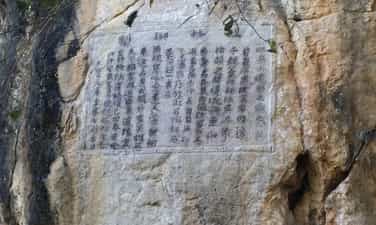
The Guilin Stele dominates
Que Lam Ngu Che stele historical relic belongs to group 3, Chieng Le ward, Son La city. This place demonstrates the historical period of the talented and great strategist Le Thai Tong and his soldiers conquering rebels in the western border region of the country, keeping peace for the country. The relic was ranked at the National level by the Ministry of Culture and Information on February 5, 1994. King Le Thai Tong, whose name is Nguyen Long, is the second son of King Le Thai To (Le Loi) and Queen Mother Pham Thi Ngoc Tran, a native of Quan Lai, Loi Duong district (now Tho Xuan - Thanh Hoa). ). Since ascending the throne, King Le Thai Tong has paid great attention to the Northwest region, the land of the country. To consolidate and ensure national unity, like King Le Thai To and other kings, during the 9 years of reigning the country, King Le Thai Tong twice commanded soldiers to go to the Northwest to suppress traitors. inverse. In March of the year Canh Than (1440), the king for the first time personally and with his soldiers went to the Western town to fight a rebel army named Thuong Nghiem in Chau Muong Muoi (now Thuan Chau district, Son La province). Wherever the king went, he was supported by the people, so the royal army quickly crushed the rebels. On the way back, the king and his soldiers stopped at Dong La (Tham Bao Ke), a natural rock cave in Muong La province. The king saw that this place had beautiful scenery, favorable geography, profound meaning and a peaceful soul. The king had his soldiers carve a poem and preface on the cliff at the entrance of Dong La. The poem, Guilin Ngu Che, has the following meaning: "The chief of Thuan Chau, Thuong Nghiem, rebelled, was ungrateful, and led his troops to follow the Ai Lao people to rebel. Personally commanded six armies to conquer it. Thuong Nghiem used all his strength and offered an elephant to surrender. I felt sorry for him for kneeling and crawling without a weapon, not having the heart to cut him, so I forgave him, then brought the army back and left a poem. Exactly one year later, in March 1441, the king again sent troops to suppress the Nghiem Nghiem rebellion in Chau Muong Muoi. Everywhere he went, the people responded and helped him, so the royal army quickly captured General Ai Lao. Dao Mong, at the same time captured Thuong Nghiem's children Sinh Tuong and Dong Dong. The traitor Thuong Nghiem surrendered and accepted the crime, from now on the western border of the Fatherland has been at peace. To pay tribute to the merits of King Le Thai Tong and to make the Que Lam Ngu Che stele monument forever dignified and shine in the hearts of successive generations, meeting the spiritual and healthy religious needs of a large number of people. people, with the consent of the Ministry of Culture and Information, in September 2001 the Provincial Party Committee and People's Committee of Son La started construction of the temple of King Le Thai Tong in Son La town and was inaugurated on September 22. January 2003, named "Guilin Ling Tu". Source: Son La province electronic information portal
Son La
10294 view
Rating : National monument
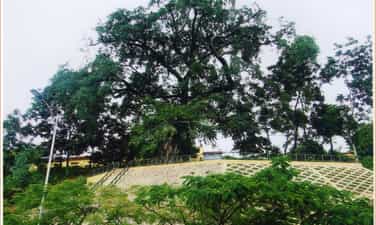
NAKED VERSION TREE
In the early twentieth century, the French colonialists established their governing apparatus in the Northwest region. They built Son La Prison to imprison, exile, and destroy the will to fight of revolutionary soldiers and patriotic Vietnamese people. In December 1939, political prisoners at the prison held a secret meeting and decided to establish a provisional cell. The cell chose the Heo banyan tree as a secret contact point with the revolutionary base outside the prison and with the Party Central Committee. In 1942 - 1943, the revolutionary situation in the country and the world was very volatile, the Party Central Committee directed the Yen Bai and Phu Tho base areas to establish a contact line with the Son La prison cell. Every day, political prisoners in Son La Prison had to go to the banyan tree area to get firewood, so the prisoners set up a secret mailbox to contact and assess the enemy situation, in order to organize an escape. According to the planned plan, in January 1943, Comrades at the Central Agency arranged to meet with comrades in Son La Prison Party Cell at Ban Heo banyan tree. Agree on the prison escape plan. With the careful preparation of prisoners from inside the prison to comrades and soldiers outside the prison, on August 3, 1943, the Cell successfully organized an escape for elite prisoners. returned to the Party Central Committee to continue revolutionary activities. Thus, during the period of struggle against the invading French colonialists, along with other communication locations, the Heo banyan tree was the place where the secret mailbox was located, and the meeting and communication place between communist soldiers of the Communist Party of Vietnam. The prison cell and the Central leadership - have really played an important role, contributing to creating a solid information network, covering the enemy's dense spy network, serving development. of the revolution and contributed greatly to the victory of the movement to gain power in Son La in particular and the country in general. The Heo banyan tree is now a revolutionary historical relic in the special national relic complex of Son La Prison, managed by the Provincial Museum. Every year, the monument welcomes hundreds of thousands of visitors to visit, learn and research. Even though it has gone through many ups and downs of history, the banyan tree is still there as a testament to a historical period of revolution in the twentieth century. Source: Son La Provincial Museum
Son La
10594 view
Rating : National monument