Relic point Vietnam
Việt Nam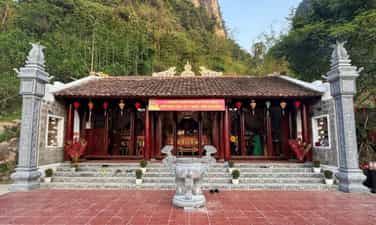
To Thi Hoan Temple
To Thi Hoan Temple Located in Dong Tam hamlet, Ly Quoc commune, Cao Bang province, To Thi Hoan Temple is a destination rich in historical, cultural and spiritual values. With a peaceful setting at the foot of Xuan Son mountain and unique traditional architecture, the temple is not only a place where local people place their religious beliefs but also an attractive attraction for tourists when coming to the borderland of Cao Bang. The temple was built to worship Mrs. To Thi Hoan (To Thi Hue), a character associated with the legend of Vietnamese women's loyalty. After her death, people built a temple to commemorate and pay tribute to her virtues. Over the centuries, the temple has always been preserved by the people, becoming a place for cultural and religious activities and a symbol of the local community's tradition of "when you drink water, remember its source". In 2011, To Thi Hoan Temple was ranked by the People's Committee of Cao Bang province as a provincial-level historical and cultural relic. Faced with the deterioration of the project over time, in 2025 the locality implemented a renovation and restoration project with a total cost of 6 billion VND. After the renovation process, the temple was built spaciously according to traditional architecture including three compartments, yin-yang tiled roof, main courtyard, steps to the temple and a solid embankment wall system. The interior is solemnly decorated with horizontal panels, couplets, hammock doors, worship statues, altar tables and worship objects made of ceramic and stone, creating a sacred and ancient space. Coming to To Thi Hoan Temple, visitors will not only admire the beauty of a traditional architectural work but also have the opportunity to learn about the history, culture and beliefs of local people. The peaceful space, blending with the green mountain and forest landscape, creates a peaceful feeling, suitable for sightseeing trips, offering incense and exploring local culture. According to Cao Bang electronic newspaper
Cao Bang
352 view
Rating : Provincial level relics
Sung Phuc Pagoda
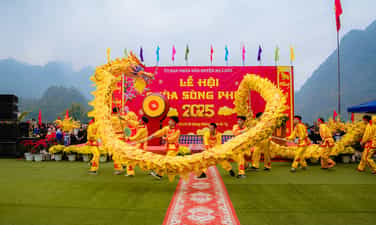
Sung Phuc Pagoda Located in Thanh Nhat town, Ha Lang district, Cao Bang province, Sung Phuc Pagoda is one of the famous ancient pagodas of the Northeast region, with a history of more than 700 years. The pagoda was built during the reign of King Tran Nhan Tong with the original name Sung Khanh, to develop Buddhism and assert sovereignty in the border area after the victory against the Yuan-Mongol army. In 1782, the pagoda was restored, moved to its current location and renamed Sung Phuc. The pagoda has bold Le Dynasty architecture with a Nhi-shaped main hall, traditional tiled roof and ancient campus. Not only is it a place to worship Guan Yin Buddha, the pagoda also worships Nghia Thanh Vuong Nguyen Dinh Ba - the person who publicly destroyed and protected the Cao Bang border area, and is associated with Nguyen Thi Due, Vietnam's first female doctorate, who practiced and taught here. The relic still preserves many precious artifacts such as stone stele, Nguyen Dynasty ordination and many valuable historical documents. Every year, from the 14th to the 16th of the first lunar month, the Sung Phuc Pagoda festival is held with incense offering ceremonies, Buddha procession and many unique folk cultural activities, attracting a large number of people and tourists. With outstanding historical, architectural and religious values, Sung Phuc Pagoda was ranked a National Historical and Cultural Relic by the Ministry of Culture and Information on January 29, 1993. Today, the pagoda is not only a famous spiritual destination of Cao Bang but also a symbol of patriotic tradition, studious spirit and cultural identity of the border region. Source: Journal of Buddhist Studies (compilation)
Cao Bang
327 view
Rating : National monument
Yen Phu Communal House
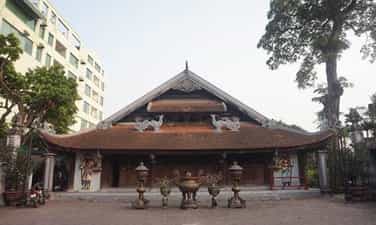
Yen Phu Communal House Located in Tay Ho ward, Hanoi city (formerly in Yen Phu ward, Tay Ho district), Yen Phu Communal House is a typical historical - architectural and artistic relic, associated with the belief of worshiping Uy Linh Lang Dai Vuong and his two younger brothers, Vuong Duy Dai Vuong and Vuong Ba Dai Vuong. According to legend, Uy Linh Lang was a general who made great contributions in the resistance war against the Yuan army during the Tran Dynasty and was honored by the people as the village's Tutelary God. The communal house was built according to the traditional "Ding"-shaped architecture, including the Great Court and the Harem, featuring an ironwood frame system, ancient tiled roofs, and exquisite carvings of dragons, phoenixes, and four sacred animals in the 17th century artistic style. Inside the communal house, many precious artifacts such as ordinations, stone stele, bronze bells, horizontal plates, parallel sentences and ancient worship objects with historical and cultural value are preserved. Not only is it a place for local people's religious activities, Yen Phu Communal House is also one of the typical relics on West Lake, contributing to reflecting the history, traditions and long-standing cultural life of the land of Thang Long - Hanoi. In 1986, Yen Phu Communal House was ranked as a National Historical, Architectural and Artistic Monument by the Ministry of Culture and Information (now the Ministry of Culture, Sports and Tourism). Today, the monument is an attractive destination for tourists and those who love to learn about the history and traditional culture of the Capital. Source: Hanoi Sights and Monuments (compilation)
Hanoi
335 view
Rating : National monument
Linh Ung Pagoda
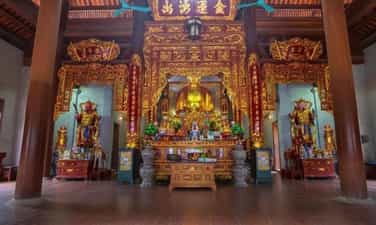
Linh Ung Pagoda (Kham Thien) Linh Ung Pagoda has the literal name Linh Ung Tu, located close to Kham Thien Street, number 290, Tho Quan Ward, Dong Da District, Hanoi. (Before merger) Linh Ung Pagoda was built in the 19th century and continued to be renovated in the early years of the 20th century; was majorly restored in 1951, adding Tam Bao with the current overlapping roof style. The pagoda was seriously damaged in the B.52 bomb attack on December 26, 1972. At the end of 1973, the pagoda was greatly renovated. Recently, in 1990, association owners and Buddhists again made merits to repair the pagoda, repair the Buddha hall, and pave the floor of the Mau hall and the Patriarch's house. The pagoda has a complete system of Buddha statues, especially two round statues dating back to the 19th and early 20th centuries and many other valuable statues such as Amitabha, Amitabha Tam Ton, and Cuu Long. Linh Ung Pagoda also worships Hung Dao King Tran Quoc Tuan. Statue of Saint Tran sitting on a dragon throne, wearing a royal hat, wearing a dragon robe, the throne touches the dragon's head, lacquered and gilded, carefully polished in the style of 19th century art. In the Mother Temple, the Ancestor's house has statues of the Three Holy Mothers, Hoang Bay, Hoang Muoi, Co statue, Cau statue... The pagoda has many horizontal panels, parallel sentences, and beautiful gilded vermilion doors. Linh Ung Pagoda was ranked a historical architectural and artistic relic by the Ministry of Culture and Information in 1993. According to Hanoi Landscapes and Monuments
Hanoi
332 view
Rating : National monument
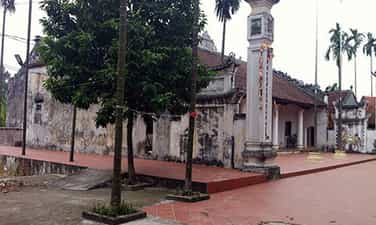
Dong Bo Dau Temple
Dong Bo Dau Temple - Historical and cultural relic worshiping Phu Dong Thien Vuong Dong Bo Dau Temple (formerly in Dap village), now in Thuong Tin, Hanoi city, is a historical and cultural relic of special value, associated with the worship of Phu Dong Thien Vuong - the legendary hero of the Vietnamese people who fought against foreign invaders. According to legends passed down locally, the temple worships Dong Soc Thien Vuong Huyen Thien Dai Thanh to repay Mother's grace, that is Saint Giong. A special point in the legend in Dong Bo Dau is that Thanh Giong not only fought the enemy to save the country but also had the merit of destroying sea monsters, saving his mother and protecting the peaceful life of the people along the Red River. Therefore, people here also honor him as the god who governs water and protects the villagers. Dong Bo Dau Temple was formed a long time ago and was recognized by ancient books such as Dai Nam Nhat Thong Chi and Cong Du Ky Ky as one of the ancient temples and shrines of the ancient Ha Tay region. After many renovations, the monument still retains many architectural values, art and traditional beliefs. The temple has an architecture in the style of "before Buddha, after Saint", including a pre-sacrificial house and a harem. The temple also preserves many precious artifacts such as ordinations, worship statues, horizontal panels, parallel sentences and especially the 5.76m high ancient statue of Phu Dong Thien Vuong, representing the image of a majestic and strong deity in a position to protect the people. In addition, the system of Bat Bo Vajra statues are also unique and valuable works of folk sculpture. Every year, local people organize the Dong Bo Dau Temple festival on January 8 and September 8 of the lunar calendar to commemorate the merits of Saint Giong. The festival has many traditional rituals and unique folk games such as stick dancing and swimming, creating a cultural space rich in the identity of the land along the Red River. In 2011, the worship of Phu Dong Thien Vuong at related locations, including Dong Bo Dau Temple, was registered by UNESCO as a representative intangible cultural heritage of humanity. With outstanding values in history, architecture, beliefs and art, Dong Bo Dau Temple is a precious heritage, contributing to preserving the image of Saint Giong - a symbol of patriotism, the spirit of fighting against foreign invaders and the morality of the Vietnamese people when drinking water, remembering its source. According to the National Museum of History
Hanoi
404 view
Rating : Provincial level relics
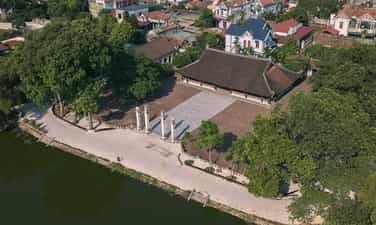
Chu Quyen Communal House
Chu Quyen Communal House - Unique architectural and artistic relic of Doai region Chu Quyen communal house (also known as Chang communal house) is located in Chu Minh commune, Ba Vi district, Hanoi city. This is one of Vietnam's typical ancient communal houses, built in the early 17th century and ranked by the State as a national architectural and artistic relic in 1962. In the past, the communal house belonged to Chu Chang village, Chau Chang district, Tien Phong district, Quang Oai district, Son Tay town. Later, Chu Chang village was separated into Chu Chang and Chu Quyen, but local people still call it Chang communal house. The communal house is located on the land along the Red River, facing Ba Vi Mountain, with a harmonious location according to traditional feng shui concepts. Chu Quyen communal house is a large-scale wooden architectural work, consisting of only one large communal house but with majestic and majestic beauty. The communal house has a structure of 3 main rooms, 2 wings, 2 porches and a system of 6 large columns. Architectural parts such as columns, beams, beams, corbels, and roofs are skillfully linked using traditional carpentry techniques. The large pillars of the communal house have become a familiar image among the people with the saying "as big as the pillars of Chang's communal house". Not only has architectural value, Chu Quyen communal house also stands out for its sophisticated wood carving art. Ancient artisans created many vivid works with images of dragons, phoenixes, flowers, clouds and everyday scenes such as farming, drinking wine, riding elephants, horses... The carved lines demonstrate the talent of folk artists and reflect the cultural life of contemporary society. According to documents preserved at the site, Chu Quyen communal house worships Nha Lang Vuong (Duc Thanh Chang), a character associated with the legend of the Later Ly Nam De period. Legend has it that Nha Lang Vuong was instrumental in defeating the enemy and protecting the country, so he was honored as a Tutelary God by many villages along the Red River. Every year, the communal house festival is held on the full moon day of the first lunar month with sacrificial rituals and many folk cultural activities such as wrestling, boating, and singing, attracting a large number of people and tourists. Currently, Chu Quyen communal house still preserves 13 ordinations of the Le Trung Hung, Tay Son and Nguyen dynasties along with many horizontal panels, parallel sentences, and artifacts of historical value. Through many renovations, especially a major restoration from 2007 to 2009, the communal house still retains its ancient beauty and original values. With typical values of history, architecture and art, Chu Quyen Communal House is a precious heritage of Thang Long - Hanoi, contributing to preserving the beauty of traditional village communal house culture and demonstrating the creative talent of our ancestors in the nation's history. According to Hanoi Landscapes and Monuments
Hanoi
423 view
Rating : National monument
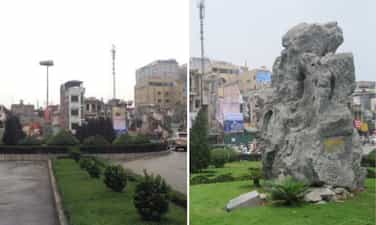
Xa Tac Dan
Xa Tac Dan - "special" historical relic of Thang Long Xa Tac Dan is an important historical relic of the ancient capital of Thang Long, built in 1048 during the reign of King Ly Thai Tong. This is where feudal kings held ceremonies to worship the Earth God (Xa) and the Nong God (Tac), praying for peace and prosperity in the country, good harvests, and prosperity. In the monarchy, the Xa Tac Dan is considered a symbol of national sovereignty and the stability of the dynasty. In 2006, during the construction of the new Kim Lien street in Nam Dong ward, Dong Da district, Hanoi, traces of Xa Tac Dan were suddenly discovered after more than 200 years of being buried. This discovery has special significance, contributing to clarifying the planning of Thang Long citadel and affirming the historical value of the monument. According to historical books, Xa Tac Dan was built with clean soil taken from many localities across the country, demonstrating territorial unity and the spirit of national cohesion. The altar consists of two square floors, built according to the five elements principle with five colors symbolizing the five directions. Surrounding it are walls, lakes, screens and a system of steps to serve the court's sacrificial rituals. Today, the area where Xa Tac Dan was discovered is marked with stone stele to remember the location of the relic. This is not only a valuable archaeological heritage but also an important testament to the history, culture and beliefs of Thang Long citadel, contributing to preserving and promoting the cultural traditions of the Vietnamese people. According to the Management Board of Thang Long Imperial Citadel
Hanoi
370 view
Rating : National monument
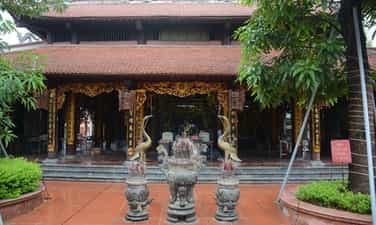
Ba La Khe Stele Temple
Ba La Khe Stele Temple - Historical and spiritual cultural relic of Hanoi Bia Ba Temple is a historical - cultural relic located in the Temple - Pagoda - Bia Ba Temple complex in La Khe ward, Ha Dong district, Hanoi city. This is a valuable work in history, architecture and folk beliefs, and is also a famous spiritual destination for the people of the Capital. According to local legend, the temple worships the Virgin Mary Tran Thi Hien (1511–1538), a native of La Ninh village (now La Khe). Legend has it that she was the concubine of King Mac Thai Tong, famous for her talent and kindness. After her death, people built a temple to commemorate her contributions and honored her as the protector of the homeland. Over the centuries, Bia Ba Temple has become an important place of religious activities, closely associated with the cultural life of local people. The relic is imbued with the traditional architecture of the Northern Delta region with the Tam Quan gate, temple yard, Great Pagoda and Hau Palace arranged harmoniously in an ancient space. The harem is where the ancient stone stele dedicated to the Holy Lady is located, which is also the origin of the name "Ba Stele". Together with La Khe communal house and pagoda, the relic complex creates a unique cultural space, reflecting the history of formation and development of Ha Dong land. Not only has historical and architectural value, Bia Ba Temple also preserves many traditional local customs and rituals. Every year, especially at the beginning of spring, the full moon day and the first day of the lunar calendar, a large number of people and tourists come to offer incense, pray for peace, fortune and express their respect. With typical values of history, culture and beliefs, Beer Ba Temple is one of the typical relics contributing to preserving Hanoi's cultural identity and is a meaningful destination for domestic and foreign tourists. According to Bachlien.vn summary
Hanoi
404 view
Rating : National monument
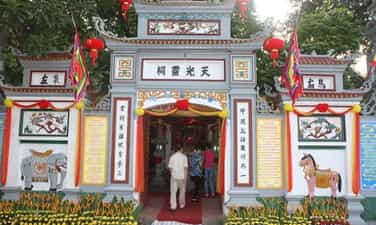
Ghenh Temple
Ghenh Temple - Sacred temple worshiping Northern Palace Queen Le Ngoc Han Ghenh Temple, named Thien Quang Linh Tu, is located on the banks of the Red River, in Bo De, Long Bien, Hanoi. This is one of the famous temples of the Capital, not only because of its architecture and belief in worshiping the Mother Goddess, but also associated with the life of Northern Palace Queen Le Ngoc Han - the talented wife of Emperor Quang Trung. According to folk legend, after Queen Le Ngoc Han and her two children died, the remains of her mother and daughter were dug up by the Nguyen Dynasty and dropped into the Red River. The people of Ai Mo village quietly recovered, covered the grave and built a shrine to commemorate it. Over time, the temple was expanded into Ghenh Temple as it is today. In the people's consciousness, Queen Le Ngoc Han is revered as the reincarnation of Mother Thoai, the Holy Mother who governs rivers and waters in Vietnamese Mother Goddess worship. The temple was built in 1858 on a large plot of land next to the Red River. The worship system of Ghenh Temple has many unique features compared to other Mau temples. The main hall places the statue of Queen Le Ngoc Han in the center, along with many altars decorated according to traditional folk beliefs, creating a sacred space rich in cultural value. Every year, the Ghenh Temple festival is held from the 6th to the 12th of the eighth lunar month, highlighting the water procession ceremony on the Red River to pray for good weather and to commemorate Queen Le Ngoc Han. Besides, the custom of offering rice cakes and star fruit - a unique cultural feature of the temple - has been preserved by people for many generations. Not only is it a place for local people's religious activities, Ghenh Temple also preserves many valuable artifacts such as the Tu Duc bronze bell, the Long Dinh palanquin, the Mausoleum palanquin, along with the horizontal system, and parallel sentences praising the merits of Queen Le Ngoc Han and the beauty of the land by the Red River. Today, Ghenh Temple is a typical cultural and spiritual destination of Hanoi, attracting a large number of tourists and pilgrims to visit and worship. Source: Hanoi Landscapes and Monuments
Hanoi
391 view
Rating : National monument
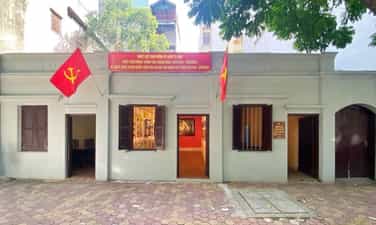
Revolutionary relic house number 5D Ham Long
Revolutionary relic house No. 5D Ham Long is located in Phan Chu Trinh ward, Hoan Kiem district, Hanoi city. This is the location marking the establishment of the first Communist Party cell in Vietnam at the end of March 1929, an important milestone in our country's revolutionary history, paving the way for the birth of the Communist Party of Vietnam. According to the National Museum of History, since the end of 1928, the struggle movement of the working class and communist trends in Vietnam have developed strongly. Faced with the demands of revolutionary reality, advanced members of the Vietnam Revolutionary Youth Comrades Association secretly met at house No. 5D Ham Long to establish the first Communist Party cell. The meeting took place on a night in late March 1929 with the participation of comrades Ngo Gia Tu, Nguyen Duc Canh, Tran Van Cung, Trinh Dinh Cuu, Do Ngoc Du, Duong Hac Dinh and Nguyen Tuan. Comrade Nguyen Phong Sac was absent due to unexpected work, but sent his comments in favor of the resolution and was recognized as an official member of the cell. Comrade Tran Van Cung (alias Quoc Anh) was elected Party Cell Secretary. At the meeting, the Party Cell identified key tasks such as promoting the establishment of the Communist Party, developing trade unions and agricultural associations, and promoting the spread of Marxism-Leninism. The birth of the first Communist Party cell at 5D Ham Long created a direct premise for the establishment of the Indochina Communist Party on June 17, 1929 and moved towards the establishment of the Communist Party of Vietnam in early 1930. House number 5D Ham Long was originally a one-story house in the blocks 5A, 5B, 5C, 5D of a bourgeois family for rent. The house has an area of about 24m², in the back there is a small yard, kitchen and toilet area. In particular, the house is located close to a small alley leading to Le Van Huu street, creating favorable conditions for revolutionary cadres to secretly withdraw when necessary. At the end of 1928, the Northern Committee of the Vietnam Revolutionary Youth Association rented this house as a base for secret operations and assigned it to comrade Tran Van Cung and his wife, Nguyen Thi Lien, to directly manage. In the simple house, the sofa set, the double-bottomed chest used to hide documents, the oil lamp and many simple household items have become historical evidence associated with the process of preparing to establish the Party. On November 25, 1959, the house was restored into a memorial house, displaying many documents and artifacts associated with the birth of the first Communist Party cell. In 1964, the relic was recognized as a Hanoi Revolutionary Monument. In 2000, the building continued to be renovated to restore the appearance as it was at the time of the historic meeting in March 1929. Today, the 5D Ham Long relic, managed by the Hanoi Museum, is a red address with special significance in educating revolutionary traditions, contributing to helping today's generations better understand the process of forming the first communist organization and the birth of the Communist Party of Vietnam. Source: National Museum of History.
Hanoi
80 view
Rating : National monument