Relic point Vietnam
Việt Nam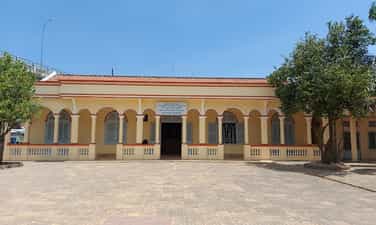
Relics of the Southern Joint Armistice Committee
Phung Hiep town, Can Tho province is the place chosen to host the headquarters of the Southern Joint Armistice Committee, with an important strategic position, this is the center of two gathering points of Can Tho and Ca Mau. The headquarters of the Southern Joint Armistice Committee was originally the house of Mr. Ha Van Phu (owner of a Vietnamese photography shop, in Phung Hiep market), built in 1928. The entire relic site was built on an area of 1,635 m2. Looking from the outside, in front of the headquarters' door, there is a large sign, written in both French and Vietnamese - Headquarters of the Southern Joint Armistice Committee. In front of the headquarters there are 2 flagpoles. A flagpole hangs a red flag with a yellow star - Vietnam's National Flag. The second column hangs the Tam Tai flag - the national flag of France. Under the tail of the Tam Tai flag, there is also the Ba Que flag of the puppet government, proving the humiliating dependence of the Saigon puppet government. On the left side of the headquarters is a semi-permanent stilt house built in a U-shaped style, the home of the Vietnamese delegation's security force. On the riverbank in front of the stilt house is a wooden wharf for our delegation's Hoa Binh ship to dock. Every time the Hoa Binh ship has a white dove symbol on both sides of the ship, and on the roof of the ship is a red flag with a yellow star fluttering, carrying our delegation from the base in Hang Diep to the meeting headquarters, the people Both sides of the river and Phung Hiep market happily welcomed, clapped loudly... cheered our delegation every day. Successfully ending the resistance war against the French colonial invaders, with the Dien Bien Phu victory "resplendent on five continents, shaking the earth", forcing the French colonialists to sign the Geneva Agreement on Armistice in the East Positive. The Geneva Agreement signed on July 20, 1954, includes 6 chapters and 47 articles. The important content is that France recognizes Vietnam's independence, taking the 17th parallel (Ben Hai River) as a temporary military boundary. The Vietnamese People's Army in the South gathered to the North. The French colonial army had to move to the South. The North of our country has been completely liberated and built socialism. After two years, the two regions will hold general elections to unify the country. To monitor and manage the implementation of the Armistice Agreement between the two sides, according to chapter 6 of the Agreement (from Article 28 to Article 47), it stipulates the organization and operation of the Joint Committee and the National Supervisory Committee. economy in Vietnam. From the above spirit, after the Geneva Agreement was signed, the Central Joint Armistice Committee was established with Major General Van Tien Dung as its head. At the Trung Gia Military Conference, the Central Committee decided to establish the Southern Armistice Joint Committee, signed by General Vo Nguyen Giap - Commander-in-Chief of the Vietnam People's Army on July 22, 1954, for the Joint Committee to In case of armistice, direct and monitor the implementation of the Agreement and arrange troops to mobilize and assemble on time. The French delegation was headed by Colonel Duque (later changed to Colonel Colelen Bazien), the Deputy was Lieutenant Colonel Magron. There were also a number of puppet lieutenant colonels working as translators and a French female secretary. Each side's delegation has about 5 permanent members including: Head, deputy delegation, secretary, interpreter... throughout the working time of the Southern Joint Armistice Committee, protected and guarded by the People's Army. Vietnam and the French Union Army. The historical relic of the Southern Joint Armistice Committee in Phung Hiep - Can Tho has important significance in educating revolutionary traditions and building confidence in the victory of the cause of building and defending the Fatherland. From the above meaning, the Ministry of Culture and Information recognized the headquarters of the Southern Joint Armistice Committee in Phung Hiep as a national historical relic on June 28, 1996. Source: Hau Giang province electronic information portal
Can Tho
6311 view
Rating : National monument

Relics of Vi Thanh - Hoa Luu dense area
Historical - cultural relic Vi Thanh - Hoa Luu dense area is located in area 4 (Sen Lake cultural area), ward 1, Vi Thanh city, central Hau Giang province. Before the ink was dry on the Geneva Agreement signed on July 20, 1954, My Diem blatantly sabotaged it. They carried out a plot to gather people to set up a dense area of Vi Thanh - Hoa Luu, occupy Long My - Vi Thanh as a base to attack and pacify the U Minh base area, which the enemy called: "Communist headquarters." ”. To carry out the above plot, My Diem gathered evil henchmen, surrendered to traitorous hatred of the revolution and mobilized thousands of troops to launch many raids, raids, evictions, gathering people, besides Then Diem issued Law 10-59, with the motto "it is better to kill by mistake than to miss", dragging the guillotine to Long My to kill our people. It was Tran Le Xuan (Ngo Dinh Nhu's wife) who personally came here to encourage the henchmen to brutally kill those suspected of being "Viet Cong" and offered to buy a human secret from 500 to 700 VND. .The resentment is sky-high, blood flows like a river. According to the design project, the dense area is 7km long, with the Xa No canal as the center, each side is 2km wide, with a total area of 28 square kilometers, divided into 4 main areas: 1 Vi Thanh Area, 2 Fire Areas. Pomegranate, 3 Middle Areas, 4 North Xa No Areas. Each area is divided into 4 sub-areas, each sub-area is divided into many lots, each lot is divided into many plots, each plot is divided into many small plots of land, each plot is 90 meters long, 45 meters wide (area equal to 4 square meters of land) for Each family is separated by a ditch. The plots are separated by a canal 3 to 4 meters wide and 2 meters deep, in addition to being surrounded by fences and barbed wire. People living in dense areas are monitored and controlled at 5 stages: entry, travel, accommodation, income, and communication. To protect the safety of the Tru Mat Area, they arranged forces as follows: a commando company from the U-Minh area stationed at the Cai Nhum market bridge, a civil guard company guarded the outside, inside they equipped clusters of Republican youth, coordinating with the secret service to search around the clock; In addition, they also organized the personalist Can Lao Party, Republican Youth, and Women's Solidarity. People's lives were strictly controlled, so people often sarcastically called the "honey" area. Living in a situation of "fish in pots and birds in cages", the people were very dissatisfied and increasingly resentful. Under the leadership of the revolutionary Party cells, they organized many uprisings against My Diem, gathering people to set up a Secret Zone. Faced with that difficult and complicated situation, after only six months of intense construction, although only a third of the project was built, on March 12, 1960, they hastily organized the inauguration of the Vi Thanh - Hoa Secretariat. Pomegranate. Resolution 15 of the Party Central Committee was born like "drought meets rain", a strong driving force pushing the struggle movement in the district to become even more fierce. On the night of September 14, 1960, the Dong Khoi order was issued, our armed forces raided and occupied many places. Coordinating with the people and patriotic soldiers in the dense areas and 12 gathering points, they rose up together to hunt down the evil henchmen and hand them over to the revolution, burned the flag, tore up Diem's photo, took down slogans, and destroyed Fence, break the gate to return to the old hamlet. Cheers, gongs, and gunshots resounded, creating a revolutionary atmosphere, a strength that "made the water burst its banks". In addition to attacking, the uprising completely paralyzed the enemy in the dense areas. To deepen the crime and educate our people, especially the younger generation, about hatred for America - The puppet established Vi Thanh - Hoa Luu Secret Zone, on August 2, 1997, the Ministry of Culture and Information recognized " "Vi Thanh - Hoa Luu Secret Site, relic of My Diem's massacre of compatriots" is a national historical-cultural relic. Source: Department of Culture, Sports and Tourism of Hau Giang province
Can Tho
6091 view
Rating : National monument

Can Tho Provincial Party Committee Base Relic Area
Can Tho Provincial Party Committee Base Relic is located in Phuong Quoi B hamlet, Phuong Binh commune, Phung Hiep district, Hau Giang province. During the resistance war against the American invasion, Can Tho city was the nerve center of the 4th tactical zone of the American puppet, the US consulate, the C-I-A intelligence agency, all types of soldiers, rear warehouses, and military yards. airports, military ports, etc. were the places where troops raided the southwestern provinces. The enemy chose Can Tho as the key area for pacification and fierce raiding, especially after the general attack in 1968. In the years 1969 - 1970 - 1971, they mobilized a large force of main forces, security forces, civil guards and various types of machines. Planes, tanks, cannons... dropped bombs, artillery, B52s spread carpets, toxic chemicals, cleared our liberated countryside, coupled with tactics to lure people in, trying to separate the people from the Party "slapping water to catch fish". ", aiming to destroy the Party and the revolution. To deal with the enemy's new plot, in April 1971, the Executive Committee of the Can Tho Provincial Party Committee met in the leafy forest of Xa Phien commune, Long My district. After careful discussion, the Standing Committee of the Provincial Party Committee chose the location in Phuong Quoi B hamlet, Phuong Binh commune, Phung Hiep district, as a base for the Provincial Party Committee to stand and direct the revolutionary movement in the province to attack. Failure of the enemy's pacification plot. Can Tho Provincial Party Committee Base was started construction in early February 1972, at the house of Ba Bai - a former landowner, so people used to call it "Ba Bai Base". Initially, the base only built a few small houses, the workplaces of the Standing Committee, Office and defense team (security team). After that, build a number of other houses for the following departments: cipher, radio, information, housing for female officials, permanent house, guest house, canteen, and communications. From this base, the Can Tho Provincial Party Committee stood firmly and led the province's army and people to attack the enemy with three frontal attacks, remove enemy posts, mobilize the masses to destroy "strategic hamlets", and gain the right to open the land. Expanding the liberated area, creating new strength for the province. The Paris Agreement was signed and took effect on January 28, 1973, but the enemy, with their stubborn nature, sabotaged the Agreement and carried out plots to "pacify", "overrun the territory", and occupy land and people. . But the Can Tho Provincial Party Committee still firmly stood firm at its base, leading the province's army and people to overcome all difficulties, hardships and sacrifices, promoting the power of three prongs to attack the enemy, breaking up many raids and encroachments. , remove the enemy's posts, and reclaim our liberated area. Promoting victory, and at the same time strictly complying with the orders of the Central Party Politburo, launched a general attack and uprising in the spring of 1975, culminating in the historic Ho Chi Minh campaign, completely liberating the South, carrying out the sacred Will of our beloved Uncle Ho: "Fight until the Americans go away, fight until the puppets fall". Under the wise, flexible and bold leadership of the Provincial Party Committee, Can Tho's army and people launched a general attack and uprising like a storm, "One day equals twenty years". In just two days, April 30 and May 1, 1975, Can Tho province was completely liberated, contributing to the liberation of the South, writing the most brilliant pages of history of the Vietnamese people in the 20th century. With those important historical events and achievements, on April 27, 1990, the Ministry of Culture and Information issued a Decision recognizing the Can Tho Provincial Party Committee base as a national historical-cultural relic. Source: Hau Giang province electronic information portal
Can Tho
6361 view
Rating : National monument

Tam Vu Victory Relic
Tam Vu Victory Relic Area is located in Xeo Cao hamlet, Thanh Xuan commune, Chau Thanh A district, Hau Giang province. The glorious victories of the four ancient Tam Vu battles that took place on the Cai Tac - Rach Goi road section, less than 5km, were a brilliant highlight in the resistance war against the French colonial invaders of our army and people. After September 23, 1945, the Saigon - Gia Dinh army opened fire against the invading French colonialists, opening the Southern resistance war, then on October 30, 1945, the Can Tho army and people became heroic in their resistance against the French colonialists. recaptured Can Tho. After 90 days of siege and attrition, destroying the French army in Can Tho town, Le Binh's suicide squad disguised itself and gathered at the French command post in Cai Rang on the morning of November 12, 1945. Wounding many enemy soldiers, including the wounded officer of Rouen, terrified the French soldiers. With courage, the Republican Guard unit commanded by comrade Nguyen Dang on January 20, 1946, attacked the enemy's military convoy on Tam Vu Highway, destroyed 2 military vehicles, and killed a number of enemy soldiers. including Dessert, commander of the French expeditionary force in the West, one of five high-ranking French officers on the Indochina battlefield. We confiscated 10 guns, including 2 medium machine guns. The Battle of Tam Vu 1 had a very important meaning, this was the first victory of our armed unit against enemy motor vehicles, opening the door for the next battles on the Can Tho battlefield. Less than a year later, Can Tho's army and people continued to win the battle of Tam Vu 2, on November 12, 1946, commanded by comrade Ngo Hong Gioi, ambushing the enemy's military convoy on Tam Vu Highway. , destroyed 3 vehicles, killed 60 French and Le Duong soldiers, collected 60 guns of all kinds and many other military equipment and supplies. After the day of "National Resistance", implementing the directive "All People's Resistance" of the Party Central Committee's Standing Committee (December 19, 1946) and the call of beloved Uncle Ho (December 20, 1946). The all-people and comprehensive resistance war has developed strongly, Can Tho's army and people have achieved many victories, especially the activities of the "Party Assassin" teams, Rangers, and armed police to destroy enemies and evildoers. The storm in the inner city of Can Tho made people confused and afraid. At this time, the Tam Vu 3 battle took place on May 3, 1947, commanded by Minister Huynh Phan Ho, also on the old Tam Vu route. Our army and people destroyed 6 military vehicles, killed and injured nearly 200 French soldiers, and captured 8 machine guns, many guns and ammunition of all kinds, as well as military equipment and supplies. The Battle of Tam Vu 3 was a victory of heaven, earth, and people. When we returned to camp at Lang Ham to prepare for the Battle of Tam Vu 3, a squad of Khmer soldiers came in to cut down trees and were forced to destroy them. Our troops withdrew as a diversion, only 10 days later they returned to hide their troops, continuing to fight the Tam Vu 3 battle without being exposed, because the people protected the soldiers to defeat the enemy. Victory after victory, just one year later, the beautiful coordination of three types of troops (main force, local army and guerrilla militia) created a heroic miracle, continuing to win the battle of Tam Vu. 4, took place on the afternoon of April 19, 1948, under the command of Minister Tran Van Giau and Chief of Staff Vo Quang Anh, our army used the tactic of occupying and attacking, destroying 14 enemy military vehicles, killing Nearly 200 French soldiers, including one Quang Ba, collected many guns and ammunition, especially the 105mm cannon for the first time in the country, resounding throughout the Indochina battlefield. With the profound meaning and scale of victory of the 4 Tam Vu battles, the golden book of our nation's revolutionary tradition against invaders has become even more brilliant. Therefore, the Ministry of Culture and Information recognized the Tam Vu victory site as a national historical-cultural relic on January 25, 1991. Source: Hau Giang Province Electronic Information Portal
Can Tho
10794 view
Rating : National monument
Uncle Ho's Temple in Luong Tam Commune
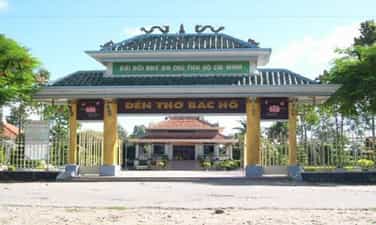
Uncle Ho's Temple relic is located in hamlet 3, Luong Tam commune, Long My district, Hau Giang province. The people of the South in general, the people of Hau Giang - Can Tho and Long My in particular, the image of beloved Uncle Ho is in the hearts and minds of every person, although thousands of kilometers away from the capital Hanoi, always look towards Uncle Ho and his beloved capital with firm belief to fight and defeat the invading enemy. Hearing the news of Uncle Ho's death on September 2, 1969 was a common pain and a great loss for the entire Vietnamese people; Especially the people of the South have not had time to welcome Uncle Ho to visit. To repay Uncle Ho's kindness and meet the wishes of the people of Luong Tam commune; The Commune Party Committee, led by comrade Lu Minh Chanh (Hai Chanh), Secretary of the Commune Party Committee, decided to set up an altar to Uncle Ho right at the Commune Party Committee Office. Comrade Le Van Thong, member of the secretary, was assigned the task of releasing photos of Uncle Ho setting up an altar and sewing funeral ribbons to organize the memorial service. The next day, the memorial service was solemnly held with the full presence of leaders of departments, branches, organizations of communes, hamlets, main army units, and local soldiers stationed near the base. Commune officials, along with a large number of people in the commune, came to attend the ceremony with infinite sadness, commemorating and remembering Uncle Ho's gratitude to heaven and earth and promising Uncle Ho the determination to defeat the American invaders. Responding to the call of the Party Central Committee - turning suffering into revolutionary action, Can Tho's army and people continuously attacked the enemy in all areas of the province. During the week of Uncle Ho's mourning, the army and people of Can Tho province launched an attack on 34 military targets, destroying nearly 400 enemies. In Luong Tam commune alone, our army and people destroyed the posts: Vam Cam, To Ma, and Duong Dao (severely damaged). Over 40 enemy soldiers paid for their crimes and many others were injured. Right after the National Funeral Day, the leaders and some veteran revolutionary comrades and elders in the commune discussed and came to a decision: to build a temple to Uncle Ho in Hamlet 3, at the intersection of the highway. This is the most convenient place for people in the commune and other areas to easily visit Uncle Ho by both waterway and road. In the summer of 1972, the US puppet launched many large-scale raids, concentrating bombs and artillery on fiercely attacking the Long My area. The Commune Party Committee was destroyed by American artillery bombs and had to be moved to another place. Uncle Ho's altar was rebuilt and the holidays to celebrate Uncle Ho were held every year (birthday, death anniversary and Lunar New Year). In addition, people in the area worship Uncle Ho and celebrate his death anniversary at home. After the day of peace, from the earnest wishes of the Party Committee and people of Luong Tam commune, they wished to rebuild Uncle Ho's Temple at the planned location during the resistance war against the US, at the intersection of the highway, hamlet. 3, Luong Tam commune and with the approval of the leaders, branches, levels and people inside and outside the locality actively contributed their human and material resources, with a heart of love for Uncle Ho and this is a practical memorial project to welcome Uncle Ho. Celebrate the 100th anniversary of Uncle Ho's birth. (May 19, 1890 - May 19, 1990). Uncle Ho's temple was built in 1990, with a scale of nearly 2 hectares. Uncle Ho's temple was built with a national, solemn and respectful architectural style. On the occasion of the 107th anniversary of Uncle Ho's birth (May 19, 1890 - May 19, 1997), provincial leaders continue to direct the construction of an exhibition house to introduce Uncle Ho's childhood and revolutionary life. Uncle, this is the second category after the Temple. With that meaning, the Ministry of Culture and Information recognized Uncle Ho's Temple as a National historical relic. Source: Long My District Electronic Information Page
Can Tho
6400 view
Rating : National monument
Historical relic of Chuong Thien Victory
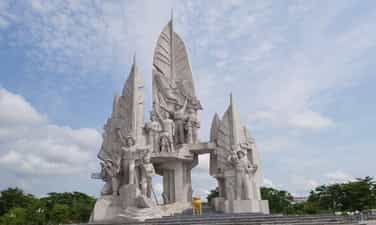
The Chuong Thien Victory historical relic is distributed in 2 locations: area 3, ward 5, Vi Thanh city and hamlet 1, Vinh Vien commune, Long My district, Hau Giang province. Chuong Thien used to be a province, established by the Saigon puppet regime on December 24, 1960, including Long My and Vi Thanh districts; This place is an important waterway traffic hub to go to the provinces of Can Tho, Soc Trang, Bac Lieu, U Minh, and Rach Gia. The enemy considers Chuong Thien a remote defense line to protect the headquarters of the 4th tactical region (located in Can Tho city), a shield to prevent our main forces from attacking, and a springboard to attack the base. U Minh revolution. Therefore, Chuong Thien became an important strategic area for both us and the enemy. For us, Chuong Thien is a solid belt to protect U Minh base, a springboard to attack Can Tho, Soc Trang, Bac Lieu, and Rach Gia. This place is also a large rear base, storing people and materials to serve the resistance war. After the Paris Agreement (1973) took effect, the Saigon puppet government and the US imperialists still intended to destroy the southern revolution, eliminate the liberated area with plans to pacify, encroach... Recognize The enemy's situation and plots, our army was prepared to deal with. During 11 months (from January to November 1973), our army and people stubbornly held on, fought bravely, and maintained the area. The enemy's plan to pacify Chuong Thien failed completely. The victory of Chuong Thien in 1973 is vivid proof of the correct, bold, and timely policy of the army and people of the Mekong Delta. This victory also contributed to creating one of the important foundations for Resolution 21 to be born, creating a premise for the change of direction of the Southern revolution, towards the victorious General Offensive and Uprising in 1975. In order to promote the value of historical relics and educate revolutionary traditions, the relic site of area 3, ward 5, Vi Thanh city and the relic site of hamlet 1, Vinh Vien commune, Long My district were chosen as locations. commemorating the victory of Chuong Thien of the army and civilians of area 9. At the location of area 3, ward 5, Vi Thanh city, Hau Giang province: According to the approved master plan, this relic site has an area of 44,303.7m2, with the following items: current exhibition area (1024m2), outdoor display area, monument, ceremony yard and a number of other ancillary items. Currently, many artifacts related to the relic site, such as more than 100 documentary photos of a number of battles to destroy Cai Nai sub-region, Quang Phong weak area, and destroy Roc Dua, Cai Son, Cai Cao stations... ; 117 artifacts, including weapons, military equipment, tanks, airplanes..., have been received and stored at the artifact warehouse of Hau Giang Provincial Museum. At the location of hamlet 1, Vinh Vien commune, Long My district, Hau Giang province: In 1998, Can Tho province (old) planned a total area of 58,000m2 of land to build the following items: exhibition house (900m2) , meeting house, internal courtyard and some other auxiliary items. The 75-round victory of the enemy battalion to pacify the invasion of Chuong Thien after the 1973 Paris Agreement, not only defeated the tactics, but also collapsed the US-Wei's strategic intention of gaining strength in the political solution. contributed to creating a turning point, defeating the enemy's strategy of Vietnamizing the war. With the special values of the monument, the Prime Minister decided to classify the Chuong Thien Victory Historical Monument as a special national monument on December 9, 2013. Source: Department of Cultural Heritage
Can Tho
6238 view
Rating : Special national monument
Ancient Spirit Association
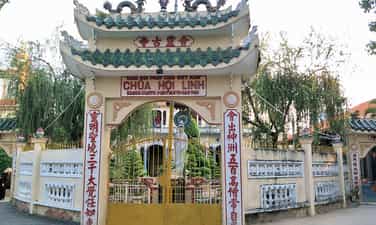
Hoi Linh Pagoda, also known as Hoi Linh Co Tu, belongs to the Northern sect - located on an area of 6,500m2 at 314/36 Cach Mang Thang Tam Street (about 200 meters from the road), Bui Huu Nghia Ward, Binh Thuy district, Can Tho city. Hoi Linh Pagoda was founded on the full moon day of the second month of the year Dinh Mui 1907, following the Lam Te Zen sect. Initially, the pagoda was built simply with tree pillars, walls and thatched roof. The pagoda's door faced the Hau River, named "Hoi Long Tu". Because the pagoda is located at the top of a small canal, it is also called Xeo Can pagoda. Architecturally: the pagoda has a complete three-entrance gate, main hall, back hall, lecture hall. The main gate extending forward has two layers of roof, the tiled roofs of the main gate and the two side gates are all curved roofs covered with beautiful blue yin and yang tiles. The main gate's tiled roof is decorated with two dragons and pearl paintings, a type of decoration very common in Southern temples and communal houses. The main hall is divided into three compartments and has one floor. The floor is divided into three rooms to worship Buddha Shakyamuni, Guanyin, and Ksitigarbha. The cement roof is molded into the shape of fish scales. On the top are lotus buds, wine gourds, dragon-shaped blades, and curved flowers and leaves. The back hall is 144 m² wide, in the middle is the Fatherland altar with a photo of President Ho Chi Minh. This place is also used as a reception area. Next to that is the lecture hall, where sutras and sermons are preached... In addition to its cultural and artistic features, the pagoda also records a historical mark associated with the two resistance wars against the French colonialists and the American Empire invaders of Can Tho people in particular. Since 1941, Hoi Linh Pagoda has become a secret base of the revolution. The monks, monks, nuns and Buddhists in the area protected, supported and nurtured many revolutionary leaders. In 1946, to protect the revolutionary base here, Venerable Thich Phap Than decided to burn part of the main hall. The pagoda's sacrifice demonstrates the spirit of patriotism, protection of officials, protection of the revolutionary base, of the monks, monks and nuns. After the Geneva Accords, Hoi Linh Pagoda continued to be a solid revolutionary base and protected the safety of many revolutionary cadres who remained active. The pagoda was a secret place where many meetings were held to deploy the policies of the revolution and the content of public struggles with the enemy. The enemy suspected that Hoi Linh Pagoda was a "undercover Viet Cong" base, and once sent a platoon of soldiers to surround the pagoda. Unable to find any evidence, the enemy arrested Venerable Thich Phap Than along with 6 monks and 6 Buddhists and detained them for investigation in Phu Loi prison for 3 years. The puppet government used all tricks to seduce, bribe, and brutally torture, but Venerable Phap Than and the monks and Buddhists all maintained their integrity and loyalty to the revolution. The revolutionary base at Hoi Linh Pagoda was still safe and continued to house and protect revolutionary cadres until April 30, 1975, liberating the South and reunifying the country. On June 21, 1993, the Ministry of Culture and Information recognized Hoi Linh Pagoda as a National Historical and Cultural Monument, a revolutionary base from 1941-1975. In particular, the State awarded the First Class Resistance Medal to Hoi Linh Pagoda and recognized martyr Duong Van De (aka Venerable Thich Phap Than) who sacrificed in the cause of fighting against the US to save the country. Source: Can Tho Tourism
Can Tho
5571 view
Rating : National monument
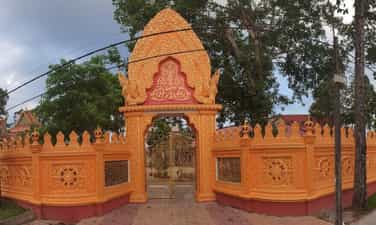
Pothisomron Temple
Pothi Somron Pagoda is an ancient Khmer pagoda located on the O Mon river, in Chau Van Liem ward, O Mon district, Can Tho city. The pagoda was recognized as a city-level historical and cultural relic in 2006. In the pagoda's grounds there are many trees, including a tree called Somron, so the pagoda was named Somron. Initially, in 1735, Pothi Somron Pagoda was only built with simple materials such as leaves and bamboo. By 1856, the pagoda was built with precious woods such as spokes, ca ca, Thao lao and covered with fish-scale tiles. 100 years later, the pagoda was degraded, Venerable Thach Khieng - Abbot of the pagoda from 1950 to 1988 went to Phnom Penh to request a new design from famous architects of Cambodia, on the basis of preserving traditional architecture. system. Construction on the new pagoda began in June 1950 and was completed in 1952. This architecture is kept until now. The pagoda has one side facing the gate of the Khmer Theravada Buddhist Academy, the other gate is close to the gently flowing O Mon River with a cool water wharf. The main hall is a prominent building in the architectural complex of Pothi Somron Pagoda, built in the East direction. Khmer people believe that although Buddha is in the Western world, he always looks towards the East to save sentient beings. The steps leading up to the main hall have a sophisticated Buddha statue meditating. On the wall are drawings depicting the life of Buddha presented very vividly. The images of the nymphs Kennâr and the god bird Krud are carved so high as to support the tile roof. The main hall's roof has three overlapping levels, with a dragon image running along the edge of the roof with its tail reaching straight up into the sky. The columns, fences, door frames, roof tops, and walls are all meticulously carved with geometric and water hyacinth patterns. Khmer pagodas all have core towers, but perhaps there are few pagodas that can preserve a more than 200-year-old tower like Pothi Somron Pagoda. The bone tower is right in front of the main hall, built of umbrellas, laterite, and bricks dating back to the 18th century. Inside this tower are the remains of many Buddhists and have been preserved for many generations. According to Venerable Dao Nhu, abbot of the pagoda since 1988, said: some Buddhists asked to rebuild and renew the outside of the tower, but the pagoda did not agree, because this is evidence of the pagoda's history and culture. nation's culture. The pagoda currently preserves many antiques. These are wooden swallow wings made in 1856 carved with images simulating stories about Shakyamuni Buddha, more than 100 sets of Satra sutras (leaf books), 17 wooden statues nearly 200 years old. The Buddha statue in the Center of the Main Hall was carved in 1885. During the two resistance wars against the French and the Americans, Pothi Somron Pagoda supported and sheltered many young people who escaped the military draft of the old regime. Many monks and monks of the pagoda, after returning from secular life, became party members and union members. Typical examples include Mr. Dao Sang, Chief of Police and Mr. Dao Ca, Chairman of the Dinh Mon Commune Resistance Committee in the years 1945 - 1948. For nearly three centuries of existence, the ancient temple is still dignified and pure, many monks have studied here, there are monks with high virtue and great merit, such as: Venerable Dao Nhu, practicing at Pothi Som Rom was 12 years old and became the abbot of the temple. Up to now, Venerable Dao Nhu is making great contributions to the sect and church as the new leader of the Khmer Theravada Buddhist Academy. Today, Pothi Somron Pagoda is the origin of many social and cultural activities launched by the Vietnam Fatherland Front Committee of Can Tho City, the Buddhist Association of Can Tho City and the Department of Culture, Sports and Tourism. Source: Western Travel
Can Tho
10161 view
Rating : City-level relics

Thoi An Temple
Thoi An communal house is located in Thoi Trinh A area, O Mon district, Can Tho city. Thoi An communal house was built in the early 19th century, built on a small scale by the people of Thoi Thuan hamlet, Thoi An village, using bamboo materials to worship the god. In 1852, King Tu Duc approved and conferred the title of Thoi An village communal house as "Thanh Hoang's original scene". Since the ordination, the villagers have chosen a location and joined forces to build a spacious new communal house 1km away from the old communal house. That is today's Thoi An Temple. The communal house was built in a rectangular shape, facing east, with a unique artistic architecture, imbued with the traditional architecture of the nation. Like some village communal houses in the Mekong Delta, Thoi An communal house worships "Thanh Hoang Bon Canh" who worships ancestors who openly reclaimed wasteland, established villages, and expanded the village's business. rich and prosperous; worshiping officials and soldiers who sacrificed for the country, worshiping the ancestors who taught vocational skills to the villagers. After the country was unified, the Thoi An Temple Sacrifice Committee set up an incense table to worship President Ho Chi Minh. grand. During the nine-year resistance war against French colonial invaders, Thoi An communal house was also the headquarters of the Provisional Administrative Resistance Committee of O Mon district. Every year, Thoi An people solemnly organize two festivals: Thuong Dien and Ha Dien, praying for good weather and good weather, prosperity and happiness. This is also an opportunity for people to remember heroic martyrs and those who have contributed to their homeland. Having gone through many historical events, Thoi An communal house still stands proudly. This is one of the few remaining beautiful and ancient communal houses in Can Tho City, as well as in the Mekong Delta region. With those values, on November 15, 2004, Can Tho City People's Committee ranked Thoi An communal house as a city-level historical and cultural relic. Source: Can Tho Tourism
Can Tho
5976 view
Rating : City-level relics
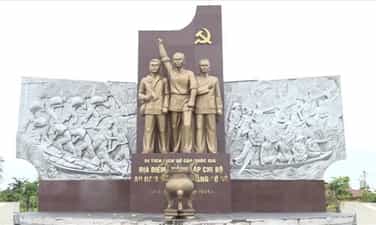
An Nam Communist Party Red Flag relic site
On the night of November 10, 1929, in a hut across the rice paddies of Co Do plantation (in Thoi Dong village, Thoi Bao canton, O Mon district, Can Tho province), comrade Ha Huy Giap - Member of the Executive Committee of the Special Committee for Security The Southern Communist Party of Hau Giang was assigned by the Special Committee to O Mon in coordination with comrade Nguyen Van Nhung and comrade Bay Nui to establish the An Nam Communist Party Cell, with comrade Ha Huy Giap as Secretary. The Annam Communist Party Cell of the Red Flag Party propagated and campaigned to raise revolutionary enlightenment for a large number of working farmers, guided the fight for their rights, and actively selected the masses to join party organizations. The Party cell quickly promoted the building and development of grassroots party organizations throughout the province to lead the revolutionary movement. The birth of this cell not only promoted the revolutionary movement in Can Tho but also had a strong impact on many localities in the region such as Dong Thap, An Giang... From the first Party cell, many other Party cells were established in the province... Mass organizations of the Party such as the Red Trade Union, the Red Agricultural Association, Youth, and Anti-Imperial Women were also organized in many places. , under the leadership of the party cells, gathered a large number of people and promoted the revolutionary struggle movement. To preserve and promote historical values, the city has invested in building a project to preserve, restore and promote the value of historical relics. Location of the establishment of the An Nam Communist Party Cell of the Red Flag Party with an area of nearly 40,000 square meters. The project was completed and put into use in 2019 right on the old plantation land, which is also the center of Co Do district today. The relic area is built in the style of an open park, with airy space, including items: monuments, reliefs, stele houses, squares, and lotus ponds. On October 31, 2013, the Ministry of Culture, Sports and Tourism decided to classify the location where the An Nam Communist Party Cell of the Red Flag was established as a national historical relic. Currently, the relic site is a place for sightseeing, studying, traditional activities, cultural and artistic activities, and sports for people of all walks of life and tourists from near and far. Source: Can Tho City People's Committee
Can Tho
9443 view
Rating : National monument