Relic point Vietnam
Việt Nam
Pe Rang Ky Cave
Pe Rang Ky Cave - a gem in the middle of the Tua Chua plateau. Located at the foot of Pin Pang mountain, in Pe Rang Ky village, Huoi So commune, Dien Bien province, Pe Rang Ky cave is a typical landscape amidst the majestic limestone mountains of the Tua Chua highland. In front of the cave is a lush natural forest, creating a wild and attractive landscape. The cave goes deep into the mountain about 800m, including three chambers with a system of stalactites, stalagmites, stone columns and stone bells with unique shapes. The first compartment stands out with large stone columns and winding stalactite bands. Moving to the second compartment, the space is larger, the stalactites shaped like mushrooms, pine trees, corals, Buddha statues or natural chandeliers create a shimmering, magical look. The third chamber impresses with its towering stone columns, amazing stalactite forest and a small clear lake in the middle of the cave. Not only attractive by its geological beauty, Pe Rang Ky is also located in the unique ecological space of the Da River lakebed, giving visitors an experience combining cave exploration and the Northwest mountain and forest landscape. With outstanding geological, landscape and ecological values, Pe Rang Ky cave is ranked a national scenic relic by the Ministry of Culture, Sports and Tourism. This is considered a "natural art museum", where visitors can admire magical sculptures created over millions of years. Source: Vietnam National Tourism Administration
Dien Bien
135 view
Rating : National monument
Tham Khen Cave
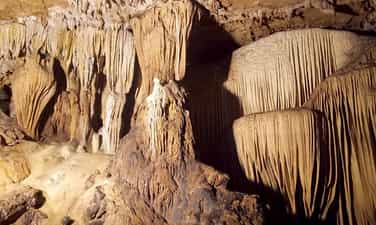
Tham Khen Cave - a wonder in the heart of Dien Bien limestone mountain. Located at an altitude of about 800m above sea level, Tham Khen Cave in Na village, Muong Dun commune, Dien Bien province, is an outstanding landscape with an interesting cave system in the middle of limestone mountains. In Thai, "Tham" means cave, "Khen" is the name of a bitter, sweet vegetable that grows in abundance at the entrance of caves. Tham Khen complex consists of two caves located not far from each other. The first cave is about 160m long, divided into three compartments, featuring stone columns, stalagmites and a system of stalactites in the shapes of elephants, dragons, phoenixes, turtles and many species of birds. In particular, in the last compartment there is a natural "skylight", bringing light down from the top of the mountain, creating a shimmering, magical space. The second cave is about 280m deep, including two chambers with many small niches. The stalactites here create images like silk strips, rivers, streams, ponds, terraced fields and successive layers of rocks. Some cliffs also emit different sounds when knocked on, creating a unique feature of the cave. Not only has landscape value, Tham Khen is also a limestone mountain and cave ecosystem with potential to serve scientific research, nature conservation and tourism development. With outstanding values, Tham Khen Cave is ranked as a national scenic spot by the Ministry of Culture, Sports and Tourism. Source: Department of Cultural Heritage
Dien Bien
147 view
Rating : National monument

Thanh Sam Mun
Sam Mun citadel, also known as Tam Van citadel, is located in Pom Lot village, Thanh An commune, Dien Bien province. This is a historical relic associated with the formation process and historical fluctuations of the Muong Thanh region. According to historical documents and local legends, the citadel was built many centuries ago, used to be an important base of the Lu lords and then became a place of dispute and struggle for many forces in the Northwest region. In particular, in the mid-18th century, Sam Mun citadel was the base of Pha Chau Tin Toong forces. In 1754, Hoang Cong Chat's insurgent army coordinated with Thai leaders to surround and capture the citadel. After the victory, Hoang Cong Chat chose Muong Thanh as his base, gradually building up his forces and expanding his area of operation. Today, the remaining vestiges of Sam Mun citadel are mainly a section of the citadel wall about 3km long in the Pom Lot hill area, at the same location as Pu Chom Chanh - which was once used as an observation point overlooking the Muong Thanh valley. With outstanding historical and cultural values, Sam Mun citadel was ranked a national historical relic by the Ministry of Culture, Sports and Tourism in 2009. The relic is an important vestige that contributes to understanding the history of the Muong Thanh region and the fighting traditions of the Northwest ethnic communities. Source: Wikipedia
Dien Bien
146 view
Rating : National monument
Muong Luan ancient tower
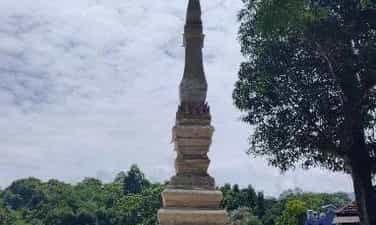
Muong Luan ancient tower located in Muong Luan 1 village, Muong Luan commune, Dien Bien province, is an artistic architectural work with typical value associated with the Lao community in the Northwest region. Built around the 16th century, the tower is about 15m high, has an elegant pencil shape, and consists of three parts: the base, the body and the top. The tower's body is decorated with many unique patterns such as dragons, lotus petals, sun shapes and stylized motifs, demonstrating the sophistication of architectural art and Lao folk beliefs. The project was built mainly with local materials such as bricks, lime, sand and molasses, showing the unique manual construction techniques of ancient highland residents. Not only has architectural value, Muong Luan tower is also an important vestige reflecting the long-standing cultural exchange process between the Lao community and ethnic groups in the Northwest region. Next to the tower, there used to be a pagoda that was a place for religious activities of the Lao community; Many traditional ceremonies, including the bathing ceremony of Buddha statues, were once held here. On February 9, 1991, Muong Luan Tower was ranked a national architectural and artistic relic by the Ministry of Culture and Information. After being restored and embellished, the monument today has become a destination rich in historical, architectural and cultural values, contributing to introducing the unique identity of the Lao community in Muong Luan to tourists. Source: Dien Bien Newspaper and Radio and Television
Dien Bien
164 view
Rating : National monument
Chieng So ancient tower
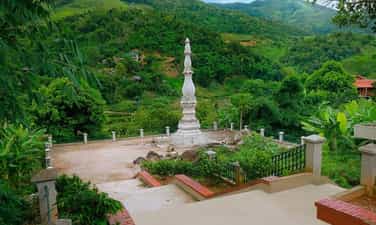
Chieng So ancient tower Chieng So ancient tower located in Na Muong village, Chieng So commune, Dien Bien province, is a unique architectural and artistic relic, determined by researchers to date from about the 15th to 16th centuries. The tower is 10.5m high, built of bricks and lime mortar, shaped like a wine jar, with a sturdy square base and the tower body gradually shrinking towards the top. The highlight of the tower is the sophisticated decorative pattern system with lotus petals, birds, flowers and especially embossed dragons curving around the tower's body. The upper part is shaped like lotus buds, giving it a soft, elegant beauty. Not only has architectural and artistic value, Chieng So Tower is also a testament to the cultural exchange and longstanding solidarity between the people of Vietnam and Laos. This is a precious heritage that contributes to enriching the historical and cultural value of Dien Bien land. Source: People's Committee of Dien Bien province
Dien Bien
177 view
Rating : National monument
Hill C1
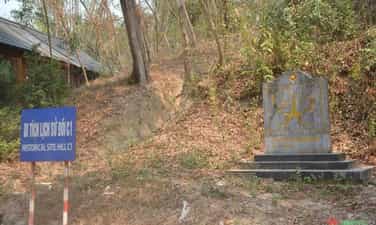
C1 Hill - Historical evidence of the Dien Bien Phu Victory C1 Hill (French military name is Éliane 1) is one of the important bases in the Eastern base group of the Dien Bien Phu Group of bases. Located on high point 493, the hill acts as a "shield" protecting the central subdivision and Muong Thanh airport, while controlling the direction of attack from the East and Northeast. According to the Dien Bien Provincial Monuments Management Board, the French army arranged elite forces including Company 3, Battalion 1, Moroccan Infantry Regiment 4 and reinforced parachute units to defend this base. As for the Vietnam People's Army, the task of attacking Hill C1 was assigned to Battalion 215, Regiment 98, Group 316. On the afternoon of March 30, 1954, in the second attack of the Dien Bien Phu Campaign, our army launched an attack on Hill C1. After breaking down many layers of barbed wire fences with explosives, the units quickly captured bunkers on top of the hill. Platoon leader Nguyen Thien Cai planted the flag "Determined to fight, determined to win" on top of C1, marking the mastery of the base. However, the French army continuously organized many fierce counterattacks to regain this strategic position. The tug of war lasted for 32 days and nights, with fierce battles on each trench and each gun emplacement. By the night of May 1, 1954, the 98th Regiment completely controlled Hill C1, creating favorable conditions for our troops to attack the remaining bases such as C2 and A1, opening the door to the center of the Dien Bien Phu base group. Today, C1 Hill is one of the component relics of the Dien Bien Phu Battlefield Special National Monument. This place still preserves the system of trenches, trenches and battlefield vestiges, becoming a red address for educating patriotic traditions and the resilient fighting spirit of the Vietnamese army and people in the resistance war against the French colonialists. Source: According to Dien Bien Province Monuments Management Board
Dien Bien
804 view
Rating : Special national monument
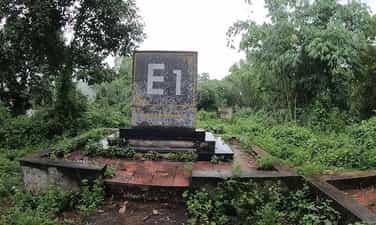
E1 Hill
E1 Hill – Fierce evidence of the Dien Bien Phu Campaign Hill E1 is located in the northeast of Muong Thanh center, Dien Bien Phu city, Dien Bien province. During the Dien Bien Phu Campaign in 1954, this was an important base in the Dominique base cluster of the French army, with the task of protecting Muong Thanh center and Dien Bien airport. After our troops captured E1, this high point was used as an artillery observation post, mountain artillery battlefield and command post to control enemy targets. Due to its strategic location, E1 suffered thousands of artillery, bombs and tank fire from the French army for 36 days and nights. The terrain was plowed and the trees were completely destroyed, causing this place to be called "death hill" by the soldiers. Despite fighting in extremely fierce conditions, our units still stubbornly held the position, maintained the battlefield, contributed to destroying enemy firepower and supported the attacks into the center of the Muong Thanh stronghold group. E1 Hill is a testament to the brave fighting spirit of the Vietnamese army, contributing to the historic victory of the Dien Bien Phu Campaign on May 7, 1954. Today, E1 hill is one of the attractions in the Dien Bien Phu Battlefield Relics Complex, helping tourists and today's generations better understand the fierceness of the battlefield as well as the resilient fighting spirit of the Vietnamese army and people in the "illustrious victory on five continents, shaking the earth". Source: People's Army Newspaper.
Dien Bien
843 view
Rating : Special national monument

Muong Tinh Cave (commonly known as Chua Ta Cave)
Muong Tinh Cave (commonly known as Chua Ta Cave) in Dien Bien is a magnificent natural masterpiece, outstanding with a diverse system of stalactites and stalagmites, sparkling with unique shapes such as terraced fields and raspberries, creating its own charm. The cave has a small and narrow entrance but a wide cave inside. There is a stream flowing inside the cave, creating a mysterious space and gurgling sounds, making it an attractive tourist discovery destination. The cave is ranked as a national historical relic according to Decision No. 1256/QD-BVHTTDL dated April 14, 2011. During the resistance war against the French colonialists, Muong Tinh cave was an important resistance base, a refuge for provincial agencies, soldiers,... especially during the first liberation of Dien Bien in 1953. Muong Tinh Cave consists of 3 main compartments. The outermost compartment has a narrow cave entrance, with an area of about 600 m², a height of 20 m, airy space, and a flat land. This is the ideal condition to organize meetings that can accommodate hundreds of people while still maintaining confidentiality. The middle compartment must crawl through a tunnel through natural rock. Inside is a space with an area of about 20 m², surrounded by stone walls, with small stone niches deep inside. This is where the revolutionary documents were hidden, with a system of desks and beds made entirely of stone arranged naturally but very reasonably. This is a secret place, but also very safe when an incident occurs. There is a small road through the top of the mountain, soldiers can get out of the forest without the enemy being able to detect it. Inside is the third compartment, about 30 m² wide. Chua Ta Cave is an ideal destination for those who are passionate about exploring nature and looking for a unique experience when coming to Dien Bien.
Dien Bien
1777 view
Rating : National monument

Thanh Ban Phu
Ban Phu citadel (also known as Chieng Le citadel) is located in Noong Het commune, Dien Bien province, 8 km south of Dien Bien Phu city center. Ban Phu Citadel is a national historical site built by hero Hoang Cong Chat (1758-1762) to fight the Phe invaders, to serve as a solid base, and the capital of the insurgent army in the fight to liberate Muong Thanh. In the inner city of Ban Phu, after General Hoang Cong Chat passed away (February 25, 1767 on the lunar calendar), to show gratitude to the hero who had defeated foreign invaders and brought a peaceful life to the people, the people of Muong Thanh built a temple to worship Lord Hoang Cong Chat and 06 district gods: Lo Ngai, Bac Cam Khanh, Hoang Cong Toan, Bun Phanh, Vu Ta, Nguyen Huu, collectively known as Hoang Temple. Cong Quat. This is a unique ancient military structure with a deep moat, high citadel, and Hoang Cong Chat temple. Ban Phu Citadel is a symbol of the spirit of solidarity and resilience of our army and people in protecting the homeland's borders, and is an important historical and cultural attraction.
Dien Bien
2578 view
Rating : National monument

Dien Bien Phu Victory Monument
Dien Bien Phu Victory Monument, located on D1 hill, Dien Bien Phu city, is the largest bronze monument in Vietnam, symbolizing the famous victory in 1954. The Dien Bien Phu Victory Monument is 16.6m high, including 3 soldiers holding a Thai baby and a flag of victory, demonstrating the spirit of solidarity and resilient will of the nation. The path up to the monument consists of 320 steps, divided into 3 landings corresponding to 3 attacks, on both sides are 56 blue stone milestones symbolizing 56 days and nights of fighting. The Dien Bien Phu Victory Monument was inaugurated in 2004 (commemorating the 50th anniversary of the victory), this is an important historical attraction, marking the "illustrious victory of five continents, shaking the earth"
Dien Bien
2122 view
Rating : National monument