Tourist destination
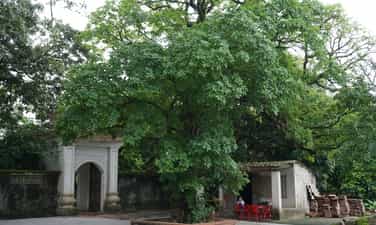
Ba Danh Pagoda
Ba Danh Pagoda is located close to Ngoc Mountain and surrounded on three sides by the Day River. The outside of the pagoda is adjacent to the walking road, the three-entrance gate of the pagoda is near the river bank, so the three-entrance gate is five steps high and the two ends are closed. The three-door pagoda has three compartments, two floors, the upper floor has two layers of roof, roofed with male tiles, around the wooden floor are railings and convenient bars, this floor is used as a bell tower, the lower three compartments have wooden doors. lim. Outside the door are two bronze pillars, on the top of the three-door gate is a pair of flanking dragons. On both sides of the main gate is a small gate with eight roofs and a semicircular curving door. On weekdays, guests enter and exit through the small door, only when there is a ceremony at the temple does the main door open. Ba Danh Pagoda worships Buddha, in addition to Buddha, there are also statues of Thai Thuong Lao Quan, statues of Nam Tao, Bac Dau and worshiping the Four Palaces belief (Phap Van, Phap Vu, Phap Dien, Phap Phong). In particular, the pagoda worships the goddess Phap Vu, the goddess of wind. According to legend, the sacred goddess Phap Vu oversees the control of rain and wind, bringing favorable weather for good harvests and helping people's lives to be prosperous, so the pagoda is called Notre Dame de Danh village, or Pagoda for short. Mrs. Danh. In the central space of the pagoda is a statue of Ba Danh in a meditating position on a shiny black throne with a kind, gentle, feminine and close face. The harmony between the statue and the throne creates the appeal of sculpture art in the Northern Delta. Almost all of the temple's architectural and carving art is concentrated in the worship hall - the place for daily ceremonies. The pavilion has five ironwood compartments, gabled ends and two dragons embossed on it. Observing from the middle of the brick yard, visitors will see a system of embossed statues of "four dragons flanking the moon" on the roof of the street. All four dragons, from their designs to their bodies, are curvy, their eyes, antennae, claws, and fins are very lively, flexible, but also very fierce, looking like they are playing with each other, flying in the vast space. The dragon here carries the colors of the Nguyen Dynasty. At the beginning of the two corridors and adjacent to the worship house are two tall, majestic pillars. On each column are embossed images of four sacred animals: dragon, lyre, tortoise, and phoenix in a symmetrical, harmonious, and balanced position. Every line shows the talent of ancient artisans. Although beautiful and ancient, Ba Danh Pagoda is known for its desolation and desolation. There have been many theories to explain this, but the most convincing is that the pagoda is very sacred, if passersby or people coming to worship, if they laugh, talk loudly, or disrespect even a single sentence, they will be punished. Therefore, pilgrims visit the temple less and less. In addition, the pagoda is located far from residential areas, with few people living around it. Three sides of the pagoda are rivers, forests, and trees, so very few people come to the pagoda, except during major Buddhist festivals. The above reasons have made the already deserted temple even more deserted. Today, the pagoda has been invested and rebuilt to be quite spacious and spacious, with more visitors coming to the pagoda. Therefore, the old saying has now been changed to: "Once upon a time it was quiet and deserted/ Now it is as busy as Ba Danh pagoda." Ba Danh Pagoda currently preserves many rare antiques and ancient books, especially Buddha statues, Bodhisattva statues, great pagodas, stone carvings, parallel sentences and incense sticks...
Ninh Binh
6952 view



Bat scene paint
Eight scenes in the mountainous area of Tuong Linh commune (Kim Bang) were once the place where Lord Trinh Sam established his palace and were compared by the lord to eight famous beautiful scenes such as in Tieu Tuong (Yunnan, China). For a long time, the Bat Canh Son range (mountain range with 8 wings) has been considered a scenic spot of Son Nam town. According to Phan Huy Chu's Lich Trieu Chuong Chuong Loai Chi (Du Dia Chi section), in the 16th century, Trinh Doanh's Trinh Doanh came here to admire and likened Bat Canh Son to Tieu Tuong in China and established a palace to go there. about enjoyment. In the past, in Bat Canh Son, there were 8 pagodas and a temple worshiping the great earth spirit, arranged and built according to the theory of the eight trigrams and five elements. Attraction 1: Ong Chua Tien, also known as Ong Pagoda. Ong Chua Tien (Ong Pagoda) was built during the reign of King Tran Nhan Tong on Tuong mountain about 200m. The mountain is the first wall in the Bat Canh Son system in Ha Nam. The pagoda has an extremely sophisticated architectural style with eight battlements and four dragon corners, so this is the first and most important point in the Bat Canh Son landscape. Scenic spot 2: Ong Temple 2. This scenic spot has a large semicircular lake surrounded by rows of deep green trees. The lake has an area of up to 320 acres with green water all year round with an average depth of about 5m. According to legend, this is the lake left by the temple after a flood. Currently in the lake there are countless species of fish that can be exploited. Ong Temple was built in a triangular structure with hundreds of majestic and magnificent Buddha statues. Coming here, you will find your soul more quiet and peaceful. Scenic spot 4: Kieu Pagoda. Kieu Pagoda is located at an altitude of 150m on the mountain of the same name. Kieu Pagoda is located in the Southeast with a large area. The pagoda currently has 3 stele carved into the cliff, which is one of the important features of this place. Besides, the pagoda is also associated with legends about moonlight. Scenic spot 5: Ba pagoda. The pagoda became sacred when the village organized a procession to worship Phap Vu Buddha. Phap Vu Buddha belongs to the Four Dharma system at Dau Pagoda (Bac Ninh) including: Phap Van, Phap Vu, Phap Loi, Phap Dien. History also records the inspiration every time the Ly Dynasty kings came to Dau Pagoda to pray, from then on, pagodas from all over asked to receive the Four Dharmas to worship.
Ninh Binh
8974 view


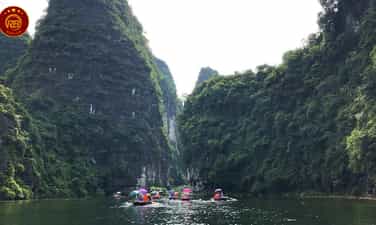
Zinc Drum
Kem Trong Ha Nam is one of the most beautiful natural landscapes in Northern Vietnam, featuring majestic limestone mountains and the gentle Day River. This is the ideal destination for those who love pristine nature and seek peace in the heart of nature. According to folk legend, during the Le Dynasty, the king was worried that the land of Kem Trong Ha Nam had prosperous feng shui that could affect the dynasty, so he ordered the Dao River to be dug to cut off the ley line of this area. This action not only has feng shui significance but also creates an amazing natural landscape, with a river winding between majestic limestone mountains. It is this thrilling story that has contributed to increasing the mystery and appeal of Kem Trong, attracting a large number of tourists to visit and explore. With a harmonious combination of rolling limestone mountains, the romantic winding Day River and pristine natural space, Kem Trong is an ideal place for visitors to freely create beautiful check-in photos. Each view here has its own beauty, from large rocks with strange shapes to green riverbank mudflats that create a poetic scene. Especially at dawn or dusk, when the sunlight shines on the water and rocky mountains, the scene becomes more magical and romantic than ever, making anyone want to preserve this memorable moment. Kem Trong Ninh Binh possesses many beautiful caves with splendid stalactite systems, formed over millions of years, creating a magical and mysterious space. Each cave here has its own unique characteristics, with stalactites with unique shapes such as curtains, pillars supporting the sky or interesting natural statues. When entering the caves, visitors will admire the light reflecting on the limestone blocks, creating a magical shimmering effect, giving the feeling of being lost in another world.
Ninh Binh
8006 view


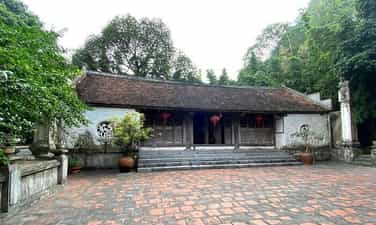
Truc Temple
Ha Nam Truc Temple is located in the Truc Temple - Ngu Dong Thi Son tourist area, in Quyen Son village, Thi Son commune, Kim Bang district, more than 7km from Phu Ly city along National Highway 21A. There are many stories about Ha Nam Truc Temple, but according to the old people who took care of the temple, in 1089, on the way to conquer the South through Quyen Son village, Ly Thuong Kiet's war fleet was caught by a sudden wind. blew the mast and swept the flag to the top of Cam Mountain. Feeling strange, he and his generals stopped, preparing to make offerings to heaven and earth, praying for the army's great victory. And that military victory was truly a great victory. Ly Thuong Kiet and his soldiers returned to pay their respects and allowed everyone to celebrate the victory. The festival lasts for months, the atmosphere is jubilant and bustling, and during that time he even taught the people here how to raise silkworms and weave cloth. Later, to commemorate the merits of Ly Thuong Kiet, the villagers built a temple right at the place where he held the festival, which is today's Truc Temple located deep inside the vast green bamboo forest. Truc Temple in Ha Nam is designed in the style of the letter "Dinh" including the temple gate, front hall and harem. The temple gate has 4 pillars: 2 central pillars over 6m high and 2 small pillars on both sides. Truc Temple's front hall is divided into 5 compartments and the harem has 3 compartments, all built in the traditional style of the 17th - 19th centuries: roofed with male tiles, built with interior bricks, exposed to the ceiling, and carved door system. following the themes of four sacred animals, four precious animals... with high artistic value. Not only can you admire the beautiful scenery and participate in the festival, coming to Truc Ha Nam Temple, visitors will also have the opportunity to see with their own eyes stone artifacts from the Ly Dynasty bearing the historical imprint of a heroic time. It is known that currently in Truc Temple, two unresearched antiques from the Ly Dynasty are kept: a pair of dragons and a stone aquarium. The pair of dragons are not very large, located symmetrically vertically, their heads facing the front hall but have different shapes. According to archaeologists who have been here, the dragon on the right, seen from the outside, is a Ly dynasty dragon with a soft, flexible shape; The dragon on the left is the dragon of the Tran Dynasty and has a bigger, stronger and fatter figure. The stone aquarium is made from monolithic stone, has a rectangular, square shape with sharp edges, the bottom of the tank is surrounded by a wave-shaped border, and the tank wall has a four-quarter pattern. Although the exact age of this ornamental tank is unknown, looking at the moss-covered details, one can tell that the tank dates back hundreds of years ago.
Ninh Binh
8614 view


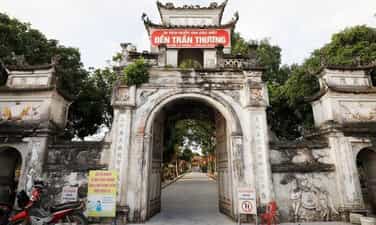
Tran Thuong Temple
Tran Thuong Temple is currently a place to honor the national hero Tiet Trung Hung Dao Dai Vuong Tran Quoc Tuan and the generals who fought against the Mongol army in the 13th century. With more than a century of existence, the temple still retains its original beauty and is a symbol of history and pride of the people of Ha Nam. The land of Tran Thuong is known for the saying "Personal Dao, Rice of Tran Thuong" and the poem engraved on the motto at the temple: "The land of Tran Thuong is immense in welfare, bustling with fruits every spring." Previously, Tran Thuong was the center of 6 water canals. From here, you can go up the Red River to Thang Long or down to the sea to the East. Only about 3km from here is where the Tran family's tomb is located. Tran Thuong Temple is one of three major temples worshiping Hung Dao Dai Vuong nationwide. Legend has it that, on his journey against the Mongol army, Tran Hung Dao realized that the terrain here was very dangerous, so he set up 6 food warehouses to serve the war. This place today has become a place to preserve the historical spirit and pride of the people of Ha Nam. Tran Thuong Temple, a majestic and ancient architectural work located on sacred land in the style of "Four water turtles". The overall landscape of the temple includes the outer gate, the inner gate, 5 buildings, 15 compartments, divided into 3 palaces: first, second, third and two hai vu, 5 wells... The architecture and natural landscape of the temple Tran Thuong Temple is like immersing yourself in religion in a sacred cultural space. The value of the temple is reflected in its delicate decoration with unique motifs: two dragons flanking the moon, flying dragons, dancing phoenixes, water waves, clouds and sky... Creating a vivid, ancient picture containing folk philosophy. . The temple's collection of altar objects and ancient books is also very diverse, especially the statue of Saint Tran with a serious face but still a nurturing smile. With traditional historical value, Tran Thuong Temple shines with unique culture. Every year, the temple organizes two major festivals: the Saint Tran food distribution ceremony takes place on the night of January 14 and early morning of January 15; The death anniversary celebration from the 18th to 20th of the 8th lunar month attracts a large number of people and tourists. During the festival, many folk cultural activities are held, from the water procession, the river swimming competition to the "Dong Dong performance" - a traditional ritual, all emphasizing the moral "Remember when drinking water". source". Tran Thuong Temple is not only a place to organize festivals, but also a place to preserve memories of culture, history and beliefs. This is a symbol of respect for the saintly figures who saved the country, the pride of a nation with endless filial piety.
Ninh Binh
9056 view


Lanh Giang Temple
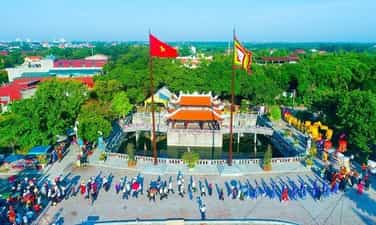
Lanh Giang Temple - a famous spiritual destination in Ha Nam, also known by the familiar name Lanh Giang Linh Tu. Specifically, this temple is located in Yen Lac village, Moc Nam commune, Duy Tien district, Ha Nam province. This tourist destination is located right next to the foot of the dike connecting the old Ha Tay, on the right bank of the Red River. Opposite Lanh Giang temple is Hung Yen province. Therefore, visitors can easily get here by many different means, from road to waterway. Because of this location, many people still mistakenly believe that Lanh Giang temple is located in Hung Yen. Ha Nam is a province without an airport, so to get to Lanh Giang temple, visitors can hunt for plane tickets to Hanoi at Traveloka. Traveloka's Fare Notification, Reschedule and Refund features will provide you with maximum support during the booking process. Currently, flights to Hanoi's Noi Bai airport are operated regularly. Therefore, visitors can easily book flight tickets for any period of time. After landing safely at Noi Bai airport, you need to choose the next suitable means of transportation to Ha Nam province. Most tourists often choose bus 206 or some typical bus companies such as Phuc Loc Tho, Viet Trung, Thoi Dai, Man Tinh,... After arriving in Dong Van town, Duy Tien district, tourists who want to visit Lanh Giang temple need to move another 8km along Highway 38 to Hoa Mac town. From here, go another 3 or 4 kilometers and you can reach Yen Lenh bridge. Next, just turn left and follow the road right next to the Red River dyke and you can reach Lanh Giang temple, Ha Nam. According to records from documents, until now, people have not been able to determine the time when Lanh Giang temple was built. According to the inscriptions left on the roof of the second building, it is likely that Lanh Giang temple was restored in 1944. Through historical ups and downs, this temple still retains its original grand scale. Many legends have told that Lanh Giang temple is associated with the Three Famous Gods - the children of the noble lady Hoa Giam. Not only were they instrumental in helping King Hung fight against Thuc Phan's army, but they also supported Princess Tien Dung and her husband. Therefore, Lanh Giang Temple was established to recognize and commemorate the gods who helped King Hung defend the country. Every year, Lanh Giang Temple will have two major festivals to express remembrance to the water gods and pray for good weather all year round so that people can settle down and settle down. The first festival will take place in the 6th lunar month, lasting from the 2nd to the 5th. The second festival will continue to take place in the 8th lunar month, specifically August 20. The festival at Lanh Giang temple not only brings together many extremely sacred and solemn sacrificial rituals and holy processions, but also brings together many interesting and exciting games. Coming to Ha Nam on this occasion, visitors can not only admire the unique landscapes and spiritual architectural works here but can also learn more about the customs and unique culture of Ha Nam. this land. In 1996, Lanh Giang Temple was officially ranked as a national historical and cultural relic by the Ministry of Culture, Sports and Tourism. Since then, the temple has become one of the works that need to be preserved, protected and developed. Lanh Giang Temple consists of 3 buildings with 14 compartments along with a guest house and altar surrounded by solid walls. In the temple there are many valuable items, many precious antiques and statues worshiping the three gods of the Hung King period. Standing in front of Lanh Giang temple, visitors will surely be extremely impressed with the massive and majestic architecture. The Tam Quan gate is designed in the style of a stack of matches with eight roofs, creating a feeling of airiness. The tip of the sword is a beautiful dragon shape interwoven with extremely harmonious motifs. In front of the Tam Quan gate is a calm, blue semicircular lake adorned with colorful and fragrant water lilies. Following the bridge from the temple gate to the middle of the lake, visitors will encounter a tower hidden in the shadow of an old sycamore tree, both majestic, ancient but also extremely poetic.
Ninh Binh
9363 view


Crescent Lake - Hung Yen
Crescent Lake is still considered the golden heart of Hung Yen. This is a landscape that all Hung Yen people know about. Hung Yen Crescent Lake is located in the center of Hien Street, adjacent to Bach Dang Street, to the East is next to Bai Say, to the Southwest is the Red River dyke. From the city center, it only takes about 1km to get here. Traveling to Hung Yen, visiting Crescent Lake, visitors will be immersed in a quiet and peaceful natural scenery. Coming here, you can breathe in the clear air, it seems like all the fatigue and sadness have disappeared, leaving only moments of true peace. Hung Yen Crescent Lake not only has poetic beauty but is also located right in a sacred land, where there are many communal houses, shrines, temples and pagodas. There are two famous spiritual sites located right on the lakeside that many tourists visit: Tran temple and Mau temple. These are two places with many historical imprints, silhouetted on the quiet surface of Crescent Lake. True to its name, many people can imagine the shape of the surface of Hung Yen Crescent Lake. This place is like an impressive crescent moon. The beauty of the lake is shown to be both rustic and extremely vivid in every song, poem, and work of art. Coming to Crescent Lake, you will enjoy the peaceful, fresh atmosphere and leave many unforgettable emotions in your soul. Crescent Lake contains a slowly flowing stream of water, a quiet and peaceful space, creating a gentle and poetic scene. Initially, the lake was a section of the Red River left after changing its course. People here compare the lake to a falling piece of Hang Nga's mirror. Although the lake is not connected to anywhere, the water in the lake is always full and clear. On one side is the Red River dyke with lush green grass, on the other side is bustling streets. If you are looking for a quiet space, close to green nature in Hung Yen, Crescent Lake is a place that is hard to miss. Surrounding Crescent Lake are many green trees, each tree reaching out to cast a shadow on the calm lake surface. Every time there is a breeze, the swaying trees give people a rustic and peaceful feeling. In the middle of the lake is a 10m high flagpole with a red flag with a yellow star fluttering, this is considered a special highlight in the peaceful lake surface. Visiting Crescent Lake, visitors can rest on the benches, admire the scenery, and enjoy the cool breeze. Walking around the lake, you will hear the gentle sound of water flowing, letting your soul be blown by the wind, the scene is like a lyrical song. In the hustle and bustle of modern life, coming here makes time seem to settle down and the soul feels lighter. Crescent Lake is where many cultural events and annual festivals of Hung Yen city take place. In 1905, Governor Le Hoan organized the Kieu Bay competition at the lake with the participation of Nguyen Khuyen and Chu Manh Trinh. During the French colonial period, the French built a small road from the Mau Temple gate to the temple. guard, divide the lake in two to deploy recreational boating activities. After the success of the August Revolution, this road was demolished to return the lake's pristine beauty.
Hung Yen
8799 view


Nom Village
Nom village is located in Dai Dong commune, Van Lam district, Hung Yen province, about 20km from Hanoi capital. Years have passed, Nom village is still a land cherished and preserved by the people of Hung Yen. In the face of bustling, hustle and bustle life, it is difficult to find a place where people feel so peaceful. The beauty of architecture, culture and people are still intact after more than 20 years of upheaval. Because of that "sustainable" beauty, Nom village tourism in Hung Yen is also of interest to many people. Moving away from the city to a small village, you will find it both familiar and strange. Familiar like being at home, strange because of a new land. In Nom village, the simple traditional beauty such as banyan trees, wells, and communal house roofs are still preserved. Through the mossy village gate, the scene inside the village is typical of ancient Vietnamese villages. The small houses are all tinged with time, the daily activities of the people take place calmly and peacefully. Feeling extremely comfortable and relaxed. Traveling to Hung Yen will not be complete if tourists have not visited Nom village. In addition to enjoying Hung Yen specialties, going to Nom village is also an opportunity for visitors to learn about the culture of the people here. Through interesting architecture and destinations. Stepping through the village gate, Nom market is the place where you can experience the most perfect Vietnamese countryside market. Nom Market was formerly the busiest market in Van Lam area. The market is simple, not reinforced concrete like the city center markets. An attractive place in Nom village is Nom pagoda. The pagoda also has another name, Linh Thong Co Tu. According to many Chinese documents, the pagoda was built on a large pine hill during the Later Le Dynasty. However, through analysis of terracotta statues in the temple, many archaeologists believe that the temple has existed for about a thousand years. Nom Pagoda has bold Asian architecture, typical of ancient Vietnamese pagodas. The pagoda houses more than 100 terracotta statues with exquisite sculptures. The pagoda is very sacred and treasured by the people of Nom village. The houses in Nom village are also places many tourists come to explore. Many houses are 200 years old and have unique architecture. Kinh Bac culture is authentic and alive through every house.
Hung Yen
8001 view


Da Hoa - Da Trach relic cluster
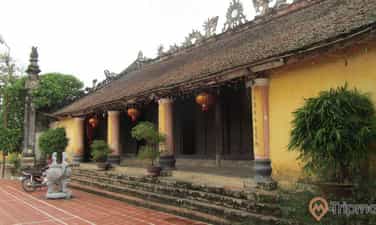
The temple was built on a high, flat, rectangular area of land with an area of 18,720m². The temple's face faces west, looking straight at Tu Nhien beach (Ngu Doi village, Tu Dan commune) - where Princess Tien Dung, daughter of the 18th Hung King, met Chu Dong Tu and the two became husband and wife. The temple is divided into three zones. The outer area has an area of 7,200m², has no walls, the only architecture is a 2-storey stele house, 8 curved roofs, with doors opening in 4 directions. In the stele house, there is a stone stele with content about the time of restoration of Da Hoa temple and the fateful meeting of Chu Dong Tu - Tien Dung. From here, follow the 6m wide paved road with rows of ancient rice trees radiating cool shade on both sides, and you will reach the main gate. Through the main gate you enter the middle area. This area has an area of 3,400m², surrounded by low walls, planted with many green trees and divided into two areas: the right area has a bell tower, inside there is a 1.5m high bronze bell; The left area has a porch, inside there is a stone porch with a width of 1.2m; Separating these two areas is a tiled road leading from the main gate to Ngo Mon with three entrances and exits, above which hangs a large letter with four words painted in red and gilded with "Bong Lai Cung Khuc". Stepping through the Ngo Mon gate is to enter the inner area. With an area of 11,520m², the architecture is in the royal style of the Nguyen Dynasty but has a harmonious combination of Buddhism, Confucianism, and Taoism. The inner area includes: a courtyard, a worship house, an adoration yard, an incense burner, and a palace. second palace, third palace and harem. Connecting the palaces are the hermitage, the tarpaulin, the horse house, the artillery house... In the harem there are 3 shrines: Saint Chu Dong Tu (in the middle), Princess Tien Dung Queen (left), concubine Hong Van – Tay Sa (right). The overall architectural works in this area include 18 houses with curved tile roofs shaped like 18 stylized dragon boats. This is a special architecture to recreate the scene of Princess Tien Dung's boat sailing on the river wharf in the past. In addition to its unique architecture, Da Hoa Temple also preserves many rare relics, typically: 3 wooden altar thrones dating from the late 17th and 18th centuries. These are considered the oldest thrones still found. seen in our country today; pair of ceramic Bach Tho jars (one hundred Tho words, none of which are similar, are engraved on the side of the jar)... Leaving Da Hoa temple, visitors will go to Da Trach temple (Yen Vinh village, Da Trach commune), a place associated with the legend of Da Trach lagoon. Legend has it that at the location of Chu Dong Tu and his two wives, princesses Tien Dung and Hong Van, "transformed" into the sky on the night of the 17th day of the 11th lunar month, they collapsed into a large lagoon, Da Trach lagoon (the lagoon was formed). after just one night). Thinking that it was a divine response, local people built a temple to worship the three gods in the Da Trach lagoon area and named it Da Trach temple, also known as Hoa temple. Da Trach Temple has been restored many times, however, the current architecture is the result of the restoration in 1890 with the character Cong (工), facing east, overlooking a semi-circular lake, the roof is carved with many dragon shapes, The phoenix is very beautiful, consisting of three rooms. Among them, the harem is the most beautifully designed space with a three-step rolling dome, giving visitors the feeling of standing in a boat cabin. From the outside, on the right, first is the altar for worshiping the temple, the statue of military mandarins, then the altar for worshiping the parents of Saint Chu Dong Tu; On the left is the altar of Be Nguoi Quan Quan (a statue of a carp made of wood painted with lacquer and gilded with shiny gold), next is the altar of Trieu Viet Vuong (548 - 571). In the middle of the harem are 3 altars: Thanh Chu Dong Tu (in the middle), Princess Tien Dung Queen (left), concubine Hong Van (right). There are also statues of two horses, one red, one white. Legend has it that those were the two horses that Saint Chu Dong Tu and his two wives rode to heal the people. In addition to the main architecture, in the temple area there is also a bell tower, inside is placed a Da Trach bell (Da Trach temple bell) cast in the 14th year of Thanh Thai (1902), 1.5m long, 0.8m wide; two rows of nine-room houses. Previously, this was the place for nine palanquins; two stone stele standing opposite each other (one stele is broken), built in the 17th year of Gia Long (1819), 1.6m high, 0.8m wide, 0.17m thick; a semicircular lake; Many horizontal panels and parallel sentences record the legend of Chu Dong Tu - Tien Dung - Tay Sa; especially the image of a hat and a stick - two objects that Saint Chu Dong Tu used to save humanity. Da Trach Temple was recognized by the State as a national historical architectural and artistic relic in 1989. To remember the merits of Saint Chu Dong Tu and Princess Tien Dung, every year, local people organize the Chu Dong Tu festival. This is one of the 16 largest festivals in the country with attractive cultural and sports activities. The most unique is the water procession with the participation of 10 boats following each other to the Red River to take water for Holy Mass at Da Hoa and Da Trach temples. This activity is organized according to ancient customs, taking place for two hours. While the boats move, there is also a dragon dance performance on the boat.
Hung Yen
7805 view


Chu Dong Tu Temple
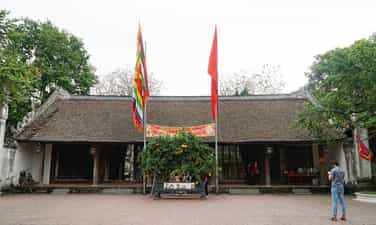
Referring to Hung Yen is mentioning a land with many places for tourists to visit. Hung Yen tourism is famous for types of tourism such as spiritual cultural tourism, community tourism, eco-tourism, and craft village tourism. Some famous tourist attractions include Nom village, Noi street, chrysanthemum garden, Tran temple, etc. Especially, it is impossible not to mention the famous spiritual place in this land, Chu Dong Tu temple. The temple was built on a rectangular high ground, and has a long history. The temple worships Saint Chu Dong Tu and his two wives, Princess Tien Dung and Princess Tay Sa. This place is associated with the legend of love and at the same time is associated with the famous victories of our nation such as the war of Quang Phuc against the Liang army; Tran Nguyen Han and Nguyen Trai fought against the Ming army; many uprising movements in the resistance war against the French colonialists,... The temple consists of two areas: Da Trach temple and Da Hoa temple. These two temple areas are not too far apart and are both located in Khoai Chau district. The total area of the temple is 18,720 square meters, including 18 rooftops of different sizes. These two temples have both been certified by the state as national cultural relics. The temple attracts tourists not only because of its ancient, mossy appearance, but the statues are also one of the notable highlights at the temple. A typical example is the statue of Saint Chu Dong Tu and his two wives placed in the harem. The statue is cast in bronze, painted, and has very sophisticated eyeliner, and currently there are three such statues placed in the Third Palace. Visitors can choose to come here from 10 to 12 of the second lunar month every year, to not only be able to see the temple but also participate in the Chu Dong Tu festival. This festival is held to commemorate the merits of Saint Chu Dong Tu and Princess Tien Dung for curing diseases and helping people. The festival is very unique with many diverse activities such as palanquin procession, dragon dance, ca tru singing, unique folk games,...
Hung Yen
7934 view


