Tourist destination

Nose Treo
Quang Tri climbing nose is a beautiful sea located in Huong Bac village of Vinh Kim commune, Vinh Linh district, this is a tourist destination for a long time because of the scenery and amazing nature. The climbing nose is facing the East Sea with natural cliffs reaching out to the sea, not from this place, visitors will admire the Hung Vy mountain forest scenery along with the vast blue sea that is both wild and magnificent. Previously, Quang Tri climbing nose reached 150m, but because of the devastation of the war, the nose now reached out a few dozen meters. However, this place still possesses impressive scenery, is a place that is considered a paradise to ease the sadness of war associated with this loving land and gradually appear as a fresh, cool destination. Let the traveler stop. The most ideal time for checking-in climbing nose is from March until the month, at this time the climate is pleasant and few, so visitors can move to the nose to climb very easily and enjoy sightseeing. Quang Tri climbing nose has an impressive shape that makes it easier for people to associate with the check-in spots full of climbing like a turtle head in Ta Xua, the tip of the stone in Pha Luong or the stack of husband in Hoanh Bo. This place is brought to a different overall, beautiful landscape. One side will be a mountain of the forest and one side is the sea with white sand, golden sunshine. The opposition between the U -Tich forest and the romantic beach brings a space that is both spacious and mysterious. Check-in here, visitors will admire the very long stone nose reaching tens of meters to the sea to wait for the cool sea breeze or the bright sunlight of the day. Not only the nose is completely protruding into the sea, but this place also has a wild jungle or a long beach for a kilometer to Vinh Thai commune with a fascinating beauty, turquoise water, white sand At times of tide, visitors can see a 2000m2 reef very interesting with all shapes and magical colors, only 300m from the nose of Quang Tri. Check-in the nose climbing Quang Tri, set foot on the cliff to reach the sea, zoomed in watching the vast ocean or walking on the fine white sand to play with the waves, immersed in the clear blue water Surely the moment you feel like open, peaceful to the end. In the climbing nose, the moment you see the green forests, the flat surface of the sea with the people floating on the wave will see that it is very small before the majestic nature. Quang Tri climbing tip connected with famous landmarks such as Cua Tung beach, Hien Luong - Ben Hai, Vinh Moc Tunnels bring a unique and rich discovery journey to tourists. It is often said that if Vinh Linh is always remembered by heroic victories, the pain of war remains, the nose climb is a place where sadness is soothed by the beautiful and poetic landscape.
Quang Tri
6085 view


Lao Bao border gate
Lao Bao border gate is one of the important border gates between Vietnam and Laos, located in Quang Tri province, Vietnam. This is a destination not to be missed when traveling to Southeast Asia, because it not only plays an important role in commercial activities but also an attractive destination with famous tourist destinations nearby. At Lao Bao border gate, visitors can experience entry and exit processes, customs and health checks fully and conveniently. Types of transport and transportation through Lao Bao border gate are also diverse from buses, taxis, motorbikes to bicycles. Lao Bao border gate is located in the southwest border area of Vietnam, located in Huong Hoa district, Quang Tri province. This is one of the important border gates adjacent to Vietnam - Laos, located on Highway 9, about 80km west of Hue city. Lao Bao border gate plays an important role in trade and cultural exchange between Vietnam and Laos. This place is being built and upgraded with modern infrastructure, in order to meet the increasing demands of tourists and goods through this border gate. Lao Bao border gate is one of the important border gates bordering Vietnam - Laos. This border gate is located in the southwestern border of Vietnam, located in Huong Hoa district, Quang Tri province. This is a place with a noticeable history of formation and development. Previously, this area was the place where wars and confrontations between Vietnam and Laos took place during the Vietnam War. After the war ended, Lao Bao border gate was built and developed to expand economic relations and cultural exchanges between the two countries. In recent years, Lao Bao border gate has been upgraded and invested with modern infrastructure. In order to meet the increasing demands of tourists and goods through this border gate. Infrastructure is built, including roads, railway stations, customs and medical inspection areas, parking areas and reception areas. Lao Bao border gate plays an important role in trade and cultural exchange between Vietnam and Laos. This is the gateway for visitors to access famous tourist destinations such as Hue city, A Luoi eco -tourism area, Phong Nha - Ke Bang National Park and Vientiane capital of Laos. In the future, Lao Bao border gate is expected to continue to develop and become an important center of the border of the southwest of Vietnam, playing an important role in expanding the opportunity to connect and deliver. Cultural saving between Southeast Asian countries. Infrastructure and reception services have been improved and upgraded to meet the increasing needs of tourists and goods through this border gate. Policies and regulations related to entry and exit, medical and customs examination have also been improved to ensure safety and respect for culture and morality when traveling here.
Quang Tri
5687 view


Klu Dakrong hot spring
About 50km from the center of Dong Ha city, Klu stream has the address in Dakrong commune, Dakrong district, Quang Tri province located on the legendary Dakrong River. Coming to KLU hot spring, you can not only bathe relaxing mineral streams, but also admire the pristine mountains and learn the lives of the people here. Traveling to Quang Tri to KLU hot spring you can go into any time is suitable. Not only winter, you can completely go to KLU hot springs in the summer to bathe the stream and enjoy the fresh air. Around Klu stream is a charming natural scenery with green trees and majestic mountains. What could be better than being relaxed, just watching the beautiful scenery to dispel all the fatigue of life. Klu hot spring bath is completely free, so this place becomes an attractive destination for locals and tourists on weekends. Coming to this Quang Tri tourist destination, you can also learn about the life and unique culture of Van Kieu ethnic people. After bathing the stream, you can visit the villages of people living around. People here are very friendly and hospitable, so you can freely talk and learn culture. Along with yourself in the gong dance, stall dance and singing with the people of Van Kieu - Pa Co. Let's find out the craft village of brocade weaving and knitting of the ethnic people here. Besides, you also enjoy the specialty of wine, wine, grilled fish, blue rice, wild chicken, forest vegetables ... If you want to rest here, you can contact the landlord in advance to stay overnight fee. In particular, there are 15 stilt houses decorated with roofs that are both rustic and close to preserved. Visitors can take photos as a souvenir or stay here to learn about the culture of Van Kieu ethnic people. In general, the service in Klu Dakrong hot springs has not been invested and developed, there are not many types of entertainment, restaurants, bars ... Therefore, when you go to KLU hot springs, you should bring full defense utensils. Personal birth, drinking water. After exploring Klu Dakrong hot spring, you can combine to visit other famous tourist destinations in Dakrong such as: Dakrong River: This legendary river is derived from the Truong Son mountain range and poured into the Cua Viet beach. The two sides live in Dakrong is a majestic mountain scene, with towering cliffs and white foaming water. Far away on the hill are stilt houses of Van Kieu ethnic people living. In 1986 Dakrong River was recognized as a national monument associated with the Ho Chi Minh trail. Dakrong suspension bridge: The famous iron bridge has a width of 6m and 100m long to serve the travel needs of the people here and also an attractive place to visit. Standing on Dakrong suspension bridge, you will be able to see the pristine mountains on both sides and do not forget to take pictures as a souvenir. Ta Lung mountain range: Visit this location you will admire the stone cliffs erected, with rare and rare jungle carpets. There are many forest trees with a diameter of up to 1m, creating a green scene. The mountain range of Lung Lung is associated with the Ho Chi Minh trail in the struggle to liberate the South. Klu Dakrong hot spring is a place that you should not miss when you have the opportunity to visit Quang Tri "fire land". Not only can the stream bath are good for health, but also a lot of interesting things at KLU Ecotourism Area waiting for you to discover that.
Quang Tri
5873 view


Dong Hoi Citadel Walking Street
Located on Phan Boi Chau and Dong Hai streets, located in two wards of Dong Hai and Hai Thanh, Dong Hoi city, Quang Binh province. Officially opened on April 23, 2021, the city's walking street to Quang Binh is one of the brand new entertainment places, attracting the attention of young people in Quang. With a series of super interesting outdoor entertainment activities and countless specialties, you will definitely get relaxing moments when coming here. Located right on Phan Boi Chau Street, one of the beautiful roads in the heart of the city, so it is not surprising that from the early days of inauguration, the city's walking street has quickly become a destination. attract the attention of many people. More specifically, in the middle of the pedestrian street is a small branch of the Japanese line flowing across, creating a dreamy, unique beauty for this street. On the days when Quang Binh air is airy, you can walk along the street until the end of the road will see the scenery of Nhat Le stream floating around the city and the sea axis of the waves of waves murmur fun. In addition to walking, you also have the opportunity to immerse yourself in the bustling atmosphere with other unique cultural and artistic shows. All promises to bring you unforgettable relaxing moments in the journey to explore the peaceful Quang. Not only regularly organizes cultural and artistic performances and countless exciting folk games, in the city's walking street, Quang Binh also has its own area for food exploration activities. If you have the opportunity to go to the city of Dong Hoi Quang Binh, you will enjoy the unique, rich dishes of local cuisine. The most famous dishes appearing here can be mentioned such as Quang Binh duck cake, filter cake, beef noodle, etc. Quang Binh Dong Hoi City Walking Street is one of the brand new entertainment locations that attract the attention of young people when coming to this city. If you have the opportunity to visit Quang land and want to have moments of relaxation with your best friends, pedestrian streets promise to be the perfect destination for you.
Quang Tri
5954 view


Vung Chua Dao Yen
Vung Pagoda is located in Tho Son village, Quang Trach district, Quang Binh province. This is a peaceful land located at the foot of Ngang pass, possessing a peaceful natural beauty, not being affected by humans. Seen from above, this place has a shape like a propeller, with Hon Nom, Hon Wind, Hon La surrounded by surrounding. Thanks to that, this location is very airy, possessing beautiful nature with blue sea, white sand, golden sunshine, extremely peaceful and relaxed. With the favorite souls to explore, want to find a relaxing place to relax, this is the most appropriate choice. The name Vung Chua Dao Yen was born by the characteristics associated with this place. Because of the three large islands, there was an extremely sacred ancient temple, the locals called this place Vung Chua. Not far away, only about 1km is Yen Island - the residence of thousands of birds - with charming, poetic, peaceful and pristine scenery. Perhaps with the advantages of charming geography and nature, this "good land" is "stop", resting many national heroes. More than 600 years ago, the famous General Tran Dat - Tran Khai after defeating the invaders, chose to rest in Yen Island. Then experienced many ups and downs of history, in 2013, General Vo Nguyen Giap also chose this place to "rest". Possessing a prime location, the view overlooking the East Sea, the majestic mountains surrounded, with the dragon's nose to the edge of the sea, this place is like the land of Long. When coming here, standing at the dragon's tip, people will see a majestic majestic scenery, where the sky is ascended to make one, like a quiet, beautiful picture. Especially, with the poetic space but extremely peaceful, you will really immerse yourself in nature, enjoy the most rest and relaxing moments of life, forget all the troubles of the hustle and bustle life. out there. According to Dai Nam book, this land is a place to supply a lot of rare and precious products, specialized to offer the king centuries ago. Specialties here in addition to blood cockle, lobster, bird's nest also have "Cuu Khong Quyet Minh" - an extremely rare abalone. Seafood here is extremely fresh, is the crystallization of the sky, bringing a special flavor, eating once remember forever. The mountain is the focal point of cohesion, where the mountain bow is immersed in the vast sea, at the foot of the mountain is the white sand stretching. Create a beauty that is both majestic and lyrical. To admire the panoramic view of Vung Pagoda, everyone come and conquer the peak of Tho, to feel the full beauty here. It only takes 30 minutes to move from the mainland, Yen island appears with poetic and simple beauty. There are still white sand beaches and immense blue sea, but there are more "small nests" of millions of bird's nest families. During the nesting season, the murmuring waves and the songs of the birds birds, creating a melodious, emotional natural music. Coming to Yen Island, you will enjoy the most pure and pristine natural space. It possesses a magnificent and wild natural beauty, and has many cultural and historical monuments associated with the heroic history of the country. In particular, this is also a place that many people come to visit, commemorate the General and pray for happiness and peace. The tomb of the general is located at the foot of Tho mountain, built in a traditional style. You definitely have to visit here when visiting Vung Chua Dao Yen.
Quang Tri
6179 view


Nam Mua Bungalows tourist area
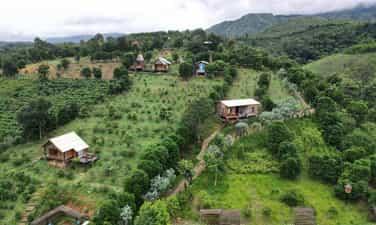
Nam Mua is the name of a bungalow - homestay in Xa Ry village, Huong Phung commune, Huong Hoa district. In the past two years, this name has become a destination for thousands of tourists inside and outside the province. And when this simple little corner far away in the middle of mountains and forests is the destination of many people, people are startled to realize that tourism is not something so far away. Bungalow 5 Seasons is located on a hill about 2 hectares wide, surrounded by endless coffee fields. It is a rural and somewhat wild space. If you don't step inside the gate at the foot of the hill, no one will think this is a tourist destination. But in fact it is an impressive tourist destination, if not the most attractive highlight of Quang Tri tourism in the past two years. So attractive that to book a bungalow here, people must book 7-10 days in advance. Before 5 Seasons Bungalow was born, people in Xa Ry village only knew about farming. Vast coffee fields have appeared in this area decades ago. The overlapping hills falling into the valley are also familiar to many people. Houses made from wooden planks are not too strange. But when someone puts all those details together, the hill becomes very soulful. And it has become a tourist destination that many people wish to experience. Mr. Hoang Thong - owner of Bungalow 5 Seasons is not a local. He is a businessman originally from Hue but lives and does business in the city. Ho Chi Minh. He arrived at Xa Ry and the familiar hill of the people naturally gave him many emotions. From then on, he began to "process" familiar things into things that were both familiar and strange. What is familiar is that he created a space of cozy separate houses nestled between trees located halfway up the hill to serve those who like to experience the feeling of peace and harmony in the mountains and forests. The strange thing he created is the structure of bungalow-style houses - a type of one-story house that originated in India since the 17th century. Each bungalow he breathed into a soul, has its own name and destiny. Perhaps that is the most "strange" thing. Butterfly House. The house is named after the Phalaenopsis orchid, a type of orchid that is both noble and most beautiful in the orchid family. The house design has a balanced square block with two wings embracing the outdoor playground in the middle. The exterior of the house is in brown tones combined with the interior in pure white tones, inspired by the color of Phalaenopsis orchids - Moths flying between the vast mountains and forests. You should come here during the coffee flower blooming season, to see the surrounding white coffee hills, making you feel like a butterfly fluttering in the middle of a fragrant flower sky. Hoang Thao's house carries with it the story of the distant past. Materials to restore this bungalow were kept intact from old machinery containers. The origin of this wood comes from India, brought to Saigon. To be reborn again, the owner brought a unique house here in the middle of a green coffee garden. Hoang Thao's house is like a branch of yellow grass, left behind by some bird on the top of the hill. The house is designed with an extended outdoor floor space in front, giving a view of the terraced fields of the Van Kieu people below. The wood surrounding the house, taken from pallets, still retains its original color, making the house yellow like the color of Hoang Thao orchids, one of the typical orchids of the Huong Hoa tropical rainforest. If you want to feel the cool air of the tropical forest, come here once. If you come here on foggy mornings, you will have the feeling of being immersed in clouds when the entire house is engulfed in mist. Van Dai House is like a harmony of countless colors with the rhythm of light. The house possesses a youthful and modern design. The reason why it is called Nha Van Dai is because it looks like a five-colored cloud tower that stands out among the mountains and forests. Van Dai is the name of a sturdy, strong and brightly colored orchid. The harmony of light will change its rhythm as the sun gradually moves through each window frame. These unique discarded door frames were used from discarded window frames of a nearby military medical station, allowing the house to receive sunlight from all sides. At night, Van Dai's house is like a lantern, lighting up the entire mountain and forest. Build a fire to immerse yourself in the colorful love song amidst the majestic mountains. Giang Huong House was originally an old abandoned wooden house that the previous owner used as a cow barn. The current owner bought the house, repaired it, renewed it and rebuilt it at the foot of the hill, next to the aquarium. Giang Huong House has the simple, ancient beauty of the mountains and forests and exudes the quiet demeanor of time, so it is called Giang Huong - a very fragrant orchid of the Truong Son forest. The left part of the house has its back against a row of ancient coffee trees, the right part has a stream view, and the front part has a lake. The house has a hallway outside, equipped with a fireplace inside, fully serving you the best experience when coming here. Queen's House: The name Hoang Hau's house comes from its prime location, located in the center of the hill, and Hoang Hau is the name of the most beautiful orchid of the Phong Lan family. The house with an area of 96 square meters was completed in just 12 days using the technique of assembling previously produced wall panels. The wooden material used to build the walls is made from pine wood salvaged from an old house. Even the name of the 5 Seasons captivates tourists. This land is called a "little Da Lat" in the Central region. In addition to the four seasons of spring, summer, autumn, and winter of heaven and earth, Mr. Thong included one more season in this name - the season of moods and emotions. And he created something special out of very ordinary things.
Quang Tri
5737 view


Sa Mu Pass
Sa Mu Pass - A destination that makes everyone surprised by the magical and beautiful natural picture. Sa Mu Pass is the intersection between heaven and earth and clouds. If we have two words to talk about Sa Mu Pass, they must be dangerous and enchanting. The pass is hidden among the wild, pristine mountains and forests of Huong Hoa district, Quang Tri province. This is not simply an important traffic artery, but also a meeting point for souls and people who are passionate about exploring and experiencing. This pass is nearly 20km long and nearly 1,400m above sea level. This place promises to be a unique destination, taking visitors into a fairyland amidst the clouds and sky! People often refer to Sa Mu Pass with its winding, winding roads. From the top of the pass, visitors can zoom out to see a vast area of sky. Or even the lush, vast primeval forests. And also the green valleys, the clear, winding streams. That beauty is both magical and poetic. Anyone must be amazed and amazed by that magical pristine feature! When you come here, you will know that it is truly as the name suggests. Sa Mu is the land of clouds. White clouds cover the top of the pass all year round, winding around the hillsides. It all creates a truly mysterious and blurry scene. The clouds gently weave through each crevice and through each tree canopy. The scenery at the pass changes depending on the time of day. Sometimes clouds cover the path. Sometimes it reveals a few golden rays of sunlight. Or sometimes, the clouds are so thick that they obscure vision. This makes visitors feel even more like they are lost in a fairyland. Completely different from the hot, uncomfortable sun of the Central region. Sa Mu Pass is a destination that promises to give you a fresh, cool, wonderful atmosphere. You will feel comfortable and at ease when immersing yourself in that space. On average, the temperature at the pass is only about 18 - 20 degrees Celsius. Therefore, it creates a feeling of refreshment and relaxation for all visitors. And for those who don't know, Sa Mu Pass is also the intersection between two climate zones. This has created an extremely diverse and rich ecosystem. These are vast primeval forests, brilliant orchid gardens, cave systems, and beautiful waterfalls. These are all highlights that you cannot miss when coming to this place. In addition, when walking along the pass, you can also encounter ancient trees hundreds of years old. Or wild flowers of all colors and rare birds. This biodiversity increases the appeal of Sa Mu Pass and attracts more nature lovers to explore and experience! With winding, steep, winding roads and many turns. With sharp turns, Sa Mu Pass is truly a big challenge for those who love adventure. It is this danger that creates the special appeal of Sa Mu Pass. They both want to explore nature and test themselves with thrills and conquests! Together with the majestic scenery of the mountains and forests, it all creates extremely magical and different colors. However, with a certain level of danger, ensuring safety when traveling on the journey to conquer Sa Mu is something that everyone must comply with to fully experience admiring the landscape here.
Quang Tri
6757 view


Ru Linh primeval forest
Besides famous historical relics, when traveling to Quang Tri, tourists can also explore the diverse and unique ecosystem. Among them, we must mention the Ru Linh primeval forest, which is a "change of pace" place that attracts tourists every time they have the opportunity to visit Quang Tri. Ru Linh primeval forest is located in Vinh Hien and Vinh Hoa communes, Vinh Linh district, Quang Tri province. This place is known as the "green lung" of Vinh Linh district in particular and Quang Tri province in general. Ru Linh is a very little remaining primeval forest in the middle of the plain in Quang Tri, characterized by red basalt soil at an altitude of 94m in the coastal plain. Ru Linh forest has a total area of 170 hectares, of which 100 hectares is covered by green forest, the rest is natural forest and plains. From Cua Tung beach and Hien Luong bridge about 6km you will reach Ru Linh forest. This place is famous for its closed evergreen forest vegetation and rich flora typical of the ancient Asian tropical flora. Visiting Ru Linh primeval forest in Quang Tri, visitors will learn about more than 200 species of 72 types. The most prominent are woody plant species such as: Mahogany, green ironwood, forest apple, wild chestnut, pentaphyllum, agarwood and many other types of trees exploited to make medicine. In the forest there are still many precious tree species such as ironwood, sycamore, agarwood, agarwood, chestnut, canarium, anvil... Animals in the forest are mainly birds, squirrels, civets and weasels and foxes. .. The special thing is that Ru Linh primeval forest has a rare population of mahogany. Among them, the largest tree can be hugged by several people, with a trunk dozens of meters high. Mahogany is distributed from the core of the forest to the edge of the forest. Up to now, Ru Linh primeval forest is surrounded by a densely populated residential area. In recent years, there have been a number of incidents that had negative impacts on the forest but were not significant. Besides the flora, Ru Linh also attracts tourists to visit animals with more than 73 species. Among them, there are 60 species of birds including shurikens, combs, storks, starlings... about 12 species of animals including civets, porcupines, pangolins, and red-bellied squirrels. Ru Linh is also famous for its rare wildlife including snakes, chickens, pythons, muntjacs, wild boars, muntjacs, and crows. According to people here, before 1945, there were wild animals such as leopards, tigers, and lions in Ru Linh. Visiting Ru Linh forest, visitors will have the opportunity to learn about the diverse natural ecosystem here. The most ideal way to explore the beauty of Ru Linh forest is to take a walk to admire the beautiful scenery and enjoy the fresh air here. Besides, you also have the opportunity to check-in virtually with beautiful photos of the mountain nature and animals at Ru Linh. Ru Linh primeval forest is associated with many famous landmarks such as: Ben Hai river - Hien Luong bridge, Cua Tung, Truong Son cemetery, Vinh Moc tunnels, ancient well system at Gio An... Therefore, when there is When coming to Ru Linh, you should not miss these famous attractions. Ru Linh primeval forest plays a role in providing agricultural water sources for communes in the east of Vinh Linh district and is considered the "green lung" here.
Quang Tri
6834 view


Tra Loc Tram
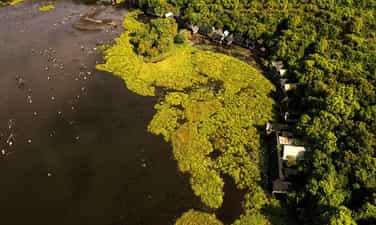
Coming to Quang Tri - a place known as the "Land of Laos wind" - visitors are surprised to see such a beautiful Tra Loc Tram eco-tourism site. This place is like a natural "specialty" given to the white sand region, because of its pristine beauty and rich ecosystem that has existed for hundreds of years. About 5km southeast of National Highway 1A, Tra Loc Tram is a swamp area of about 10 hectares in Hai Xuan commune, Hai Lang district, currently located within the campus of Tra Loc Tram eco-tourism area. "Tram" as the locals call it, means a swamp with lots of fish and shrimp. "Pha Tram" means releasing water in the lagoon to catch fish and shrimp. With a location in the middle of a low-lying plain and adjacent to the sand dunes of Hai Vinh, Hai Thien and Hai Quy communes of Hai Lang district, surrounded by sand dunes shaded by primeval cajuput forests, Tram Tra Loc is considered the "green lung" of Hai Xuan commune. This is also a never-ending source of irrigation water for agricultural production of people in the region. In particular, this eco-tourism area is strictly protected by the people and the government, so on normal days, no one is allowed to fish, cut trees, or pick lotus at the site. When coming here, visitors will be immersed in the poetic and lyrical natural scenery. Surrounding the lake are clusters of forests with thousands of large and small trees, with more than 100 species of plants, many of which belong to precious groups. Based on the terrain and climate as well as from the practice of developing ecotourism in neighboring provinces, Tra Loc Tram is a natural resource with great potential to develop ecotourism including typical natural landscapes. representative of the lake area, biodiversity values, especially endemic and rare species. With the richness and diversity of ecosystems including 3 main types of terrestrial ecosystems; The 5 types of wetland ecosystems, the richness and diversity of the ecosystems are the habitat for plants and animals and make Tra Loc known to tourists as an attractive tourist destination. With a charming landscape including many types of perennial natural forest trees, lotus ponds and many resident wild animals. Tram Tra Loc eco-tourism area will be a useful and interesting entertainment destination for tourists from near and far during the holidays. Besides, visitors can also enjoy dishes imbued with country flavors such as: steamed fish rolled with rice paper, grilled buffalo meat with bamboo leaves, cauldron fish porridge, etc. As gifts for relatives and people. You can also find green leaves, lotus seeds, Tra Loc leaf conical hats... sold around the bamboo area. According to the elders in the village, during the years of resistance, the Tram Tra Loc area was chosen as a revolutionary base and a forward surgical station in the south of Quang Tri. Many bombs and bullets have fallen on this land, especially during the resistance war against the US to save the country. Currently, this place still retains many historical and cultural relics, temples, etc. that were once traces of our soldiers' activities. In addition, at the end of the summer-autumn season (August of the lunar calendar), the people of the commune Hai Xuan, Hai Lang district (Quang Tri), the people of Tra Loc village organized the "Phat Tram" folk festival, also known as the "Catching fish" festival with the participation of hundreds of people inside and outside the province. . This is one of the few traditional fishing festivals in Quang Tri province still preserved today. According to the elders in the village, the "Pha Tram" festival has been around for more than 300 years and has become a typical traditional festival of local people, while helping to strengthen solidarity and connection. group in the village community. According to regulations, participants in "Phat Tram" can only use traps, nets, rackets... to catch fish and only catch big fish, while small fish are saved for the next season. Every time someone catches a fish, they shout to increase excitement and cheer everyone's spirit, making the atmosphere bustling and happy. After the festival, the pond is drained of water and cleaned, contributing to returning a fresh water environment and creating conditions for fish species to live and develop. Quang Tri with the advantage of eco-tourism areas in harmony with pristine nature, fresh, cool climate, fresh food, eco-tourism areas are increasingly attracting tourists from near and far. And especially about Tra Loc Tram, visitors are immersed in the cool, quiet space of pristine nature, can hear every breath of creatures, feel the immense green of the mountains and forests. This place is like an ideal resort paradise that attracts tourists, making anyone who sets foot here never want to return.
Quang Tri
7019 view


Holy Land of Our Lady of La Vang
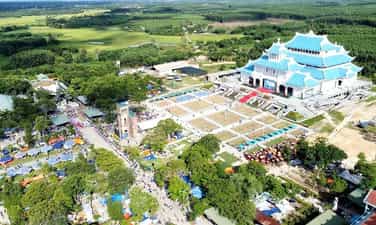
La Vang is a famous place in Quang Tri, a familiar place to all Catholics in Vietnam. This is also a place that retains traces of history and is the largest Catholic pilgrimage center in the country. La Vang, full name is Our Lady of La Vang Pilgrimage Center, also known as Our Lady of La Vang Shrine. ), located in Phu Hung village, Hai Phu commune, Hai Lang district, Quang Tri province. There are many explanations for the name La Vang, including two popular explanations, agreed upon by many people and passed down. up to now. One argument says that this is an area with a lot of "La Vang" trees, both for drinking water and for curing diseases. The word La Vang later became popular everywhere, the three stars lost copies and were read left as La Vang. More than two hundred years ago, La Vang was a small land, lost in the middle of the sacred forest, poisonous water, mountains and hills. desolate, few people pass by. According to ancestors, during the terrible persecution in mid-1798, some believers had to find a place to hide. They took refuge in the mountains and forests of La Vang. While hundreds of people gathered to pray and recite prayers under the ancient banyan tree, which is now the location of the Shrine of the Virgin Mary, they saw a beautiful lady wearing a robe, holding a child in her arms. They were comforted and shown how to cut branches and leaves around the place where they were hiding and boil water to drink, which would help them overcome difficult situations and illnesses. She also promised: "From now on, anyone who comes to pray to Mother here will receive Mother's grace and support." Since then, the event of the Virgin Mary appearing in the mountains and forests of La Vang has been spread everywhere through generations. And after many changes in times, after many constructions, in 1961, La Vang church Vang has been made a "National Shrine dedicated to the Immaculate Heart of Mary" and La Vang Sanctuary is a "National Marian Center". After more than two hundred years, La Vang has now become a famous landmark and the largest Catholic pilgrimage center in the country. Through a long history of construction and development, La Vang today is a large pilgrimage center, located on an area of 190,106 square meters, divided into many subdivisions with different functions, many of which have not yet been implemented. As a tourist, when coming to La Vang, three works will catch your eye and attract you from the moment you arrive, including: The ancient bell tower is the remaining relic of the old Basilica. The old cathedral was built in 1925, inaugurated in 1928 and elevated to a basilica in 1961. During the war, the cathedral was destroyed by bombs and bullets in 1972. After 44 years of existence. Currently, only the bell tower remains of the cathedral and has been preserved as a historical relic to this day. Traces of time and bombs are still imprinted on the monument. Along with the new Basilica under construction, depending on the angle of view, you will easily feel the interference between old and new, of continued tradition, of Asian architectural features, boldly Vietnamese. South of the relics and all the works behind the ancient bell tower. La Vang Basilica was started in 2013, expected to be completed in 2020. However, due to the impact of the epidemic, the project is still ongoing. in the finishing process. The Basilica of Our Lady of La Vang was built on an area of 13,464 square meters. 140m long in North-South direction, 104m wide in East-West direction with capacity of 5,000 people. This is the largest construction project of the Vietnamese Catholic Church to date. When you come here, you will clearly feel the Vietnamese architecture of the church. The project is designed in an Asian style, bringing Vietnamese soul through familiar and familiar tiled roofs, sculptural lines and decorative details that bring the breath of Vietnamese tradition and are innovated and simple to create. elegant and timely process. The shrine area of Our Lady of La Vang, simulating the shape of a banyan tree, is a structure built at the location where it is said that the Virgin Mary appeared in the past, on the grass, under the banyan tree. This is also where the statue of Our Lady of La Vang is located and where pilgrims come to pray. The project was built in 1963, based on the project of architect Ngo Viet Thu (who designed the Independence Palace), however Only the rough parts have been completed due to war and chaos. By 2008, "Three artificial banyan trees" were officially completed with artistic styling, like real banyan trees. In addition to the three points above, La Vang also has a number of works and relics that you can visit such as ancient wells, reliefs, and sculptures designed to be placed on many paths in the pilgrimage center, or The area is decorated with thanksgiving plaques of those who came here to ask for favors and received them. The main and biggest holiday of the year in La Vang is August 15 every year. This holiday is usually held for 3 days, from August 13 to August 15 every year, with a congress cycle every 3 years. On each of these occasions, hundreds of thousands of people flock to La Vang to attend the ceremony, both Catholics and non-Catholics. So to visit the most convenient way, you can go any day of the year, except for this major holiday, especially if you come to La Vang just for sightseeing purposes. The land of La Vang always has a special place in the hearts of Catholics, coming here you will feel incredible peace. This place is also always willing to welcome any visit with the most complete hospitality.
Quang Tri
7573 view


