Tourist destination
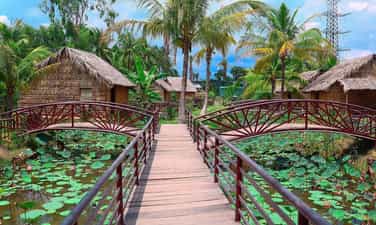
Ben Tre Green Village tourist area
Located in the top hottest eco-tourism areas of Ben Tre, Lang Xanh resort and entertainment area is considered an ideal destination, a place to relieve stress for many families, friends, especially students. The student is on summer vacation and wants to find a place to temporarily escape the noise of the smoky urban area to immerse himself in the Southern river region, living in the fresh natural air and idyllic scenery. Ben Tre's brand new eco-tourism area is currently located at 111D, Provincial Road 883, An Phu Thanh hamlet, An Khanh commune, Chau Thanh district, Ben Tre province. Green Village is only about 80km from Ho Chi Minh City center by road. If you depart from the Western bus station, it will only take you about 1.5 to 2 hours to travel. The road to the tourist area is quite easy and quick because it is located right at the front. Specifically as follows: You follow Highway 1A southwest until you reach My Tho city. Next, choose to turn right onto Highway 60, cross Rach Mieu bridge, and pass the toll station. Village Xanh eco-tourism area is only about 4km from the bridge, so when crossing the bridge, go slowly and pay attention to the road. You keep going until you reach the roundabout then turn right to enter An Khanh commune. From here, continue about 3km to reach this paradise of entertainment and tourism. This attractive place is known as a famous entertainment and entertainment paradise in the coconut land in particular and the West in general. With a campus of more than 3 hectares, Ben Tre tourist destination is covered with a system of green trees and many ponds and lakes spread over a large area. Even though the South is in the hot season with high temperatures, when checking in at this resort, you will not worry about encountering scorching sun because the resort is equipped with a mist spraying system to reduce heat. Cooler and better than the artificial rain system on the leaf huts on the Green Village campus. All create a green, clean, and pleasant space for relaxation and play for visitors. Ben Tre in particular and the Western provinces in general have many famous eco-tourism areas or amusement parks. From Phung islet, Lan Vuong tourist area, Ha Thao, Chin Song, Cai Mon fruit garden,... are all familiar names to tourists who love traveling to the West, especially young people. Having only recently appeared, the Green Village eco-tourism area is not inferior to the above names and quickly reached the top of popular destinations. Because this place makes a mark as a paradise for fun and entertainment and is also a famous place for delicious dining in the land of coconuts. In addition, this tourist destination also possesses fresh air, peaceful and airy village scenery, infrastructure in harmony with nature with many fun activities, rustic entertainment, and group activities. Another advantage of this Western tourist coordinates is that it is suitable for tourists of many different ages, from families, groups of young people, students or the elderly because there are many diverse experiences depending on their needs. depending on your different travel needs, from relaxing, sightseeing, going for a walk or participating in games, enjoying Western cuisine,... Because Green Village has an area of up to 3 hectares, with just rivers, lakes, amusement parks, dining areas, and restaurants The accommodation and overnight stay is extremely comfortable and convenient amidst a cool natural setting. Most Western tourists are quite familiar with this type of eco-tourism with dozens of hot hit locations recently such as My Khanh Can Tho tourist area, Tan Lap Long An floating village, Long - Ly - Quy - Phung or Thoi Son Tien Giang island,... Also with that familiar rural style, the Green Village tourist area has quickly become popular with many tourists and is increasingly visited. What could be more interesting than after tiring and stressful days of work and study, you take a bus to the West, stop in Ben Tre and check in to Green Village. Then here, the countryside tour begins. It is a relaxing feeling when walking on clear, peaceful country roads, passing through gardens, and looking at lush green fruit trees. Sometimes when your feet are tired or you need to avoid the sun, you should step into the leaf huts to rest your feet. Those who love taking photos will definitely be extremely satisfied when coming to Green Village because this place has many beautiful check-in coordinates. From the houses roofed with coconut leaves, built of clean wood, surrounded by tall coconut trees to the tiny grocery store decorated with cute landscapes that are both a place for fresh air and a prime photo corner because they don't touch the goods. with anywhere else. On the way, visitors will also encounter many beautiful ponds and lakes filled with lotus and water lilies, adding to the landscape wooden bridges, designed in arcs to form straight paths, creating a beautiful and peaceful scene. strange. After taking a walk to enjoy the surrounding scenery, you definitely have to immediately participate in the exciting fun activities at Green Village. It can be said that most of the entertainment services here have bold rustic features but are extremely unique and creative, not inferior to Lan Vuong tourist area. Is there anyone who wouldn't be excited and excited when they can put on a Ba Ba shirt, lightly wrap a bandana around their head or shoulders, and then go through each game with their best friends, stepping on the bus to return to their childhood with this game? swing bridge, ride a bicycle across a plank bridge or swing across a lake. Not only that, visitors should prepare their nerves of steel to slide down the waterfall or raft on the river. In addition to the experience of participating in fun and attractive activities, the Green Village eco-tourism area also attracts many local tourists with its famous Ben Tre delicacies.
Vinh Long
6967 view


Phu Da Island
Ben Tre is not only the land of coconuts and many sweet fruit orchards, but also many lands of islands and land banks located in the middle of the Tien River that have been built up over the years. They are Phung Islet, Quy Islet, Oc Islet, Tien Islet,... and especially Phu Da Snail Islet - a place considered the land of rice snails, a Western specialty. Ben Tre is the land known as oasis of the Southwest region because it is surrounded by four large rivers: Ham Luong, Co Chien, Ba Lai and Tien rivers and an intricate system of canals. That is why this place is extremely favored by nature. Alluvium from large, gentle rivers accumulates for many days and forms many dunes and islands in this country. Among them, we cannot ignore Phu Da rice snail dunes. The land dune called Phu Da is located in the middle of the section of Co Chien river flowing through, currently belonging to Vinh Binh commune, Cho Lach district, Ben Tre province. This area has fresh water all year round and is also the growing place of rice snails. Like Thoi Son island, Tien Giang, An Binh island, Vinh Long, Phu Da snail island is also a garden land. With a length of more than 3km, a width of 500m and all of it is riverside alluvial land. This dune has the interesting feature of having fresh water all year round from the surrounding rivers, and always receiving a lot of alluvium, creating a poetic scene, fresh air and especially many gardens. Eat fresh, fruitful fruit with all kinds of trees that produce fruit throughout the four seasons such as rambutan, grapefruit, longan, durian, mango, etc. Phu Da people have always been proud of preserving the charming natural landscape, the green color of coconut rows and fruit gardens for many years, because human hands rarely touch the beauty of the garden. is still intact with tourists from all over the world coming to Ben Tre. Perhaps that is why this dune area is always in the top 10 most beautiful eco-tourism areas in Ben Tre at present, next to the eco-tourism areas of Phung dunes, Quy dunes, Tien dunes,... In addition to the fruit gardens Lush and lush, Phu Da is also famous for its unique cuisine, rice snails. It can be said that Phu Da snail is the ideal address for those who are foodies and love rustic specialties of the countryside. The dune rice snails here are famous for being sweet, fatty, crunchy and large. Because the dune is located between many rivers flowing through it, especially the Co Chien river, it has become a habitat for this species of rice snails. They live at the bottom of the river, eating alluvial deposits all year round, so the meat is fragrant and greasy, the snail's intestines are white, and the snail's shell is thin and green. Living in freshwater areas and being able to bathe in the cool water of Tien River, Co Chien and Ham Luong rivers, after being caught, this rice snail species can be immediately processed into a dish without having to spend time soaking the snail in water. water to release slime like other snails. Through the skillful hands of the ladies, visitors to the island will be treated to many delicious dishes made from this snail species such as rice snails stir-fried with coconut, rice snail pancakes, boiled rice snails, rice snails stir-fried with lemongrass. chili pepper,... If you have more time, you should visit the dune and if you are lucky, you will also be told by the elders here about the origin of the name of this special dune. According to stories, in the past, people in this area were very poor. That's why the people named the island Phu Da to express the hope that the majority of people will escape poverty and have food and wealth. In the past, this land had few people living and although poor, it was fortunate to have countless snails. At that time, those who were poor also relied on snails to help them gather vegetables. Later, people figured out how to bring those snails to other rich families on the island in exchange for rice. And from there, the "brand" of Phu Da rice snails was born, becoming famous, gradually attracting a large number of tourists to visit and enjoy impressive Ben Tre delicacies. Today, to protect the habitat of this snail species, the section of Co Chien River flowing in Phu Da snail dunes has been blocked, preventing large boats from entering to limit harm and negative effects on development. of rice snails. After checking in to Phu Da island, enjoying the specialties of rice snails, visiting fruit gardens, visitors can also participate in attractive, rural-style fun activities such as going to the monkey bridge, bathing in alcohol, Picking fruit, participating in canoeing, wading in ditches to catch fish,... These are all interesting games that are not inferior to the fun games at Lan Vuong or Lang Be tourist areas. Next, continue your journey to explore Phu Da snail dunes with your family and friends by visiting Phu Da Temple to worship and pray for peace. And after that, don't forget to visit the famous Ba Chua Xu Temple "whatever you pray for" in the dunes for pilgrimage. These are also two famous spiritual tourist destinations in Phu Da. In addition, on the dune there is also Phu Da church for Catholics in particular and tourists in general who want to visit and visit. Phu Da Islet has been an interesting ecotourism destination for domestic and foreign tourists, especially on weekends or short holidays. Come to Phu Da rice snail island to enjoy the extremely famous rice snail specialty of Ben Tre coconut land.
Vinh Long
6184 view


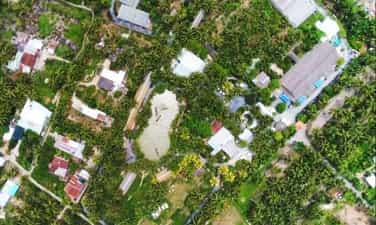
Phu An Khang Tourist Area
Along with charming river nature, Phu An Khang eco-tourism area in coconut land - Ben Tre is known as an ideal entertainment and relaxation spot. Return to Ben Tre on weekends, Tet holidays or whenever In your free time, you don't need to go far because there is a tourist area located right in Binh Phu ward right in the city center. With an area of more than 3 hectares, this place is like a peaceful world completely separate from the noisy atmosphere and dust outside. Familiar images such as coconut rows, shady areca rows, fruit and vegetable gardens, and quietly flowing waters take you back to a beautiful relaxing space. Besides, Phu An Khang eco-tourism area It also brings you and your relatives or friends exciting moments of fun with interesting games. Canoeing, making cakes, digging ditches to catch fish, going to monkey bridges, etc. After playing to your heart's content, you can also enjoy the delicious cuisine of the Southwest region. Relax and listen to melodious amateur music. No need to go far, just a little free time and you will have dozens of happy memories in this place. With fresh air and a luxurious restaurant that can accommodate up to 1,000 people, this resort is chosen by couples to hold their wedding parties. As for young people, families or groups, this place impresses with its diverse activities. Being immersed in nature brings a lot of joy and relieves stress extremely effectively. Temporarily ignore the hustle and bustle of daily life and return to Phu An Khang eco-tourism area to transform into a real farmer. Put on your authentic Ba Ba clothes and participate in fun activities for you to experience. Try once to cross the shaky monkey bridge spanning both sides of the bank, row a dinghy to admire the scenery on both sides of the green canal or row a boat to catch ducks, row a canoe by hand,... Or roll up your pants and wade in the ditch to catch ducks. Fishing and catching shrimp are also one of the true farming experiences that many people love, especially foreign tourists. There are even competitions to see who has the fastest hands and eyes. And even though it was a bit dirty from having to wade through the mud, everyone had fun with this game. If you catch big fish and shrimp, you can bring it back to the restaurant and have it processed to enjoy on the spot. In a large campus full of activities close to nature, Phu An Khang eco-tourism area is an ideal place to organize camping picnics, team building, etc. Participate in spirit-bonding games. Exciting and exciting team spirit such as: riding a bicycle over a plank bridge, riding a monkey bridge without handrails, the challenge of swinging across a river, riding a bike underwater,... Not only that, you can also play Sasuke with your friends. Obstacles require endurance and flexibility to overcome. Along with health promotion activities, the tourist area also regularly organizes attractive games that attract both locals and tourists to participate. Typical examples include: contest of wrapping banh it tran, wrapping banh chung, pouring banh xeo, making grilled banana cake, etc. Through these activities, you can test your ingenuity and learn about Western cuisine. Eat delicious food to your heart's content. You can register to participate in advance so that the resort can prepare before arriving. The spatial layout of this tourist area bears the typical characteristics of the Southwest countryside. Under the tall coconut trees are lush green fruit gardens. In addition to the specialty orchards of oranges, guavas, jackfruits, and cherries, there are also indoor growing areas with high-quality fruits such as green melons, hanging gardens of cherry tomatoes, American figs, etc. Or hydroponic vegetable gardens, clean vegetables grown for tourist areas. Walking around Phu An Khang eco-tourism area, not only will you be able to check in with beautiful scenery, but you will also be able to pick fruits and eat them right in the garden. After that, you can go to the leaf huts to fish, bottle-feed the fish, and visit the Koi pond. Or ride a horse or tram to explore the countryside around the tourist area and other locations. Visit the coconut candy factory, handicraft workshop, beekeeping house, etc. After you are tired, rest in a hammock to enjoy the cool breeze and listen to the melodious music of amateur music resounding in the peaceful atmosphere. Peaceful during the day, at night this place is even more sparkling with fanciful decorative lights. This amusement park also has interesting activities for children so that everyone in the family can enjoy the vacation to the fullest. Experience traveling to the West to the fresh coconut land, enjoy some peace right in the heart of the city. Especially, you can have fun and eat well to have truly meaningful holidays with your loved ones.
Vinh Long
5982 view


Tra Vinh
Tra Vinh is located at the end of the island, between Tien and Hau rivers. The terrain is mainly flat land with an altitude of less than 1m above sea level. Because it is located in the coastal plain, there are many sand dunes running along the coast, forming parallel curves. The closer the beds are to the sea, the taller and wider they are. With separation by rice fields and a network of roads and canals, Tra Vinh's terrain is quite complex. There are low areas sandwiched between high fields, and the slope is only shown on each field. In particular, the southern part of the province has low land, divided by bow-shaped sand dunes into many small depressions, with heights of only 0.5-0.8m. Therefore, every year, this area is often flooded with saltwater for a period of 3-5 months. Located in the Mekong Delta, Tra Vinh province also has common advantages such as: abundant radiant light conditions, high and stable temperature. However, due to the characteristics of the coastal climate, Tra Vinh province has some meteorological limitations such as strong winds, high evaporation, and little rain. Tra Vinh is located in the tropical region with a temperate climate, average temperature from 20 - 27 °C, average humidity 80 - 8000%/year, less affected by storms and floods. The rainy season is from May to November, the dry season is from December to April of the following year, the average rainfall is from 1,400 - 1,600mm, with favorable conditions for investment in production, business and tourism[4] . Every year, drought often occurs, causing difficulties for production with a number of consecutive days without rain from 10 to 18 days, in which districts such as Cau Ke, Cang Long, and Tra Cu are districts that rarely suffer from drought. Tieu Can district has an important drought at the beginning of the crop around June and July, while the remaining districts such as Chau Thanh, Cau Ngang, Duyen Hai have drought in the middle of the crop but in July and August are often more serious. Tra Vinh also faces a current difficulty: being flooded with salt water during some dry seasons of the year.
Vinh Long
8233 view


Ang Pagoda
When mentioning Tra Vinh, people think of the land of ancient Khmer pagodas and historical relics with many legends, associated with the journey to explore the South. Tra Vinh province has many Khmer pagodas, of which Ang pagoda is considered one of the largest pagodas, typical of Khmer pagodas in the province. Ang Pagoda, called Wat Angkor Raig Borei in Paly language, is located in Ward 8, Tra Vinh city. The pagoda is located in the scenic cluster of Ao Ba Om and the Khmer ethnic cultural museum, a highlight not to be missed in the tourist map of Tra Vinh. Looking from afar, you will see the temple's buildings with tower-shaped architecture rising straight to the sky, with a magnificent and magnificent beauty but no less solemn. According to historical books, Ang Pagoda was built in the 10th century (990) and was built on its current scale in the 3rd year of Thieu Tri, i.e. 1842 according to the solar calendar. Since then, the pagoda has been restored and repaired many times, including the construction of new auxiliary buildings such as monks' houses, main halls... but the main hall basically remains in the same state as when it was first formed. . Like many other Khmer pagodas in Tra Vinh, Ang Pagoda is a complex of architectural works including a monastery, a lecture hall for teaching Paly and Khmer script... surrounding the majestic main hall. The pagoda faces east, reflecting the Buddhist ideology that Shakyamuni Buddha in the west looked east to save sentient beings. The gate of Ang Pagoda is decorated with very intricate and sophisticated sculpture art with statues of lizards, fairies, and magical birds following traditional Khmer motifs. From the main gate is a wide walkway between two rows of ancient trees with large, tall trunks, creating a majestic stance for the temple. The walkway passes through a wide moat surrounding the area, creating a fresh, cool atmosphere. The pagoda's campus is 4 hectares wide with many endemic plant species on sand dune land such as star, dau, bamboo... including hundreds of ancient star and dau trees that shade the ancient pagoda all year round. The center of the Khmer temple is the main hall (Preah Vihea) worshiping Buddha, which converges and reflects the level of contemporary artisans in the art of architecture, painting, sculpture... The entire main hall is supported by pillars. by a system of 18 columns made of precious wood. Inside the main hall is a large space with 12 pillars decorated with dragon images, painted and gilded. The roof of the main hall of Ang Pagoda is uniquely structured, including three roof levels with beautiful and harmonious colors, of which the top two roofs are very high and steep, creating a sacred feeling that Buddhists must be very humble about. when looking up. The two gables are closed with two elaborately carved triangular wooden panels. The roof mounds have the snake god Naga with a curved crest, symbolizing the bridge between the world and Nirvana. The four walls of the main hall are unique murals expressing Buddhist thoughts, through the spiritual path of Shakyamuni Buddha. On the ceiling are four monumental frescoes showing four stages in Buddha Shakyamuni's life: Buddha's birth, Buddha's renunciation, Buddha's enlightenment and Buddha's entry into nirvana. The Buddha altar in the main hall of Ang Pagoda was also carefully crafted by artisans at that time. The entire pedestal is a lotus flower with many petals placed behind a wooden hammock carved very delicately with many images of flowers, leaves, and animals painted in red and gold. Like other Khmer Theravada temples, the main hall of Ang Pagoda only worships Shakyamuni Buddha in a meditating sitting position. In front of the main hall is a tower containing the remains of the monks who presided over the temple through the ages. What is special is that this is the only five-spired tower among Khmer temples in Tra Vinh. The five-spired tower is the influence of Hindu thought on the universe, nature and humans. After nearly two centuries of solidity and majesty surviving the effects of weather, wind, rain and time, Ang Pagoda is the pride of the Khmer people in particular, and of the Tra Vinh ethnic community in general because Unique, pinnacle values in the art of architecture, painting, and sculpture imbued with Khmer cultural identity, with certain exchanges with Vietnamese, Chinese, Indian, and Thai cultures... In the spiritual life of the Khmer people, the temple is not only a place to practice and perform Buddhist rituals but also a place to preserve and transmit traditional cultural values from generation to generation. With those great material and spiritual values, Ang Pagoda was ranked a national historical-cultural relic by the Ministry of Culture and Information, now the Ministry of Culture, Sports and Tourism, in 1994.
Vinh Long
6157 view


Co Pagoda
Tra Vinh is one of the provinces in the Mekong Delta where many Khmer ethnic people live. Khmer people are very devout Buddhists with rich and diverse festivals, creating a unique identity for Khmer culture. There are pagodas and temples all over the villages, hamlets, and squirrels in Tra Vinh; Every Khmer pagoda is a work of art, including Stork Pagoda. Nodol Pagoda - Co Pagoda is one of the prominent Tra Vinh tourist destinations that tourists should not miss. Co Pagoda's real name is Nodol Pagoda, or Giong Pagoda, but the Khmer people call it Wat Phno Don because there are many coconut trees around (in Khmer, Wat means pagoda, Phno means sand dune, Don means coconut tree). People often call it Co Pagoda because for more than a hundred years this place has become the residence of thousands of storks of all kinds such as storks, gongs, pigeons... of which the largest population is the stork family with many Types: white stork, ibis, red-headed stork, yellow-headed stork, yellow-billed stork, black-billed stork... Co Pagoda is located in Cay Da hamlet - Dai An commune - Ta Cu district, about 40km south of Tra Vinh City. To get to Co Pagoda, from the center of Tra Vinh City, you follow Highway 54 to Tra Cu district, continue towards Dinh An port (a branch of Hau river) to the welcome gate of Dai An commune, turn On the left side you will see the majestic Co Pagoda gate with colorful patterns and motifs. According to the history of Co Pagoda, the pagoda was built in 1677. Over more than 300 years of existence and development, Co Pagoda has been restored countless times, large and small. The pagoda gate was restored in 1968 and the main hall was restored in 1944. After the most recent restorations in 2009 and 2012, the pagoda was completed and put into use today. Like other Buddhist temples in Tra Vinh province, Co Pagoda has an architectural complex typical of Southern Khmer pagodas. Including works such as the temple gate, main hall, ossuary tower, monk's house, meeting house... arranged harmoniously on a large campus. The temple gate is decorated with many unique and outstanding decorative patterns, attracting eyes from the first visit. The main hall of the pagoda has a quite unique design with curved roofs following the dragon tail model, above there are pointed towers shaped like Xome mountain and images familiar to Khmer people such as the four-faced god Mohabrom. , god bird Kayno, Riehu (Reahu), Mahaknot... The space inside the main hall is decorated very solemnly, the highest position is a large statue of Shakyamuni Buddha, below are smaller statues. The walls in the palace are decorated with many splendid, colorful paintings, representing different Buddhist themes. The grounds of Co Pagoda are surrounded by green bamboo groves, rows of star trees, neem trees, oil trees, shady, and beyond are endless green rice fields,... Visit Co Pagoda in the morning Early or late in the afternoon, visitors can admire with their own eyes the sight of pairs and flocks of storks spreading their wings to search for food and returning to their nests after a hard day of foraging, creating a beautiful scene in the sky. Visiting Co Pagoda, you will feel your soul relaxed, quiet, lighter, and all the hardships, difficulties, and pressures of life will disappear. When visiting the temple, you should dress politely, you can rent Khmer costumes to enter the temple - in accordance with Khmer etiquette and also to take unique virtual photos.
Vinh Long
6373 view


Vam Ray Pagoda
Coming to Tra Vinh, it is impossible not to mention the unique Khmer pagodas of the people here. The most prominent one is Vam Ray Pagoda, which was rebuilt from the foundation of a more than 600-year-old temple destroyed during the war. Although newly built, it still carries the ancient and traditional features of Khmer Theravada Buddhism. Vam Ray Pagoda is located in Vam Ray hamlet, Ham Tan commune, Tra Cu district, Tra Vinh province about 35km from Tra Vinh city. Traveling to Tra Vinh, to get to Vam Ray Pagoda, from Tra Vinh city, follow Highway 54 to Tap Son, turn left onto Highway 53 to Tra Cu. Go past Tra Cu about 3km, cross Ham Giang bridge, immediately turn right, go on a small road to Vam Ray pagoda. Right from the outside looking in, the magnificence of this temple makes anyone feel overwhelmed, as if lost in a magnificent, brilliant golden palace. Sparkling yellow radiates everywhere in the temple from the dome, walls, supporting pillars, to even the reliefs and statues. Vam Ray Pagoda has Angkor architectural style, a typical Cambodian architecture. The pagoda has four gates and according to Khmer pagoda tradition, the main gate and main hall face east, symbolizing the Buddhist path of practice from West to East. The entrance to Vam Ray Pagoda is a majestic gate painted in gilded color, the top of the gate is shaped like pointed towers stacked on many floors, hidden in the surrounding green space, making the pagoda gate even more prominent. In the middle of the yard of Vam Ray Pagoda, there is a towering cylindrical column supported by stylized columns shaped like the Naga god snake with 5 heads, used to light candles on festive days, symbolizing that Buddhism will enlighten people. species, helping people live virtuous lives like the snakes that were tamed by Buddha according to the Khmer concept. In the middle of the yard of Vam Ray Pagoda, there is a towering cylindrical column supported by stylized columns shaped like the Naga god snake with 5 heads, used to light candles on festive days, symbolizing that Buddhism will enlighten people. species, helping people live virtuous lives like the snakes that were tamed by Buddha according to the Khmer concept. The inside of the main hall is splendidly decorated with colorful murals imbued with Khmer culture. The running theme of the works is the life of Buddha and Buddhist teachings. The main hall's spacious, elegant and cool space creates comfort for visitors as well as worshipers. Looking slightly to the Southeast of the main hall is the 54m long statue of Shakyamuni Buddha entering Nirvana, placed on a pedestal equivalent to a 2-storey house. The entire statue and pedestal are also painted with gilded lacquer. The artistic peak of Vam Ray Pagoda is reflected in the unique motifs on the dome, walls, columns and stairs, such as the head statue of the four-faced saint Maraprum, the half-human half-bird goddess Kayno, the Marakrit god bird... Not only Vam Ray Pagoda, but all Khmer pagodas in general have always been the center of cultural activities of the community in the area for thousands of years. From pure Buddhist holidays to special Khmer holidays and festivals such as: CholChnamThmay, Sendôlta, Okombok, Robe Offering Ceremony... all take place at the pagoda and are associated with traditional cultural forms of the Khmer people. ethnic and folk games, attracting a large number of tourists to visit.
Vinh Long
6413 view


Khmer Museum
Tra Vinh Museum of Khmer Ethnic Culture is located in Ward 8, Tra Vinh city, more than 5 km southwest of the provincial center, located in a complex of cultural and tourist areas, connected with famous relics. Ba Om Pond, the architectural and artistic relics of Ang Pagoda and the Provincial Cultural and Sports Center, are very convenient for students, ethnic culture researchers and tourists to visit, research, learn about. Tra Vinh Khmer Ethnic Culture Museum is a two-storey building with an area of more than 1,700 m2, designed and built on the basis of a harmonious combination of traditional Khmer ethnic architectural style and modernity. The campus is 1 hectare wide, with many shady green trees all year round. The museum currently stores, displays, and introduces more than 800 artifacts, images, and documents reflecting the material cultural and spiritual cultural life of Tra Vinh's Khmer ethnic community, from traditional to contemporary. . From the entrance gate is a large yard with many trees, creating a quiet atmosphere for the Museum campus, completely separate from the noise and bustle outside. This is a necessary preparation for visitors, especially researchers, to calm down before focusing on learning comprehensively and deeply about Khmer cultural identity, through artifacts, Images and documents are displayed and introduced. On the campus, in the northern corner is a tower containing the remains of a prominent person, intellectual, and revolutionary activist of the Tra Vinh Khmer people in particular, and the Southern Khmer people in general, Maha Son Thong (1910). – 1997). After studying abroad and receiving a Maha degree (equivalent to a Bachelor of Buddhist Studies), he participated in the pre-uprising period of the revolution, going through two resistance wars against imperialism and the work of building and defending the Fatherland. Maha Son Thong has held many important positions such as Deputy Secretary of the Tra Vinh Provincial Party Committee; Regional Commissioner, Vice Chairman of the National Liberation Front and Head of the Khmer Transport Committee of the Southwest Region; Member of the Presidium of the Central Committee of the Vietnam Fatherland Front... Most of the ground floor area of the Museum building is an empty hall under the columns with many stone benches so visitors can sit and rest or walk around to discuss cultural issues of concern. The stairs upstairs are located in the middle of the lobby and below the stairs is a lovely semicircular lake with many ornamental fish swimming freely, creating a gentle and joyful landscape. Part of the ground floor area is divided into working rooms for Museum officials and employees. In these positions, responsible people can easily observe all activities as well as be ready to respond to guidance and introduction requests for visitors. The remaining part is the Gallery of the revolutionary struggle traditions of the Khmer people of Tra Vinh in the pre-uprising period, the two resistance wars against French colonialism and American imperialism as well as the current work of building and defending the Fatherland. .
Vinh Long
6452 view


Mangrove Forest eco-tourism area
Rung Duoc eco-tourism area is located in Long Khanh commune, Duyen Hai district, Tra Vinh province. This Western tourist destination is located in the mangrove ecosystem along the Southwest coast. This is a place of conservation and habitat for many species of wild animals and plants, as well as aquatic species that are at high risk of extinction. Local people call it mangrove forest because this tree species surrounds the entire ecological area with more than 20 years of age and spreads over a huge area of more than 200 hectares. The mangrove forest is located not too far from the center of Tra Vinh province, only about 7 km from the famous Ba Dong tourist area, so it is quite convenient for tourists to travel. This forest has many types of trees typical of the mangrove ecosystem such as mangroves, fish sauce, dates, parrots... of which the largest number is mangrove trees. This type of tree not only prevents the intrusion of sea water into the mainland but also serves as a habitat for many types of animals typical of mangrove forests. Therefore, this tourist and conservation area has high ecological value. Moreover, the mangrove forest of more than 200 hectares is located in the mangrove forest system along the Southwest coast, so it is carefully cared for and preserved by the government. Tra Vinh is only about 170k from Ho Chi Minh City, so visitors can go to the Rung Duoc tourist area in this province by motorbike or bus. The specific way to move is as follows: By motorbike: Starting from Saigon, you go to Binh Chanh, then turn onto Highway 1 and continue in the direction passing Ben Luc bridge to Tan An city of Long An province. From here, visitors continue to My Tho city, along Highway 60 through Ham Luong bridge to reach Mo Cay district. Continue turning onto Highway 53 and go straight and you will reach Tra Vinh city. From the city center, you only need to go about 51km to reach the Mangrove Forest tourist area. By bus: The journey is quite simple because you just need to go to Mien Dong bus station, choose to buy a bus ticket to Tra Vinh with a ticket price of around 100,000 VND/person. When you arrive at the bus station, choose to travel by taxi or motorbike taxi and you will reach the attractive Tra Vinh tourist destination called Mangrove Forest. Tra Vinh is located in the Mekong Delta region, so it also has a temperate tropical climate typical of this region. Just like the provinces of Ben Tre, Tien Giang, Long An, and Tra Vinh, it is cool all year round, so visitors can come to the Rung Duoc ecological area, Ba Om pond, Long Tri island, and Ho island tourist area at any time. Any time of the year is fine. However, the advice that indigenous people often give tourists is to choose to go in the rainy season because this is the time when trees grow, the climate is pleasant, and animals are more diverse than the dry season. Specifically, from May to November every year, with heavy rainfall and flooding season, the vegetation in Mangrove Forest grows strongly, attracting many animal species to live, feed and breed here. . When checking into Tra Vinh Mangrove Forest, visitors are free to experience fun, sightseeing, and exploration, most notably the following activities: Excursing to the Mangrove forest by road or waterway: depending on your preferences and schedule, you can choose one of two ways to visit, but exploring the river and forest by waterway is often chosen by tourists more because If you go this way, you will be able to sneak into large and small mangrove bushes, with trees that are decades old, growing together below but still leaving space above, creating a vast blue sky. Tourists can freely enjoy the exciting and new feeling when each motorboat floats in the fresh space of thousands of trees, birds and many other typical creatures of the forest - river. Tra Vinh Mangrove Forest also has a diversity of animal and plant species like Can Gio mangrove forest or Nam Can Ca Mau because there are many similarities in climate and soil. The fauna here is truly rich with monitor lizards, squirrels, weasels, cobras, turtles, etc. along with many types of fish, shrimp, aquatic products and many typical birds of the mangrove forest. . Coming to the ecological area, you will feel like you are slowing down, experiencing the feeling of being completely immersed in nature, heaven and earth, freely breathing the fresh, cool air of the countryside. In addition to the above activities, when coming to Tra Vinh Mangrove Forest tourist area, you will also have the opportunity to listen to the river songs, imbued with the countryside flavor of the local people. When sitting on small boats gliding, don't forget to spend some time, chat and learn about the lives of local people. The feeling of hearing rustic melodies, rustic words, and daily life stories of the people of this land amidst the cool and fresh nature is truly very interesting. There are many delicious dishes and famous specialties that have made the name of Tra Vinh cuisine. So when visiting the Rung Duoc tourist area in particular and Tra Vinh in general, don't miss the experience of eating noodle soup, rice noodles, porridge, Ben Co noodle soup, dishes made from shrews, grilled fish of all kinds. over a fire made of dried mangroves, silver shrimp with lemon, brown fish cooked in sour hot pot with fruit, fish sauce, etc. The dishes are sold in many places, but tourists should visit delicious restaurants in Tra Vinh to Feel free to choose and enjoy.
Vinh Long
7559 view


Cu Lao Tan Quy
Tan Quy island has a part of Cau Ke district, Tra Vinh province and a part of Tra On district, Vinh Long province, famous for being a green island with fruit trees laden with branches, creating a very typical beauty of river gardens. Western country. Tan Quy island is located in An Phu Tan commune, Cau Ke district, about 45 km northwest of Tra Vinh city. To get to Tan Quy island, it only takes about 10 minutes to take a ferry from Ben Dinh beach. However, if you want to see the panorama of nature and admire the beautiful scenery on both sides of Tay Quy island, you can choose to depart from Ben Cat. In addition, visitors to Cu Lao can sit on canoes gliding on the Hau River to enjoy the cool, refreshing air. Tan Quy Island was formed in the first half of the 19th century when the first residents crossed the river to come here to build villages and hamlets. After that, this place was named Tan Vinh village. At the beginning of the 20th century, around after 1920, this place was renamed Tan Quy island until today. Cu Lao Tan Quy is located in the watershed area, so it has fresh water all year round, fertile alluvium... becoming a specialized fruit growing area with all kinds of typical Southern fruits such as: mangosteen, durian, rambutan , strawberry, cow skin longan... Especially Tan Quy mangosteen is popular in domestic and foreign markets because of its high quality and stable output. Tan Quy mangosteen contains a full range of sour and sweet flavors, balancing all the taste buds on the user's tongue. Anyone who eats this mangosteen fruit will understand why it is known as the "queen of fruit". The ripe fruit season is from April to June of the lunar calendar, the entire island becomes a huge display area for specialty fruits, visitors can easily find them on the side of the road or go into the garden to visit the special fruits. this land. The island's people are famous for their hospitality. At every house, guests are invited to enjoy specialties from the garden. Walking under the orchard's foliage laden with fragrant ripe fruit, visitors will be extremely excited to see durian fruits swinging on branches, straight rows of rambutan and longan with wide spreading canopy laden with fruit, along with rows of mangosteens leaning over to reflect their reflections. Coming here, the fatigue seems to disappear because of the cool air, gentle river breeze, and shady trees creating a pleasant feeling of relaxation. Not only knowing how to generate income from orchards, in recent years, when noticing an increasing number of Tra Vinh tourists coming to visit and learn about Cu Lao, some households have renovated their gardens to Open more garden tourism services, becoming a visit and entertainment destination for many tourists from near and far. Tan Quy island eco-tourism areas have built leaf huts or uniquely designed hammocks in a corner of the garden for visitors to sit and rest after walking and enjoying ripe fruit. After that, visitors also learn about many famous specialties in Cu Lao such as: water lily fish hotpot, chicken hotpot cooked with giang leaves, stir-fried squid with mustard greens, grilled tiger prawns... In addition to enjoying the fresh, poetic air, enjoying the delicious taste of garden fruits. Traveling to Tra Vinh, coming here you will be even more excited to enjoy the feeling of cycling, bathing in the river, rowing a boat to watch the river, endless green orchards or taking a boat for an adventure " "Pong Lau fish hunting" with the enthusiastic and hospitable garden people.
Vinh Long
6722 view


