Tourist destination
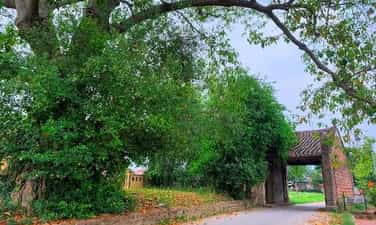
Duong Lam ancient village
About 44km from Hanoi, in Son Tay town, Duong Lam ancient village is known as one of the oldest villages in the North. From wooden walls, inclined brick walkways to prominent yellow laterite walls, this place is always an attraction for many domestic and foreign tourists to visit and learn. Coming to Duong Lam, tourists feel like they are lost in a completely different world, completely separate from the hustle and bustle of everyday life. Today, Duong Lam village still retains the basic characteristics of a village in the North with a village gate, banyan tree, water wharf, communal house yard,..., and laterite houses located close to the road. The village road is winding and winding. The mark of an ancient past with heroic pages of history appears, becoming lasting historical values of the country. According to the cadastral map, Duong Lam currently has 9 villages: Mong Phu, Dong Sang, Doai Giap, Cam Thinh, Cam Lam, Phung Khang, Ha Tan, Hung Thinh and Van Mieu. This is the only village that still retains the intact structure and lifestyle of an ancient Vietnamese village in the Northern midlands. This place is like a "Living Museum" preserving valuable historical and cultural relics spanning thousands of years: From Phung Hung Communal House, Ngo Quyen Temple to the Temple of Lady Mia... Especially, in Duong Lam It still retains ancient houses with architectural lines from the 17th - 18th centuries and religious customs and practices that have been preserved unchanged over many generations. According to statistics from the Duong Lam Ancient Village Management Board, there are currently a total of 956 ancient houses, concentrated mainly in the villages of Dong Sang, Mong Phu and Cam Thinh. Many houses were determined to have been built in 1649, 1703, 1850... So up to now, they are approximately 300 - 400 years old. All are built of laterite, oval wood, terracotta bricks, and tiles, with 5-compartment or 7-compartment architecture. The middle space is for worship, decorated with hammock doors, has tables and chairs, mahogany traps, the carved features are still maintained with landscape relics showing the customs of the ancients. Outside the garden there is still an ancient laterite well, the well water is very clear and can be used for daily activities. Tourists are attracted by the clean brick roads and feel the warmth and peace of the people here when walking among the dark yellow laterite walls, wells, courtyards, fields, and fields. majestic temple. Another value of Duong Lam is in its spatial planning. Mong Phu village is located on a low hill. At the top of the hill is a large communal house with a yard as large as a square, from there radiating in all directions into the village. The village is planned in a way that spreads from the center, which is the village communal house. The main communal house yard is a six-way intersection with roads leading to every corner of the village. The special thing is that no matter where you go or what neighborhood you start from, no one has to turn their back on their main direction. The houses in the village are structured in the style of internal and external, the yard is lower than the street level. On rainy days, water from outside accumulates in the yard (water gathering) and then flows out into the sewer. Not only is it home to many ancient houses, Duong Lam is also a name associated with many historical stories, and is known as the land of "two kings" - the birthplace of two kings Phung Hung and Ngo Quyen. There are also many wealthy families here, giving birth to talented people. Perhaps there are few places in the Northern Delta that possess many traditional specialties associated with the land and village names like Duong Lam. When talking about Duong Lam, people remember Mong Phu soy sauce, Mia chicken, roasted meat, blue sweet soup, sausage candy... All of these products are made from available ingredients in a traditional village with agricultural lifestyle, inherited by generations, passing on experiences from generation to generation. This is the precious folk knowledge that Duong Lam people cherish and preserve. If Hoi An people are proud of the old town, Hanoi people are proud of its 36 streets, then Duong Lam people can be equally proud of laterite houses and Duong Lam ancient village is still an attractive address for tourists. schedule every time they come to Son Tay. Amidst the hustle and bustle of life but still possessing unique cultural values, landscapes, and typical architecture of the Red River Delta countryside, Duong Lam ancient village will certainly bring visitors unique experiences. unforgettable.
Hanoi
7678 view


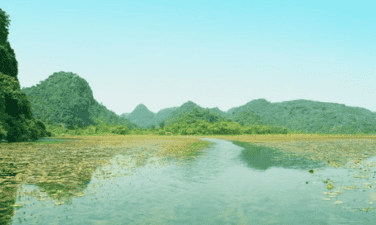
Ho Quan Son
Quan Son Lake is a place called "Ha Long on land" in Hanoi. Not only is it a super hot place to chill, but it is also a place for you to camp and go backpacking with friends. Quan Son Lake is a scenic spot with an area of up to 850 hectares and belongs to 5 communes in My Duc, a suburb of Hanoi. Quan Son Lake has majestic beauty with 20 large and small mountains surrounding the lake surface. In addition, Quan Son Lake also possesses extremely rich vegetation. The lake surface area is about 850 hectares with dozens of majestic limestone mountains. Forest coverage is up to 80%, and the flora and fauna are extremely rich. Coming here, visitors will feel like they are lost in a watercolor painting because of the pristine, green and vibrant landscape. In the lake bed, there are still many resistance relics, most notably the engineering safety zone, the weapons factory at Coi Tuy Lai mountain and the Hong Son pagoda. Besides, Quan Son Lake is also a place imbued with the culture and lifestyle of the Northern Delta. The pure beauty of Vietnamese villages is expressed through every riverbank, field, and quiet house. With those wonderful things, this place has become an attractive destination for both locals and tourists, especially on weekends. The landscape of Quan Son Lake is imbued with the national culture of the Northern Delta people. Each house, riverbank, and field brings wildness and peace. The best time to travel to this scenic spot is in the summer. The ideal time is from mid-May to June. This time is when the lotus blooms, so you will admire the charming scenery and the sweet scent of lotus spreading everywhere.
Hanoi
6749 view


Tram Mountain.
Tram Chuong My Mountain is known as the "miniature Ha Giang plateau" in the heart of Hanoi's suburbs with its wild and majestic beauty. Visiting this location, you will be able to climb mountains, admire the scenery and check-in virtually. Tram Chuong My Mountain is also known as Tu Tram San, the mountain is located in Phung Chau commune, Chuong My district and about 30km from the center of Hanoi capital. You can organize a picnic at Tram Mountain at any time of the year. However, to have a smooth trip and many interesting experiences, you should go in April and May, when the weather is cool and suitable for sightseeing activities. Or you can also go to Tram Chuong My Mountain on February 2 of the Lunar Calendar to enjoy the vibrant and bustling atmosphere and admire the fragrant white blooming landscape of the area. Tram Chuong My Mountain possesses wild, charming beauty with the highlight being the soft, curving trails stretching along the mountainside. The bumpy white stone cliffs on the top of the mountain bear the mark of time, perhaps that is why Tram Mountain is known as the "miniature Ha Giang stone plateau". Unlike other craggy, majestic mountains in the Northwestern rocky plateau, Tram Mountain has a poetic, charming, and charming beauty typical of the capital. Along from the foot of the mountain to the top of Tu Tram Son mountain, the natural landscape is fresh and pristine with green grass and romantic wildflowers on both sides of the road like a miniature painting.
Hanoi
6746 view



Bu Hill Hanoi
Only 40 km from the center of the capital, Bu Hill is a landmark located on the border between Chuong My district, Hanoi and Luong Son district, Hoa Binh. This place has a beautiful mountain range with gentle slopes with a length of about 1.5 km. Every late fall, from November onwards, when the weather is cool and slightly chilly, the reeds growing on the hillsides will bloom, creating a beautiful scene. The reed blooming season on Bu hill will start in early November and last until the end of December, the best time is mid-November. Reed grass slopes at sunset on Bu hill, Nui Be hamlet, Nam Phuong Tien commune, Chuong My district, Hanoi. From the center of Hanoi, follow Highway 6 to Xuan Mai and then turn left to follow the Ho Chi Minh trail. Go 5 km past Ha Tay Community College to the Fish market area, then turn right at the 4-way intersection with Fish market. Follow the concrete road into Nui Be village to the end and you will see two paths. On the right is a dirt road with a 200m long slope. On the left is the gravel road, shorter and safer. The road from Hanoi to the foot of the mountain is very easy to go, but the part up the mountain is more difficult due to many bumpy and steep rocks. It is suitable for two-wheel drive cars. If you ride a motorbike, you need to use a strong gear and hard steering wheel. Moving from the foot of the mountain to the top takes about 20 minutes. Thanks to its spacious and pristine landscape, Bu Hill is also an ideal photography spot. The weather is cool all year round, but Bu Hill attracts the most young people to check-in during the last months of the year when the reeds bloom. Because it is close to Hanoi, visitors can go back and forth during the day or camp one night on the weekend. The best time to see late autumn reeds is early morning or sunset on beautiful sunny days. At that time, the whole area of white reed grass hills turned orange-pink under the sun.
Hanoi
6821 view


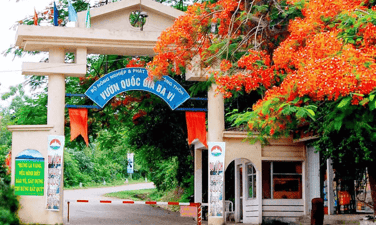
Ba Vi National Park.
Ba Vi National Park is located on the Ba Vi mountain range in Ba Vi district (Hanoi) and Luong Son and Ky Son districts, Hoa Binh province with an area of 10,814.6 hectares, 15 km from Son Tay, Hanoi and 15 km from Hanoi. Hanoi center 50 km west. Since the early 20th century, Ba Vi has been a famous place thanks to its diversity of ecosystems, beautiful scenery and cool climate. This national park is located in a high mountain range running along the northeast-southwest direction with Vua peak 1,296 m high, Tan Vien peak 1,227 m high, Ngoc Hoa peak 1,131 m high. Traveling to Ba Vi National Park, visitors can not only see the rich vegetation but also visit many beautiful and attractive places such as: Thuong temple, houses from the French period, Uncle Ho's temple, green cypress complex. Ancient trees, cactus garden... These are all very beautiful and attractive places. When you come here, remember to bring a camera so you can check in on these beautiful, sparkling moments like in a fairy tale.
Hanoi
7034 view


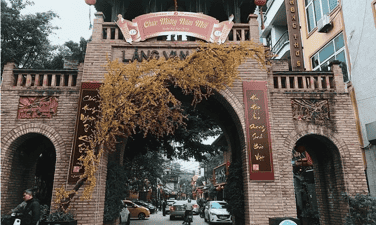
Van Phuc Silk Village Hanoi
When talking about the beautiful and famous silk weaving village in Vietnam, we cannot help but mention the name Van Phuc silk village, Ha Dong with its delicate embroidery and patterns. Van Phuc Ha Dong silk village is one of the most famous silk weaving villages in Vietnam. This is a traditional silk weaving village that has been recognized as the record "The oldest silk weaving village still operating today" awarded by the Vietnam Record Book Center. Furthermore, Ha Dong silk village is also an attractive destination for both domestic and foreign tourists. Van Phuc silk weaving village is also known as Ha Dong silk weaving village in Van Phuc ward - Ha Dong - Hanoi. Having existed for more than 1,000 years, Van Phuc silk village is one of the most beautiful silk weaving villages in Vietnam. From the center of Hanoi, to visit Van Phuc silk village, you go through Nguyen Trai street to Ha Dong post office and then turn right; Or you can follow the Le Van Luong - To Huu route. Although the current urbanization process is happening very quickly, Van Phuc Ha Dong silk village still retains its inherent ancient beauty. Van Phuc Silk Village was formerly known as Van Bao. Due to the Nguyen family's taboo, the village was renamed Van Phuc. In 1931, for the first time, Van Phuc Ha Dong silk was promoted to the international market at the Marseille fair and was evaluated by the French as one of the most sophisticated and beautiful silk lines of Indochina. By 1958, Van Phuc silk was exported to Eastern European countries and until now Ha Dong silk is popular in many countries around the world. Over time, Van Phuc silk still retains its traditional beauty. And currently, Van Phuc silk is at the forefront of Vietnam's textile industry. Van Phuc silk is always considered beautiful and durable. Because of the diverse patterns on silk, symmetrical decoration, elegant and simple lines, it brings decisiveness and generosity to the viewer.
Hanoi
5788 view


Red River rock beach
Red River Stone Beach is one of the destinations not to be missed when traveling to Hanoi. This is not only an ideal stop for picnics and experiencing nature in a different way, but also a place for visitors to find inspiration and relax after tiring working days. Red River stone beach is located in an alley on Au Co street, Nhat Tan ward. The distance from Hanoi city center to here is only about 30 minutes by car. Although located near the center of a busy urban area, Red River rock beach has a peaceful and gentle beauty. Every weekend, this place attracts a large number of tourists to picnic and take photos with colorful flowers. This is also the ideal place to enjoy the fresh and cool air of nature.
Hanoi
6828 view



Perfume Pagoda.
Perfume Pagoda is located in Huong Son commune, My Duc district, about 50km from Hanoi city center. This place is known as one of the most unique spiritual destinations in Hanoi! Huong Pagoda is also the center of a cultural and religious complex consisting of many other ancient and sacred temples and pagodas. Destinations at Huong Pagoda: Trinh Temple It's the first temple you come to after getting off the boat. Built at the foot of Ngu Nhac mountain, majestic and wild. Thien Tru Pagoda The pagoda is located on the terrace of Lao mountain, built and completed in 1467. It takes about 40 minutes to walk from the ferry wharf to Thien Tru pagoda. Giai Oan Pagoda The pagoda is located on the road to Huong Tich cave, about 2.5km away on Long Tuyen mountain, with an ancient and nostalgic look. Suoi Yen This is the only waterway to get to Huong Pagoda, about 4km long. Huong Tich Cave The cave is shaped like a dragon opening its mouth to play with pearls. Huong Tich Cave is at an altitude of 390m, you can climb or travel by cable car. Thanh Son Pagoda The pagoda has both river and mountain entrances with majestic natural scenery. Thanh Son Pagoda is one of the temples that represents Vietnamese beliefs. Long Van Cave From Long Van wharf, climb about 150m to reach Long Van pagoda, go through the mountain to Long Van cave. Long Van Cave has an airy and spacious space. Sung Sam Cave Sung Sam Cave is at an altitude of 100m, the door faces southwest and the cave is about 15m wide. Bao Dai Pagoda The pagoda is located at the foot of the mountain and currently has the architectural style of the Nguyen Dynasty. Tuyet Son Cave The cave is located in the middle of the mountain, the road to the cave is relatively easy. Inside there are countless stalactites with strange and beautiful shapes.
Hanoi
5741 view


Vietnam Museum of Ethnology
The Vietnam Museum of Ethnology has many functions: researching, collecting, preserving, and restoring artifacts and documents about ethnic groups; Organize exhibitions, performances and other forms of activities to introduce and educate about the culture of ethnic groups in Vietnam as well as other countries... Located right on Nguyen Van Huyen street, Cau Giay district, Hanoi, the Vietnam Museum of Ethnology is only about 8 km from the center of Hanoi capital, very easy for you to get around. For the people of Hanoi in particular and the people of Vietnam in general, the museum has enormous cultural meaning and value. On your journey to explore Hanoi's old quarter, you definitely cannot miss this place. Vietnam Museum of Ethnology was built in 1981 with an initial area of 3.27 hectares. After many renovations, the museum area was increased to a total area of 4.4 hectares. This is a project designed by architect Ha Duc Linh, a Tay person; The interior was designed by female architect Véronique Dollfus (French). With the purpose of preserving the history and culture of 54 Vietnamese ethnic groups, the museum is one of the attractions in Hanoi suitable for students and tourists interested in learning about everything. the cultural features of each nation. Artifacts are displayed in many different categories such as costumes, jewelry, weapons, musical instruments, religion, houses... and are loved and highly appreciated by visitors.
Hanoi
5919 view


Thanh Chuong Viet Palace
Viet Phu Thanh Chuong was built in 2001, originating from the idea of artist Thanh Chuong - who wanted to recreate the cultural imprint of his ancestors in ancient times. Located on a plot of land with an area of more than 8,000 hectares in Soc Son, Viet Phu Thanh Chuong is considered a massive architectural work with bold Vietnamese characteristics. Viet Phu Thanh Chuong is located at Keo Ca lake, Hien Linh commune, Soc Son district, only about 40km from Hanoi center so moving here is relatively easy. You can choose from many types of vehicles such as cars, motorbikes, buses... Viet Phu Thanh Chuong encompasses 30 architectural works bearing the appearance of Vietnamese history of the last century. Walking around a large circle, visitors will feel the historical space rushing back into their memories. First, you will admire the beauty of 13 ancient houses with special names such as Tuong Van house, Thanh Tinh house, Huong gate, Mac Huong house, Xuan Phong restaurant,...
Hanoi
4980 view


