Tourist destination

Phia Po peak
Phia Po Lang Son peak is becoming a new destination for young people. If you are too bored with the stuffiness of the city, try packing your backpack and going to this land to feel the endless beauty of nature. Not as famous as Binh Lieu of Quang Ninh or Fansipan of Sa Pa, Phia Po Lang Son peak is still attractive enough to those who love to explore new things. This place contains many interesting things waiting for you to discover. Phia Po is located in a complex of 80 mountains in the Mau Son range, with an altitude of 1,541m above sea level. While Mau Son peak is called Mother Mountain, Phia Po is called Cha Mountain by local people because in the Tay language, Phia means mountain, Po means father. To find Phia Po, you can follow the address of Mau Son commune, Loc Binh district, Lang Son province. Phia Po Lang Son peak is far from the city center. Lang Son is nearly 30km, is a relatively new trekking destination in Lang Son, very suitable for those who love to move and learn new things. Phia Po is more than 180km from Hanoi City, travel time is about 4 hours. Tourists follow the Bac Giang - Lang Son highway, then enter Highway 1A, pass through Lang Son City, then turn right onto Highway 4B, continuing for nearly 30 kilometers to reach the foot of Phia Po mountain. Lang Son has the famous Mau Son peak, known to many tourists. In addition, this place also has the equally majestic Phia Po peak, which still retains its wild beauty and is not known to many people. Phia Po is called by many beautiful names such as "Mount Everest of Lang" or "roof of Lang Son", just hearing this is enough to excite mountain climbing enthusiasts. With an altitude of more than 1,500m, Lang Son tourists should spend 2 days and 1 night to conquer Phia Po peak and recuperate. According to Phia Po trekking experience, you should choose days with nice, sunny, no rain weather to climb the mountain. The ideal departure time is morning, about 7-8 o'clock. The Phia Po trekking journey includes 2 stages. The first stage of climbing the mountain is about 3.5km, from the foot of the mountain to the stopping point, camping, and overnight stay. The next stage moves to the highest peak. The total distance for 2 days of trekking is about 14 km. Visitors climbing Phia Po can also experience many different terrains. First is the old forest and dry stream. The path is narrow, with many tree roots and large rocks. The higher you go, the more beautiful the landscape. A vast steppe is welcoming climbers. It can be said that the beautiful and peaceful scenery is like Switzerland. The special thing is that each time, this grass field changes color. If in the summer, this place wears a blue color, full of vitality, then in the fall, it turns into magical burning grass like in the movies. On the coldest winter days, the withered grass is covered with clouds, making it look even more mysterious. Spring comes, bell flowers bloom, beautifying the nature of this place. Just saying this, you can already look forward to the beautiful landscape at the top of Phia Po Lang Son. Surrounding the steppe are towering mountains that stretch endlessly. A beautiful scene that is difficult to describe in words. In general, Phia Po Lang Son peak has beautiful grass slopes, you will go through maple leaf forest, primary forest, reed grass forest, bamboo forest and even rhododendron forest before reaching the top of the mountain. The spine of the Phia Po dinosaur is about 500m long, 2m wide, rising in the middle, with eye-catching abysses on both sides. Along this spine, there are also large horizontal rocks that look exactly like the vertebrae of a dinosaur. Not only is it a virtual living spot, but it is also a spot for tourists to hunt for the ocean of floating clouds in Lang Son. Not as long and dreamy as the spine of the Binh Lieu dinosaur (Quang Ninh), but the spine of the Phia Po dinosaur is enough to make you feel the vast and majestic beauty of the mother of creation. Standing in front of rolling mountains, people become very small. Before your eyes there is only nature, heaven and earth, white clouds, deep green forests... Passing through the forest, everything seems to light up. That is the peak of Phia Po Lang Son right before your eyes. The highest point of the peak is marked by a milestone erected by previous climbers. At this moment, emotions seemed to burst. Vast scenery appeared, the airy and vast scenery seemed to take away all the fatigue of the previous arduous journey. Don't forget to take out your phone or camera to save these memorable moments. Phia Po peak attracts tourists especially in winter and spring because the weather is stable and not hot at this time. However, depending on your arranged time, you can trek to Phia Po peak at any time. It can be said that Phia Po is one of the mountains with diverse landscapes, very beautiful and relatively easy to climb, suitable even for non-professional climbers. This mountain is truly worthy for you to explore at least once, however I believe that if you go once, you will return to this place a second or third time in different seasons of the year.
Lang Son
5681 view


To Thi Mountain.
To Thi Lang Son Mountain is associated with the anecdote of a woman holding a child and waiting for her husband, a symbol of the steadfast loyalty of Vietnamese women. To Thi Lang Son mountain tourist area is a famous destination of Lang Son, located in Tam Thanh ward, Lang Son city. This mountain is located in the limestone mountain range in the northwest of the province, and has the shape of To Thi waiting for her husband. Today, this mountain has become an impressive destination in the relic system of Lang, attracting tourists from all over the country to visit and learn. In 1962, the relic area including To Thi Mountain, Nhi - Tam Thanh Scenic Area complex and Mac Dynasty citadel was ranked at the National level by the Ministry of Culture, Sports and Tourism. Not only is it a beautiful mountain, To Thi Mountain is also associated with the story of a woman holding her child and looking into the distance, waiting for her husband. Coming to Lang Son, visitors just need to cross Ky Cung river to see the naturally created stone slab bearing the silhouette of To Thi standing proudly between heaven and earth - the most beautiful symbol of Lang Son. If you have the opportunity to travel to Lang Son, remember to visit To Thi mountain. This mountain is also called Vong Phu mountain. On the top of the mountain is a natural rock shaped like a woman holding her child and looking into the distance. In Vietnamese fairy tales, this is To Thi waiting for her husband to go fight in the North. After waiting forever, her husband still did not return, so she turned into stone. Later, people called this rock To Thi. And since then, To Thi Lang Son mountain has also become a beautiful destination attracting tourists to visit and admire. People come here not only to see the naturally created rock but also to enjoy the magnificent and poetic picture of Lang. Coming to Vong Phu Mountain, you will have the opportunity to see closer the symbol of Vietnamese women's loyalty. Although the years have passed and nature has damaged the monument, the local government has restored it almost to its original state, fully preserving an image of To Thi that is imprinted in the hearts of Vietnamese people. As a beautiful symbol of fidelity, To Thi Lang Son mountain has become a valuable source of inspiration, giving birth to many beautiful poems and songs. Among them, the most famous is the immortal epic Hon Vong Phu. Therefore, when visiting this destination in Lang Son, visitors will have many special emotions, different from when exploring other mountains in Vietnam. Today when exploring To Thi Lang Son mountain, you will see at the foot of the statue of To Thi there are incense bowls, showing the people's respect for her. Many tourists come here to pray and pray for the best things for their lives and love affairs. Exploring this beautiful mountain is also an opportunity for you to admire the beautiful scenery of Lang Son city from above. It is a picture of green rice fields, peaceful houses, and majestic mountains and forests. All create a truly poetic, peaceful and lyrical scene that lingers in the hearts of many travelers. In particular, To Thi Mountain is also located in the Mac Dynasty Citadel relic complex. Therefore, do not miss the opportunity to explore a majestic citadel that was once very large and majestic in our country's Mac Dynasty history. The city wall with moss-covered stones and old stairs creates a beautiful check-in background for visitors. Today, the road up the mountain has been built with quite easy steps. Therefore, visitors do not need to worry about climbing and sightseeing. Along the steps there are also sturdy railings, both ensuring safety for visitors and making your virtual check-in photos more beautiful. Any season of the year is suitable for you to return to Lang Son and see To Thi. If you come here in the winter, you can also go to Mau Son to see the extremely beautiful snow and ice. In addition, you can also discover many more destinations such as hydrangea garden, Phia Den national park, Na Lay mountain, Dang Mo waterfall,... To Thi Lang Son Mountain is a scenic spot, a beautiful relic that you should visit once to be able to see with your own eyes the stone statue of To Thi waiting for her husband. From there, we will be more proud of the beautiful scenery, people and good traditional cultural values that Vietnamese people have preserved for many generations.
Lang Son
6362 view


Gia Nghia Tea Hill
Coming to Dak Nong, if you want to find a tourist destination that is both beautiful and has "virtual" photos, don't miss Gia Nghia tea hill, which is being actively checked in by travel enthusiasts recently. Gia Nghia tea hill has long been known as the natural "virtual living studio" of Dak Nong thanks to its poetic natural scenery. Virtual living in Gia Nghia tea hill is a wonderful experience for anyone because not only will you be immersed in the lush green space of a peaceful countryside, but you can also bring home virtual living photo shoots of a lifetime. with the scenery of a magically beautiful tea hill under the sunset or poetically under the morning mist. If you have ever been fascinated by famous virtual tea hills such as Bien Ho tea hill in Gia Lai, Cau Dat tea hill in Da Lat, O Long tea hill in Sapa or heart tea hill in Moc Chau, you will definitely come to the tea hill. In Gia Nghia, you will immediately fall in love with the beautiful scenery of this place. Gia Nghia tea hill is known as one of the largest tea growing places in the Central Highlands with an output of hundreds of tons per year. Therefore, tea here is one of the main livelihoods of people in the area. Especially recently, when the beauty of the tea hills has become more known, the number of tourists from all over is increasing, creating conditions for local people to promote the image of their homeland tea hills to everyone. domain. The scenery at Gia Nghia tea hills makes visitors feel like they are opening their souls, embracing the purest and most beautiful things and traveling to a dreamland, where there are only tea hills stretching as far as the eye can see. Gia Nghia tea hill always carries with it a fresh, pleasant atmosphere, a "soothing medicine" for the souls after many hardships and hardships. This virtual live check-in location can also help you fully see the beauty of the sunset or late afternoon. In particular, visitors can also learn how to grow tea and experience the daily life of Ede and H'Mong girls... The weather in Dak Nong is very mild with an average annual temperature of 24 degrees Celsius, so it is very suitable for you to do sightseeing and exploration activities. The most ideal time to visit the tea hills is the dry season, from November to April next year because at this time the weather is cool, the scenery is beautiful and sunny. However, at other times you can still check-in to the tea hill as long as the weather is not too harsh, especially in the rainy season, although the weather is not favorable, the tea hill scenery looks very beautiful. There are two times of day when the tea hill view is most beautiful: in the morning before 9:00 a.m. and in the afternoon after 4:00 p.m. Enjoying the wonderful scenery and comfortably living virtually are the best experiences when you check in to Gia Nghia tea hill, Come to feel the pure air of nature, be captivated by the poetic scenery and also find peaceful spaces in the middle of the beautiful highlands.
Lam Dong
4973 view


Ky Cung Temple
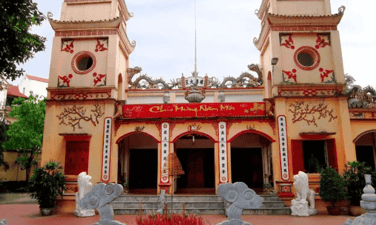
When making a pilgrimage to Lang Son, one of the famous tourist destinations that tourists cannot miss is Ky Cung Temple. This is one of the sacred temples worshiping Quan De Pentagram - the fifth mandarin in Ton Quan during the Tran Dynasty and this place also worships the Four Palaces. Ky Cung Temple is currently located in Vinh Trai ward, north of Ky Cung river. This is considered one of the sacred places to worship the god Giao Long - a god who keeps good rain and wind all year round. In the temple, there is Ky Cung stone wharf, recognized as one of the eight beautiful scenes in Lang Son. In the past, it was said that this was the place of the god Giao Long, who kept the river and water and made good weather and rain throughout the year. According to historical records, Ky Cung temple has existed for a long time, but it is unknown who built it and the year it was established. We only know that this is a small temple built of earth to worship the god who governs this land, blessing the people with good business, good harvests, and good weather. According to the book Dai Nam Nhat Thong Chi, there is a record about Ky Cung temple as follows: "On the left side of Ky Cung river in Vinh Trai commune, Thoat Lang district, there is a dragon who became a god digging a cave here. The temple is very sacred and has been worshiped many times. conferred”. Later, the temple worshiping the god Giao Long was replaced by mandarin De Pentecost Tranh, because in the minds of the people of Lang, the legend of Ky Cung temple is associated with the legend that mandarin De Pentecost Tranh was the son of Bat Hai Dong communal house, descending to the throne. Tran came down during the Tran Dynasty, was sent by the king to defend Lang Son and command the fight against the enemy. Because he lost the battle, he was falsely accused of seducing another man's wife, so he threw himself into the Ky Cung River to commit suicide, proving his innocence. Understanding his injustice, the gods transformed him into two gods, Coc, who reside at the temple to rule and coordinate the rivers and waters. His injustice was later proven clean by Than Cong Tai - a general of the Le Dynasty. Than Cong Tai was a figure with great contributions to the people and was also a cultural celebrity at that time. This is one of the extremely sacred historical relics that many tourists are interested in when coming to Lang Son. When coming to the temple, visitors can admire the ancient architecture and many antiques passed down from thousands of generations. Located in the heart of the bustling center of Lang Son city. The temple's architecture is built in a Dinh-shaped style similar to other temples, including 3 arched doors and 2 square brick pillars. The top is decorated with many embossed patterns, at the top is a three-qi stone consisting of a peak and altar flowers on both sides. The outside of the temple will face the Ky Cung river. The inside of the temple includes many diaphragms and grand pagodas built during the Le Dynasty with many antiques of spiritual value such as thrones, canopies, bells, parasols, bronze tops, ancient statues,... In addition to the statue of Tuan Tranh mandarin. Worshiped in the main hall, the temple also has an additional space to worship Quan Am and the Holy Mother. In the temple yard, there is still a stone wharf left, this is one of 8 beautiful scenes recognized in the Eight Scenes Town in Lang Son. According to many historical records, in the past, envoys passing through China, when passing through this stone wharf, had to prepare incense offerings to pray for a safe and successful trip. In addition, at Ky Cung temple, Quan De Pentecostal Temple is also worshiped. This is also one of the gods worshiped by people at the temple. Here, when there is a party or Four Palace ceremony, villagers often invite them to come and stay. When he ascends to the field, he will wear a blue costume embroidered with dragons, carry an amulet, perform a ceremony, and perform an opening ceremony. After that, he will testify and then dance the dragon sword. At other palaces, when opening a palace or having a party, people wait for the price of Quan De Ngu after inviting the big mandarins to witness all the horses and then turn them into gold. Every year, on January 22 to 27, people here will organize the largest Ky Cung temple festival in Lang Son. At the same time, it also opens up a space for traditional cultural exchange. Normally, at noon on the 22nd, the ceremony will begin with the Tuan Tranh palanquin procession to give thanks for repaying Than Cong Tai at Ta Phu temple. This ritual begins from the legend of Than Cong Tai who resolved the injustice of Tuan Tranh as we mentioned above. At noon on January 27, local people will hold a farewell ceremony to process the Tuan Tranh palanquin back to Ky Cung temple. At times such as the full moon day, first lunar month or festivals, Ky Cung temple will welcome a large number of tourists to visit and exchange culture. When coming here, tourists often buy neat offerings to offer to the gods, hoping for peace, luck, convenience and success in their work. Tourists coming to Ky Cung temple often order oan cakes as offerings to Ky Cung temple. This is not only a cake imbued with the culture of the people here, but also shows spiritual meaning when designed with a unique and meaningful shape. When visiting Ky Cung temple, tourists often choose places near the temple to enjoy typical dishes of Lang Son people such as: sour pho, fried rice cake, Huu Lung grilled spring rolls, squid meat... For those who love to find culture, history and mysteries, Ky Cung Temple will definitely bring you the trip you desire. This spiritual tourist destination attracts a large number of people every year to visit and worship. On your journey to explore Lang Son, don't forget to visit this place.
Lang Son
5990 view


Dong Xanh Park
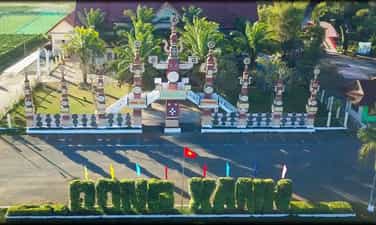
Dong Xanh Park in the eyes of tourists is considered a miniature Central Highlands, a tourist destination. Dong Xanh Park is located in village 5, An Phu commune, Pleiku city, Gia Lai province. This place is considered a place to rest, convalesce and explore the cultural identity of the Northern Central Highlands, invested and built by Gia Lai Culture - Tourism Joint Stock Company. With an area of about 8 hectares, Dong Xanh Park stretches across the An Phu rice fields and in the villages of the Gia Rai and Ba Na ethnic people... That's why the architecture of stilt houses, long houses, and houses is unique. Dragons, tombs, T'rung water musical instruments and statues are created to simulate and recreate the daily life and production of ethnic minorities. One Pillar Pagoda was built in Dong Xanh park following the prototype of "Tay Thien Nhat Tru" in Hanoi in both proportion and architecture. Therefore, when visiting here, this image will help travelers remember one of the sacred and proud architectural works of the Vietnamese people. Dotted around are the statue of Avalokiteśvara Buddha to save suffering, the God of Wealth Tower, the Three Entrance Gate and two stone elephants symbolizing the art of hunting and taming wild elephants of the indigenous people of the Central Highlands and on the four sides are Precious plants are arranged harmoniously and beautifully. Here, there is also a water park with the first wave pool in the Central Highlands, a mini zoo with many birds and precious animals such as Ostrich, Deer, Leopard, Bear, Crocodile... and a motel system with bungalows. Serving guests who want to relax… In addition to designs imbued with cultural identity when traveling to the Central Highlands, this stop is also invested in building spiritual cultural works towards the roots and towards the ancestral land to commemorate their gratitude. King Hung was instrumental in building the country. Specifically, visitors will feel peaceful and free when respectfully worshiping in front of the Hung Vuong National Temple. This temple is the largest in scale in the Central and Central Highlands, built with traditional architecture including an 18m high stylized communal roof. In the palace is the majestic statue of the National Patriarch Hung Vuong, carved from wood, 6m high, weighing nearly 3 tons, lacquered and gilded. And in front of the palace are majestic statues of 18 Hung Kings, creating a majestic but also solemn space. At Dong Xanh park, the appearance of petrified wood has attracted a lot of attention from tourists. It is known that this fossil wood is the oldest in Vietnam, dating back hundreds of millions of years, with a diameter of more than 1 meter and a length of tens of meters. The fossilized wood trunk is as large as a linga placed next to the communal roof, a symbol of Central Highlands culture. This wood was found in the crater of Chu A Thai commune, Ajun Pa district, Gia Lai province. According to previous people, the ancient forests in Gia Lai were buried under volcanic lava flows for millions of years, creating beautiful fossilized wood. And scientists have also proven that the Central and Central Highlands regions, especially Gia Lai province, have dozens of volcanoes. Along with geological changes over millions of years, fossil wood is created from the decomposition of organic matter in the wood that has taken place over that long period of time. People in the Central Highlands believe that petrified wood is a wonderful form of jewelry, with a quartz-like texture so it is very hard and can be used as fine arts. With large pieces, petrified wood can be sawed to make tables and chairs because it is not rotten or damaged by rain, wind or weather. Not only that, petrified wood also brings luck, peace, health and longevity to the owner. Characteristic symbols for the village culture are images of communal houses, long houses, stilt houses, tomb houses, tomb house statues, T'rung water musical instruments, and Central Highlands landscape monuments. Especially the statues of the Water King (Po Tau La) and the Fire King (Po Tau Pui) - two important symbols in the natural beliefs of the Central Highlands peoples. Along with that is the statue of Djong looking for the Sun goddess. All have created a vivid but extremely realistic nuance about the daily life and production of ethnic people. In addition, the image of the largest bronze gong in Vietnam with a diameter of 2.5m and a weight of 700kg will certainly make tourists excited. This is a work made by artisans of Phuoc Kieu bronze casting village, opening up a space of gong culture in the Central Highlands. Continuing inside, looking around, visitors will see a system of bungalows built next to an aquarium, a flower garden, a water park, a wave pool, and a lotus pond with rockeries. with a garden full of animals: ostriches, deer, leopards, bears, crocodiles... Mixing with the fresh, airy atmosphere in Dong Xanh park when traveling to the Central Highlands, you can also explore and participate in Participate in attractive entertainment activities such as: traveling boating, duck riding, fishing... Or visitors can also visit the culinary service area - traditional ethnic specialty restaurant with their family and friends to enjoy the famous dishes here. such as: bamboo tube rice, can wine, ghe wine, grilled wild meat...
Gia Lai
5768 view


Dak To Pe terraced fields
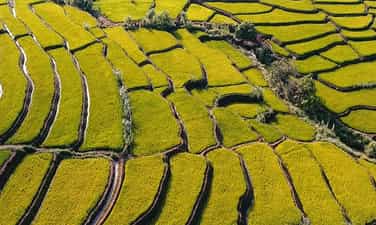
Dak To Pe terraced fields are a beautiful natural picture of the mountainous region of Dak Doa district, Gia Lai. This place carries with it the majesty and wilderness of vast, vast fields. So on your trip to Gia Lai, don't miss this attractive destination. Dak To Pe terraced fields are located in Trang commune, Dak Doa district, Gia Lai. The entire field has an area of about 50 hectares and is the wet rice cultivation area of the people of Kol and Ghe villages. Each year, people will cultivate two rice crops, in addition to alternating corn crops. According to the people of Trang commune, Dak To Pe terraced fields were formed about 45 years ago. After liberation, soldiers and officials came here to instruct villagers how to cultivate wet rice to have enough food to serve their lives. However, because this area is full of mountainous terrain, it is difficult to retain water, and the soil is easily eroded and infertile, so people have built banks to form terraced fields for easy cultivation. Up to now, Dak To Pe terraced fields include hundreds of fields of different sizes, located along two gentle mountain slopes, creating a breathtaking beauty, especially in the ripe rice season. Dak To Pe terraced fields possess a very simple and rustic beauty. This place is not as majestic as the terraced fields of Sapa or Mu Cang Chai due to the gentle terrain, the altitude is only about 500m above sea level. The fields here are also divided into quite small plots, with many different shapes, rather than running long like in the Northwest region. The most beautiful time of Dak To Pe Terraced Fields is during the ripe rice season. At this time, the fields will be dyed a rich and brilliant yellow color, shining under the rays of the sun. In particular, Gia Lai people cultivate two crops per year according to the weather, so when the rice is ripe, it will ripen simultaneously, creating a brilliant beauty and stretching over 50 hectares, extremely beautiful. The people here are very enthusiastic and friendly with groups of tourists who come to visit and travel. You can comfortably climb along small trails, watch people harvest rice, and chat with them to better understand the lives of the people here. However, because the terrain of Dak To Pe Terraced Fields is only slightly sloping, it will not look beautiful when photographed. Therefore, if you want to take impressive images, you must climb to the top of the mountain or take photos with a flycam to see the vastness and majesty. Located at the end of the Dak To Pe terraced fields will be the wild and beautiful Doi waterfall. The waterfall consists of two parallel streams, following the cliff and pouring down. The water source of Double Waterfall is formed from Dak Oi and A Dit streams. The stream flows through the Dak To Pe terraced fields, reaching the cliff, forming two parallel waterfalls, 20m apart. Water from the waterfall pours down into the middle of the abyss about 150m deep, creating a scene as soft as a girl's silky hair falling down. Although not as majestic as Kty Waterfall or Kleng Waterfall, Double Waterfall still has a very unique beauty. However, the amount of water at Double Falls is not too abundant. During the dry season, Dak Oi and A Dit streams will dry up, causing Twin Falls to lack water. Currently, only the waterfall on the left from Dak Oi stream is still flowing steadily, while the waterfall on the right has almost dried up, with only traces of the flow still imprinted on the cliff.
Gia Lai
4522 view


Ancient stone stream in Van village
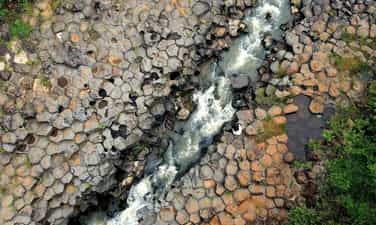
Gia Lai is already very famous for many of our country's most pristine and natural tourist destinations. Besides famous attractions such as Kon Ka Kinh National Park, Van village's ancient stone stream is a typical example of the newly discovered beauty in this land. Van village's stone stream is a rocky rapid of millions. five years old with a gurgling stream separating the stone pillars into two banks, in Ialy town, Chu Pah district, Gia Lai province and about 45km from Pleiku city. Unlike Bau Can Waterfall, the stone pillars in this stone stream are hexagonal shaped stacked on top of each other. They stretch for about 1km on both sides of the murmuring stream, creating a unique, one-of-a-kind natural landscape. The ancient stone stream of Van village has a simple, rustic landscape, surrounded by vast forests and mountains. Next to the path is a gurgling stream. There's nothing better than relaxing here with close people, or simply finding a little peace amid the chaos of life. The smell of the plants and the fresh feeling of the stream are guaranteed to take you away from the noisy and bustling city to the peaceful nature. The hexagonal stone pillars are stacked and close together to form a unique honeycomb shape that is impossible to take your eyes off of. In between the two banks, there is a gurgling stream flowing through the rocks, bringing a feeling of peace and relaxation. All your senses are soothed by the unique beauty of Van Village's Ancient Stone Stream, relaxing in the embrace of nature. Besides the tourist attractions of the Central Highlands such as Plei Op Cultural and Tourism Village, Van village's ancient stone stream with its unique and new beauty will be a great choice for your photo shoots. Bright colors and scenes that seem simple and rustic but are extremely eye-catching will be the factors that help make your photos different. What's better than being able to save memories with your family, friends, and loved ones in interesting locations, right? The ancient stone spring of Van village is not only a source of water for the people in Van village but also a place to bathe and play for children here every festival season. The ancient stone stream has been associated with human life here from generation to generation. Some people also believe that the sound of the stream flowing through the rapids is the voice of Yang, the god. Because only gods can create such strange stone pillars. More and more, the ancient Stone Stream of Van village is becoming more and more known, and the people here love and are more proud of the beauty of their homeland.
Gia Lai
5197 view


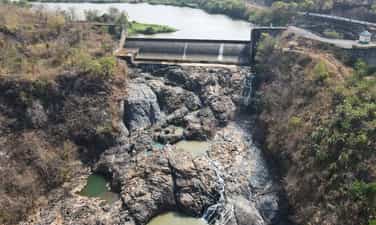
Mang Yang ancient rock rapids
Mang Yang ancient rock rapids is also known by another name as ancient rock field in Don Hyang village. This rapid is located downstream of H'Chan Hydroelectric Power Plant, in Don Hyang village, De Ar commune, Mang Yang district, Gia Lai. The rocky rapids were discovered during the exploitation and construction of the hydroelectric plant. In just a short time, the images taken here have become extremely hot in Gia Lai review groups. Many young people flock here to admire this unique terrain as well as check-in with the super impressive background. In Gia Lai, there are currently three famous ancient stone fields: Mang Yang ancient stone rapids, Van village's ancient stone stream and the hexagonal stone paradise in Kong Yang village. All three of these rocks are of great significance in geological research, helping scientists learn many new things about the formation process of the Gia Lai region in particular and the Central Highlands in general. Along with that, based on professional documents and assessments of geologists, Mang Yang ancient rock rapids have a structural form and age similar to Ganh Da Dia of Phu Yen province. The ancient rock rapids at Mang Yang are made up of relatively regular hexagonal stone blocks and bars, quite similar in shape, arranged alternately in perpendicular directions. The structure here easily reminds us of a giant honeycomb, with many unique rough spots. The stone has a stained color as if it had just gone through a big fire, the color is uneven, some dark and light places are very special. If the rocky stream section in Van village was hidden under ancient foliage for a long time, Mang Yang ancient rocky rapids were influenced by the flow of the Ayun River. This river flows very fast, especially in the rainy season, the amount of water and its force can be very erosive. Hundreds of stone bars, over the centuries, have been continuously eroded by currents, combined with geological changes and weathering processes, creating the unique landscape today. According to research from scientists, this ancient rock field originated from volcanic magma eruption. Originally, igneous rock has tremendous hardness, so the force of the flow has smoothed the outside surface, making the rock blocks look like they are stuck together, forming large pieces with a hexagonal structure like a honeycomb. In many locations, ancient rock blocks also form large depressions, even penetrated by water, forming holes up to a meter in diameter. Since then, the terrain has had many more niches and caves of all kinds with different shapes and sizes. Currently, we still do not know how many ancient stone blocks there are below the dam or underground. However, according to the assessment and inference of geologists, the current exposed part of Mang Yang ancient rock rapids is probably only a part of the rock field. Over time, terrain changes can help us discover more interesting things still buried underground.
Gia Lai
4654 view


Dong Lam steppe
If you want to explore a miniature inner Mongolia right in Vietnam, with biodiversity as well as many beautiful rocky mountains, waterfalls, and caves, come to Dong Lam steppe. This is one of the ecotourism destinations that is loved by many young people. Let's find out all the information about this steppe region with us. Dong Lam steppe is also known by many people as Huu Lien steppe, currently located in Huu Lien, Huu Lung, Lang Son communes. This destination is only about 25km from Lang Son city center and 130km north of the capital. The total area of the steppe is about 100 hectares, possessing many poetic scenery, rare and hard to find. Tourists visiting the steppe will be impressed by the vast, green grasslands. In the middle are clear water streams flowing through, originating from deep mountain beds and ending on a beautiful lake. Surrounding the field are majestic mountain ranges, creating a natural picture that captivates visitors when coming to Dong Lam steppe. Because the weather in Dong Lam steppe is divided into two seasons: rainy season and dry season, visitors can organize activities appropriate to the weather situation. In the dry season, the streams will dry up, creating a dry green valley terrain. Therefore, this is a great time to organize mountain climbing, cave exploration or long-distance walking or cycling to explore nature. From July to October, the rainy season will begin on the steppe. Therefore, the whole of Dong Lam will be flooded with water, creating conditions for kayaking activities on the lake, fishing or exploring limestone mountains. With a cool climate seemingly all year round, almost any time to visit Dong Lam steppe is suitable. Whether rainy or dry season, visitors can participate in interesting experiential activities. In addition, tourists coming to Dong Lam in January will also have the opportunity to participate in unique ethnic cultural festivals such as Tam Thanh festival, Ky Cung - Ta Phu temple, Na Nhem festival, Ky fireworks festival. Deceive. Coming to Dong Lam steppe, visitors will have the opportunity to watch horses grazing in the dry season. People here have trained horses well so people can take photos or rent horses to tour throughout the steppe. Lang Son's rich grasslands are also a condition for people to raise livestock. In the dry season, Dong Lam steppe is very suitable for organizing picnic and mountain climbing activities. Therefore, visitors can bring an additional tent or rent a tent to rest and cook at the Dong Lam stopover. In addition, about 3km away, there will be two cultural tourism villages, Ban village and Coc village, for people to participate in experiential activities with the people here. Experiencing boating on Pac Mo Lake is also an interesting activity that visitors should participate in. This place is likened to Tuyet Tinh Coc with extremely beautiful blue lake water. People can contact the homestays or hotels where they stay to rent a boat for about 50,000 VND/boat. The biodiversity in Huu Lien forest is also an attraction for tourists. This special-use forest has a natural area of about 8.9 thousand hectares with 2 primeval forests, home to about 30 rare plant species and 776 different plant species. There are also 409 natural animal species, with 61 animal species listed in the red book. In addition to the beautiful natural mountains and forests, the activities of the indigenous people of the Dong Lam steppe are also something that makes visitors extremely impressed. Coming here, everyone will admire the beauty of the stilt houses with 4 yin and yang tiled roofs of the Dao and Tay ethnic people who have lived for many generations. In addition, intangible cultural heritage values such as Nha To singing, Pa Xan singing, Then singing, Ancient Cheo performance,... are also interesting activities that people can learn from local people. This. Dong Lam is a region where you can discover many attractive local specialties. Grilled stream fish, traditional sticky rice of the Tay and Nung people with delicious flavor or Lang roast duck famous for its softness and sweetness, crispy skin, served with rolls and special dipping sauce. You also cannot miss wild vegetables, hill chicken... and other mountainous dishes grown and prepared by indigenous people. Dong Lam Steppe will bring you a diverse, rich and attractive culinary experience. For those who love poetic and idyllic beauty, Dong Lam steppe will be the most ideal destination in the upcoming vacation. The peace and fresh, cool atmosphere here will bring you moments of comfortable relaxation. Pack your suitcase and set out to Dong Lam steppe, you will be completely immersed in the beautiful natural landscape and temporarily leave behind all the sadness and fatigue in everyday life.
Lang Son
6373 view


Quynh Son cultural tourism village
Quynh Son cultural tourism village owns many caves in the mountains, limestone mountains and valleys that create beautiful scenery that attracts tourists. Visiting Quynh Son tourist village, visitors can also learn about the unique culture of the Tay ethnic people and enjoy specialties here. Quynh Son cultural tourism village is located in Quynh Son town, Bac Son district, about 80km southwest of Lang Son province center. This village is located 180km from Hanoi with convenient transportation. Quynh Son cultural tourism village at each time and season has its own beauty. Depending on your preferences and conditions, you can go to Quynh Son village at any time. If you want to go to Quynh Son cultural village to relax, rest... then summer or weekends are the best times. Traveling to Quynh Son in the winter season, you will have the opportunity to admire the beautiful snowfall, just go to the top of Mau Son - A wild, poetic mountain and hill complex. If you want to explore national culture and participate in unique festivals, January is the most ideal time. Quynh Son commune is loved for its poetic natural landscape, limestone mountains interspersed with caves, below are green fields and winding streams. In particular, Quynh Son cultural village still preserves a system of historical and cultural relics including Quynh Son communal house - a communal house worshiping Quy Minh Dai Vuong with a lifespan of hundreds of years; Ra Rieng Bridge is the place marking the victory of our army and people who defeated the French, contributing to the victory of the Bac Son uprising on September 27, 1940. In addition, near Quynh Son cultural village, there are other attractive tourist attractions such as: Fairy Well, Tan Huong village tile factory, caster cave system, microwave station... all are very interesting places to visit and explore. worthy of attention. People here live and live in stilt houses with familiar Tay ethnic architecture, located close to each other with a strong sense of community. Visitors will be able to eat, drink, rest in the stilt house space, and participate in the agricultural production process. Quynh Son people still preserve the unique Tay ethnic culture. Every year, this place will hold the Long Tong festival (field festival) on January 12 and 13, a festival to pray for a good harvest. Besides, the festival also has many unique activities such as: shuttlecock throwing, swinging, Vi singing, Then singing, Tan Dan dancing,... In addition to relaxing in a close, fresh space, you can also You can visit famous Bac Son relics that still exist in Quynh Son cultural village such as Nong Luc communal house, Mo Nhai fort, Bac Son museum... In addition to sightseeing, visitors also have the opportunity to explore unique cuisine. such as: Sour pho, egg rolls, rice noodles... Besides In addition, the culinary culture in Quynh Son village is also worth exploring with typical dishes of mountainous ethnic people such as black banh chung, rare meat, sticky rice, Chinese sausage,... If you have the opportunity to visit Lang and are looking for a quiet place with beautiful scenery, Quynh Son cultural tourism village is an ideal destination that you should not miss. Not only will you be able to visit the beautiful scenery, but you will also be able to learn about the unique cultural features of the ethnic people here.
Lang Son
5475 view


