Relic point Vietnam
Việt Nam
Historical relics and landscapes of Nui Ba base area
800m high compared to sea level, Ba mountain is the highest and largest mountain range in Binh Dinh Delta. In the mountain, there are 66 different peaks, giant rocks of all shapes, there are many forests, streams, winding and folding spots of hillsides to create rugged terrain ... During the anti -American resistance war, Mount Ba held an important strategic position, especially for the Eastern area. It was once a basis for the operation of the Provincial Party Committee, agencies and armed forces units of the province, Quy Nhon town committee and district committees of An Nhon, Tuy Phuoc and Phu Cat. From this base, the Provincial Party Committee has directed the resistance, opened many training courses, training armed forces and revolutionary facilities. Ba Mountain is also a pedal that opened many attacks and rebellions in the Dong Khoi Dong campaign in 1964, the 1968 Spring Mau Than campaign and the 1975 Spring attack and rebellion liberated Quy Nhon town and Binh Dinh province. Nui Ba base area is a place to mark the arduous life, the spirit of resilience and the heroic feats of the generations of cadres, soldiers and people of Binh Dinh in the cause of fighting for independence and freedom for the country. Historical relics and landscapes of the Nui Ba base area were ranked national in 1994, with 22 relics in Ba mountain range of Cat Tien town and Cat Hai, Cat Tai, Cat Hung, Cat Hanh and Cat Thanh communes of Phu Cat district. The Monument of Victory Nui Ba has a beautiful terrain "like a painted water direction", closer to Trung Luong beach, Ong Nui Pagoda (Linh Phong) - which attracts a large number of tourists. So this is a very suitable destination to organize trips, picnic sources, especially for union members and young people. Source of electronic portal of Binh Dinh province.
Gia Lai
5005 view
Rating : National relics.

Historical relics of kilometer 7 talented salary
This is the Lich Su monument noted about the protest (on the night of July 22, 1931) of more than 3,000 people in Hoai Nhon district, fighting against the French colonialists and the henchmen who persecuted the people of Nghe Tinh and Duc Pho. In July 1931, implementing the policy of the Central Party Committee, Hoai Nhon Party Committee organized the mobilization of the masses to the streets to fight against the white terrorist policy of the French Empire, suppressing the Soviet movement of Nghe Tinh and the German people of Pho Ngai. On the night of July 23, 1931, more than 3,000 protesters from the northern communes of Hoai Nhon district concentrated on the boiling army to the city of Bong Son street. Where the protesting group went to suppress the Phu Doan, burning the prostitutes along the road. Around 1:30 am on July 23, 1931, when the protest troupe pulled to the 7th kilometers of Tai Luong (Hoai Thanh Tay commune), the enemy soldiers stopped and suppressed bloody protests. 13 party members and the masses were sacrificed, a party member was sentenced to death, 3 party members were sentenced to life imprisonment, 20 party members were exiled to Buon Me's prison, 11 comrades were exiled to Kon Tum prison, 47 comrades were imprisoned at Binh Dinh Prison and hundreds of masses were imprisoned at Phu Ly prison. The protest shook the minions of the French colonial government. The protest shows the atmosphere of the struggle and agriculture in the climax of 1930 - 1931; Demonstrating the iron will, a resolute protection and maintenance of revolutionary movements in the most difficult and fierce times of Hoai Nhon people in particular and Binh Dinh province in general. On January 26, 2011, Minister of Culture and Tourism issued Decision No. 323 ranking national monuments for historical sites of souvenir souvenirs in 1931 at the kilogram of 7 Tai Luong (Hoai Thanh Tay commune, Hoai Nhon district). Source of electronic portal of Hoai Nhon town, Binh Dinh province.
Gia Lai
4983 view
Rating : National relics.
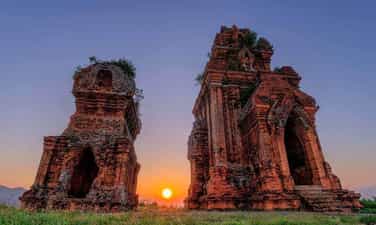
Twin Tower (Hung Thanh Tower)
Built in the late 12th century, located in Dong Da Ward, TP. Quy Nhon, is a beautiful and unique architectural work consisting of two towers. The twin tower is classified as a beautiful "unique" of Champa architectural art. Both towers are not the traditional multi -layered square tower of the Cham tower but a structure of two main parts: the square body and the top of the curved pyramid, the corners of the tower shows the bird statues into Garuda with two hands as if to support the roof of the tower. The upper arch of the soaring doors like arrows. The architecture of the twin towers is influenced by Indian art. The tower was ranked by the Ministry of Culture and Information as an architectural monument in 1980. Source of electronic portal of Binh Dinh province.
Gia Lai
5782 view
Rating : National relics.

The temple of Admiral Bui Thi Xuan
The temple of Admiral Bui Thi Xuan was started construction on September 20, 2007 on a land area of 5,191m2, in Phu Xuan block, Phu Phong town, Tay Son district, Binh Dinh province; About 500 meters from historical monuments from Bui Thi Xuan street to the southwest. The temple was constructed by Tan Phuong Construction Co., Ltd. and Duy Tan Construction Co., Ltd. and inaugurated on July 10, 2008. The construction of the temple of Admiral Bui Thi Xuan is to express the gratitude, contributing to educating the young generation of Vietnam for the patriotic tradition and national pride. The temple has an area of 178 m2, built in ancient architecture. The main space between the worship sentence and the statue of Admiral Bui Thi Xuan; The statue is made of ceramics and gold inlaid with the sitting posture in the ratio of 1/1 to show the charisma of the martial arts general Van martial arts; The two sides before worshiping the bowl of weapons and the wooden tanks, the content is like the opposite sentence at the monument from Bui Thi Xuan street: Nguyet Chieu Thanh Khe former Chemistry The high foggy is Thai Tien Tinh Translation is: Old shaded green slot teeth Suong sowed thousands of old love. On the left of her worshiping case, she was a sentence, above, there was a golden ancestor of gold lacquered wood. On the right of the case of worshiping her is the incense, above, there is an article worshiping the generals under the golden lipstick. Bui Thi Xuan was born in a family of patriotic farmers in Xuan Hoa village, Tuy Vien district, Quy Nhon district (now Phu Xuan block, Phu Phong town, Tay Son district, Binh Dinh province). Her ancestor, Bui Dac Tho, was from Hoi An village, Quang Dien district, Nghe An district, migrated to Dang Trong to establish a business in Tay Son hamlet in the late seventeenth century. He was born with three sons, Bui Cong Ai, Bui Cong Nghia and Bui Cong Minh. Mr. Bui Cong Ai gave birth to Mr. Bui Dac Ke as the birth of Bui Thi Xuan. In 1771, Bui Thi Xuan participated in the Tay Son uprising movement and was assigned the rookie training and taming the battle to the battle, she had mastered hundreds of OPs with Chien Chien, contributing significantly to the victories of the Tay Son army associated with the famous name and career of the national hero Quang Trung - Nguyen Hue later. In 1778, she was promoted by Emperor Thai Duc as the Admiral of the Administration to ban the troops and defend the Emperor's capital (An Nhon, Binh Dinh); From 1786 to 1792, she and her husband, Pho Tran Quang Dieu Pho, Nguyen Hue destroyed the feudal group Le -Trong, eliminated the boundary of the Gianh river that had divided the country for more than 200 years, and the basis for the cause of the country's reunification later. After Quang Trung died, Ms. Canh Thinh held the responsibility of the commander of the army to prohibit the protection of the Phu Xuan capital. In 1802, she commanded 5,000 troops to participate in the battle in the town of Tran Ninh (Quang Binh), which made the Nguyen army very scared. The story is that: When faced with King Gia Long, she said that if there was a female general like us anymore, Nhat Le door would not be cold. It is difficult for you to set foot in Bac Ha. Bui Thi Xuan is a complete and talented woman, Can Truong Liet, she dedicated her life to the cause of fighting against foreign invaders to unify the country. Her name has gone into history and forever the pride of Vietnamese women. She died on November 30, 18802 in Phu Xuan (Hue). Every year, on the 6th of November of the lunar calendar of Quang Trung Museum solemnly organize the ceremony of commemorating her, tourists from all parts of the country come to attend a lot and burn the heart to commemorate the career of the heroic female career, the elite son of Tay Son - Binh Dinh homeland. Source of electronic portal of Tay Son district, Binh Dinh province.
Gia Lai
5236 view
Rating : National relics.

From Vo Van Dung and the temple of Dai Tu Vo Van Dung.
From the Vo street, at the end of Phu My village, Tay Phu commune, Tay Son district, Binh Dinh province (formerly Phu Loc village, Tuy Vien district, Quy Nhon district), this place is a rugged land: narrow land, sparse people, mountains and mountains, people mainly live on agriculture, exploit forest products and hunt. It is the process of struggle to renovate the harsh nature to create life that I have trained the people of Phu Loc virtue of hard work and the spirit of martial arts. Vo Van Dung was absorbed in the martial spirit of his homeland, so he had learned many traditional martial arts such as: bow, sword, sword ... the tradition of his homeland. He was intelligent, good at martial arts, so Vo Van Dung soon stood in the generals of the Tay Son army, his name was associated with the glorious feats of the Tay Son people. The Vo family used their houses from the road to worship Vo Van Dung and was ranked by the Ministry of Culture and Historical Monuments in 1988 according to Decision No. 1288/Decision -The Culture, September 24, 1988. According to the plan, the provincial People's Committee is planning to build a new martial arts temple in the homeland of martial generals, along the path to the tourist area of Tao Ho. To commemorate and grateful the hero, the son of the homeland; Binh Dinh province built a temple of Dai Tu Vo Van Dung to educate patriotic traditions and national pride for generations today and tomorrow. The temple was started construction on October 21, 2021 on a land area of 1.05 hectares of Phu Lam village, Tay Phu commune, Tay Son district, Binh Dinh province, about 2.5 km from historic relics from Vo Van Dung street to the Northwest. Source of electronic portal of Binh Dinh province.
Gia Lai
5163 view
Rating : National relics.

Temple of Tang Bat Ho
Tang Bat Ho temple was built by the family and Hoai An district authorities in 2001, in 2003, the People's Committee of Binh Dinh province was recognized as a provincial historical monument. By August 2013, the Ministry of Culture and Sports was ranked national historical monuments. In order to grateful and acknowledge the career of Chi Sy Tang Tang Tang Tang in the history of national liberation against the French colonialists, from 2012 to the present, from the State's funding source, the support of domestic organizations has mobilized over 5 billion VND to upgrade the Tang Bat Ho temple in the planning of 5,300m2 (10 times higher than before), in which the construction area is 160m2, the area of the temple is 16 Temple members. The Sy Tang Bat Ho's house (1858-1906), from An Thuong village, An Thanh commune, Hoai An district, Binh Dinh province. Coming from a family with a patriotic tradition, growing up he participated in fighting against France in the Nguyen court army at that time, participating in the Can Vuong movement. By the time the Can Vuong movement in Binh Dinh failed, Mr. Bon three places to find a way to save the country and finally joined the Dong Du movement led by Phan Dinh Phung. The rich and diverse activities during 30 years, through 4 periods showed that he was a strong, indomitable patriot, always burning the will "Run the National Newspaper." The upgrade and recognition of the national historical monument at Tang Bat Ho temple shows high appreciation for the stature and great contributions of the patriotic and patriotic family, fighting against foreign invaders to liberate the nation; Thereby educating patriotic and revolutionary traditions for generations today and tomorrow. Source of electronic portal of Binh Dinh province.
Gia Lai
5540 view
Rating : National relics.
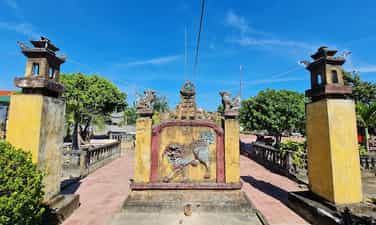
Ong Pagoda
Ong Pagoda (Quan Thanh Tu) is located in the town of Tu Thu Xa, Nghia Hoa commune, Tu Nghia district, 10km from Quang Ngai city to the east. The pagoda was made by 4 states of Hoa Minh Huong (Fujian, Trieu Chau, Hainan, Guangdong) living in Thu Xa Kien area in the second Minh Mang year (1821) and has undergone 4 restoration in 1881, 1894, 1920, 1991. Ong Pagoda worships Quan Vu in the main hall, worshiping Avalokitesvara Bodhisattva (people of China and Vietnam called Buddha Quan Am Nam Hai) in the harem space in the model of "Money Holy Buddha". In addition, the harem also worshiped Thien Hau, Kim Dau and 12 midwives. In terms of scale, although Ong Pagoda seems humble compared to the temples worshiping Quan Cong in Hoi An (Quang Nam), there is a harmonious combination of flower -Vietnamese architectural elements in a whole rich aesthetic. According to the profile of the General Museum of Quang Ngai province, the pagoda has a total area of 2,730m2, including temple garden, Tam Quan, pagoda yard and pagoda. All are surrounded by round 1, 1.2m high, 0.5m thick in a parallel style. The pagoda turned to the east. From the outside, the architectural works are arranged on a trary axis, tightly layout, posted in sequentially including: Tam Quan, Binh Phong - Tieu Tieu, Trong - Bell floor and temple. On both sides of the facade, there are two low gates, behind the temple is the temple to worship Tieu Dien Sy. Tam Quan gate structured one space, four columns, two sets because of the anti -fruit, in the way of the diaphragm. The third diaphragm bends the shape of the boat decorated with the head of the phoenix tail. The diaphragm is linked through the husbands and gloking through the column head. The roof of the tam tile roofed with yin and yang tiles, the top of the boat bent the boat, decorated the dragon shape, the tail covered with vegetable vines. The roof is decorated in the form of a box with five decorative cells. The two sides of the three gate are the temple of Ba Thien Hau. Battan Phong 2m high, with three compounds, the front covered with tiger shaped tiger bared the tail to look very vivid, the back covered the shape of the glass on the roof cluster. On both sides of Binh Phong are two pillars. Bell floors, drum floor built posted through the axis. Ong Pagoda currently holds 6 steles, epitaphs of Han characters, created in 1895 (7th Thai Thanh), 1920 (5th Khai Dinh), which are the years when the temple restores. Decorative stone stele touches the dragon painting in the forehead, the brazen beer is decorated with the dragon's head wrapped in a vegetable vine. The epitaph records the list of people who worship the money, including the name of the person, the place of residence, and the amount of money. In general, the art of decoration at Ong Dat Pagoda is quite sophisticated, especially the technique of embossing, touching, puncturing, touching on the screen, wooden walls, worshiping, trap, pattern, husband, statue, briefcase ... Ong pagoda has a harmonious combination of architectural elements of Vietnamese and Chinese people. In addition to the main components and materials of the traditional communal house in the Central region (the baseballs' husbands, the fake husband's husband) also has the appearance of the hiding of the planet of the Northern Delta and the set of the pumpkin husband's style of the North China style. Ong Pagoda was recognized by the Ministry of Culture and Sports (now the Ministry of Culture, Sports and Tourism) to recognize the national monument under Decision No. 43 of the Culture/Decision on January 7, 1993. Source of Quang Ngai Electronic Information Portal.
Quang Ngai
4722 view
Rating : National relics.
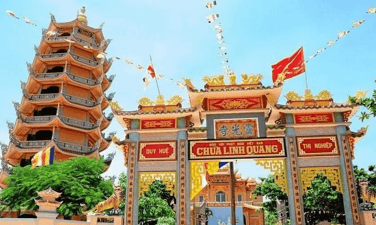
Linh Quang Pagoda
Since creating up to now, people on the island called the temple name "Linh Quang Tu" to pray for the glory and light of the temple always enlightened to save the people on the island to have a peaceful and happy life. Linh Quang Tu is the beginning of the temple associated with the spread of Buddhist light in Phu Quy. Not only is a beautiful place, but Linh Quang Tu is a typical temple in the fields of historical, literature and art compared to other temples on the island. Linh Quang Tu is a famous ancient temple in terms of scale as well as architectural art, religion, ritual, with diverse natural scenes that deserve to be the famous landscape of Phu Quy Island. If the official chronology of the temple followed the genealogy, the pagoda was created and renovated in the year of the Rabbit 1747 of King Le Hien Tong - the 8th Canh Hung dating. Up to now (2017) the temple has dated 270 years and so far this is one of the earliest temples in Binh Thuan. With these typical values and meanings, Linh Quang Pagoda was ranked by the Ministry of Culture and Information Ranking of the National Landscape in Decision No. 51 Decision/Minister of January 12, 1996. Source of electronic portal of Phu Quy district, Binh Thuan province.
Lam Dong
5184 view
Rating : National relics.

Mui Ne white sand hill (Bau Trang)
Bau Trang (or Bau Cat, Bach Ho, Bau Sen) is a freshwater lake in Binh Thuan province, about 62 km northeast of Phan Thiet city, in Hong Lam village, Hoa Thang commune, Bac Binh district (formerly in Binh Nhon commune, old Hoa Da district). According to legend this place is a large lake, after the people cover the sand dam and run across the lake to pass. This large lake has since been divided into 2 parts: Tieu Ho and Dai Ho. Because "Bau" in the local language means "lake", for a long time, the local people have called Tieu Ho as Bau. In 1867 when Ho Chi Minh passed by here, seeing the beautiful scenery of Bau Trang that he called "Bach Ho". "Bach Ho" began to appear in Nguyen Thong's poetry and also from there became the poet who assigned Bau Trang. Bau Trang is divided into 2 parts by a sand hill across. The people here have been called Bau Ong and Bau Ba. Bau Ba is larger than Bau Ong and contains more water. The depth of Bau Ba is 19m in the rainy season. Around Bau Ba planted a lot of lotus. Lotus is planted by residents for the purpose of harvesting seeds and looking. Because of planting lotus in this area, the landscape is more special. Small than Bau Ba, but there is a dike separating the two lakes. Bau Ong is more shallow and not as sweet as Bau Ba. Possessing a rare natural beauty, Bau Trang is a famous sight that most tourists cannot ignore when choosing Binh Thuan is a resort, sightseeing, entertainment. With a total area of about 45 hectares, the tourist destination consists of 23.2 hectares of 3 types of forest types managed by Le Hong Phong Protection Forest Management Board, the remaining 2.8 hectares of land and 19 hectares of water surface managed by the People's Committee of Hoa Thang commune. In 2013, this place was recognized as a place in the top 100 impressive destinations of Vietnam, in the period of 2014 - 2016, continuing to receive the title of ASEAN favorite destination and the top 100 favorite points in the South. Especially in 2019, Bau Trang was honored to receive the ranking of national landscapes at the decision of the Ministry of Culture, Sports and Tourism. Source of information portal in Bac Binh district, Binh Thuan province.
Lam Dong
4759 view
Rating : National relics.
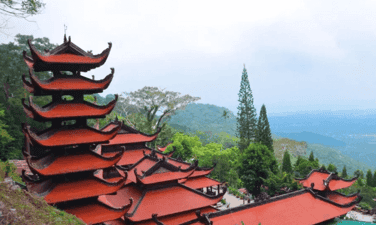
Ta Cu mountain pagoda
Ta Cu mountain pagoda (locals or simply calling the mountain pagoda) is a temple located on Ta Cu mountain at an altitude of more than 400 m, in Thuan Nam town, Ham Thuan Nam district, Binh Thuan province, near Highway 1, 28 km south of Phan Thiet. This pagoda is a national historical and cultural relic of Vietnam. In the middle of the 19th century monk Tran Huu Duc (1812-1887) Dharma name Thong An, Huu Duc's Dharma from Phu Yen to Binh Thuan built a draft in Kim Thanh village (Bau Tram) who had just practiced and picked medicine. He used to practice and contribute a lot of effort to take care of Buddha in many pagodas in Binh Thuan such as Co Thach Pagoda, Linh Son (Tuy Phong), Phuoc Hung (Phan Thiet) and some pagodas in Phu Quy island. In 1872, the monk went to Ta Cu Mountain to practice in a rock cave (later called the nest cave). Until the time of death, Master Huu Duc did not go down the mountain anymore. At the same time, the monk Huu Duc was a good physician. In the 33rd year of Tu Duc (1880), the Empress Dowager was seriously ill, the gods asked to receive the monk to help treat the disease but the monk refused, only sent people to the court. The Empress Dowager was gone, King Tu Duc gave the name of the pagoda, Linh Son Truong Tho and the monk was "Venerable Venerable". Until the monk Huu Duc President passed away (on October 5, 1887 in the lunar calendar), the Master Tam Hien set up a new temple below, later called the lower pagoda or Long Doan pagoda and Linh Son Truong Tho pagoda as the temple. Above the temple, about 50 m from the nest cave is the statue of Shakyamuni Buddha, 49 m long, 7 m high. The work was chaired by Mr. Truong Y, casting with reinforced concrete in the restoration of 1963. About 50 m from the bottom is the Tam Ton Ton Ton statue group, built on the lotus: A Amitabha statue in the middle of 7 m high, the left is the statue of Avalokiteshvara and the right of Dai The Chi statue is 6.5 m high. The tomb tower of the ancestors and the abbot of the abbot was divided into two clusters in front of the church and after the temple. The nest tower is located in front of the temple, besides the tomb of the tiger, it is tamed by Master Huu Duc. Source of portal port of Binh Thuan province.
Lam Dong
5293 view
Rating : National relics.