Relic point Vietnam
Việt Nam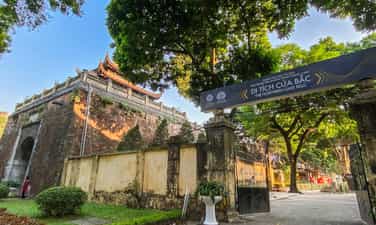
North Gate
Historical witness in the heart of Hanoi's Imperial Citadel Located on Phan Dinh Phung Street, Cua Bac (Bac Mon) is the only intact city gate of Hanoi Citadel during the Nguyen Dynasty. Built in 1805 on the foundation of Cua Bac during the Le Dynasty, the building is not only a precious vestige of ancient military architecture but also a symbol of the resilient spirit of Hanoi's army and people during the years of fighting against foreign invaders. The North Gate is built in a gazebo architecture with a massive gate below and an eight-roof watchtower above. From the gazebo, ancient soldiers could observe the entire area inside and outside the citadel to protect the capital. After more than two centuries, the building still retains many original architectural features with solid brick and stone walls, large wooden gates and the Chinese characters "Chinh Bac Mon" still intact on the gate. The special feature that makes Cua Bac a valuable historical relic is that two cannon bullet holes are still clearly visible on the outside of the city gate. This is a vestige of the attack carried out by the French army on Hanoi citadel in 1882, reminding of glorious battles in the nation's history. Inside the gazebo is currently the place to worship the two Governors of Hanoi, Nguyen Tri Phuong and Hoang Dieu - heroes who fought and sacrificed their lives to protect Hanoi citadel from the invasion of the French colonialists. The solemn space and exhibits help visitors understand more about the patriotic spirit and indomitable will of their ancestors in protecting Thang Long - Hanoi. Coming to Cua Bac, visitors will not only admire a unique ancient architectural work but also have the opportunity to explore the Thang Long Imperial Citadel complex, learn about the history of the capital with a thousand years of civilization and take impressive photos among the rows of ancient trees on Phan Dinh Phung Street - one of the most beautiful streets in Hanoi. Today, Cua Bac is a stop not to be missed on the journey to explore the Capital. Amidst the pace of modern life, the project still quietly preserves historical marks, becoming a symbol of patriotism, resilience and pride in a thousand-year-old Hanoi of civilization. According to the Management Board of Thang Long Imperial Citadel
Hanoi
399 view
Rating : Special national monument
O Quan Chuong
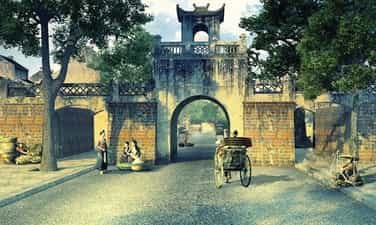
The last doorway preserves the ancient soul of Hanoi Amid the bustling life of Hanoi's Old Quarter, O Quan Chuong still stands quietly as a witness of more than two centuries of history. As the only remaining doorway of Thang Long citadel, the building not only has unique architectural value but is also a symbol reminiscent of a thousand-year-old Hanoi of civilization. Built in 1749 and restored in 1817 under the Nguyen Dynasty, O Quan Chuong is also called Dong Ha Mon, located at the eastern gate of the ancient citadel. The building is built according to the gazebo gate architecture with a large main door, two side doors on both sides and a gazebo with four curved roofs above. On the gate there are still three Chinese characters "Dong Ha Mon", a historical mark that has existed over the years. Having gone through many historical events, O Quan Chuong still retains its ancient features with moss-covered brick walls, time-stained tiled roofs and a peaceful space in the heart of the city. Standing under the city gate, visitors feel like they are going back in time, returning to the image of old Thang Long - where groups of people and horse-drawn carriages used to bustle in and out through the doors every day. Not only is it a historical relic, O Quan Chuong is also a favorite stop for tourists when exploring Hanoi's Old Quarter. From here, you can easily combine visiting Dong Xuan market, Hang Chieu street, Hoan Kiem Lake walking street or enjoy typical dishes of Hanoi cuisine. In particular, in the early morning or late afternoon, the sunlight passing through the city gate creates an ancient scene, which is the ideal time to save typical photos of Hanoi. Today, O Quan Chuong is not only a national historical relic, but also a symbol of longevity, preserving memories of an ancient Thang Long in the heart of the modern capital. If you have the opportunity to visit Hanoi, don't forget to stop at O Quan Chuong to feel the rustic, peaceful beauty and listen to the historical stories that echo along each ancient brick. According to Hanoi magazine
Hanoi
430 view
Rating : National monument
Lang Fortress historical site
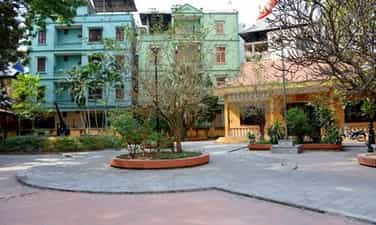
Located on Fort Dai Lang Street, Lang Thuong Ward, Hanoi City, Lang Fort Historical Site is the place where the first artillery shots opened the nationwide resistance war against the French colonialists on the evening of December 19, 1946. This is also the place where the first victory of the Vietnam People's Army Artillery was achieved, becoming a "red address" of special significance in the history of the struggle to protect the nation's independence. The fortress was built by the French colonialists in 1941 on the fields of Lang Trung village for the purpose of defending Hanoi. Initially, the project was equipped with four 75 mm anti-aircraft guns and a solid command post system. After the Japanese fascist's coup in France in 1945 and the victory of the August Revolution, Vietnamese military forces collected, repaired and restored cannons to serve the task of protecting the revolutionary government. On June 29, 1946, the first artillery unit of the Vietnam Army was established. Lang Fortress became one of the important artillery battlefields protecting the Capital, where artillery soldiers urgently prepared for combat missions day and night amid the increasingly tense situation in Hanoi. On the evening of December 19, 1946, after the signal to start the National Resistance War was broadcast, from Lang Fort, the first artillery rounds simultaneously fired at French army positions in Hanoi citadel. The sound of artillery not only opened the long resistance war against the French colonialists but also marked the birth and growth of the Vietnam Artillery. During the 60 days and nights of fighting to protect Hanoi, the soldiers at Lang Fortress fought resiliently with the capital's army and people, contributing to holding back the enemy, creating conditions for the Party Central Committee, Government and headquarters to withdraw to a safe base, preparing for a long-term resistance war. After the war, traces of the fortress were no longer intact due to urbanization. However, the 75 mm cannon and part of the battlefield have been preserved and restored within the relic grounds. This place also has a gallery introducing images, documents and artifacts about the history of the formation of Lang Fortress, the early days of the National Resistance and the traditions of the Vietnam People's Army Artillery. In 1986, Lang Fortress was classified as a historical relic by Hanoi city, and in 1992 it was recognized by the State as a National Historical Monument. The building continued to be restored and renovated in 1994–1995 and 2006, contributing to preserving precious historical values for future generations. Today, Lang Fort Historical Relic is a meaningful destination for history lovers, especially the younger generation. Not only does it preserve memories of the early days of the National Resistance War, this place is also a symbol of the resilient will, determined fighting spirit and heroic tradition of the Vietnam People's Army Artillery. Source: Hanoi Sights and Monuments (compilation)
Hanoi
616 view
Rating : National monument
Memorial house of President Ho Chi Minh in Van Phuc
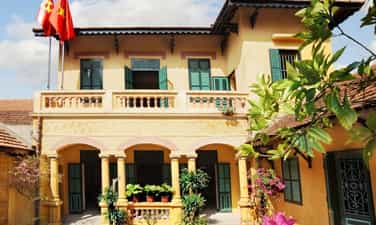
Located in Van Phuc ward, Hanoi city, President Ho Chi Minh Memorial House is where he lived and worked from December 3 to December 19, 1946, before issuing the National Call for Resistance. This is one of the special historical relics, marking the opening moment of the Vietnamese people's long resistance war against the French colonialists. The house was originally owned by Mr. Nguyen Van Duong's family, a family with a patriotic tradition in Van Phuc silk village. With a convenient location, both close to Hanoi and ensuring confidentiality and safety, this place was chosen by the Party Central Committee as the living and working location of President Ho Chi Minh during the days when the country's situation was extremely tense. During his time in Van Phuc, President Ho Chi Minh still went to Hanoi during the day to work with the Government, receive international delegations and direct work, and in the evening returned to this house to study the situation, meet with the Party Central Committee Standing Committee and prepare important decisions for the country's destiny. In mid-December 1946, in response to the escalating acts of invasion by the French colonialists, the Party Central Committee met many times in Van Phuc to decide on the policy of launching a nationwide resistance war. It was in the room on the second floor of the house that President Ho Chi Minh drafted and completed the National Call for Resistance, the historic document that opened the resistance war against the French colonialists with the immortal summons: "We would rather sacrifice everything, than definitely not lose our country, definitely not willing to be slaves." On the evening of December 19, 1946, the National Call for Resistance was broadcast on the Voice of Vietnam, starting a long-term nine-year resistance war and leading to victory with the Dien Bien Phu Victory in 1954. This event marked an important turning point in the nation's history, demonstrating the resilient will and desire for independence and freedom of the Vietnamese people. Mr. Nguyen Van Duong's family kept it absolutely secret, creating all conditions for President Ho Chi Minh to work safely during his stay. Before leaving Van Phuc, he thanked his family and encouraged the people to actively support the resistance war, expressing his strong belief in the nation's victory. Today, the Memorial House of President Ho Chi Minh in Van Phuc is still preserved almost intact. The second floor of the house holds a working room and many original artifacts associated with the days when President Ho Chi Minh lived and worked here; The first floor is a space to display documents and images about the National Resistance War event and local revolutionary traditions. During the journey to explore Hanoi, the Memorial House of President Ho Chi Minh in Van Phuc is a place to help each person better understand and appreciate the sacrifices and determination of the nation in the journey to win and maintain independence. Source: Hanoi Landscapes and Monuments (compilation).
Hanoi
162 view
Rating : National monument
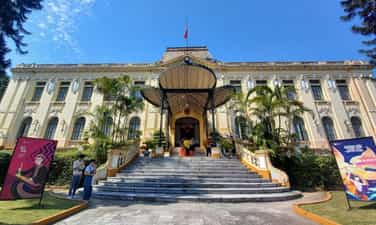
Northern Palace historical site
Northern Palace historical site Located at 2 Le Thach Street, Hoan Kiem Ward, Hanoi City, Bac Bo Phu is one of the special historical relics associated with the early days of the founding of the Democratic Republic of Vietnam. This is where President Ho Chi Minh and the Provisional Government worked after the August Revolution in 1945, and witnessed many important events in the process of building and protecting the young revolutionary government. The project was built by the French in 1918 in the style of ancient French architecture, initially as the Tonkin Governor's Office - the highest administrative agency of the colonial government in Tonkin. After the Japanese fascist's French coup in March 1945, the project was renamed Phu Kham Sai Tonkin. On August 19, 1945, in the boiling atmosphere of the August Revolution, tens of thousands of people from the rally at the Opera House Square marched to occupy the Kham Sai Palace. The event of seizing power here became one of the typical milestones of the General Uprising in Hanoi, contributing to bringing the August Revolution to victory and paving the way for the birth of the Democratic Republic of Vietnam. After the victory of the August Revolution, the project was renamed Bac Bo Phu. From the end of August 1945 to the day before the National Resistance, President Ho Chi Minh and the Provisional Government worked here, making many important decisions on building the state apparatus, domestic and foreign affairs, and preparing for the defense of newly won independence. In particular, on December 20, 1946, Bac Bo Phu became one of the fiercest fighting points in the early days of the resistance war against the French colonialists. The National Guard soldiers heroically fought to protect the Government's headquarters, contributing to the beginning of the nation's long resistance war. After the capital was liberated in 1954, the building was renovated and became the Government Guest House, continuing to serve the State's domestic and foreign affairs activities. In 2005, Bac Bo Phu was labeled a Revolutionary Historical Relic, recognizing its special historical and architectural values. Not only has historical value, Bac Bo Phu is also a typical French architectural work with elegant design, in harmony with the space of Hoan Kiem Lake and August Revolution Square. After more than a century, the building still retains many traces of the nation's early founding period and is a witness to important events in the nation's history. Today, Bac Bo Phu is one of the typical "red addresses" of Hanoi Capital. Preserving, embellishing and promoting the value of monuments not only contributes to preserving historical memories but also helps educate patriotic traditions and revolutionary spirit for present and future generations. For tourists who love history, Bac Bo Phu is a meaningful destination to learn about the early days of the formation of the modern Vietnamese State and the journey to protect the nation's independence. Source: Tuoi Tre Newspaper
Hanoi
557 view
Rating : Special national monument
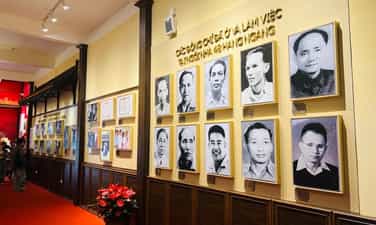
House number 48 Hang Ngang
Historical site 48 Hang Ngang - Where President Ho Chi Minh wrote the Declaration of Independence Located at 48 Hang Ngang Street, Hoan Kiem Ward, Hanoi City, the historic house at 48 Hang Ngang is where President Ho Chi Minh wrote the Declaration of Independence, the historical document that gave birth to the Democratic Republic of Vietnam on September 2, 1945. This is one of the typical relics associated with his life and career, and is also a "red address" with special significance in Vietnam's revolutionary history. The house is owned by patriotic business couple Trinh Van Bo and Hoang Thi Minh Ho, who have made many contributions to the revolutionary cause. Located in the middle of Hanoi's Old Quarter, connecting to both sides of Hang Ngang and Hang Can streets, the house has a convenient location, solid architecture and ensures confidentiality and safety. Therefore, from August 25 to September 2, 1945, this place was chosen as the living and working location of President Ho Chi Minh and the Party Central Committee Standing Committee. On the second floor of the house, President Ho Chi Minh chaired many important meetings, decided on domestic and foreign policies, established the Provisional Government and prepared for the Independence Day. In particular, it was in this room that he completed the Declaration of Independence - the historical document declaring to the whole world the birth of the Democratic Republic of Vietnam. On September 2, 1945, at the historic Ba Dinh Square, President Ho Chi Minh solemnly read the Declaration of Independence in front of more than half a million compatriots, officially giving birth to the first worker-peasant state in Southeast Asia, ending thousands of years of feudalism and nearly a century of colonial domination, opening a new era of the nation - an era of independence, freedom and nation-building. Currently, the first floor of the house is a space displaying many precious documents, images and artifacts related to President Ho Chi Minh, the August Revolution and the birth of the Declaration of Independence; The second floor is still preserved almost in its original state with original artifacts, helping visitors better visualize the historic days of the fall of 1945. Today, 48 Hang Ngang Historical Site is a destination that attracts a large number of domestic and international tourists. Not only does it have great historical value, this place also contributes to educating patriotic traditions, national pride and revolutionary spirit for today and future generations. On the journey to explore Hanoi, the house at 48 Hang Ngang is a meaningful stop for everyone to better understand the moment of the birth of an independent Vietnam and the immortal marks in the nation's history. Source: Hanoi Monuments and Scenic Management Board (compiled).
Hanoi
540 view
Rating : Special national monument

Vietnam Military History Museum
Established on July 17, 1956 with the original name of Military Museum, located next to the Hanoi Flagpole, opened to visitors from December 22, 1959. Through the process of construction, development and continuous growth, the Museum was renamed Vietnam Military History Museum in 2002 and officially welcomed visitors at the location of Thang Long Avenue, Dai Mo Ward, Tay Mo, Nam Tu Liem District, Hanoi City (now Xuan Phuong Ward, Hanoi City) in November 2024. The museum has the function of researching, collecting, inventorying, preserving, displaying and propagating the value of Vietnam's military cultural heritage. The display system introduces thousands of artifacts, organized and arranged in a modern, scientific and rich manner, applying modern technology and advanced equipment, comprehensively reflecting the history of fighting against foreign invaders and gaining independence of the Vietnamese people; the formation and development of the people's armed forces, the core of which is the Vietnam People's Army during revolutionary periods. Through the exhibition system as well as educational activities, the Vietnam Military History Museum contributes to helping visitors understand more about the treasure of Vietnam's military cultural heritage, feel a strong connection with the past, understand more about the heroic history of the Vietnamese people, appreciate the existing values and look forward to a brighter and better future.
Hanoi
1406 view
Rating : National monument

Hoa Giang Van Minh - Porcelain Porcelain on the Foreign Affairs Front
Hoa Giang Van Minh - Porcelain Porcelain on the Foreign Affairs Front The ancient village of Duong Lam is known as the "masterpiece of spirituality", which produces national heroes, celebrities, faculties, and talent. They are people who have made excellent contributions to the cause of national construction and defense of the nation. Hoa Giang Van Minh - the talented envoy is one of those elite children of the homeland of Duong Lam. Giang Van Minh was born in 1573 in Mong Phu hamlet. He passed the Detective Flower of Mau Thin, the reign of King Le Than Tong in 1628. This examination was no one passed the title of Poinsettia or the Table of the Label only had the title of Flower Detective. He is a broad, highly talented learner, is a diplomatic diplomat, and brave. After a period of being sent to the court in Nghe An until 1637. King Le sent a Chinese -Van Hoa Detective to the delegation to go to Chinese porcelain. Over a hard journey, the delegation reached Beijing. He and his accompanying people had to stay in translation for a long time. Thanks to the smart strategy, he was able to enter King Minh. When the audience, King Minh intended to try the talent of the Vietnamese god, so he raised a side: "Copper Chi Kim Dai Kim Luc" (Translation: The copper column has now covered the moss). The side of King Minh was arrogant, referring to the old Ma Vien to invade our country, after suppressing the Hai Ba Trung uprising, he built a bronze column to engrave the word "bronze with extraction, Giao Chi to kill" (meaning: bronze columns, the people Giao Thich only destroyed) as a curse of our people. After listening, Detective Hoa Giang Van Minh was very angry but he still calmly confronted: "Dang Giang self -necked by pink" (Translation: Bach Dang River from ancient times is still red). In the opposite of the steel, showing the heroic spirit and national pride, reminding King Minh to recall three times the Bach Dang River tinged with the blood of the Northern invaders: the victory of the South Han army of Ngo Quyen (938), the victory of the Song army of Le Dai Hanh (in 981) and the victory of the Nguyen Mong army of Tran Hung Dao (in 1288). Thought to humiliate the Ambassador of Vietnam, suspected that Giang Van Minh was humiliated. Despite the rules of the state, King Minh cowardly sent his troops to operate his stomach to see "how big the male An Nam was." After killing him, King Minh praised him as the secretor, so he sent merciful mercury, put the ginseng and put it in the coffin to closed to the Southern Water Mission to transfer his body to the country. Believing that Kham Jiang Yuan died heroically, King Le and Lord Trinh extremely mourn. The king personally went back to his hometown in Mong Phu village (Duong Lam) to attend the funeral and gave him some words: the ambassador of the army, the hero of the ancient hero means "going to the mission without humiliating the king's destiny, worthy of being the hero of the ancient Thien" and pursuing him as "the work of the Lang Thi Lang, the title of Vinh district". Currently, the tomb of Kham Giang Van Minh is still carefully cared for by the clan in the country of Go Dong - Mong Phu village, built a pedestal of the throne, surrounded by protective flower walls. As for the throne, the place of burial ceremony of him, called by the local people as Quan Giang to memorize the legend of the angel of the deity has made a glorious for the country. In 1845, the people in the area of Hoa Giang Van Minh Detective Church to commemorate his merits. The church area has an area of about 400 m2, which is architecturally in the style of the buds including the road and the back of the road. The buildings are built with bricks and roofs; The wooden roof is smooth, sharp, no sophisticated engraving station. The gate of the church style of beer, built of bricks, on the floating Chinese characters "Giang Tham Hoa Cong Tu" (Cong Lang Dynasty Church of Ta Thi Lang Tham Hoa Giang Van Minh). Hau Duong is the main place of worship, 3 spaces have a altar with beautifully painted altars. In the church also preserved a number of precious relics such as: 4 diaphragm paintings, 20 pairs of Chinese verses (10 pairs written on the golden lacquered wood, 10 pairs written on the wall column), 3 steles. Hoa Giang Van Minh Detective Church was ranked in 1991 national cultural and historical relics, which is a sacred place to record the situation of Tham Hoa and also a place of patriotic traditional education for the younger generation. At this church, in addition to being a place to honor the gratitude of Tham Hoa's merit is also the place to worship and honor many of the late Jiang family through the period when he passed the board of chief appointed as the mandarins and hold important positions with great merits for feudal dynasties. The last time the church has been remodeled with the State's capital, the construction was completed under the technical assistance of experts and volunteers of the Japan International Cooperation Agency in Vietnam (JICA), this renovation project was also honored to receive awards for wood construction techniques of UNESCO Asia -Pacific Committee in 2013. The ceremony of commemorating the death of the angel, in addition to the solemn and respectful rituals of his noble sacrifice, the family also held a study promotion ceremony to honor and encourage the descendants of Giang to Dat and win high prizes in all levels of education. Located in the center of Mong Phu ancient village close to the communal house and the People's Committee of the commune, the Giang church is currently an attraction that attracts a large number of domestic and foreign tourists.
Hanoi
2523 view
Rating : Updating

OLD LATERWELL IN DUONG LAM
OLD LATERWELL IN DUONG LAM In the village organization system in Vietnam, especially in the Northern Delta region, ancient wells have become an essential project, closely linked to the community whose main life is agricultural production. Along with the silhouette of the ancient banyan tree, the airy courtyard of the communal house, the village well and its valuable image are deeply ingrained in the memories of everyone and every home. The well is an indispensable friend in every spiritual project of the village communal house. This "trinity of cultural heritages" is always placed in convenient locations by the people, making it easy to gather and gather people in the village. The Northern Delta has many villages associated with ancient wells. Referring to those places, one cannot help but mention the Ancient Village in Duong Lam (Son Tay, Hanoi). There, in addition to the famous and precious works of tangible and intangible cultural value, including the once famous laterite ancient wells, always create unforgettable memories of generations of villagers, happy and sad memories, pride, pride in the homeland, the land of ancient and spiritual masterpieces. Laterite wells in Duong Lam Ancient Village are distributed everywhere: places of spiritual belief (communes, temples, pagodas, shrines, churches), and residences of households. Depending on the location, people explore and dig wells. Water geysers are sprayed through laterite seams to create clarity, cleanliness, coolness, and remove harmful impurities. The laterite stones are dug up from the ground. Wherever you dig, the stone will be hard (it will not break or distort the circular shape of the well when the soil fibers have been dug). Therefore, digging a well in Duong Lam is not an embankment, a round well is built and then dropped down to attach screws (like in low-lying areas or the Northern midlands). The well of a communal house or spiritual place is usually 3 - 5m wide and 7 - 10m deep; The mouth of the well is placed with large laterite stones, monolithic or pieced together, which are both durable, strong, and clean. Well at home has a smaller diameter, only 1.2 - 1.5m, the depth also depends on 5 - 7 - 9m. Wells in public places such as villages and hamlets do not have buckets, so anyone who wants to use them must bring a bucket. When a family well doesn't have a winch, people have to use human strength to pull the bucket (which also takes a lot of effort). Later, when there were soft cable pulleys, water was scooped with higher productivity, and people spent less effort. Wells that appear in public places or monuments are often given names associated with this location such as: Dinh well, Dong well, Chua well. Offshore wells, there are a number of well names associated with hamlets such as: in Mong Phu village there are wells in Dinh hamlet, Sui hamlet, Sai hamlet, Giang hamlet. Particularly, the wells on both sides of Mong Phu communal house are likened to two sacred dragon eyes. Giang hamlet's well is famous for being cool, making delicious tea, and drinking sweet "Giang hamlet's well water, Buong field's sweet potatoes". The well is located in front of the door of communal houses, pagodas, and temples as a way for relics according to Confucian feng shui theory. Around it are often planted some ancient trees such as: banyan, rice, and muom. Around the circular shaft of the well, the part protruding from the ground, over time, the laterite surface is covered with moss, which is also a good environment for the vines called squash grass (snail scale plant, dragon scale plant) to grow, creating a tangled rhizome system, firmly attached to the laterite wall surface. There are ancient wells dug in square shape (symbolizing that mother earth always nurtures and loves her children and reflects the silhouettes of ancient buildings) and round wells (like the shape of the sun) that have the meaning of always shining the sunlight day after day radiating the harmony of yin and yang. The digging of a well is considered and discussed very carefully by the people in the village, such as the geographical location and feng shui of the place to be carefully considered to choose a source of water that is clear, cool, sweet, not cloudy, not foul, not salty; The water circuit must ensure flow all year round, throughout the month. At the beginning of the year, people have the custom of slapping wells to receive new vitality and prosperity, and also in the early morning of the first day of the New Year, many families go to the village well to carry water to fill tanks, jars, pots, and storage containers to hope for a year where the family and clan will have lots of blessings and great fortune, because according to the village's religious customs, the village well is the deepest place, the gathering place, containing vitality and fortune (underground water flows forever). According to the confidence of many old people, the heart of the well is the heart of the people, of the villagers, as well as the nature of: people are tolerant and compassionate, the village well does not contain hatred for what has gone through. In the ancient village, there is also an extremely famous ancient well that has entered the legend of many generations of villagers and surrounding areas, which is the Milk well, also known as Chuong Sa well in Cam Lam village, near the temple and mausoleum area worshiping King Ngo Quyen. It is a small and shallow well, 0.7 - 0.8m wide in diameter, more than 1m deep, the well is embanked with laterite bricks. The water in the Milk well has a very special cool and sweet taste. The water is clear in all seasons and you can see through to the bottom. When talking about the Milk Well, people recall a very thrilling legend about an abandoned newborn baby and an old woman with a kind and tolerant heart. When she met this baby, she held the child with a heart-wrenching cry, remembering her mother's milk. The two of them went looking for houses along the road to ask for water and could not see any houses or people. Arriving in a valley at the foot of Cam Hill, they found a gurgling stream of water flowing from a cave. The grandmother fed the baby some clear water. The baby stopped crying and slept soundly in her arms. Since then, she set up a tent here to raise her grandchildren. When she passed away, people in the area built a temple to worship her, called Mother Temple, next to the sacred water source called Milk Well. When in the dry season, all the village and house wells ran out of water, but the milk well was still full of water. The villagers came here to ask for water to eat, drink, and do daily activities. Nowadays, Milk Well is also known by many breastfeeding mothers for its miracle. Strangely, every time the mother unfortunately loses her milk, she asks her relatives to come here to perform a ceremony and ask for water to bring home to drink, and the mothers' milk supply is miraculously restored. At the entrance to Sai hamlet (Mong Phu hamlet) there is an old well near the Ha family church. In front there is a stone stele engraved with 4 ancient Chinese characters "Nhat bang tam", the stele is on the back of a turtle, and dated 1933. Or Nghe well in Cam Lam village (Nghè well water, Cam Lam tea Giang well water, Buong field sweet potatoes) These two wells are famous for being clear, clean, cool, delicious and sweet to drink Although there are not many laterite wells in the Ancient Village and are used frequently, there are still ancient wells at valuable spiritual and religious sites and some grounds of old houses and traditional families. Some wells are also used as incense sticks for worship. The wells in families are still pumped up for daily use (although they no longer protrude above the ground to reveal the round well's laterite well, because they want to save space, the well is still submerged, covered with a concrete cover, and water is taken up by a vacuum pump pipe). Although there are no newly dug wells, every time we visit the cultural heritage of the Ancient Village in Duong Lam, especially in the summer and fall, after a tour around the village, staying at the ancient house, no one can miss the moment of feeling the cool water from the laterite well from the water jars kept by the homeowner for visitors (washing face, nose, hands and feet, even taking a sip of laterite well water). Surely visitors will feel the sweet, rustic, noble taste of the cool, ever-flowing stream of water like the tradition of diligence, hospitality, compassion, and hard work of the people of the homeland.
Hanoi
491 view
Rating : Updating

Conservation of "milk well" in Duong Lam
Conservation of "milk well" in Duong Lam In the cultural space of the ancient village in Duong Lam, the village well is an indispensable part of the cultural and cultural heritage, creating a very unique feature in the lives of people here. "Milk well" in Cam Lam village, Duong Lam commune, is well known because this is a sacred well, which has brought miracles for women who are raising children with milk or loss of milk. "Milk well" is a folk call, and people here still call the bell well. Legend has it that, in a chaotic time, when this place was still a pristine mountain without a human being, a newly born baby was abandoned to cry and cried strictly at the foot of the hill. A old woman passed by witnessed but did not know how to hold the baby. She only knew how to carry the baby in her arms along the way in the hope of finding a house to ask for water. Going forever and not seeing the shadow of people, going to a valley at the foot of Cam hill, she saw a murmuring water flow from the cave of the stone so that the water would let the baby drink. The baby suddenly stopped crying and fell asleep in her hand. Since then, she has set up a tent here to raise the child. When lost, people in the area set up a temple to worship her and called the "mother temple" on the sacred water called the "milk well". The circuit then becomes sacred and is well known. When in the dry season, all the village wells were dried up in the bottom, the water circuit was still full and clear. Together they burden the water to eat, the more water takes the more water. The bell well is located at the foot of Cam Mountain. It is said that this is the land of King Ngo Quyen, so no one dares to build a house on the king's land, so this place still intact the ancient and dense. Milk well is located next to the trail at the foot of the blocked hill and Cam mountain in Cam Lam village. In order to reach the "milk well", it must go through Phung Hung and Ngo Quyen temples. A few hundred meters from Ngo Quyen mausoleum in the south, deep into the red dirt road will see "milk well". In fact, this "sacred well" is no different from the ancient wells in other rural areas. It is a small well and shallow well, the well is quite narrow with a wide diameter of about 70 - 80cm, deeper than 1m, the well is embankment with laterite. In particular, the water in the "milk well" has a special cool sweetness. The water is clear throughout the four seasons and can see through the bottom with a faded old laterite. Today, the "milk well" of Cam Lam village is well known because the well water is likely to cure milk loss for newborn women. The person who came to ask for milk just need to sincerely read the name, the address of the parents and the baby lacked milk accompanied by a fruit incense card and a few change. The father left 7 dong, the mother left 9 change at the temple and went to the well to scoop the water into the bottle. The ceremony after the worship is not brought back. The seniors in the village shared: People comply with this convention with the thought that Loc enjoyed after the ceremony must be "dispersed" for the children around the area. In this way, their prayers will be Linh Ung. The water asking for the "milk well" brought back to pour once into the cup for the woman to drink all not to be removed. The rest brought to cooking porridge or boiled for women to use. One or two days later, breast milk will return. The story of the bell well that helps women with milk makes many people visit Duong Lam are curious and want to take place to admire this monument. Perhaps because of this, anyone standing in front of the old well in Cam Lam has a different feeling from other wells in the ancient village of Duong Lam. In the gloomy, calm setting, each person is self -aware that he needs to speak gently in the well. In the relics complex in the land of two kings, the bell bell seemed as a treasure of the village. The cool drops of this "milk well" have brought peace in the souls of young mothers, helping them to balance their lives and in some way, have achieved their wishes. For the people of Duong Lam, the village well is an indispensable part of the cultural and cultural heritage of the ancient village, creating a very unique feature in the lives of people here. It is thought that preserving and preserving the image of ancient wells will increase the heritage value of the ancient Vietnamese village. This requires the determination and the efforts of the people and the local authorities to let the ancient well - the unique feature of the Doai culture will exist forever with time.
Hanoi
2466 view
Rating : Updating