
 vn
vn en
en ja
ja ko
ko zh
zh

















List of relic sites (92)
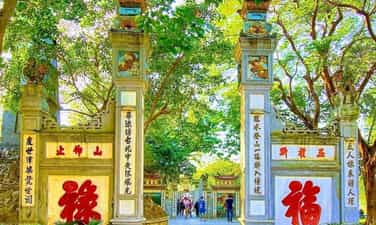
Ngoc Son Temple
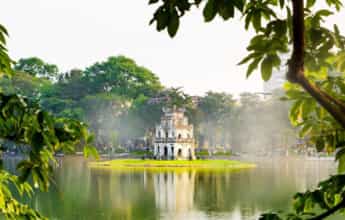
Ngoc Son Temple - Typical historical and cultural relic on Hoan Kiem Lake. Ngoc Son Temple is located on Ngoc Island in the middle of Hoan Kiem Lake, Hoan Kiem District, Hanoi. This is one of the capital's famous historical, cultural and scenic spots, associated with the history of Thang Long and the legend of King Le Thai To returning the precious sword to the Magic Turtle after victory over the Ming army. The relic complex includes many unique architectural works such as Pen Tower, Dai Nghien, The Huc bridge, Dac Nguyet gate, Tran Ba communal house and the main temple area with an altar, middle hall, harem and auxiliary items. Among them, the Pen Tower was built on Doc Ton Mountain, prominent with three Chinese characters "Ta Thanh Thien" (Write on the blue sky), expressing the spirit of promoting knowledge and civilization. Dai Nghien made of green stone, created in 1865, engraved with a poem compiled by the famous Nguyen Van Sieu, is a valuable work of art. The Huc Bridge with its characteristic red color and soft curves leading to the temple has long become a familiar symbol of Hoan Kiem Lake. The main temple area is built according to traditional architecture with a consecutive system of front altar, middle hall and back palace. The items are decorated with many motifs of dragons, phoenixes, Tho characters, Long Ma Ha Do, Than Quy Lac Thu, reflecting the sophisticated carving art of ancient Vietnamese architecture. Besides, Tran Ba communal house located close to the lake has the meaning of "breaking waves", symbolizing the stability of national culture. Located adjacent to the temple is the memorial area of King Le Thai To with a ceremonial gate, a communal house and a bronze statue of the king in a sword-holding position. The project contributes to honoring the national hero who led the Lam Son uprising to win independence for the country and is associated with the accumulation of swords at Hoan Kiem Lake. Ngoc Son Temple and Hoan Kiem Lake have become inseparable symbols of the Capital, preserving the historical, cultural and spiritual values of the Vietnamese people. Source: According to the Department of Cultural Heritage
Hanoi
8 view
Rating : Special national monument
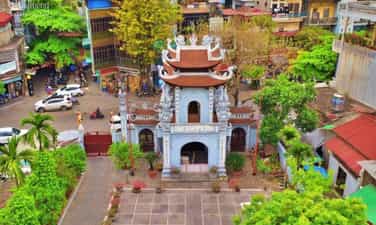
King's Temple
King Pagoda - Historical relic, unique artistic architecture in the heart of Hanoi King Pagoda is located at 17 Thinh Yen Street, Pho Hue Ward, Hai Ba Trung District (old), Hanoi. This is a relic complex including Hung Khanh Pagoda and Thien De Palace, famous not only for its historical and architectural value but also for being the cradle of traditional chess fighting in the ancient capital of Thang Long. According to historical documents, King Pagoda was built during the Early Le Dynasty (15th century). The relic is both a place to worship Buddha and De Thich - a god revered as the "king of chess" in Eastern culture. Legend has it that a prince of the Le Dynasty, admiring De Thich's chess playing skills, had a shrine built, from then on this place became the center of cultural activities and chess competitions of the capital. The relic complex is planned in harmony with the main pagoda, Mau palace, Tam Quan, corridor and Thien De palace including ritual gate, front altar, harem, stele house and flag yard. The highlight is the five-compartment altar building with traditional architecture, curved roof, and roof decorated with dragons flanking the sun, imbued with the style of ancient Vietnamese architectural art. The King Pagoda Festival takes place every year from the 6th to the 9th of the first lunar month. Besides Buddhist rituals and traditional beliefs, the highlight of the festival is the Chinese chess competition - a unique culture that has existed for many centuries. According to ancient custom, the person who wins the championship for three consecutive years will have their name engraved on a memorial stone stele at the monument grounds. With typical values of history, architecture and folk culture, King Pagoda was ranked a national historical and architectural and artistic relic by the Ministry of Culture and Information in 1992. Today, this place is an attractive spiritual and cultural destination, contributing to preserving and promoting the traditional values of Thang Long - Hanoi. Source: According to Hanoi Landscapes and Monuments.
Hanoi
8 view
Rating : National monument
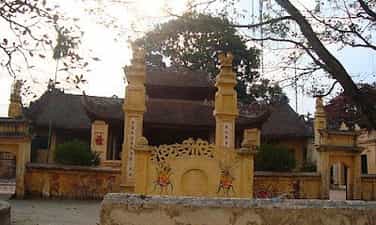
Ba Tia Communal House (Vinh Ninh Communal House)
Ba Tia Communal House - Historical site associated with female general Hai Ba Trung Ba Tia communal house (also known as Vinh Ninh communal house) is located in Vinh Quynh commune, Thanh Tri district, Hanoi city. This is an ancient communal house worshiping Ba Tia (Truong Tu Nuong) - one of the female generals of Hai Ba Trung, who had meritorious service with the insurgents against the Eastern Han army in the years 40-43 AD. According to legend, Ba Tia was a talented martial artist who recruited insurgents to join the Hai Ba Trung uprising. After the Two Ladies committed suicide at Hat Mon, she continued to fight against the enemy until she transformed at Than Phu gate. To commemorate her merits, local people built a temple to worship her and honored her as the Tutelary God. Ba Tia communal house was built according to traditional architecture with items such as Nghi Mon, Phuong communal house, Great communal house and Harem. The relic also preserves many precious artifacts such as 23 ordinations (the earliest in the Canh Hung era in 1753), divine genealogy, gilded palanquin, horizontal scrolls, parallel sentences and agricultural extension copies of the Quang Trung period. During the resistance war against the French colonialists, Ba Tia Communal House was also an active location for revolutionary cadres, associated with the name of General Vuong Thua Vu, contributing to the historical value of the monument. Every year, Ba Tia communal house festival is held from the 8th to the 12th of the second lunar month, with traditional procession and sacrifice rituals to commemorate female general Truong Tu Nuong and educate patriotic traditions for generations. With outstanding historical, cultural and architectural values, Ba Tia Communal House was ranked a national historical and cultural relic by the Ministry of Culture and Information in 1980. Source: Hanoi – Sights and Monuments
Hanoi
9 view
Rating : National monument
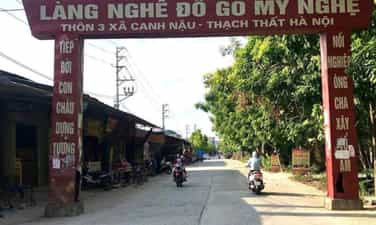
Canh Nau Communal House
Canh Nau Communal House - A mark of Vietnamese village history and architecture Canh Nau communal house is located in Canh Nau commune, Thach That district (formerly), Hanoi city. This is a typical religious work of the Doai region, associated with the history of formation and development of Canh Nau village over many centuries. According to research documents, the communal house was built around the 17th century, then restored in the 18th and 19th centuries. The project has an architectural plan of "early, late" style, outstanding with a system of wood carvings in the artistic style of the Later Le period, especially dragon images and folk patterns with high aesthetic value. The communal house is a place to worship 5 village tutelary gods, including Do Vien - a figure credited with teaching Chinese characters to local residents. Not only is it a religious center, Canh Nau communal house is also a place where traditional festivals take place, contributing to preserving the cultural identity of the community. With typical historical, architectural and artistic values, Canh Nau Communal House was ranked a national architectural and artistic relic by the Ministry of Culture and Information in 1993. Source: Hanoi – Sights and Monuments
Hanoi
9 view
Rating : National monument
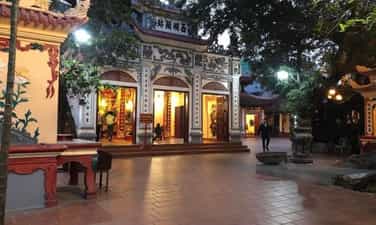
Phu Tay Ho
Phu Tay Ho - Typical historical, cultural and religious relic of Hanoi Located on the peninsula in Quang An ward, Tay Ho district, Hanoi, Phu Tay Ho is one of the famous religious relics associated with Holy Mother Lieu Hanh - one of the Four Immortals of Vietnamese folk beliefs. Located amidst the poetic space of West Lake, the relic has long become an important spiritual destination for the people of the Capital and tourists from everywhere. According to many research documents, Phu Tay Ho is associated with the legend of Poinsettia Phung Khac Khoan meeting Holy Mother Lieu Hanh while traveling to West Lake. However, the exact date of construction of the palace has not yet been determined by historical documents. The existing Sino-Nom documents at the site, such as stone stele, bronze bells, horizontal plates, and parallel sentences, mainly date to the late Nguyen Dynasty. Some epitaphs and artifacts show that this place is related to Bao Khanh temple of ancient Tay Ho village and has undergone many renovations and embellishments. Not only has historical value, Phu Tay Ho is also a center for practicing the typical Mother Goddess worship belief in Hanoi. Every year, especially on the occasion of early spring and the holidays of Saint Mother Lieu Hanh, a large number of people and tourists come to offer incense and pray for peace and fortune. With historical, cultural and religious values, Phu Tay Ho is one of the typical destinations, contributing to preserving and promoting the traditional cultural identity of Thang Long - Hanoi. Source: Hanoi – Sights and Monuments
Hanoi
11 view
Rating : National monument
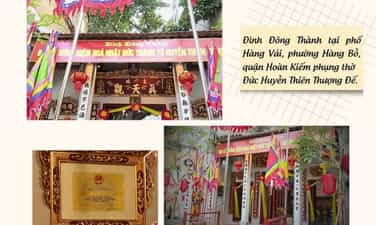
Dong Thanh communal house
Dong Thanh Communal House - Historical and architectural relic in the heart of Hanoi's Old Quarter Dong Thanh communal house, also known as Hang Vai communal house, is located at 7 Hang Vai street, Hoan Kiem district, Hanoi. This is one of the typical ancient communal houses of the old quarter, both a place for religious activities of the residential community and preserving many unique historical, cultural and architectural values of ancient Thang Long. The communal house was built to worship Saint Huyen Thien Tran Vu - a god revered by the people for his merits in guarding the North and protecting the country and people. Previously, the communal house was the common living place of two villages, Dong Thanh and Dong Thanh Thi, later merged into Dong Thanh village under the Nguyen Dynasty. Over the centuries, the communal house has still preserved many precious artifacts such as the bronze statue of Saint Huyen Thien Tran Vu, the system of stone stele of the Nguyen Dynasty recording the process of construction and restoration along with ordinations, horizontal panels, and parallel sentences with historical and artistic value. These are precious documents that contribute to reflecting the cultural and religious life of Hanoi's Old Quarter residents through many periods. Not only has architectural and religious value, Dong Thanh communal house is also associated with important milestones in the nation's history. During the early days of the National Resistance War at the end of 1946, the communal house was used as an ambulance station of Inter-Region I, contributing to the fight to protect the Capital for 60 historic days and nights. This event has increased the historical value of the monument, turning this place into a red address for educating patriotic traditions for generations. In 2014, Dong Thanh communal house was ranked as a city-level historical - architectural and artistic relic. Today, the communal house is not only a place for local people's religious activities but also an attractive attraction on the journey to explore Hanoi's Old Quarter. According to Hanoi New Newspaper
Hanoi
104 view
Rating : Provincial level relics
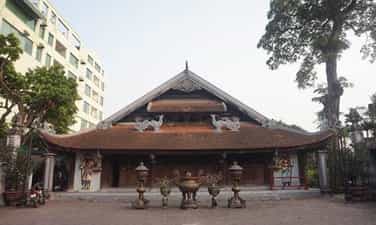
Yen Phu Communal House
Yen Phu Communal House Located in Tay Ho ward, Hanoi city (formerly in Yen Phu ward, Tay Ho district), Yen Phu Communal House is a typical historical - architectural and artistic relic, associated with the belief of worshiping Uy Linh Lang Dai Vuong and his two younger brothers, Vuong Duy Dai Vuong and Vuong Ba Dai Vuong. According to legend, Uy Linh Lang was a general who made great contributions in the resistance war against the Yuan army during the Tran Dynasty and was honored by the people as the village's Tutelary God. The communal house was built according to the traditional "Ding"-shaped architecture, including the Great Court and the Harem, featuring an ironwood frame system, ancient tiled roofs, and exquisite carvings of dragons, phoenixes, and four sacred animals in the 17th century artistic style. Inside the communal house, many precious artifacts such as ordinations, stone stele, bronze bells, horizontal plates, parallel sentences and ancient worship objects with historical and cultural value are preserved. Not only is it a place for local people's religious activities, Yen Phu Communal House is also one of the typical relics on West Lake, contributing to reflecting the history, traditions and long-standing cultural life of the land of Thang Long - Hanoi. In 1986, Yen Phu Communal House was ranked as a National Historical, Architectural and Artistic Monument by the Ministry of Culture and Information (now the Ministry of Culture, Sports and Tourism). Today, the monument is an attractive destination for tourists and those who love to learn about the history and traditional culture of the Capital. Source: Hanoi Sights and Monuments (compilation)
Hanoi
261 view
Rating : National monument
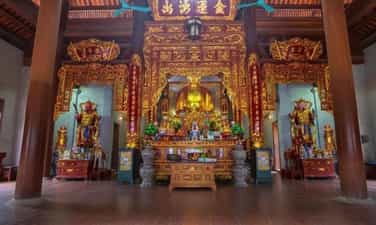
Linh Ung Pagoda
Linh Ung Pagoda (Kham Thien) Linh Ung Pagoda has the literal name Linh Ung Tu, located close to Kham Thien Street, number 290, Tho Quan Ward, Dong Da District, Hanoi. (Before merger) Linh Ung Pagoda was built in the 19th century and continued to be renovated in the early years of the 20th century; was majorly restored in 1951, adding Tam Bao with the current overlapping roof style. The pagoda was seriously damaged in the B.52 bomb attack on December 26, 1972. At the end of 1973, the pagoda was greatly renovated. Recently, in 1990, association owners and Buddhists again made merits to repair the pagoda, repair the Buddha hall, and pave the floor of the Mau hall and the Patriarch's house. The pagoda has a complete system of Buddha statues, especially two round statues dating back to the 19th and early 20th centuries and many other valuable statues such as Amitabha, Amitabha Tam Ton, and Cuu Long. Linh Ung Pagoda also worships Hung Dao King Tran Quoc Tuan. Statue of Saint Tran sitting on a dragon throne, wearing a royal hat, wearing a dragon robe, the throne touches the dragon's head, lacquered and gilded, carefully polished in the style of 19th century art. In the Mother Temple, the Ancestor's house has statues of the Three Holy Mothers, Hoang Bay, Hoang Muoi, Co statue, Cau statue... The pagoda has many horizontal panels, parallel sentences, and beautiful gilded vermilion doors. Linh Ung Pagoda was ranked a historical architectural and artistic relic by the Ministry of Culture and Information in 1993. According to Hanoi Landscapes and Monuments
Hanoi
256 view
Rating : National monument
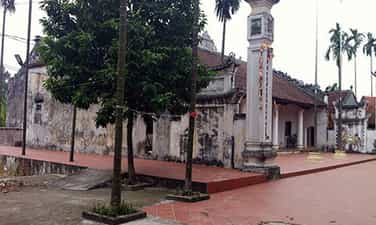
Dong Bo Dau Temple
Dong Bo Dau Temple - Historical and cultural relic worshiping Phu Dong Thien Vuong Dong Bo Dau Temple (formerly in Dap village), now in Thuong Tin, Hanoi city, is a historical and cultural relic of special value, associated with the worship of Phu Dong Thien Vuong - the legendary hero of the Vietnamese people who fought against foreign invaders. According to legends passed down locally, the temple worships Dong Soc Thien Vuong Huyen Thien Dai Thanh to repay Mother's grace, that is Saint Giong. A special point in the legend in Dong Bo Dau is that Thanh Giong not only fought the enemy to save the country but also had the merit of destroying sea monsters, saving his mother and protecting the peaceful life of the people along the Red River. Therefore, people here also honor him as the god who governs water and protects the villagers. Dong Bo Dau Temple was formed a long time ago and was recognized by ancient books such as Dai Nam Nhat Thong Chi and Cong Du Ky Ky as one of the ancient temples and shrines of the ancient Ha Tay region. After many renovations, the monument still retains many architectural values, art and traditional beliefs. The temple has an architecture in the style of "before Buddha, after Saint", including a pre-sacrificial house and a harem. The temple also preserves many precious artifacts such as ordinations, worship statues, horizontal panels, parallel sentences and especially the 5.76m high ancient statue of Phu Dong Thien Vuong, representing the image of a majestic and strong deity in a position to protect the people. In addition, the system of Bat Bo Vajra statues are also unique and valuable works of folk sculpture. Every year, local people organize the Dong Bo Dau Temple festival on January 8 and September 8 of the lunar calendar to commemorate the merits of Saint Giong. The festival has many traditional rituals and unique folk games such as stick dancing and swimming, creating a cultural space rich in the identity of the land along the Red River. In 2011, the worship of Phu Dong Thien Vuong at related locations, including Dong Bo Dau Temple, was registered by UNESCO as a representative intangible cultural heritage of humanity. With outstanding values in history, architecture, beliefs and art, Dong Bo Dau Temple is a precious heritage, contributing to preserving the image of Saint Giong - a symbol of patriotism, the spirit of fighting against foreign invaders and the morality of the Vietnamese people when drinking water, remembering its source. According to the National Museum of History
Hanoi
347 view
Rating : Provincial level relics
Chu Quyen Communal House
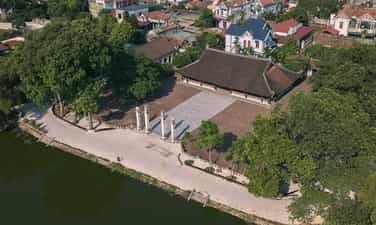
Chu Quyen Communal House - Unique architectural and artistic relic of Doai region Chu Quyen communal house (also known as Chang communal house) is located in Chu Minh commune, Ba Vi district, Hanoi city. This is one of Vietnam's typical ancient communal houses, built in the early 17th century and ranked by the State as a national architectural and artistic relic in 1962. In the past, the communal house belonged to Chu Chang village, Chau Chang district, Tien Phong district, Quang Oai district, Son Tay town. Later, Chu Chang village was separated into Chu Chang and Chu Quyen, but local people still call it Chang communal house. The communal house is located on the land along the Red River, facing Ba Vi Mountain, with a harmonious location according to traditional feng shui concepts. Chu Quyen communal house is a large-scale wooden architectural work, consisting of only one large communal house but with majestic and majestic beauty. The communal house has a structure of 3 main rooms, 2 wings, 2 porches and a system of 6 large columns. Architectural parts such as columns, beams, beams, corbels, and roofs are skillfully linked using traditional carpentry techniques. The large pillars of the communal house have become a familiar image among the people with the saying "as big as the pillars of Chang's communal house". Not only has architectural value, Chu Quyen communal house also stands out for its sophisticated wood carving art. Ancient artisans created many vivid works with images of dragons, phoenixes, flowers, clouds and everyday scenes such as farming, drinking wine, riding elephants, horses... The carved lines demonstrate the talent of folk artists and reflect the cultural life of contemporary society. According to documents preserved at the site, Chu Quyen communal house worships Nha Lang Vuong (Duc Thanh Chang), a character associated with the legend of the Later Ly Nam De period. Legend has it that Nha Lang Vuong was instrumental in defeating the enemy and protecting the country, so he was honored as a Tutelary God by many villages along the Red River. Every year, the communal house festival is held on the full moon day of the first lunar month with sacrificial rituals and many folk cultural activities such as wrestling, boating, and singing, attracting a large number of people and tourists. Currently, Chu Quyen communal house still preserves 13 ordinations of the Le Trung Hung, Tay Son and Nguyen dynasties along with many horizontal panels, parallel sentences, and artifacts of historical value. Through many renovations, especially a major restoration from 2007 to 2009, the communal house still retains its ancient beauty and original values. With typical values of history, architecture and art, Chu Quyen Communal House is a precious heritage of Thang Long - Hanoi, contributing to preserving the beauty of traditional village communal house culture and demonstrating the creative talent of our ancestors in the nation's history. According to Hanoi Landscapes and Monuments
Hanoi
353 view
Rating : National monument
Xa Tac Dan
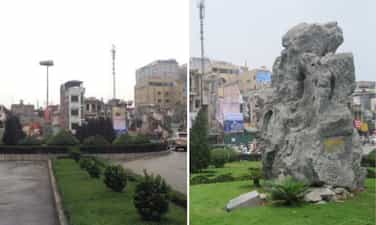
Xa Tac Dan - "special" historical relic of Thang Long Xa Tac Dan is an important historical relic of the ancient capital of Thang Long, built in 1048 during the reign of King Ly Thai Tong. This is where feudal kings held ceremonies to worship the Earth God (Xa) and the Nong God (Tac), praying for peace and prosperity in the country, good harvests, and prosperity. In the monarchy, the Xa Tac Dan is considered a symbol of national sovereignty and the stability of the dynasty. In 2006, during the construction of the new Kim Lien street in Nam Dong ward, Dong Da district, Hanoi, traces of Xa Tac Dan were suddenly discovered after more than 200 years of being buried. This discovery has special significance, contributing to clarifying the planning of Thang Long citadel and affirming the historical value of the monument. According to historical books, Xa Tac Dan was built with clean soil taken from many localities across the country, demonstrating territorial unity and the spirit of national cohesion. The altar consists of two square floors, built according to the five elements principle with five colors symbolizing the five directions. Surrounding it are walls, lakes, screens and a system of steps to serve the court's sacrificial rituals. Today, the area where Xa Tac Dan was discovered is marked with stone stele to remember the location of the relic. This is not only a valuable archaeological heritage but also an important testament to the history, culture and beliefs of Thang Long citadel, contributing to preserving and promoting the cultural traditions of the Vietnamese people. According to the Management Board of Thang Long Imperial Citadel
Hanoi
325 view
Rating : National monument
Ba La Khe Stele Temple
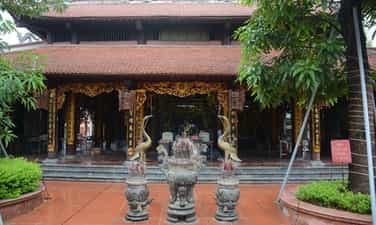
Ba La Khe Stele Temple - Historical and spiritual cultural relic of Hanoi Bia Ba Temple is a historical - cultural relic located in the Temple - Pagoda - Bia Ba Temple complex in La Khe ward, Ha Dong district, Hanoi city. This is a valuable work in history, architecture and folk beliefs, and is also a famous spiritual destination for the people of the Capital. According to local legend, the temple worships the Virgin Mary Tran Thi Hien (1511–1538), a native of La Ninh village (now La Khe). Legend has it that she was the concubine of King Mac Thai Tong, famous for her talent and kindness. After her death, people built a temple to commemorate her contributions and honored her as the protector of the homeland. Over the centuries, Bia Ba Temple has become an important place of religious activities, closely associated with the cultural life of local people. The relic is imbued with the traditional architecture of the Northern Delta region with the Tam Quan gate, temple yard, Great Pagoda and Hau Palace arranged harmoniously in an ancient space. The harem is where the ancient stone stele dedicated to the Holy Lady is located, which is also the origin of the name "Ba Stele". Together with La Khe communal house and pagoda, the relic complex creates a unique cultural space, reflecting the history of formation and development of Ha Dong land. Not only has historical and architectural value, Bia Ba Temple also preserves many traditional local customs and rituals. Every year, especially at the beginning of spring, the full moon day and the first day of the lunar calendar, a large number of people and tourists come to offer incense, pray for peace, fortune and express their respect. With typical values of history, culture and beliefs, Beer Ba Temple is one of the typical relics contributing to preserving Hanoi's cultural identity and is a meaningful destination for domestic and foreign tourists. According to Bachlien.vn summary
Hanoi
343 view
Rating : National monument
Ghenh Temple
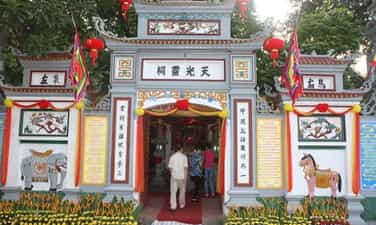
Ghenh Temple - Sacred temple worshiping Northern Palace Queen Le Ngoc Han Ghenh Temple, named Thien Quang Linh Tu, is located on the banks of the Red River, in Bo De, Long Bien, Hanoi. This is one of the famous temples of the Capital, not only because of its architecture and belief in worshiping the Mother Goddess, but also associated with the life of Northern Palace Queen Le Ngoc Han - the talented wife of Emperor Quang Trung. According to folk legend, after Queen Le Ngoc Han and her two children died, the remains of her mother and daughter were dug up by the Nguyen Dynasty and dropped into the Red River. The people of Ai Mo village quietly recovered, covered the grave and built a shrine to commemorate it. Over time, the temple was expanded into Ghenh Temple as it is today. In the people's consciousness, Queen Le Ngoc Han is revered as the reincarnation of Mother Thoai, the Holy Mother who governs rivers and waters in Vietnamese Mother Goddess worship. The temple was built in 1858 on a large plot of land next to the Red River. The worship system of Ghenh Temple has many unique features compared to other Mau temples. The main hall places the statue of Queen Le Ngoc Han in the center, along with many altars decorated according to traditional folk beliefs, creating a sacred space rich in cultural value. Every year, the Ghenh Temple festival is held from the 6th to the 12th of the eighth lunar month, highlighting the water procession ceremony on the Red River to pray for good weather and to commemorate Queen Le Ngoc Han. Besides, the custom of offering rice cakes and star fruit - a unique cultural feature of the temple - has been preserved by people for many generations. Not only is it a place for local people's religious activities, Ghenh Temple also preserves many valuable artifacts such as the Tu Duc bronze bell, the Long Dinh palanquin, the Mausoleum palanquin, along with the horizontal system, and parallel sentences praising the merits of Queen Le Ngoc Han and the beauty of the land by the Red River. Today, Ghenh Temple is a typical cultural and spiritual destination of Hanoi, attracting a large number of tourists and pilgrims to visit and worship. Source: Hanoi Landscapes and Monuments
Hanoi
334 view
Rating : National monument
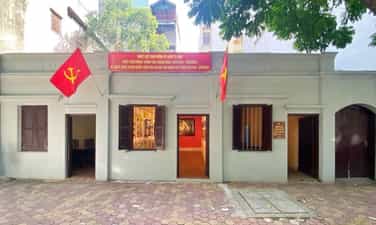
Revolutionary relic house number 5D Ham Long
Revolutionary relic house No. 5D Ham Long is located in Phan Chu Trinh ward, Hoan Kiem district, Hanoi city. This is the location marking the establishment of the first Communist Party cell in Vietnam at the end of March 1929, an important milestone in our country's revolutionary history, paving the way for the birth of the Communist Party of Vietnam. According to the National Museum of History, since the end of 1928, the struggle movement of the working class and communist trends in Vietnam have developed strongly. Faced with the demands of revolutionary reality, advanced members of the Vietnam Revolutionary Youth Comrades Association secretly met at house No. 5D Ham Long to establish the first Communist Party cell. The meeting took place on a night in late March 1929 with the participation of comrades Ngo Gia Tu, Nguyen Duc Canh, Tran Van Cung, Trinh Dinh Cuu, Do Ngoc Du, Duong Hac Dinh and Nguyen Tuan. Comrade Nguyen Phong Sac was absent due to unexpected work, but sent his comments in favor of the resolution and was recognized as an official member of the cell. Comrade Tran Van Cung (alias Quoc Anh) was elected Party Cell Secretary. At the meeting, the Party Cell identified key tasks such as promoting the establishment of the Communist Party, developing trade unions and agricultural associations, and promoting the spread of Marxism-Leninism. The birth of the first Communist Party cell at 5D Ham Long created a direct premise for the establishment of the Indochina Communist Party on June 17, 1929 and moved towards the establishment of the Communist Party of Vietnam in early 1930. House number 5D Ham Long was originally a one-story house in the blocks 5A, 5B, 5C, 5D of a bourgeois family for rent. The house has an area of about 24m², in the back there is a small yard, kitchen and toilet area. In particular, the house is located close to a small alley leading to Le Van Huu street, creating favorable conditions for revolutionary cadres to secretly withdraw when necessary. At the end of 1928, the Northern Committee of the Vietnam Revolutionary Youth Association rented this house as a base for secret operations and assigned it to comrade Tran Van Cung and his wife, Nguyen Thi Lien, to directly manage. In the simple house, the sofa set, the double-bottomed chest used to hide documents, the oil lamp and many simple household items have become historical evidence associated with the process of preparing to establish the Party. On November 25, 1959, the house was restored into a memorial house, displaying many documents and artifacts associated with the birth of the first Communist Party cell. In 1964, the relic was recognized as a Hanoi Revolutionary Monument. In 2000, the building continued to be renovated to restore the appearance as it was at the time of the historic meeting in March 1929. Today, the 5D Ham Long relic, managed by the Hanoi Museum, is a red address with special significance in educating revolutionary traditions, contributing to helping today's generations better understand the process of forming the first communist organization and the birth of the Communist Party of Vietnam. Source: National Museum of History.
Hanoi
63 view
Rating : National monument
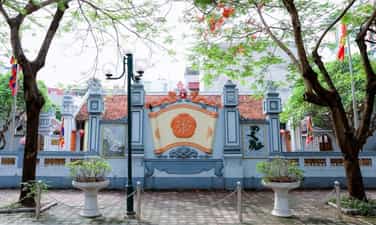
Chu Van An Temple
Chu Van An Temple is located on the To Lich river, in Thanh Liet commune, Thanh Tri district, Hanoi city. This is the place to worship Chu Van An (1292–1370) - a famous teacher and Confucianist of the Tran Dynasty, who was revered by generations as "Van The Su Bieu" (teacher of all generations). According to historical documents, after Chu Van An passed away, the people of Thanh Liet's hometown built a temple and honored him as the village's Tutelary God. During the reign of Le Trung Hung (1533–1789), the temple was added to worship local university graduates, so it also had the meaning of Literature - a place to honor those with education and contributions to the homeland. The temple was built according to the traditional "Cong" style architecture, including three main items: the altar house, the communal house and the harem. The harem is the most sacred space of the relic, where the gilded altar and the altar tablet of Chu Van An are placed. Having undergone many restorations, especially on the occasion of the 1000th anniversary of Thang Long - Hanoi, the temple was renovated spaciously but still retains its ancient architecture and solemn space. The temple still preserves many artifacts of historical and cultural value such as two robes, hammock doors, horizontal panels, parallel sentences, altars, copper tops, single vases, six stone steles, genealogies and five ordinations of the Le and Nguyen dynasties, reflecting the Vietnamese people's tradition of respecting teachers. Not only is it a place to commemorate teacher Chu Van An, the temple is also a place for religious activities of local people and a destination for many students, teachers and tourists from all over to offer incense and express gratitude to the exemplary teacher of Vietnamese education. With outstanding historical, cultural and educational values, in 1989, Chu Van An Temple was ranked as a national historical-cultural relic. Today, the monument not only contributes to preserving the heritage of Thang Long - Hanoi but is also a symbol of the nation's tradition of studiousness and respect for teachers. Source: Vietnam News Agency
Hanoi
401 view
Rating : National monument
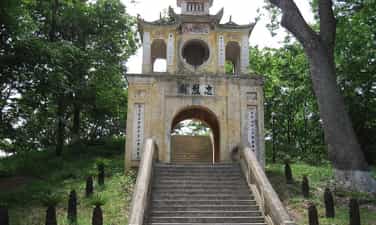
HISTORICAL RELIC OF TRUNG LIET TEMPLE
HISTORICAL RELIC OF TRUNG LIET TEMPLE Trung Liet Temple, solemnly located on top of Dong Da Mound, is an ancient structure built to commemorate the loyal mandarins and martyrs who had heroic deeds and sacrificed their lives to protect the capital. Through the Nghi Mon gate made of moss-covered bricks and a small brick yard, you will reach the sturdy Dai Pagoda, prominent with the three words "Central Liet Mieu" along with a system of horizontal lacquered and gilded couplets. The temple was built in the Dinh (\text{丁}) architectural style, with a closed gable, and an ancient tiled roof with bold architectural art of the Nguyen Dynasty from the 19th century (1856). Although located on the same campus, Trung Liet Temple has a completely independent worship function from Dong Da Mound. If Dong Da Mound is a testament to the 1789 battlefield associated with honoring Emperor Quang Trung and his victory over the Qing army, then Trung Liet Temple is a special place established to worship patriotic mandarins of the Nguyen Dynasty who heroically sacrificed their lives when the French colonialists attacked Hanoi citadel. Therefore, the worship center at the temple's harem contains tablets and statues of Governor Nguyen Tri Phuong, who went on hunger strike to death after the citadel fell for the first time in 1873, and Governor Hoang Dieu, who committed suicide under an ancient banyan tree when the citadel fell for the second time in 1882. In addition, the temple also worships King Nguyen Lam's Imperial Ambassador Nguyen Lam and the tablet of King Quang Trung to gather the sacred souls of the mountains and rivers. The project has been ranked as a national historical relic, and funding has been invested in restoration to preserve the integrity of the architectural values and steadfast atmosphere of its predecessors. Source: Hanoi – Sights and Monuments
Hanoi
191 view
Rating : National monument
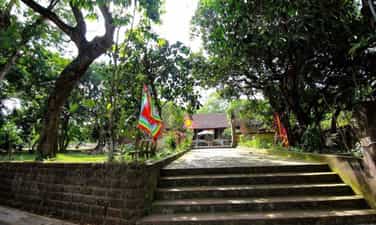
Phung Hung Temple
Phung Hung Temple (Bo Cai Dai Vuong) was established in many places in Vietnam, but the temple in Duong Lam (Son Tay Town, Hanoi City) has the largest scale, unique architecture and contains many historical and cultural values. Phung Hung is from Duong Lam hamlet. He is a virtuous man who loves people. Phung Hung has two younger brothers, Phung Hai and Phung Dinh. The three brothers all have extraordinary health: Phung Hung can fight tigers and wrestle buffaloes; The two younger brothers carried rocks weighing thousands of pounds. Therefore, people from near and far respected Phung Hung as Do Quan and Phung Hai as Do Bao. Born at a time when the country was invaded by foreign invaders, they soon formed the will to fight the invaders and gain independence and self-reliance. They recruited talented insurgents and rebelled in Duong Lam against the rule of the Tang Dynasty. When the insurgent army attacked Tong Binh citadel, enemy general Cao Chinh Binh failed and died of anxiety. Phung Hung held the citadel, organized political affairs, and built independence and autonomy for the country for 7 years. After his death, the people were grateful and honored him as Bo Cai Dai Vuong. In Phung Hung's hometown, Cam Lam village, Duong Lam commune, Son Tay town, Hanoi city, people have built a temple to worship him. The current scale of the temple was formed after a major repair and restoration in the 19th century, including items: ritual gate, left and right gate, great worship and harem. The gate was built simply, with the function of separating the spiritual world from mundane life. Through the gate are two left-right rows, each row has three compartments, the rafters are designed to be airy and convenient for community activities. The great pavilion consists of three rooms and two compartments, with two tiled roofs. The sets of pillars are structured on four rows of pillars, linked in the following way: "The upper part of the gong is the armpit, the lower part is the pass, seven porches". Decorative patterns on architectural structures are quite simple, mainly focusing on the ends, pliers carved in dragon shapes, armpits carved with rattan patterns, flipped leaves, stripes and planing levers carved with leaves combined with stylized rattan strips. The harem consists of three rooms, built in the style of a gable wall. Architectural structures favor durability, solemnity and respect for the hero being worshiped. The bronze statue of Phung Hung is placed in a solemn position in the harem (the statue was embellished in the early 21st century). Cam Lam's hometown not only has Phung Hung temple but also preserves many places associated with his life and career such as Vung Ham, Ho Gam hill, Xa Mau hill, Ngoc well and Duoi ridge. According to legend, these are the places where the Phung brothers used to fight tigers, practice martial arts and practice battles before uprising against the colonial army. Phung Hung Temple was ranked a national historical - architectural and artistic relic by the Ministry of Culture and Information in 1964. Source: Hanoi – Sights and Monuments.
Hanoi
398 view
Rating : National monument
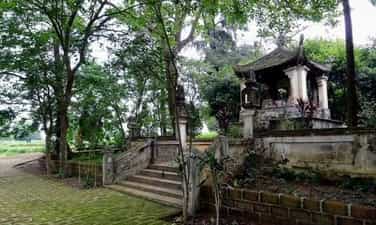
Ngo Quyen temple and mausoleum
Ngo Quyen temple and mausoleum are located in Duong Lam commune, Son Tay town, Hanoi. Cam Lam village, Duong Lam commune, Son Tay town, Hanoi city is the land of "one hamlet, two kings" (Phung Hung and Ngo Quyen). Today this place still retains traces and temples associated with the names of the two men, especially Phung Hung temple and Ngo Quyen mausoleum. Ngo Quyen was born and raised in a family where his father was a Chau Muc. Ngo Quyen is handsome, handsome, has an unusual appearance, is intelligent and brave, and has superior health. He soon mastered martial arts, swordplay... and gained a great reputation. Born when the country was invaded by foreign invaders, in his youth, he did many virtuous deeds, helping the poor and recruiting talented and heroic men, building bases, waiting for the day of the uprising. In 938, the Nam Han invaders led by Hoang Thao brought warships massively into our country at Bach Dang gate. Using military tactics, using sharpened wooden stakes with iron tips, Ngo Quyen and his soldiers defeated the enemy's powerful navy along with enemy general Hoang Thao - son of King Nam Han. Ngo Quyen's glorious victory on the Bach Dang River ended the period of Northern domination, lasting more than a thousand years, opening a new page of independence and long-term freedom for our nation. Ngo Quyen rebuilt the country, adjusted politics, built citadels, established rituals... the government apparatus had a long-term monopoly. Ngo Quyen Temple was built a long time ago and has been restored many times. The major restoration was during the Nguyen Dynasty, Tu Duc Dynasty (1848 - 1883). At the end of the 20th century, the temple, mausoleum and surrounding landscape were renovated and upgraded. The scale of the temple currently includes the following items: Ritual gate, Left and right gate, Great altar and Harem. The great temple consists of 5 compartments, built in the style of a gable wall. The components of the wooden frame are mainly smooth planed and sharpened to ensure the stability of the project. The harem is in the style of a striker and a rear-guard, the frame is decorated with the theme of the four sacred animals, the four nobles... solemn, showing respect for the deity. Ngo Quyen Temple was built on the side of a hill. Worship objects such as: Ngo Quyen statue, dragon throne, incense burner, altar, etc. are arranged in the Harem. The Great Pagoda displays many artifacts, notably the underground stakes on the Bach Dang River... telling about Ngo Quyen's life and career. Right next to the temple, in front is Ngo Quyen's mausoleum, built in the shape of 4 roofs on a high pedestal, surrounded by brick walls. In the middle of the mausoleum is an altar, inside there is a stone stele "Tien Ngo Vuong Mausoleum", dated to the second Minh Menh period (1821). In front of the mausoleum are deep ponds, which are said to be the lotus pond where Ngo Quyen and his friends used to herd buffaloes, dive and practice exercises when he was a child. On the hillside are rows of bamboo trees. Legend has it that this is the place where Ngo Quyen tied a rope to tie an elephant to the tree trunk. Ngo Quyen temple and mausoleum were ranked historical, architectural and artistic relics by the Ministry of Culture and Information in 1964. According to Hanoi Landscapes and Monuments
Hanoi
524 view
Rating : National monument
Outstanding monuments
See all
Imperial Citadel of Thang Long
Historical and archaeological relics of Thang Long Imperial Citadel Central Area - Hanoi with a core conservation planning area of 18,395 hectares (including Hanoi Ancient Citadel Relic Area and 18 Hoang Dieu Archaeological Relic Area) and a buffer zone area of 108 hectares. In 1009, Ly Cong Uan ascended the throne and established the Ly dynasty. In 1010, Ly Thai To moved the capital from Hoa Lu to Dai La citadel, renamed the new capital Thang Long and built it into the country's largest economic, political and cultural center. Through the Ly, Tran, Le So, Mac and Le Trung Hung dynasties, Thang Long citadel always held the position of "National Capital", the residence and working place of the King and Royal Family. This area is also where important ceremonies of the country are held. After the Nguyen Dynasty established the capital in Hue (1802), the capital role of Thang Long was dissolved... After 1954, the Thang Long citadel area became the headquarters of the Ministry of National Defense. It was in this area that many important decisions of the Party and State were made, contributing to great victories in the resistance war against the US to save the country, win national independence, and unify the country. Through time and historical events, Thang Long citadel has had many changes and deformations..., but up to now a number of historical and archaeological relics are still preserved, typically: Flagpole (Hanoi Flagpole): built in 1812, under the reign of King Gia Long, 33.4m high, including three floors: base, column body and lookout. Doan Mon: is the southern citadel gate, built in a rolling arch style. Doan Mon is arranged horizontally, including the middle door reserved for the king, on both sides there are 4 smaller doors, for mandarins and royal families. Kinh Thien Palace: located in the center of the imperial citadel (early Le Dynasty), built in 1428, right on the old foundation of Can Nguyen Palace under the Ly Dynasty (later renamed Thien An Palace). In 1886, this palace was destroyed by the French colonialists to build the French Army Artillery Command. Currently, only traces of the foundation of Kinh Thien Palace remain. In particular, this area still preserves two stone dragon steps, dating back to the 15th century. Hau Lau (Princess's Floor): built in 1821, used as a resting place for the maids in the convoy escorting the Nguyen Kings when traveling to the North. At the end of the 19th century, Hau Lau was seriously damaged, the French colonialists renovated and rebuilt it as it is today. Main Bac Mon (North Gate): is the northern city gate, built in 1805, consisting of two floors, eight roofs, with a curved blade head, in the traditional style. Surrounding walls and 8 palace gates of the Nguyen Dynasty: In 1805, the Nguyen Dynasty built a wall from Doan Mon gate around the inner palace, creating a palace for the king to work and rest every time the North patrolled. Currently, in the ancient citadel there are still 8 city gates along with a system of walls surrounding the palace made of bricks. Relics of house and bunker D67: built in 1967, in area A. This is where the Politburo, Central Military Party Committee, and General Command made many historical decisions, marking the milestones of the Vietnamese revolution: The 1968 Tet Offensive, the 1972 campaign, the 1975 General Offensive and the climax of the Ho Chi Minh Campaign... French architectural works: built from the late 19th century to the early 20th century in the Vauban style, including the French Army Artillery Command building; a 2-story building, built in 1897, now used as the headquarters of the Department of Operations; two one-story buildings, built in 1897. East of the Operations Department building is a guest house, built in 1930. Trees in the relic area: planted at high density and diverse in types, have contributed to creating a fresh environment and harmonious landscape for the relic area. Archaeological relics at 18 Hoang Dieu: located about 100m west of Kinh Thien Palace, with an area of 4,530 hectares, excavation began in December 2002, divided into 4 zones (A, B, C, D). While excavating here, archaeologists discovered traces of the foundations of ancient architectural works of Thang Long Imperial Citadel and many valuable artifacts, such as terracotta architectural decorative materials, wooden columns, ceramics of Vietnamese feudal dynasties and many foreign utensils and objects, such as porcelain of West Asia, China, Japan... Thang Long - Hanoi Ancient Citadel is a typical historical and archaeological relic, material evidence reflecting high technical level, containing historical, architectural and artistic values. At the same time, it reflects the cultural interference with countries in the region and around the world in a long historical process, shown through many historical artifacts, architectural works, and urban landscapes with thousands of years of history. With the special historical, cultural and scientific values of the monument, the Prime Minister decided to classify the Thang Long - Hanoi Imperial Citadel Central Area historical and archaeological site as a special national monument on August 12, 2009. Source: Department of Cultural Heritage
Hanoi
11022 view
Rating : Special national monument

One Pillar Pagoda
The pagoda was built in 1049, the first year of the reign of Sung Hung Dai Bao of King Thai Tong of the Ly Dynasty. Legend has it that at that time, King Thai Tong was old and his father had a son, so he often went to pray at pagodas. One night the king had a dream and saw Avalokiteshvara Buddha appearing on a lotus platform in a square lake in the west of the citadel, holding a baby boy and giving it to the king. Then, sure enough, the king gave birth to a son. Seeing the fulfillment, the king immediately ordered a pagoda to be built to worship Avalokiteśvara Buddha. One Pillar Pagoda is an architectural complex consisting of a pagoda and a tower in the middle of the lake, originally called Dien Huu pagoda and Lien Hoa tower. This monument has long been known as the One Pillar Pagoda. The far pagoda is located west of Thang Long citadel, in Ngoc Thanh village, Ngoc Ha, now the location behind Uncle Ho's Mausoleum. The pagoda was built on a square lake, in the middle of the lake there is a stone pillar, about two meters high, nine meters in circumference, at the top of the pillar is a small tiled pagoda, shaped like a lotus flower rising from the water, hence the name of the pagoda. Nhat Tru Pagoda or One Pillar Pagoda. The pagoda was built in 1049, the first year of the reign of Sung Hung Dai Bao of King Thai Tong of the Ly Dynasty. Legend has it that at that time, King Thai Tong was old but had no son yet, so he often went to pray at pagodas. One night the king had a dream and saw Avalokiteshvara Buddha appearing on a lotus platform in a square lake in the west of the citadel, holding a baby boy and giving it to the king. Then, sure enough, the king gave birth to a son. Seeing the fulfillment, the king immediately ordered a pagoda to be built to worship Avalokiteśvara Buddha. When the pagoda was finished, the king summoned all the Buddhist monks and nuns in the capital to stand around, chant sutras for seven days and nights, and build a large temple next to it to worship Buddha, called Dien Huu pagoda. In 1105, King Ly Nhan Tong repaired the pagoda and erected a white stone tower in front of Dien Huu pagoda called Bach Tuynh tower. The tower is 13 meters high. From the tower to the One Pillar Pagoda, go through a rainbow corridor. Every month, on the full moon day and the first day of the month, the king, his queens, concubines, concubines and courtiers go to the temple to worship Buddha. Especially on the 8th day of the fourth lunar month every year, the day Buddha was born, the king would go to the temple one night in advance, fasting to perform the Buddha-bathing ceremony the next day. On this day, many Buddhist monks, nuns and people from all over come to attend, creating a big festival in the capital. On this day, there is a life release ceremony at the temple. The freeing ceremony began right after the Buddha bathing ceremony. The king stood on a high platform, holding a bird in his hand and letting it fly away. Then the monks, nuns, and lay men and women raced to each release one bird, the shadow of the bird. flying through the sky. Old history records that in the eighth year of Long Phu (1108), the king ordered 12,000 pounds of bronze to be cast into a large bell called Giac The Chung (bell to awaken people), to hang at Dien Huu pagoda. A Phuong communal house was built with green stone eight meters high, and on the roof of the communal house were large iron bars to hang bells. But after the bell was cast, it didn't ring, so it had to be left in the field. For a long time forgotten, the bell became a turtle's nest, so the bell was called Quy Dien. In 1922, the Far East Uncle Ho School repaired the pagoda and kept it according to the old architecture. On the night of September 11, 1954, French colonial henchmen, before handing over the Capital to our Government and people, deliberately set mines to destroy the pagoda. After taking over the capital, the Government ordered it to follow the old format and repair it. In April 1955, the One Pillar Pagoda was restored to its original form. Until 1958, on the occasion of President Ho Chi Minh's visit to India, the Indian people gave him the Bodhi tree from the land of Buddha and was planted in the temple yard. Source: Ba Dinh District Electronic Information Portal
Hanoi
10898 view
Rating :

Thanh Nhan Pagoda
Thanh Nhan Pagoda (Linh Son Tu) is the Party's secret revolutionary base, the Ancestral Church is the meeting place, printing of leaflets, and accommodation for revolutionary cadres active in the period before the August Revolution of 1945 and when France temporarily occupied Hanoi (1947- 1949). A number of officers who sacrificed heroically at the pagoda in March 1949 were buried at Mai Dich cemetery - Hanoi. Thanh Nhan Pagoda (Linh Son Tu) is the secret revolutionary base of the Party and the church. The group is a meeting place, printing leaflets, and accommodation for revolutionary cadres active in the period before the August Revolution of 1945 and when the French temporarily occupied Hanoi (1947- 1949). A number of officers who sacrificed heroically at the pagoda in March 1949 were buried at Mai Dich cemetery - Hanoi. Located to the south of the ancient Thang Long citadel, close to the O Cau Den area, there is a pagoda called Thanh Nhan Pagoda in its literal name, Linh Son Tu in its literal name. Thanh Nhan Pagoda is currently located at alley 331 Tran Khat Chan. Thanh Nhan Pagoda is located in a complex of relics including Lac Nghiep Communal House in the East, close to the pagoda, a little further away are An Cu Communal House, Luong Yen Communal House. Thanh Nhan Pagoda is located on a mound that people here used to call a mountain, engraved on the ancient stone stele "Linh Son Bao Tu" carved in the year Canh Hung 20 (1759), during the Le Dynasty. Monk Chinh Minh, the abbot of Linh Son pagoda at that time, wrote as follows: "Now in Ong Mac land, Thanh Nhan village in the capital, there is a land with a towering mountain of land. That mountain has a vein leading from West Lake, flowing to the To Lich River, on the right there is Bach Ho, on the left there is Thanh Long, in front is a robin, behind is a feathered bird, as far as the eye can see, it is truly a first-class quiet land. most of all". Thanh Nhan Pagoda has a large scale. The three-entrance structure is shown in the form of pillars, with a main gate. The main pagoda is located on the highest position compared to the supporting structures and faces south, overlooking the courtyard and lotus pond of the pagoda. The pagoda has a "Dinh" shaped structure, gabled walls, and tiled roof. The ridge and the embankment are raised high, decorated with rosettes on the top, and in the middle of the ridge is the great pagoda "Linh Son Tu". The decoration in the main pagoda's architecture is gentle, the themes and motifs are mainly in the artistic style of the Nguyen Dynasty, such as: apricot bamboo stems, seal patterns, concentrated on the mesmerizing parts. Along with the main temple architecture, there is an ancestral house with five compartments. The temple also has a model electric house. Currently, Thanh Nhan Pagoda still preserves a rich amount of relics in both quantity and artistic value. Typically, there are ancient stone steles (9 steles). The system of Buddha statues, Mother Goddess statues, and Patriarch statues includes 61 large and small statues. Two bronze bells were cast in the year of Tu Duc (1848). Other artifacts: horizontal boards, parallel sentences... are products of the Nguyen Dynasty. On May 28, 2003, Thanh Nhan Pagoda - Linh Son Tu was ranked by the Hanoi People's Committee as a historical architectural and artistic relic by Decision No. 2942/QD-UB. What we cannot mention is that in the early years of the resistance war against the French colonial invaders, Thanh Nhan Pagoda was a base for raising underground revolutionary comrades, a place where documents were printed and hidden. Party leaflets, in the fierce and persistent struggle, there were comrades who heroically sacrificed their lives at this pagoda. A number of other comrades later took on the responsibility of the Party and the State, they became heroes. witnesses of the historical period, and also witnesses affirming the positive contribution of Thanh Nhan Pagoda in the cause of fighting to protect Hanoi Capital, protecting the Fatherland, creating more motivation to promote the war. The revolution quickly led to brilliant victory. On August 5, 2005, Thanh Nhan Pagoda was labeled a revolutionary historical relic. Today, the pagoda is also an address for generous-hearted Buddhists to contribute and share with many difficult situations in society through very practical and humane charity works such as cooking rice. , charity porridge for cancer patients in difficult circumstances at two K hospitals (Addresses Quan Su and Thanh Tri). Organize gift distribution programs combined with medical examination and treatment for people in remote areas; eye surgery program for the poor; distribute wheelchairs to disabled people. Coordinate with the Health Department to organize charity clinics for the poor right at the temple. Source: Phuong Thanh Nhan website
Hanoi
10617 view
Rating : National monument

Communal house, Dai Lan pagoda
Dai Lan communal house and pagoda relic cluster was ranked by the Ministry of Culture and Information (now the Ministry of Culture, Sports and Tourism) as a national architectural and artistic relic in 1989. This is the destination of many people. tourists from near and far because of the unique features of the architecture as well as the friendliness and hospitality of the people... Dai Lan communal house and pagoda (Dai Lan village, Duyen Ha commune, Thanh Tri district), were built around the 17th century. Previously, the cluster of relics was close to the riverbank. Over time, the riverbank eroded so the villagers moved to the current location. Dai Lan Communal House Dai Lan communal house, located close to the left of the three jewels of the village temple, has a "Dinh" shaped architecture including 3 vestibules and 2 back rooms. The Dai Lan communal house is divided into 3 compartments and 2 compartments with 4 curved roofs, the roof is covered with two dragons flanking a tiger holding a stylized sun, the two ends of the roof are two dragons holding the roof, the roofs are covered with swords. The dragon's head curves toward the communal house. Inside, the roof support beams are made in the style of upper gong and armpit beams, lower porches, seven porches, and seven backs on the surface with four rows of pillars. Architectural decorations at Dai Lan communal house mainly focus on the remaining heads, dragon-carved pillars, the four sacred animals, and the four precious gems, which are familiar themes in traditional folk belief architecture. Dai Lan Communal House worships 4 village Tutelary Gods (3 during the Hung King period, Linh Ho, Minh Chau and Cha Luc, who were instrumental in suppressing the enemy and Nguyen Nhu Do, a great mandarin of the Le Dynasty, who served as Minister and was an ambassador three times. China). Dai Lan communal house still retains many valuable artifacts including 11 ordinations of the Le and Nguyen dynasties, scrolls, hammock doors, dragon thrones, tablets, incense burners, cenotaphs, especially four palanquins set. Made from the 17th to 18th centuries. Notably, there is a large scroll-shaped horizontal scroll, below is a hammock door running throughout the house. These are two relics decorated with perforation and gilded lacquer techniques. Dragons flanking the sun, dragons rolling water, dragons and horses painting pearls...are decorated on the border of the horizontal panel. The upper part of the hammock door is a pair of large dragons flanking tiger faces, both sides are decorated with images of water-spewing dragons, phoenixes, dragon horses...beneath these two artifacts is a wooden plan meticulously decorated with embossed techniques. A stylized dragon with leaves flanking a tiger, in the middle are dragons and phoenixes, facing the sun in the middle... The main hall has a horizontal panel made in the form of a scroll hanging on a delicately carved hammock door. The decorations there all show traditional carving themes: two dragons in the Japanese dynasty, dragons rolling in the water, dragons and horses painting pearls, dancing phoenixes... Below is an incense burner with hidden sculptures around the border. The two side rooms have horizontal panels hanging above the entrance to the forbidden palace. In the harem, there is a large palace, where the dragon throne and the tablets of the four tutelary gods are placed. In the harem, there is also a large palace containing the dragon thrones and tablets of the four village tutelary gods. Dai Lan village festival takes place on three days, the 6th, 7th (main festival) and 8th of January. In the annual festival, stick fighting is indispensable to commemorate the merits of the gods, and at the same time to exercise strength and wisdom to keep the village peaceful. Dai Lan Pagoda Dai Lan Pagoda (Pho Hue Tu), originally the home of Dai Lan village, Duyen Ha commune. Because in the past, the pagoda had moved many times and the most recent time was in 1959 when the Red River changed its course and the pagoda's land collapsed, so the villagers moved the Buddha statue and worship items to the village to worship, since then the pagoda has been transformed into a temple. pagoda. In the past, the construction site had a large architectural scale with a "pre-Nhat and post-Dinh" structure, however, over time the monument has been seriously degraded. In 2010, the government and local people renovated the current Tam Bao Pagoda with a Dinh architectural structure located on a plot of land at the beginning of the village, close to the village communal house, including Tien Duong and Upper Palace. but still preserves some of the old works' stubs. In 2012, the Ancestor house and Mother house were built. In 2013, the Guest House was built. The front hall consists of five compartments and three Upper Palace compartments. The pagoda was built with a brick wall surrounding it, the gable wall was closed, at the end of the bank was a stepped throne, two tiled roofs, in the middle of the roof was a scroll, the inside was embossed with Chinese characters writing the name of the pagoda, on both ends. The roof is covered with two leaf dragons holding the roof, the two gable walls are built with mezzanine walls connected to two pillars, the top of the pillar is covered with four phoenixes with their tails together, down below is a lantern box with four sacred animals (dragon, glass) embossed inside. , turtle, phoenix), the body of the pillar is covered with embossed edges, inside are written pairs of Chinese characters praising the beautiful scenery of the pagoda and the compassion, joy, forgiveness and charity of Buddhism. Inside, the set of railings supporting the roof of the front hall is made in the following style: Upper gongs overlap the beams, lower floors, porches, seven rears on the surface with four rows of pillars. Decoration on the architecture of the Tien Duong house is concentrated on the pillars, beams, stripes and pillars with the main decorative themes being dragons, four sacred animals, four precious animals, chrysanthemums, eight precious objects of Confucianism... Worth it The most notable are the two armpit paintings on both sides of the gable representing cloud dragons using filigree techniques. The cloud dragon represents the traditional Confucian concept of the dragon and the dragon, the dragon and the tiger are symbols of the meeting of kings and subjects. The presence of two pillars decorated with dragon clouds is very appropriate in an architecture that worships former academicians. The harem of Dai Lan pagoda is built with pedestals gradually increasing from the outside to the inside, with statues placed on the pedestals. At the top is the Tam The statue. The second layer is the set of statues of Amitabha Tam Ton, with the statue of Amitabha sitting in the middle, flanked by the statue of Avalokiteshvara and Mahasthamaprapta. The next layer is the statue of Amitabha Tiep Mang, on both sides are the statues of Thi Gia. The fourth layer includes Quan Am Chuan De statues, flanked by Kim Dong and Ngoc Nu statues. Outside are the statues of the Jade Emperor and Brahma, De Thich, then the Kowloon throne and the statue of Sakyamuni Buddha. On both sides of the Upper Palace there are statues of Quan Am Tua Son, Tho Dia, Giam Trai, and a set of statues of Ten Dien Diem King. Outside the front hall are two altars worshiping the Monsignor, the Holy Monk and the statues of Ho Dharma Encouraging Goodness and Punishing Evil. Besides the Buddha statue system, Dai Lan Pagoda also preserves a number of valuable artifacts: hammock doors, incense burners, and incense bowls of the Le Dynasty; 1 pair of Qing Dynasty porcelain vases, 2 bells, 4 horizontal panels and 2 pairs of parallel sentences. In 1989, the Dai Lan communal house and pagoda relic complex was ranked by the Ministry of Culture and Information (now the Ministry of Culture, Sports and Tourism) as a national architectural and artistic relic. Source: Hanoi Department of Culture and Information
Hanoi
10593 view
Rating :

Hoang Xa communal house
Hoang Xa Communal House still retains the altar, the large throne altar, the altar, the palanquin and the precious bowl, the ordination (from the Quang Trung to Khai Dinh period) and parallel parallel panels; The carvings reached the highest peak of art during the Le Trung Hung period. Ung Hoa district possesses a rich system of relics and intangible cultural heritage, typical of the Red River civilization and the Northern Delta region. Among them, Hoang Xa communal house - a national historical and cultural relic - attracts a large number of tourists from near and far to visit. Hoang Xa communal house (Van Dinh town, Ung Hoa district) was built around the end of the 16th century, in the "Nhat" style, meaning there is only one rectangular building with three compartments and two large wings, worshiping in a horizontal way. The altar is worshiped on the mezzanine in the space between the two main columns and the two military columns at the back of the middle space, worshiping the village tutelary god Quy Minh - one of the Three Saints of Tan. Expression of fertility, happiness, prosperity. The communal house's name is taken from the name of Hoang Xa village (formerly in Lien Bat commune, now in Van Dinh town). In the 17th century, Hoang Xa communal house was repaired and the Central Palace and the Harem Palace were built in the architectural style of the letter "Cong". Hoang Xa communal house looks towards the West - Northwest. The ritual gate is designed in the style of a pillar. The head of the pillar is shaped like a lantern, the top is covered with two unicorns flanking each other. Nghi Mon has four pillars. The middle door is two large square pillars with two unicorns flanking each other at the top. Dai Bai (main communal house) is built on a rectangular foundation of 200m2, including 3 large rooms and 2 wings, uneven. The middle space is a place for ceremonies, the front rooms are paved with wood as a place for community activities, now there are 4 tiled pedestals built. The wooden frame is firmly built on rows of large, round columns. The main column of the two middle sets has a circumference of 1.85m, the military column has a circumference of 1.25m. The four main sets are made in two different ways. The two sets of structures are structured in the style of "Upper is stacked with a lower beam", the two main sets are structured in the style of "Upper is stacked with lower beams". Supporting the upper part of the two gable roofs is a system of rafters placed on large horizontal beams. The beam has one end that goes through the body of the main column with two side rafters, and the other end is placed on the military column on the gable side. The Harem Palace consists of 1 room and 2 compartments, built on a square foundation, with 4 roofs and curved corners. Between the four pillars is placed a large altar, above is a square box-shaped altar painted with red and gilded gold, inside the coffin is the dragon throne and tablet of Tutelary God Quy Minh. Located perpendicularly connecting the Hau Palace with the Great Temple is the Central Palace building consisting of 3 vertical compartments, forming 3 floors of hammock doors. Over time, Hoang Xa communal house still preserves artistic sculptures expressed on traps, stripes, planks, pillars, piles of beams, residual ends... Most of them are paintings. carved dragons with the themes of Doc Long, Long Van, Long O, Long Ly... Four pliers are carved into dragon shapes with slim heads, long tails hidden behind the column, horse faces with protruding foreheads, upturned noses, smiling mouths, beard and mane stretched back like long swords covering the neck, legs spread out firmly. Throughout the framework of the communal house, dragon images are created in different positions in the style of carving parasols and multi-layered bubbles of the art of the Le Trung Hung period. Interwoven with dragons are carvings with many themes of human and animal activities such as scenes of fairies dancing and singing, musicians playing drums, singing at communal houses, rowing boats, wrestling, cockfighting... scenes of elephants plowing and horses. or the scene of riding an elephant on a horse, burying a dragon's jaw... Besides, in Hoang Xa communal house, there is still an altar, a large altar, a throne, an altar, a palanquin and a precious bowl, ordaining (from the Quang Trung period to Khai Dinh) and Hoang Phi are parallel sentences. All combine to give Hoang Xa communal house a beauty as a complete artistic whole. Hoang Xa Communal House was ranked as a historical and cultural relic by the Ministry of Culture (now the Ministry of Culture, Sports and Tourism) in 1962. (Source: Hanoi Department of Tourism)
Hanoi
10489 view
Rating :

Voi Phuc Temple, Hanoi
The temple was established during the reign of Ly Thai Tong (1028-1054) in the southwest corner of the old Thang Long citadel in the territory of Thu Le village, now Thu Le park. Worshiping Prince Linh Lang, son of King Ly Thai Tong, and his 9th concubine Duong Thi Quang, but it is said that he was originally the son of Long Quan, whose name was Hoang Chau, waterfall, who had meritorious service in the resistance war against Vietnam. Song Dynasty invaders. After his death, the people of Thu Le built a temple and was ordained by the king as Linh Lang Great Vuong, the supreme blessed god. The god has many times conspired to help the Tran dynasty in the war against the Yuan-Mongol invaders, and the Le dynasty in the revival. Because in front of the temple door there are two kneeling elephants, it is commonly called Voi Phuc Temple and because the temple is in the west of the capital, it is also called Tay Town or Doai Town (Doai, according to the Western eight trigrams). Voi Phuc Temple is currently located in Ngoc Khanh ward, Ba Dinh district, Hanoi. The temple is also called Phuc Thu Le Elephant Temple to distinguish it from Phuc Thuy Khue Elephant Temple at 251 Thuy Khue Street, Tay Ho District, Hanoi. Previously, the temple was located in the Tu Tran system, "keeping" the west of the capital. This place was originally a land full of lakes, ponds, and marshes, and was one of the Thirteen camps dating back to the Ly Dynasty. At that time, it belonged to the general cabinet, Quang Duc district, Phung Thien district. Legend has it that Voi Phuc Temple was built in the 7th year of Chuong Thanh Gia Khanh (1065) under King Ly Thanh Tong on a high mound in the land of Thu Le camp - one of 13 camp villages in the west of Thang Long capital. . The temple's opening is currently a four-pillar gate, like cosmic axes that bring vitality from the upper floors down to earth (this is a product of the 19th and 20th centuries). On both sides of the gate are steles of a horse and a pair of elephants. adoration ceremony (currently a new four-pillar ritual gate has been built, close to the main road). It is also because of this that the temple is named Voi Phuc. New
Hanoi
8987 view
Rating : National monument

Nguyen Trai Temple.
Nguyen Trai Church is located in Nhi Khe commune, Thuong Tin district, Hanoi. Nguyen Trai (1380 - 1442), a national hero, outstanding cultural figure, and world cultural celebrity, was recognized by the United Nations Educational Scientific and Cultural Organization (UNESCO) in 1980. Nguyen Trai Church was built in Nhi Khe village, Nhi Khe commune, Thuong Tin district. In Con Son (Hai Duong) and other places there are also temples worshiping famous person - national hero Nguyen Trai. The gate of Nhi Khe village is embossed with four large Chinese characters: "Like seeing a great guest" (like seeing a big guest). That is the heart of the ancients who came to the village. This gate is also called "Quoc Gate" - according to legend, it is called so to commemorate the founder of the country Nguyen Trai. After passing the National Gate, a short distance leads to the Nguyen Trai church area with the Nguyen Trai monument, the church, the exhibition house "Nguyen Trai's life and career", and Nhi Khe library. Since then, the church has welcomed millions of visitors to admire and admire a work with good content, portraying Nguyen Trai - a talented man of literature and martial arts. Through the monument area you will reach the church. In front of the church there is a semicircular lake. The church has a system of pillars, walls, cannon gates... elaborately painted in the style of a village communal house. Through a small brick yard to reach Dai Bai, Nguyen Trai church was built of four-stone wood, gabled, and covered with ancient tiles. The church has the architectural appearance of the Nguyen Dynasty - the result of renovations in the 19th century. The art of architecture tends to be durable, smooth, and sharp. The highlight of the Dai Pagoda building is that the great paintings, horizontal panels and parallel sentences are all painted with gold or silver plated with gold to show respect and gratitude to the great mandarin and poet Nguyen Trai. Those are the royal concubines: Opening the country Nguyen Huan, Binh Ngo opening the country, Simple close to the people... On the altar of Nguyen Trai in the Hau Palace, there is a portrait of Nguyen Trai and the ordination box of the Le and Nguyen dynasties. In particular, there is a sign to honor the words of King Le Thanh Tong, in the 5th year of Quang Thuan (1464), "Uc Trai's heart is bright and beautiful" (Nguyen Trai's heart is as bright and beautiful as Khue star). That was the king's vindication of Nguyen Trai. Visiting Nguyen Trai church, guests will be introduced to "Guava Farm" and "Ao Hue" about Nguyen Trai's father, Nguyen Phi Khanh, who opened a teaching school. Nguyen Trai's great career is boldly imprinted on Nhi Khe land. Nguyen Trai Church has been renovated many times. On the occasion of the 1000th anniversary of Thang Long - Hanoi, Hanoi city and Thuong Tin district invested funds to restore and renovate the entire Nguyen Trai memorial area. Nguyen Trai Church was ranked as a historical relic by the Ministry of Culture and Information in 1964. Source Electronic information portal of Thuong Tin district, Hanoi city.
Hanoi
7497 view
Rating : National monument

Ba Da Pagoda
Ba Da Pagoda was originally the ancestral place of the Lam Te Zen Sect, one of the two major Zen Sects of Buddhism in Northern Vietnam. Ba Da Pagoda (Linh Quang Tu) is located at 3 Nha Tho Street, Hang Trong Ward, Hoan Kiem District, Hanoi, only about 100m from Hoan Kiem Lake area. This place used to belong to Tien Thi village, Bao Thien ward, Tien Tuc district, Tho Xuong district, Phung Thien district, Thang Long capital. Ba Da Pagoda is one of the four most ancient Ba Pagodas in the Capital along with Ba Danh Pagoda, Ba Nanh Pagoda and Ba Ngo Pagoda. Ba Da Pagoda was originally the ancestral place of the Lam Te Zen Sect, one of the two major Zen sects of Buddhism in Northern Vietnam. The pagoda is also associated with many evidences of two resistance wars to save the country of Hanoi people. During the resistance war against the French, Ba Da Pagoda was a travel base for Viet Minh cadres. After the establishment of the Vietnam Unified Buddhist Association (May 1958), Ba Da Pagoda was the headquarters of the Hanoi Buddhist Liaison Committee. After the establishment of the Vietnam Buddhist Sangha (November 1981), the pagoda became the Headquarters of the Hanoi Buddhist Association. Since 1992, at Ba Da Pagoda, the first Hanoi Buddhist Intermediate class (1989 - 1992) opened. At the end of Le Trinh's reign (1767 - 1782), when people dug around the pagoda garden to get soil to build Thang Long citadel, they found a stone statue. People believe that this is a statue of Lady Buddha so they brought it to worship in the pagoda, from then on it was called Ba Da Pagoda. In June of the Year of the Horse (1786), the Tay Son army entered Thang Long. During the battle, an accidental fire caused Ba Da Pagoda to turn to ashes. The pagoda burned down, leaving only an empty ground with grass and moss growing. At that time, the superior ordered the people to weed that deserted garden to repair the ruin. The villagers built a pagoda made entirely of bamboo paintings to pay respect to Buddha and have a place to worship. In the year of the Ox (1793), monk Khoan Giai became the abbot of the pagoda and gradually built a three-room, tile-roofed pagoda. In the year of the Snake (1821), Patriarch Giac Vuong succeeded to the throne and received merit from ten directions, so he built a larger pagoda, added several corridors and increased guest rooms. Next, Pho Si's ancestors planned to post... From here on, Ba Da Pagoda restored its ancient beauty. The pagoda today has a relatively large scale with 5 front halls, 4 upper halls and the Patriarch and Mother Church areas located in a closed campus. The pagoda does not have three gates like other pagodas, the entrance is a narrow alley about 9 meters deep. The temple faces North. The most unique architecture of this temple is the low porch supported by four stone pillars of modest, proportionate size. On the column there are very delicate and soft carved motifs, depicting scenes of the four seasons and four seasons. In the pagoda, there are many wooden statues painted in red and gilded, on top there is a statue of Tam The, below is a statue of Amitabha Tam Ton. Next is the statue of Sakyamuni Buddha, with statues of Bodhisattva Manjushri and Bodhisattva Samantabhadra on both sides. The bottom row is the Cuu Long Temple, the statues are all larger in size than other pagodas, the statues here have their own very beautiful and ancient appearance. In particular, the Bai Duong house does not have a Dharma Protector Statue like other pagodas, but there are many back stele mounted on the walls on both sides. The pagoda also preserves a number of precious artifacts such as two bronze bells cast in 1873 - 1881; bronze casting ceremony in 1842. Ba Da Pagoda was ranked as a historical and cultural relic by the Hanoi People's Committee in 2006./. Source Electronic information portal of Hoan Kiem district, Hanoi city.
Hanoi
6788 view
Rating : National monument

Ha Thai Communal House
The architectural and artistic relic of Ha Thai communal house, Duyen Thai commune, Thuong Tin district, Hanoi is one of 15 monuments in the country ranked as a national monument by the Ministry of Culture, Sports and Tourism in the first phase of 2017. . The Ministry of Culture, Sports and Tourism has just issued decision No. 824/QD- BVHTTDL recognizing the architectural and artistic relic of Ha Thai communal house, Duyen Hai commune, Thuong Tin, Hanoi as a national monument. Ha Thai communal house, Duyen Thai commune, Thuong Tin district has bold architectural features of the Northern Delta with banyan trees, water wharf, and communal house yard. This is the place to worship the two village tutelary gods, the military mandarin of Le Bui Si Luong's reign and Mrs. Dinh Thi Trach (also known as Mrs. Lay) who sacrificed her life to let the villagers escape the disaster to pay tribute. The genealogy records that: previously this land was desolate, overgrown with trees and sparsely populated. At that time, there was a ferocious tiger in the forest, called the wolf tiger by the villagers, who often came to capture people and livestock to eat. Unable to capture this mature tiger, the villagers had to pay tribute to the tiger every year on November 10. In the village, there was Mrs. Lay, a woman without a husband or children. Understanding the pain and loss of the villagers, she voluntarily offered herself to the tiger with the hope that this tribute would stop. Her prayer before heaven and earth seemed sacred and fulfilled, because since November 10 of that year when the tiger came to pounce on Ms. Oi and took her away, people have no longer seen the tiger return to harass her. To commemorate her merits, the people built a shrine. She was later honored as the village's tutelary god and that shrine became Ha Thai village communal house and took November 10 every year as the traditional village festival. Ha Thai village communal house is also related to the military mandarin during the reign of Le Bui Si Luong (1544-1597), he held the position of Grand Master and Commander of the Palace. As a man of excellent literary and military intelligence, he had great contributions in defending Le and destroying Mac. When he came to Ha Thai, realizing that this land had the power of dragons worshiping tigers, he chose Ha Thai to establish a family home and teach people to start a business, so after his death, he was also honored as the village's Tutelary God. Ha Thai village festival takes place from the 9th to the 11th of the 11th lunar month every year and attracts a large number of tourists from all over. Source Hanoi Department of Culture and Sports.
Hanoi
6711 view
Rating : National monument

Dau Pagoda
Dau Pagoda (Thuong Tin, Hanoi) was recognized with two national records: Being the place with the first fleshly statue in Vietnam and owning the oldest and most page bronze pagoda history book in Vietnam. Located on a high mound in the middle of the fields of Gia Phuc village (Nguyen Trai commune, Thuong Tin district, Hanoi), Dau Pagoda - the number one ancient pagoda - for more than 1,800 years has always been quiet under the shade of trees. Lush green, surrounded by lakes and the gentle Nhue River flowing behind. Dau Pagoda has the literal name Thanh Dao Tu or Phap Vu Tu, people often call it King Pagoda, Ba Pagoda, or Dau Pagoda, each name is associated with a legend. According to the ancient bronze book still kept at Dau Pagoda, the pagoda was started construction during the Sy Nhiep period in the 3rd century AD, at the same time as the legend of Man Nuong Buddha and the Buddhist worship system appeared. Four Dharmas (including Phap Van, Phap Vu, Phap Loi, Phap Dien). Initially, the pagoda was called Thanh Dao Tu. After the pagoda welcomed the Great Saint Bodhisattva Phap Vu (the goddess who governs the rain) to worship, it was called Phap Vu Tu. During feudal times, the pagoda was mainly for kings to worship Buddha, and people were only allowed to worship during festivals, so people called it King Pagoda. The pagoda worships Bodhisattva Phap Vu incarnated as a woman, so people also call it Ba pagoda. The temple is famous for its sacredness, the scholars who sought great careers here all passed the entrance exam and became famous; Farmers pray for a bountiful harvest, so people call it another name, Chua Dau. Under the reign of King Le Than Tong (17th century), the pagoda was degraded, then restored, making it more majestic and spacious. After that, the King ordained the pagoda as "The number one famous place in An Nam", meaning "Number one famous place in the South." Buddhists and people around the area consider it a Buddhist land because of the inspiration that the pagoda brings. Dau Pagoda not only has a beautiful location as if sitting on a blooming lotus flower, but is also a magnificent architectural complex with typical architectural art features of the Ly-Tran-Le-Nguyen dynasties. In particular, the pagoda is famous for the Bodhisattva bodies of two enlightened Zen masters Vu Khac Truong and Vu Khac Minh. These are two extremely rare cases in the Buddhist practice journey of Zen masters in the country and around the world. With a rich history, preserving many cultural, architectural, and artistic values, Dau Pagoda has been ranked a Class A historical and artistic relic by the State since 1964. Two statues of two Zen masters were recognized by the State as National Treasures in 2016; Dau Pagoda also set a record as the pagoda with the first corpse statue in Vietnam. Source Electronic information portal of Thuong Tin district, Hanoi city.
Hanoi
6653 view
Rating : National monument
 AI Travelviet