Relic point Vietnam
Việt Nam
Historical Relic of Oyster Restaurant Ferry Port
Quan Hau ferry terminal is the place that marked the activities of ferry workers when they repeatedly went on strike and stopped ferry operations to stop the French colonial invaders. This was also the "fire coordinates" in the resistance war against the US to save the country when every day the US imperialists dropped thousands of tons of bombs to cut off supply resources from the rear to the front line... Quan Hau ferry terminal is a national historical relic located on National Highway 1A, passing through Quan Hau town, Quang Ninh district. In 1886, the French colonialists built a ferry to cross the Nhat Le river. Every day, rudimentary wooden ferries were used to transport people, food, and French troops back and forth to serve the purpose of colonial invasion. To prevent the invasions of the French colonialists, the workers working at the ferry terminal repeatedly held strikes, quit rowing and determined not to support the colonialists' invasion purposes. The resolute actions of the ferry workers contributed to the efforts of the entire people to expel the colonial invaders...During the years of resistance against the US to save the country, tens of thousands of tons of bombs and bullets were thrown by the US at this ferry in an attempt to destroy the country. The vital route transporting goods and resources from the North to support the large front line in the South was cut off. Even in the thick rain of bombs and bullets from the American imperialists, the soldiers on duty at this ferry fought heroically and shot back enemy aircraft. With the determination to defeat the American invaders, with the leadership of the Party Committee and the people's government of Quang Ninh district and the support and assistance of the army and local people of heroic communes such as Luong Ninh and Vinh Ninh, Vo Ninh... officers and soldiers of Quan Hau ferry have promoted the revolutionary tradition of their homeland "Two Goods", determined the ideology of accepting hardships and sacrifices, determined to fight and win, no matter the circumstances. In any case, ensure blood vessel delivery "The ferry waits for the car, but we refuse to let the car wait for the ferry". Quan Hau ferry officers and soldiers have accomplished many outstanding feats and completed their tasks well. Throughout history, every day Quan Hau ferry has many times bringing soldiers, supplies, and weapons and ammunition to overcome the storm of bombs and bullets to support the southern region. This place also has many legendary names in the homeland's resistance war as examples of devotion and sacrifice of martyrs... Along with the development of the country, Quan Hau ferry has stopped operating. and instead, the modern Quan Hau bridge was built connecting the North and South banks to serve the socio-economic development of the locality in particular and the country in general. Quan Hau ferry terminal has also been ranked as a national historical relic. Currently, this relic site has been invested in and built as a place where people of Quang Ninh district regularly come to offer incense to commemorate heroic martyrs... Source Electronic information page of Quang Ninh district, Quang Binh province.
Quang Tri
5691 view
Rating : National monument.

Long Dai ferry terminal
This place marks the heroic sacrifice of 16 young volunteers from unit C130 of Thai Binh province in the resistance war against the US to save the country 50 years ago: September 1972 - September 2022. These are hastily written verses by a very young student named Vu Dinh Van while traveling on one of the ferries across the Long Dai River in the unit's formation marching on the Quang Tri front in 1972. Witnessing the scene During the fierce war and the enormous sacrifices of the soldiers, young volunteers, and frontline civilians of the ferry service units, he was deeply moved and admired and wrote the poem "Night of March". troops crossed Long Dai ferry. That hastily written poem had verses that couldn't have been more real. More than half a century ago, Long Dai Ferry wharf was an area located in the "casserole" area of Military Region IV, becoming a "choke point", "lifeline", and a particularly important traffic bridge on the route. 15 between the great rear of the North and the battlefield of the South and friendly countries of Laos and Cambodia. The ferry port is also the most important and fiercest river crossing point of the historic Ho Chi Minh route. It was here that the US imperialists focused on raining down hundreds of tons of bombs and bullets to destroy and "suffocate" resources from the rear to support the front line. Long Dai ferry along with other landmarks such as: Mu Da, Xuan Son, Heaven Gate, Gianh ferry, Quan Hau ferry became "bomb bags" and "fire pans" in the empire's war of sabotage in the North. America, especially from 1967-1971. To ensure smooth traffic flow and avoid situations when the enemy attacks and cannot transport goods and weapons, from January 1971, Long Dai area was developed into 2 ferry terminals: I is close to Long Dai bridge today and ferry wharf II is downstream of Long Dai river about 500m from wharf I. In July 1972, the US imperialists fiercely attacked Long Dai ferry terminal and Route 15A. While on duty, the Youth Volunteer Unit of Thanh Chuong district, Nghe An province was carpet bombed by the American enemy, causing the unit to suffer heavy casualties and have to move to the back line to reinforce its forces. To ensure smooth traffic flow, the C130 unit was stationed and permanently responded here with engineering troops to promptly clear the route. Living and fighting in a place known as a "bomb pocket" and a "pan of fire", the Youth Volunteer soldiers of Company 130 remained undaunted, always maintaining their will and determination: "Fight the enemy." Let's go, open the way to advance", "If the enemy destroys us, fix us, if the enemy destroys us, then fix us, "If you live, stick to the bridge and stick to the road, die with resilience and courage". After the enemy attacked, we saved people, goods, and weapons. This person fell, another person took his place, continuing to carry out the task of clearing the port and ensuring traffic flow. At 3:00 p.m. on September 19, 1972, while soldiers of unit C130 of Thai Binh province were on duty at Long Dai ferry terminal 2, American planes continuously bombed Long Dai ferry terminal and hit the team. picture of C130. The enemy bombardment lasted only about an hour and caused extremely heavy damage and great losses to the unit: 15 soldiers died (7 women, 8 men), including 3 soldiers. soldier died while transporting goods by boat from the North bank to the South bank of Long Dai River; 12 soldiers died at the ferry terminal and in the shelter, a number of other comrades were injured. After the American enemy planes stopped bombing, the area where the unit was stationed was left with only land filled with bomb craters. The soldiers rushed to the tunnel area to dig quickly in the hope that their comrades were still safe, but after each layer of soil their hearts ached when they saw their comrades lying there. The body is no longer intact. The entire unit endured their grief to bury their brothers and sisters and continue their duties. The unit's pain had not subsided. On September 23, 1972, the US imperialists continued to bomb Long Dai ferry, and soldier Tran Manh Ha died while on duty. Unit C130 once again had to say goodbye to its comrades in infinite sadness and extreme pain. After two rounds of carpet bombing by the US imperialists, unit C130 sacrificed 16 comrades, including 7 women and 9 men. The brothers and sisters bravely sacrificed their lives while on duty at Long Dai ferry terminal 2 at the most fierce time and will forever stay with the motherland of Quang Ninh (Quang Binh). 50 YEARS HAVE PASSED (9/1972 - 9/2022), your blood and bones have merged into the flow of the Long Dai river, resting in eternal peace. To pay tribute and commemorate the heroic martyrs who sacrificed their lives for the cause of national liberation and national reunification, the Quang Binh Provincial Youth Union coordinated with the Vietnam Rubber Industry Group to invest in building a House. Memorial stele for 16 young volunteers who died at Long Dai II ferry terminal. The project was inaugurated on December 21, 2012. On October 7, 2016, the People's Committee of Quang Binh province issued Decision No. 3101/Decision - The People's Committee ranked the place of sacrifice of 16 Youth Volunteers at ferry port II as a historical relic. Long Dai in September 1972. Along with the memorial temple for Truong Son martyrs, the relic is a "red address" in the travel itinerary to revisit the old battlefields and pay tribute to comrades. And every citizen, officer and soldier inside and outside the district, when coming here to offer incense, feels proud of the victories of generations of ancestors who fought heroically and sacrificed for independence. national freedom. Source Electronic information page of Quang Ninh district, Quang Binh province.
Quang Tri
6168 view
Rating : Provincial level relics

Hoang Ke Viem's tomb and church
Hoang Ke Viem's tomb and church in Van La village, Luong Ninh commune (Quang Ninh district) are classified as provincial historical relics according to Decision No. 2167/Decision - People's Committee dated August 26, 2011. The relic is a place to commemorate Hoang Ke Viem - a historical figure who played an important role in the anti-French period in the second half of the 19th century and the beginning of the 20th century. It is also a place to educate the younger generation. patriotism, courage, and tenacity to fight to protect the country of our ancestors and forefathers, arousing pride in our homeland's traditions. Hoang Ke Viem (1820-1909), also known as Hoang Ta Viem, alias Nhat Truong, alias Tung An, hometown of Van La village, Van Dai canton, Quang Ninh district (now Luong Ninh commune, Quang Ninh district). In 1843, Hoang Ke Viem passed the bachelor's exam and was appointed as a private officer, with the rank of Quang Loc Tu Khanh. In 1846, during the reign of King Thieu Tri, he worked as a physician in the central region of Lai. In 1852, he held the position of police officer of Ninh Binh province; In 1854, he was promoted to Bo Chinh in Thanh Hoa province; In 1859, he became Bo Chinh and Tuan Vu of Hung Yen province; In 1863, he held the position of Governor of An-Tinh (Nghe An-Ha Tinh). During this time, he made contributions to policing, expanding the economy, and developing people's livelihood. In 1870, many riots occurred in Tonkin, the Black Flag, White Flag, and Yellow Flag invaders raged, looted, and harassed the people. France plotted to occupy the Red River region to freely trade with Yunnan and Hoa Nam (China), making the social situation extremely chaotic. Faced with that situation, the royal court appointed Hoang Ke Viem as Governor of the military affairs of the four provinces of Lang-Binh-Ninh-Thai, directly commanding the Tam Tuyen secondary army along with Tan That Thuyet to take care of quelling and stabilizing the rebellion. determined the North. With the strategy of "both fighting and luring surrender", after only a short time, Hoang Ke Viem was able to capture the leader of the Black Flag army, General Luu Vinh Phuc, and join forces to defeat the White Flag and Yellow Flag rebels. Thanks to this merit, he was promoted to the rank of Academician, General Governor of Tam Tuyen, and appointed to the Tonkin Military Service. In 1873, the French army under the command of Captain F. Garnier conquered Hanoi and many other provinces in the Red River Delta. Hoang Ke Viem was appointed by the court to be the Tonkin Military Officer (high military position). especially in Tonkin) to command and urge the defense against the French. In this position, he commanded Hanoi's army and people to coordinate with the Black Flag army to defeat the French attack on Hanoi citadel, killing the French commander F.Garnier. Ten years later, on May 19, 1883, Hoang Ke Viem again commanded Hanoi's army and people to defeat the attack of the French army at Cau Giay, shooting and killing Lieutenant Colonel H.Riviere. In 1887, he was promoted to Crown Prince Thieu Bao, Privy Council of Great Ministers. In addition to his military talent, Hoang Ke Viem was also a literate person: he wrote poetry, prose, and history. His works in Han Nom with the pen name Tung An are quite diverse and rich such as: Tru Thiet Son Phong Su Nhi Ton (summarizing the consolidation of border area security combined with reclamation and increased production) , Than Co Essential Nguu (textbook for infantry on how to use new weapons, how to shoot, how to preserve weapons with illustrations and exercises), Hoang Trieu Van Vu The Tac Le ( Rules for martial arts competition schools), Critique Tran Hoan (recording about the reign of King Tu Duc), Tien Cong Tien Cong Luc (recording his father's life and career)... After his death, he was posthumously awarded the two words "Van Nghi" by King Duy Tan, meaning "Van Nghi". is a friend of literature. Local people tell stories about Hoang Ke Viem that, when he retired, the king gave him 4 acres of first-class fields of his choice, but he only chose 4 acres of wild grass land that the people of The Lai village used. To raise cattle and buffaloes, he mobilized his family's descendants and the villagers to go urgently Another area of land next to it was turned into a lush two-season field. People called it the Hoang dunes field that never lost a thousand seasons. After clearing the fields, he divided them equally among everyone to cultivate. Grateful to him, the villagers built a temple in the field to worship every year. On the opening day of the temple, people lit incense and lamps to pray, but the incense did not burn and the lamp did not turn red. They were surprised and frightened, so they had to send someone to invite him to come and worship him. From then on, during the worship period, such things no longer happened, so the villagers considered him even bigger than the Earth God. The grounds of Hoang Ke Viem tomb have an area of more than 230 square meters, including: gate, yard, fence, tombstone, semicircular lake and grave. The grave is built of cement in a rectangular shape, above the grave is embossed with the image of 7 overlapping lotus leaves symbolizing purity and a pure heart like his life. The church was built in 1937 with bricks and yin-yang tiles. The architecture of the church consists of three compartments, arranged in the southeast direction, about 300m2 wide. In 1967, the church was destroyed in an American air strike. In 1998, descendants contributed to rebuilding the church to its current form. Every year, on the anniversary of his death, descendants of the family gather at the church to offer incense and worship to commemorate his merits. With those historical meanings and values, on February 24, 2023, the Ministry of Culture, Sports and Tourism issued Decision No. 396/Decision - Ministry of Culture, Sports and Tourism on the recognition of Relics. History The tomb and Hoang Ke Viem Church in Luong Ninh commune (Quang Ninh district) are national relics. Source Quang Binh province electronic information portal.
Quang Tri
5550 view
Rating : National monument.

Co Ba Temple
Co Ba Temple is located in a charming mountainous location, with its back against the mountain, facing the clear blue Nhu stream, in Lang Den village, Phu Nhuan commune. Today, in Phu Nhuan commune, the story of Ms. Ba is still told. In the past, the land of Phu Nhuan had a princess named Ba who was extremely beautiful and often helped good people. She is very knowledgeable about river affairs, so she often teaches people in the area how to travel on rivers and how to catch seafood in rivers and streams, so she is deeply loved and respected by the people in the area. After the princess died, people built a temple to worship her. Co Ba Temple is an important cultural and spiritual activity site, associated with the religious life of ethnic people in Phu Nhuan commune, and has existed for hundreds of years. Every year, people in Phu Nhuan commune and neighboring localities often come to offer incense, worship, and pray for peace. With historical and cultural values, Co Ba Temple has been recognized by the Provincial People's Committee as a provincial historical and cultural relic to contribute to preserving and promoting cultural heritage values associated with development. tourism; Traditional education, meeting the spiritual needs of the people. On the day of receiving the Ranking Certificate, many spiritual and cultural activities took place associated with the annual festival on the 7th day of the 7th lunar month held at the temple. On this occasion, the People's Committee of Bao Thang district announced details of the temple area planning and the plan to develop the Co Ba temple historical relic area in the near future. Co Ba Temple is an important cultural and spiritual place, associated with the religious life of ethnic people in Phu Nhuan commune. Source: Lao Cai Newspaper
Lao Cai
5927 view
Rating : Provincial level relics

Pavie ancient stone route
The ancient Pavie stone road is more than 100 years old in Nhiu Co San village, Sang Ma Sao commune, Bat Xat district, and has been ranked by Lao Cai province as a provincial-level scenic relic. On December 11, news from the Department of Culture and Sports of Lao Cai said that the Provincial People's Committee had just issued Decision No. 3130/QD-UBND, ranking the ancient stone road Pavie in Nhiu Co San village, Sang Ma Sao commune, Bat Xat district is a provincial-level scenic relic. According to this decision, the Pavie ancient stone road protection area is determined according to the minutes of zoning of relic protection areas in the relic scientific records. The People's Committee of Lao Cai province assigned the Department of Culture and Sports and the People's Committee of Bat Xat district to develop a plan to protect, manage, restore and use the scenic relic of the ancient stone road of Pavie in accordance with regulations. According to many documents and records, in 1920, the Pavie stone road began to be built. Governor Auguste Jean - Marie Pavie is the one who surveyed and directed the construction of this route to transport food and agricultural products between the Northwest provinces of Vietnam. Therefore, the route is called Pavie. After 7 years, the road was completed with a total length of about 100km, crossing Gio Pass in the Nhiu Co San range, extending from Bat Xat district (Lao Cai province) to Lai Chau city (Lai Chau province) today. However, according to indigenous people, before the French built the road, their ancestors conquered Nhiu Co San peak by this path and explored Lai Chau land. The French only continued to borrow the route from the Mong people. for transportation. The ancient Pavie stone route used to serve the transportation of goods, agricultural products, weapons... from Lao Cai to Lai Chau during the French colonial period. Over time, although the path has been covered by grass and trees, the rocky road is still about 3 meters wide and stretches more than 20km through complex terrain. After more than 100 years of being almost forgotten, the ancient stone road has recently been rediscovered and has become one of the must-see journeys to discover the magnificent nature of tourists when coming to Lao Cai. SOURCE: SPEECH AGENCY OF VIETNAM JOURNALISTS ASSOCIATION
Lao Cai
5822 view
Rating : Provincial level relics

Ngoi Bo Temple
Ngoi Bo Temple now belongs to Thong Nhat commune, Lao Cai city, Lao Cai province. Overlooking the river confluence - the intersection of Ngoi Bo stream and the Red River, the temple is a place to worship Tan Vien Son Thanh - one of the Four Immortals of Vietnamese folk beliefs, "the most sacred deity of Vietnam". Southern Heaven". According to the elders, when the people from the lowlands in the village came here and were attached to this land, they built shrines and temples to worship Saint Tan Vien - a Saint who is worshiped throughout the midland and Northern Delta with devout belief in His blessing and protection. That trust is the pedestal and spiritual fulcrum of those far away from home on the path to creating a life in a new land, and at the same time a reminder and maintenance of memories of their homeland. about his ancestors' origins. Ngoi Bo Temple Festival takes place on January 11 every year. Ngoi Bo Temple was ranked as a Provincial historical-cultural relic in 2016./. SOURCE: LAO CAI CITY MONITOR MANAGEMENT BOARD
Lao Cai
5463 view
Rating : Provincial level relics

Quan Temple
Quan Temple is located in Lao Cai ward, Lao Cai city, Lao Cai province, which marks the resistance war against Mongol invaders in the 13th century. Legend has it that the location where the temple was built was where the Tran Dynasty army's prison camp was located during that great national defense war. Over time, with the interweaving of historical memories, legendary thoughts and current aspirations, the temple became a place to worship the Second Supervisor - a legendary figure, a saint. sacred in the temple of Vietnamese people's belief in worshiping Mother Goddesses of the Three Palaces and Four Palaces. According to the adoration texts: “He was originally in heaven The Son of the King of God came to earth No matter who has the order to cry May Mr. Second live a peaceful and prosperous life Talented, upright and intelligent The temple and the temple are filled with heroic spirits The word that the Saint descends and saves grace Many talents, many fortunes, long life in spring". Legend has it that the 11th day of the 11th lunar month is the main day of His Banquet. On this occasion every year, monks, religious officials, admirers of the Three Palaces and Four Palaces beliefs, along with people and tourists from all over, come to the temples, palaces, and shrines to pay their respects to him. incense, praying for His protection and support. Quan Temple was ranked as a Provincial historical and cultural relic in 2015./. SOURCE: LAO CAI CITY MONITOR MANAGEMENT BOARD
Lao Cai
5999 view
Rating : Provincial level relics
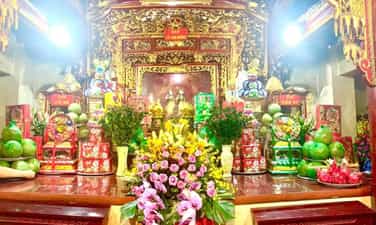
Temple of the couple
Located in Binh Minh ward, Lao Cai city, Lao Cai province, Doi Co Temple is a place to worship Cam Duong Doi Co - sacred goddesses in the religious temple of Mother Goddesses of the Three Palaces and Four Palaces. Legend has it that the aunts were "hometown in the ancient land of Dinh Bang/ Line after line trading silk fabric". The Cam Duong area (now part of Lao Cai city) is where the nuns, after their transformation, had their epiphany, "Saving people on land and in the river/ Going back and forth with smooth sailing." To commemorate the merits of their ancestors, people in the area built shrines and temples, where generation after generation they worshiped with incense and smoke. Every year, on the 13th day of the 9th lunar month, the local government and people respectfully hold a banquet to express their gratitude to the Ladies, and at the same time to honor the good qualities of women. Vietnam, affirming the nationality and humanity of the Vietnamese people's belief in worshiping Mother Goddesses of the Three Palaces and Four Palaces, consolidating and further strengthening the cohesion of the community on the foundation of shared beliefs and a sense of direction. source and compatriots. Double Co Cam Duong Temple was ranked as a Provincial historical-cultural relic in 2005./. SOURCE: LAO CAI CITY MONITOR MANAGEMENT BOARD
Lao Cai
5861 view
Rating : Provincial level relics

Van Hoa Temple
Legend has it that more than 700 years ago, when the Northern army invaded our country, the first place to suffer the destruction and harassment of the invaders was Bao Thang street, Thuy Vi district, Hung Hoa province (now Laos ward). Cai, Lao Cai city). At that time, Duke Tiet Hung Dao Dai Vuong Tran Quoc Tuan received orders from the court and soldiers along the waterway (along the Red River) to fight, suppress the Northern invaders, and keep the land peaceful. To commemorate and repay the debt of defeating the invaders, in 1940, the people of Van Hoa commune established a village communal house in Canh Chin village, worshiping Saint Tran and serving as a meeting place for the people. In 1947, also at Canh Chin village communal house, local soldiers chose it as their command post. In 1954, this place was again chosen as the venue for the first military-civilian Party conference of Lao Cai town after Lao Cai was liberated. In 1980, people in the area built a small temple to worship Saint Tran. By 2005, the Lao Cai City People's Committee decided to renovate and upgrade Van Hoa Temple. Next to the temple is a memorial stele house dedicated to the 49 martyrs of Van Hoa who sacrificed their lives for the cause of national liberation. Every year on the full moon day of the first lunar month and the 20th day of the 8th lunar month (the death anniversary of Saint Tran), people in the commune hold solemn ceremonies at Van Hoa temple to commemorate the merits of the past. Van Hoa Temple today is one of the historical and cultural relics located in the relic complex: Thuong Temple, Mau Temple, Cam Temple, Doi Co Temple, Cam Duong Revolutionary Base Area, Tan Bao Pagoda, Cam Lo Pagoda . This place is also an attractive destination for tourists in the spiritual tourism chain of Phu Tho - Yen Bai - Lao Cai. Every year, it welcomes hundreds of visitors and worshippers, contributing significantly to the development of the locality. With those great historical and cultural values, the ranking of Van Hoa Temple as a provincial-level historical and cultural relic contributes to preserving and promoting cultural heritage values associated with tourism development and restoration. serve the local political tasks well, ensuring security and politics; Traditional education, meeting the spiritual needs of the people. Source "Lao Cai Electronic Newspaper"
Lao Cai
5906 view
Rating : Provincial level relics
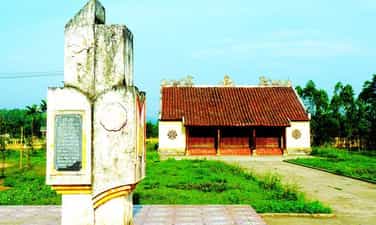
Kim Bang communal house and Cay Tang cave
The revolutionary historical relics of Kim Bang communal house and Cay Quyt cave are located in Kim Bang village, Minh Hoa commune (Minh Hoa district). This place is associated with the vibrant and heroic historical events of Quang Binh province and the nation during the resistance war against the French colonialists. In particular, this is where the 2nd Quang Binh Provincial Party Congress took place on May 19, 1949. During the resistance war against the French colonialists, Minh Hoa had an important strategic position, being the revolutionary base of Quang Binh province. Kim Bang Communal House is not a very large communal house but is located in a favorable location in the middle of a fairly large and flat area of land. From Kim Bang, secret paths through the forest can radiate to different directions, so delegates can attend the congress while still ensuring confidentiality and safety. Next to Kim Bang communal house, there are also large and deep caves such as Quyt cave and Diem cave, which can hold meetings for several hundred people in case of unforeseen circumstances. With that condition, the Tuyen Hoa District Party Committee arranged to collect rock piles outside Diem cave to place a lookout to protect the outer perimeter, and at the same time arranged militia and guerrilla forces to guard around the clock during the event. festival. And Quyt cave was chosen as a shelter or as a place to hold a congress when an incident occurred. The people here are rich in revolutionary tradition, wholeheartedly following the Party and Uncle Ho... Therefore, in just a short time, 4 temporary houses made of wood, thatch, bamboo, etc. were built around the communal house. Kim Bang to serve the congress. Minh Hoa people not only contributed but also used all their resources from cattle, pigs, chickens to corn, cassava, vegetables, etc. to support the congress. Dozens of officials, guerrillas and people were sent to serve the congress for 12 days (the congress took place for 9 days and 3 days for preparation work). Around the Kim Bang communal house area, 8 guard towers are placed on high points and assigned strict guards. Thanks to that, the congress was guaranteed absolute secrecy and safety. Even 7 days after the congress ended, the French colonialists learned that they frantically sent planes to drop bombs and burn down the pavilion. The Second Quang Binh Provincial Party Congress is an extremely important event in Quang Binh's history. The resolution passed by the Congress promptly met the objective demands of the resistance war against the French colonialists of the army and people of Quang Binh. Bringing the resistance movement to a new historical turning point is extremely important not only for the people in the province but also has a positive influence on the resistance movement of the whole country. The revolutionary historical relics of Kim Bang village communal house and Cay Tang cave are ranked at the provincial level according to Decision No. 1088/Decision - Sports and Tourism Committee dated July 9, 1999 of the People's Committee of Quang Binh province. Kim Bang communal house, Cay Tang cave with "Quang Binh's rise", July 15, has become a traditional historical day of Quang Binh, becoming an emulation movement to overcome challenges throughout the resistance war of Quang Binh. our people. Kim Bang Communal House was built in 1924 and completed in 1925. The communal house is made of wood, has a thatched roof, and has a dirt floor. The communal house includes the Early communal house and the Later communal house. During the anti-French period, the pavilion was shot down by French planes, then the pavilion was converted into a school and defense warehouse. In 1966, the pavilion was completely burned by American planes dropping napalm bombs. Currently, the communal house is funded by the province to restore the communal house on the old ground of the village communal house. In 2004, the communal house was restored and renovated, becoming a meaningful destination for tourists and a place for cultural activities, educating patriotic and revolutionary traditions for generations. Cay Tangerine cave is located about 500m from Kim Bang communal house; has an average height of about 3m; 15.5m wide; depth of cave 22m; The cave entrance is 10m wide. Cay Tangerine len cave was used during the days of the Second Congress in May 1949. Also in Cay Tanger len len cave in September 1964, the General Conference of the 325A division took place to stabilize the preparation organization. went to the South to fight. In 1968, the district celebrated shooting down the 3,000th American plane in the North; Len Cay Tangerine Cave is also where 400 tons of food were hidden during the years of the war against America. In particular, Cay Tang cave is an archaeological relic that was previously excavated and researched by M.colani, a French archaeologist from the Hanoi School of Far Eastern Antiquities. Source: Electronic information portal of Minh Hoa commune, Minh Hoa district, Quang Binh province.
Quang Tri
5376 view
Rating : Provincial level relics