Relic point Vietnam
Việt Nam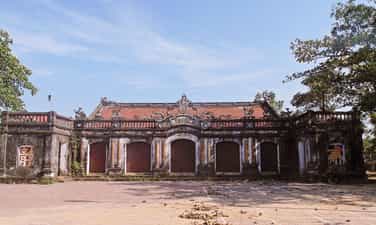
Hoa Ninh Communal House.
Hoa Ninh Communal House belongs to Hoa Ninh village, formerly Quang Hoa commune, Ba Don town, built in the 11th year of Bao Dai - 1936. During feudal times, the communal house was both a "communication station for army corps to serve administrative purposes." army", is also a place to worship heroes, those who openly reclaimed wasteland to establish villages... Along with cultural values, Hoa Ninh communal house during the two resistance wars against the French and the American invasion was also a place that marked many historical events. The communal house was a meeting place for the people, where rallies of the Viet Minh front took place calling for the masses to rise up to seize power in villages and district capitals (August 1945). During the years of resistance against America to save the country, this was also the place where our armed forces gathered and was a warehouse to hide weapons ready to fight back against enemy aircraft when they attacked the North. In 1965, American enemy bombs severely damaged Hoa Ninh communal house. But, with the determination of the people and the close guidance of the authorities at all levels, in 1976, the communal house was successfully renovated and became a "golden address" for the next generation to enhance their self-esteem. pride and responsibility for the glorious tradition of our ancestors. In 1993, the (former) Ministry of Culture and Information ranked Hoa Ninh Communal House as a national historical and cultural relic. Hoa Ninh Communal House was built with a massive and meticulous scale and architecture. The communal house is arranged with a system of surrounding walls, pillar gates, screens and a horizontal grand communal house. The sharpness and sophistication are shown right at the gate of the communal house, with the main gate built of bricks. The two pillars on both sides are designed extremely elaborately, the lines are in harmony with each motif and color. On the tops of the two pillars are images of two pigs delicately covered with green and light brown enamel, showing the strength of solidarity of the people. The communal house gate bears bold architectural and artistic features of Vietnamese villages. Hoa Ninh communal house in Quang Hoa commune consists of 5 rooms, 4 rooms, 1 main door and 4 side doors. In front of the main door of the communal house, there is an engraving of the word "Tho" embedded in the moon and three embossed Chinese characters: Phuc, Du, Dong. This is also the center for displaying decorative motifs such as: Dragon, Lion, Turtle, Phung, precious bowls, flowers... by the art of plastering and assembling pieces of porcelain and porcelain. In addition, this area also has 2 more couplets by bachelor Nguyen Tien Ich. Hoa Ninh communal house has a unique roof, built in a quadrilateral style, two upper roofs in the front and back, two lower roofs at the East and West ends. In the middle of the communal house's roof is the sacred image of two dragons flanking the moon. Every year, on every occasion of Tet, at Hoa Ninh communal house in Quang Binh, there is a Ky Phuc festival, this is a festival with the purpose of praying for blessings for the people, praying for peace in the country and people, good harvests, and smooth sailing. wind... In addition to the meaning of praying for good fortune, this is also an occasion for the people of Quang Hoa village, and more importantly, the people of Quang Binh, to remember their ancestors and preserve their national cultural identity. Source Electronic information portal of Quang Hoa commune, Ba Don town, Quang Binh province.
Quang Tri
4155 view
Rating : National monument.
Long Khanh Temple
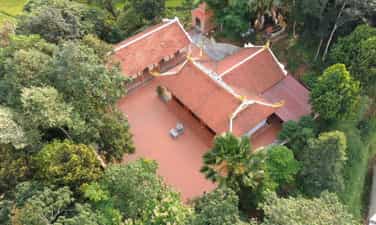
Long Khanh Temple Cultural and Historical Relic, Phuc Khanh Commune, Bao Yen District, Lao Cai Province organized the Long Khanh Temple Festival with two parts. During the ceremony, delegates, residents and tourists participated in the procession. Carrying a palanquin and offering incense according to the customs and culture of the Nung ethnic group (the majority ethnic group here), praying for good rain, peaceful winds, lush and bountiful crops, and a prosperous and happy family. At the festival, local people and tourists can experience folk games such as tug of war, blindfolded duck catching, rice cooking competitions, baking competitions, singing and dancing... performances and games imbued with identity of the people here. According to historical records, at the end of the 19th century, Luc Yen was invaded by black flag rebels from the north, looting wealth, killing civilians, and burning houses. Not giving up in the face of misery, the mandarin of Luc Yen province at that time was Tang Han Bao, he was teacher Tao, a very prestigious Nung ethnic person, and gathered a large number of people in the area of the same clan to stand up and rebel. . In order to commemorate the merits of the hero Tang Han Bao who sacrificed bravely and heroically, the local Chief Minister presented to King Khai Dinh (Nguyen Dynasty) asking for approval to worship in the entire region on the 2nd day of the lunar month. January every year. The main festival of Long Khanh Temple on July 10 (lunar calendar) every year attracts many locals and tourists from everywhere to worship and pray for blessings, fortune, and wealth. In 2018, Historical and Cultural Relics d SOURCE: ENVIRONMENTAL ECONOMICS ELECTRONIC MAGAZINE
Lao Cai
5722 view
Rating : Provincial level relics
Nghia Do Temple
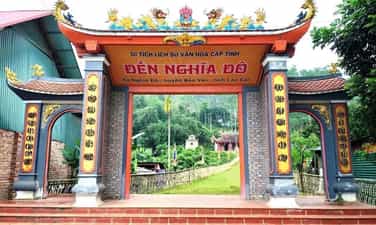
According to historical records: Ancient Nghia Do was a large valley with rich forest land, surrounded by streams, creating a peaceful landscape. In the late 18th and early 19th centuries, this place was called "Muong Khuong", later renamed "Muong Nghia Do" associated with the formation of Nghia Do temple on July 14, Canh Tuat year, year of Tu. Third Germany (1850). The name Nghia Do has been associated with this land ever since. Here, brothers Vu Van Uyen, Vu Van Mat (the Bau lords) and a number of generals of the Vu family and generals in the region built a defense line to protect Nghi Lang citadel from afar; Organize land reclamation to serve local military food production, expand and develop this land. In particular, the Bau lords allowed lowland soldiers to integrate with the indigenous people to create permanent garrisons on the border region. Nghia Do Temple has been recognized as a provincial-level historical and cultural relic since 2016. In 2018, the temple was embellished and restored; By 2019, it will be inaugurated and put into use, meeting the spiritual needs of people in the region and tourists from everywhere. Nghia Do Temple Festival is held annually on July 14 (lunar calendar) to commemorate the great contributions of the Bau lords hundreds of years ago who protected the peaceful life of the people and expanded development. this land. Lao Cai electronic newspaper
Lao Cai
5872 view
Rating : Provincial level relics
Pho Rang station
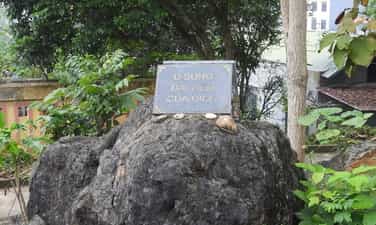
(CPV) - Pho Rang Fort National Historical Site in Pho Rang town, Bao Yen district (Lao Cai) is a special testament, where the heroic and glorious historical victory of the 73rd generation of ancestors is engraved. years ago (June 26, 1949 – June 26, 2022). According to the History of Bao Yen District Party Committee (Lao Cai), Pho Rang station was built on peak 442, with an area of nearly 1 hectare; This is a strategic location, able to control the entire basin area of Pho Rang town and surrounding areas. The station has almost three sides of the river, so the station can cover and monitor all activities on the river and both sides of the river. The French built a solid fortification system with many bunkers, trenches, dense sharpened bamboo fences around the base, mines, obstacles and gun emplacements were arranged around the station. The enemy also arranged 2 platoons of European and African soldiers, 1 team of red soldiers, 1 platoon of paratroopers, 1 platoon of soldiers, all kinds of weapons ready to fight back and block the progress of our military branches to liberate the region. Northwest. On May 19, 1949, the Thao River campaign opened, our troops destroyed two positions, Dai Buc and Dai Phac (Tran Yen district, Yen Bai) in Nghia Lo subdivision, shaking the entire defense system. of the enemy on the right bank of the Red River in Yen Bai province. Taking advantage of the victory, we attacked the Pho Rang sub-area, which was a key base, the enemy's headquarters and also the sub-area's headquarters. At 6:00 p.m. on June 24, 1949, our artillery began firing at the enemy post, suppressing the gun emplacements. After more than 40 hours of continuous fighting with intense, resilient and courageous spirit, at exactly 08:00 on June 26, 1949, our troops took control of the battlefield, defeated the post, and captured alive the Ba commander. station, destroying more than one enemy company. Pho Rang post was defeated, a part of the enemy army retreated in two directions toward Nghia Do and Lao Cai. The destruction of Pho Rang command post shook the enemy's defense line from Pho Lu to Nghia Do, causing losses, confusion and fear to the enemy. The victory at Pho Rang post broke an important link in the defense line of Bao Ha - Pho Rang - Nghia Do - Yen Binh, promoting the disintegration of the enemy, creating a premise for the main force to advance to liberate Pho Lu and advanced to attack Nghia Do post, making an important contribution to bringing the Song Thao campaign to victory, smashing the enemy's key defense line, liberating over 600 square kilometers and tens of thousands of people from the Northwest ethnic groups to escape the yoke. enemy's grip. The Battle of Pho Rang Fort was a heroic and glorious victory that was recorded in the glorious history of our country. On June 11, 1999, Pho Rang Fort relic was recognized by the Ministry of Culture and Information (now the Ministry of Culture, Sports and Tourism) as a National Historical Relic, according to Decision No. 38/QD-BVHTT . SOURCE: Central Agency of the Communist Party of Vietnam
Lao Cai
5671 view
Rating : National monument

Memorial House of Mrs. Hoang Thi Loan (Uncle Ho's Mother)
Ms. Hoang Thi Loan - President Ho Chi Minh's mother was born in a land rich in revolutionary tradition and studiousness; The Hoang family's original hometown is in Van Noi village, Hong Tien commune, Khoai Chau district. In her, she brings together the noble qualities of a traditional Vietnamese woman: responsible, kind, compassionate, hard-working, and devoted to her husband and children. To pay tribute and honor her great contributions, in 2003, the People's Committee of Hung Yen province decided to start construction of a church (now the Memorial House) on the land of Van Noi village, Hong Tien commune. This is a project with bold traditional architecture, in harmony with the space and landscape of the Northern Delta village, in the old campus of Van Noi communal house. Inaugurated in 2005, this is one of the important works of the province, a place for people from all walks of life inside and outside the province to offer incense, visit, and commemorate the woman who sacrificed her life for her husband, children, and family. dedicating to the Vietnamese people a great son - the much beloved President Ho Chi Minh. On July 26, 2023, the Chairman of Hung Yen Provincial People's Committee signed a decision to classify Mrs. Hoang Thi Loan Memorial House as a Provincial Historical Relic under No. 1555/Decision - Chairman of the People's Committee. After 20 years since construction, some items of the project have deteriorated. With the attention of provincial leaders and departments, branches, in early 2024, Khoai Chau District People's Committee implemented the Project to restore and embellish Mrs. Hoang Thi Loan Memorial House and auxiliary works, including Items: Restoration and embellishment of Memorial House relic items; renovating and upgrading the road to the Memorial House and a number of other items... After 6 months of construction, up to now, the work of restoring and embellishing items and auxiliary works of Mrs. Hoang Thi Loan Memorial House has been completed. complete. Relics of the Memorial House of Mrs. Hoang Thi Loan, making this place a red address, an attraction for visitors to learn about history... Source: Department of Culture, Sports and Tourism.
Hung Yen
5794 view
Rating : Provincial level relics

Communal house - Temple in Mao Xuyen village
Based on the preserved legends and ordinations, Mao Xuyen Village Communal House was built to worship the Village God, Mr. Hoang Van Lang, also known as Duc Hoang Hai, the second son of female general Ngoc Chi during the Hai Ba Dynasty. Trung were the people who had the merit of expelling the Southern Han army in the years 40 - 43 AD. The communal house has a "first, last, last" architecture. Currently, the communal house still retains two ordinations and precious artifacts such as stone stele, great paintings, parallel sentences, hammock doors and a system of worship statues. Behind the communal house is the pagoda, a place to worship Shakyamuni Buddha, with Dinh script architecture with many ancient features still preserved such as Tam Quan, front hall and upper palace. During the resistance war against the invaders, Mao Xuyen Communal House - Pagoda was also a place for revolutionary activities of local pre-uprising comrades. With that historical meaning and value, at the ceremony, authorized by the Chairman of the Provincial People's Committee, comrade Mai Xuan Gioi, Deputy Secretary of the District Party Committee - Chairman of the District People's Committee, awarded the provincial-level relic ranking certificate Dinh- Mao Xuyen Village Pagoda for officials and people of Nguyen Trai commune. Source Electronic information portal of An Thi district, Hung Yen province.
Hung Yen
5720 view
Rating : Provincial level relics
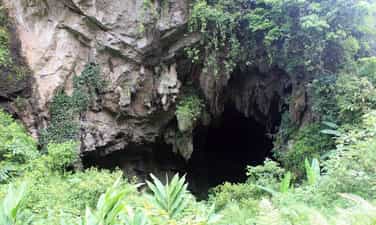
Ham Rong Cave
Ham Rong Cave is located right at the foot of Ham Rong mountain, Na Bu village, Tung Chung Pho commune, Muong Khuong district, Lao Cai City (now Muong Khuong town) nearly 2km from the district center. This is a large cave located in the heart of a limestone mountain. The reason it is called Ham Rong is because according to legends and folk tales, in the cave there is a very large dragon that often appears when the weather changes. Therefore, local people named that cave Ham Rong cave. Coming to Ham Rong cave, visitors will have the opportunity to admire the mysterious beauty amidst a vast mountainous area. The road to Ham Rong cave is quite convenient, visitors follow the Tung Lau stream to the main entrance to the cave. This stream curves all year round over each ravine, passes through caves, forming the "Pao Tung" waterfall - a wonderful landscape of the entire Muong Khuong region. Ham Rong cave complex includes 2 main caves connected to each other with a total length of about 750m. Ham Rong cave entrance is more than 6m wide and the cave arch is 5m high, so it is convenient for tourists to visit. The inside of the cave is divided into many small interconnected niches, about 10m deep to reach single dark-colored stalactites, continue up through a small hole - a place to receive natural light that shines deep into the cave. The strange shapes are: stalactites clinging to the cliffs with dome caves that look soft like climbing gourds. Going deeper into the cave, visitors will see shapes that look like goats eating. grass, shapes of birds in flight, they blend with the landscape shimmering under the lights. Suddenly before the visitors' eyes appeared a palace with the Emperor's crown dotted with sparkling jewels, then shapes resembling successive terraced fields. In the middle of the cave is a round cylindrical block with a head like a Buddha and a kind face, but its body is thorny and rough, clinging to each other like antennae, in some places it looks like a fairy chess board, like a princess's chamber. Lord... The deeper you go into the cave, the more you realize the splendid majesty with the variety of colors creating a poetic and lyrical beauty. Ham Rong Cave has great value in terms of tourism, geology, and aesthetics. Coming to the cave, visitors can not only admire the charming scenery of mountains, forests, natural rivers and streams, but also provide conditions for researchers in geography, soil and stratigraphy. Ham Rong is also a source of artistic inspiration for artists and photographers. Ham Rong Cave was recognized by the state as a National Scenic Monument according to Decision No. 15/QD-BVHTT dated April 14, 2003. SOURCE: Lao Cai Provincial People's Committee
Lao Cai
5702 view
Rating : National monument
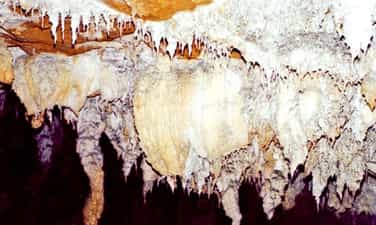
Muong Vi Cave
28 km northwest of Lao Cai city through Bat Xat district to Ban Vuoc, turn left to Muong Vi commune - where there is a large valley, surrounded by rolling limestone mountains forming a complex of caves. Large area called Muong Vi cave complex. This place includes Na Rin, Cam Rang, Cam Rum and Cam Tam caves, all quite beautiful. This is one of the unique and attractive relics of Lao Cai province. Na Rin Cave is a large cave with many transparent silver-colored stalactites interwoven together like simple screens in design but exuding luxurious and pristine beauty. The stalactite heads look like drops of pure water originating from a small stream located on the cave wall. The stalactites look like crystal chandeliers of different sizes. Cam Rang Cave is located halfway up a mountain in a high position with little moisture, the emulsion color is slightly dark brown but solid. Inside the cave are rocks shaped like long gourds and a tray of five yellow fruits that attract the eyes of all tourists coming here to visit and explore. Inside the cave there is a sky gate, above the gate is a stalactite strip that looks like a crown with elaborate iridescent lace strips. Equally attractive are Cam Rum and Cam Tam caves, these two caves also have many rocks with unique shapes covered with colorful stalactites. Cam Tam cave alone contains many rich and attractive folk elements. There are many ancient traces left here, reflecting the spiritual cultural life of the Giay ethnic community. Muong Vi Cave also contains many mystical folk tales about the intelligent and heroic Giay king with his feats of fighting against foreign invaders and protecting his village, such as building streams to prevent water from attacking invaders, planting bamboo to create fences. fought against the enemy very effectively, then came the story of the King's flying stone horse... There are also folk tales telling the story of beautiful and gentle fairies who often come down to help people. during the busy planting and fall seasons planning... Muong Vi cave complex is a large cave complex with many different characteristics and research values, is a place containing rich folk treasures about the country and people here, and is also a place Learn about the research of geologists. In particular, the Muong Vi cave complex has a practical value in the strategy of protecting border security and enriching the local ecological environment. This is also a place to learn about aesthetic values, providing creative inspiration for creative researchers in literature and painting. Currently, this place has been attracting the attention of many scientific fields such as culture, environment, tourism, geology... in order to exploit, conserve and promote the values of relics to serve the people. economic development for the locality. Muong Vi cave complex was recognized by the state as a National Scenic Monument according to Decision No. 38/QD-BVHTT dated June 11, 1999 of the Ministry of Culture and Information. SOURCE: Lao Cai Provincial People's Committee
Lao Cai
5724 view
Rating : National monument
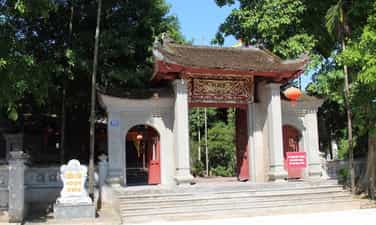
Cam Temple
Cam Temple is located in Soi Muoi village, Van Hoa commune (now the group of 3 Pho Moi wards - Lao Cai), the temple is located at the foot of a low hill, surrounded by lush fruit trees, in front of the temple are 3 ancient trees: the sycamore tree. , jackfruit trees and jade trees spread shade to the temple, creating an ideal landscape. The temple was built and existed nearly 200 years ago and is associated with the history of building and defending the country of the Vietnamese people in general and Lao Cai ethnic people in particular. The temple has a legend associated with the three times of resistance against the Mongol army under the command of the Tran Dynasty's king, general Tran Quoc Tuan - who was awarded the title "Van Co heroic spirit of the highest class of blessings". . Legend has it that in 1257, Tran Quoc Tuan marched to the border to command the defense against the Mongol invaders (13th century). Many generals fell on this border land. Cam Temple was built to commemorate 5 Tran Dynasty soldiers (names unknown). At that time, the station area (today's Pho Moi) was a dense primeval forest. During an inspection and command of border defense (around 1257), General Tran Quoc Tuan chose the location of the current Cam Temple. Now working as a 2nd line military medical station in border defense. Later in the battles, wounded soldiers were brought back to be treated in this forest. The indigenous people at that time, the Vietnamese, Tay and Giay people, also brought sick people in for military medical care. Then something thrilling happened: at night there was a young girl wearing a blue dress who came to treat everyone. The girl was very good at treating everyone. Everyone who received the medicine was healthy, but the miracle doctor just appeared. at night and not seen during the day. Learning about the local people, the people said that there was no one's child like that. Afterwards, the people and soldiers believed that it was the apparition of the Holy Mother of Heaven helping the army and people to protect the country. Right below Phuong Dinh next to this ancient jackfruit tree are 5 graves of military officers who sacrificed their lives for a great cause. Cam Temple is located in the center of the ancient forest, formerly a small temple created by soldiers and villagers together, then officially started construction into a temple in the 16th century, after many advances. Agarwood still retains some ancient maple trees and jackfruit trees. Today, the temple has been beautifully restored and consists of two parts: the main hall and the harem. Meeting the needs of folk beliefs not only of the city's residents but also of tourists from all over, beautifying old legends - legends of military and civilian love on the border. Cam Temple holds its main festival on the seventh day of the seventh month (lunar calendar) every year, celebrating the death anniversary of 5 Tran Dynasty soldiers. People consider this the death anniversary of "erasing the sins of the dead" for the five soldiers; Therefore, together we contribute rice and meat... to the organization. The ceremony of the relic is organized quite spaciously in order. Besides the ceremony, there is also a fun festival with traditional games such as shuttlecock throwing, swallow fighting... In addition, this place is also the place to organize the annual field festival. On December 27, 2001, Cam Temple was recognized as a National Historical Site according to Decision No. 51/QD-BVHTT of the Ministry of Culture and Information. SOURCE: Lao Cai Provincial People's Committee
Lao Cai
6005 view
Rating : National monument

Banyan tree and La Tien Temple
Historical relics Banyan Tree and La Tien Temple are located in Nguyen Hoa commune (Phu Cu, Hung Yen). This is a place to commemorate the heroic souls of 1,145 heroic martyrs, revolutionary soldiers and our compatriots who were killed by the French colonialists during their occupation here (from 1949 - 1954), including 121 officers and soldiers. People of Nguyen Hoa commune (Phu Cu, Hung Yen). During the resistance war against the French colonialists, La Tien was an area with an important strategic military position, blocking the south of Hung Yen, the north of Thai Binh and the west of Hai Duong, so the enemy took this as an occupation position. , set up posts and blockades to prevent the reinforcement of human resources, material resources, weapons, guns, ammunition, food, etc. from neighboring areas and suppress the revolutionary movement of Hung Yen's army and people. Right from the beginning of the occupation, the enemy terrorized the country in an attempt to establish an extremely brutal "white belt". They captured thousands of people and guerrillas in the area and took them to La Tien post to brutally torture and kill them in barbaric ways. In just nearly 5 years of occupation in La Tien (1949 - 1954), the enemy killed 1,145 revolutionary soldiers and patriots. But the enemy's brutality not only failed to suppress the revolutionary movement, but also fanned the flames of hatred and the stubborn will to fight for independence and freedom of our army and people. The attack to destroy La Tien post conducted by our army and people at the end of January 1954 contributed to the resounding victories of the army and people of Hung Yen province in the resistance war against the French colonialists; of great significance on the battlefield across the country, contributing to weakening the enemy, creating conditions for our army and people to win Dien Bien Phu. With special historical values, the Banyan Tree and La Tien Temple have been recognized as National Historical Sites according to Decision No. 4007/Decision - Ministry of Culture, Information and Tourism dated November 18, 2015 of the Ministry. Culture, Sports and Tourism. Today, this relic has become a symbol of the resilient, indomitable and rebellious spirit of the people of Phu Cu in particular, the people of Hung Yen and the whole country in general. This place is not only a place to set up hate stele and engrave the crimes of the enemy, but also a place to pay tribute to the soldiers and compatriots in the province and neighboring provinces who sacrificed heroically to protect every inch of land. , the hometown river. This place has also become a red address to educate the young generation about revolutionary traditions, patriotism, heroism, and resilience of our officers, soldiers, and compatriots. Electronic information portal of Phu Cu district, Hung Yen province.
Hung Yen
5830 view
Rating : National monument.