Relic point Vietnam
Việt Nam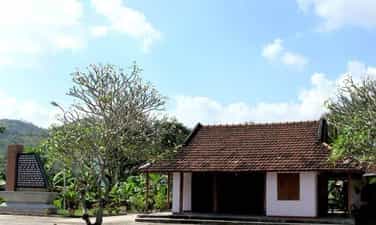
The place where the first Vietnamese Communist Party cell was established in Phu Yen
On October 5, 1930, at comrade Phan Luu Thanh's house, in Dong Be hamlet, Phuoc Long hamlet, Xuan Long commune (now Long Binh neighborhood, La Hai town, Dong Xuan district), a conference was held. Party members, announced the establishment of the first Communist Party Cell in Phu Yen province including 8 party members, comrade Phan Luu Thanh was elected Secretary. By January 1931, Phu Yen Provincial Party Committee was established. On June 18, 1997, the place where the first Communist Party cell was established in Phu Yen province was ranked as a National Historical Site. After the Communist Party of Vietnam was born (February 3, 1930), a number of patriotic young intellectuals in Phu Yen sought to contact Communist organizations to organize struggles. At the end of 1929, the campaign to establish a communist organization had many positive changes, associated with the activities of a collective of revolutionary soldiers, the most typical of which was comrade Phan Luu Thanh. Comrade Phan Luu Thanh was born in 1906, from Dong Be hamlet, Phuoc Long village, Xuan Long commune, Dong Xuan district (now Long Binh neighborhood, La Hai town, Dong Xuan district), and is a patriotic young man. Living in a miserable country, he actively participated in patriotic organizations at that time such as: Hung Nghiep Social Society, Vietnam Revolutionary Youth Association... Propagated and enlightened about the ideals of communism, comrade Phan Luu Thanh actively worked to build a communist base. By organizing revolutionary activities of historical significance, comrade Phan Luu Thanh was admitted to the Communist Party of Vietnam at Thi Nghe Party Cell (Saigon) in August 1930 and sent to La Hai, Dong Xuan, Phu Yen to continue building the base. The comrades contacted, connected, and gathered a number of formerly progressive young people to continue propaganda activities for communism, hanging the hammer and sickle flag, and distributing leaflets in La Hai, Tuy An, Tuy Hoa, Song Cau Provincial Capital... These forms have influenced the masses, created conditions for the workers and peasants to come into contact with the Party's policies, and stimulated patriotism among some young people and students. national consciousness according to communist ideology. Through propaganda, enlightenment, and challenges, comrade Phan Luu Thanh admitted a number of outstanding comrades into the Party. Before the strong development of the revolutionary movement in the province. On October 5, 1930, comrade Phan Luu Thanh held a meeting of all party members at his home to discuss the establishment of a Communist Party cell. After carrying out the procedures according to the Party's regulations, in a solemn and sacred atmosphere, comrade Phan Luu Thanh announced the establishment of the first Communist Party cell in Phu Yen. The Party cell has 9 party members. The birth of the first Communist Party cell in Phu Yen opened a new era for the revolutionary movement in Phu Yen, meeting the urgent aspirations of the working class, farmers, and intellectuals. intellectuals and working people in Phu Yen. From here, the revolutionary struggle movement of the people of Phu Yen had the guidance of the communist organization - a decisive factor for the future victory of the revolutionary movement in Phu Yen. . Source: Electronic information page of Phu Yen Provincial Party Committee's Propaganda Department
Dak Lak
9035 view
Rating : National monument
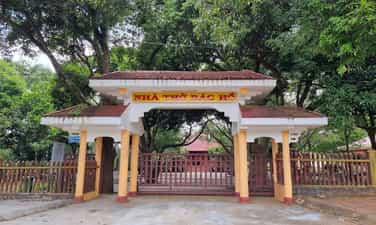
BAC HO CHURCH
Uncle Ho's church is currently located in Binh Hoa village, Son Dinh commune, Van Hoa plateau, Son Hoa district, Tuy Hoa city. This place is closely associated with the process of building and developing resistance forces and resistance headquarters of Phu Yen province. For many years of perseverance, resilience, and indomitable resilience from the 1960s to the victorious spring of 1975. On August 22, 2008, the Ministry of Culture, Sports and Tourism recognized a national historical relic site, including Uncle Ho's church and 12 other locations. This place was once the resistance base of the Provincial Party Committee, government, army and people of Phu Yen. The 3 Son relic site is located on the Van Hoa plateau, western Phu Yen, at an altitude of over 400m above Tuy Hoa sea level. This place has mountainous terrain, vast green trees, and many beautiful caves, rivers, streams, waterfalls and lakes. Fertile red basalt soil. coffee and pepper galore. The base of the resistance war against the US to save the country of Phu Yen's army and people is a complex of relics, the center of which is Uncle Ho's church. Located on a land area of 5,000 m2, next to inter-provincial road 643. Uncle Ho's church is solidly built, airy space in the style of ancient Vietnamese temple architecture, majestic and quiet on the green background of plants. and mountains and forests. 40 years ago, on September 6, 1969, the army and people of Phu Yen held a memorial ceremony to send Uncle Ho to eternal life, and now the remaining evidence is two chestnut trees, small at that time, now lush and shining. shade and cover for many people who came to visit Uncle Ho. Descendants and descendants have made pilgrimages here to burn incense sticks to offer him, visit Uncle Ho's church, you have the opportunity to visit the entire complex of 12 relics of the ancient resistance base of Phu Yen, which are the Spring Hall, the infirmary. Truc Bach, Provincial Party School, each name reminds us of a time when our father made history, that is the red address that calls us back to our origins. Uncle Ho's Church - in the western land of Phu Yen, the resistance base of Phu Yen's army and people, is now the red address of the source, for social and political organizations, mass organizations and large numbers of people. People make pilgrimages to visit and offer incense to commemorate the 400th anniversary of Phu Yen land. Source: Phu Yen Tourism Promotion Information Center
Dak Lak
6957 view
Rating : National monument
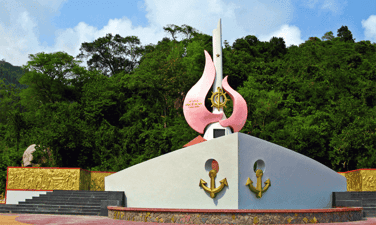
Vung Ro Port Relics
Vung Ro wharf is one of the important wharfs on the Ho Chi Minh Trail at sea, receiving hundreds of tons of weapons transported by Unnumbered Ships from the North to support the Southern battlefield during the years of resistance against America, save the country. In just a short time, from November 1964 to February 1965, Vung Ro wharf received four ships with no numbers. Vung Ro was ranked as a National Historical Site on June 18, 1997. In 2014, it was ranked by the Vietnam Records Organization as the Top 10 beautiful bays of Vietnam. In May 1964, the Phu Yen Provincial Party Committee received a directive from the Party Central Committee tasked with choosing yards ready to receive military supplies from the North to the South by sea. Vung Ro wharf is located right at the foot of Ca Pass, east of Highway 1, is a deep, smooth water wharf with many caves and rocks that can be used to hide many types of weapons, and there are safe corridors from Vung Ro. to Hoa Hiep, Hoa Xuan and to the base of the Phu Yen Provincial Party Committee, the base of the Inter-Provincial Party Committee 3 and the Southern Central Highlands provinces. On the night of November 28, 1964, Vung Ro wharf welcomed the first train No. The reception of weapons from No Number trains was carefully and closely organized by the army and people of Phu Yen. From Vung Ro wharf, secret trails weave through ravines and steep passes, with the participation of thousands of young strikers and civil servants day and night transporting hundreds of tons of weapons to the rear base and spreading to all areas. South Central battlefield, promptly equipped for major battles, expanding the liberated area. The fourth ship arrived on the night of February 15, 1965, and was discovered by the enemy the next morning. To ensure the secrecy and safety of the Ho Chi Minh Trail at sea, we had to destroy the Ship with No Number and sink it into the sea at Bai Chua. From here, the strategic shipping route at sea, which had been meticulously and secretly built, was revealed, but the Vung Ro incident caused terror to the enemy. Time passes, but the victory remains radiant. In 2001, the Vung Ro Wharf Monument stele and the Vung Ro Memorial Monument were built and completed, to forever engrave a heroic event in the history of the nation's war. Vung Ro and trains without numbers. The legend will forever be the pride of Vietnamese military art, forever the pride of the soldiers and people of Phu Yen and of the entire heroic Vietnamese nation. Source: Electronic Information Portal of Tuy Hoa City, Phu Yen Province
Dak Lak
5455 view
Rating : National monument
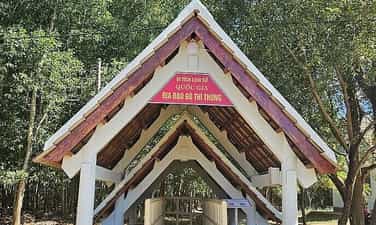
Go Thi Thung Tunnels
15km west of the center of Chi Thanh town (Tuy An), Go Thi Thung plateau (An Xuan commune) is about 400m above sea level, has a cool climate all year round, and gentle green trees and fruits. . On the top of this plateau, there is a large mound and a tunnel system of Phu Yen's army and people during the years of resistance against the US. This tunnel system has contributed to many battles that shocked the enemy and created resounding victories for our army and people. That day, faced with the strength of the enemy, the Phu Yen Provincial Party Committee and the Military Command of Region 5 decided to dig tunnels at Thi Thung mound. Construction started on May 10, 1964. The District Team and Provincial Team directly commanded An Xuan, An Dinh and An Nghiep communes to dig tunnels. By August 1965, Thi Thung tunnel was completed. After completion, the total tunnel length is 1,948m through Go Thi Thung, 4.5m deep, 0.8m wide. The entire tunnel has 486 wells, at the mouth of the well, a wooden beam is placed, and a camouflaged side door is left 20 meters away. Above the tunnel is a lookout with an observation deck. Surrounding the tunnel is a system of interconnected trenches running horizontally and vertically. When there is an enemy, we appear to fight, and after fighting, we withdraw, the enemy does not detect us and the people keep it absolutely secret and safe. When suffering heavy defeat on the battlefield, the US massively poured troops into South Vietnam. At the An Xuan plateau, many fierce battles took place. Our army and people achieved many resounding victories, making an important contribution to the victory of the "Local War" in the Southern battlefield. After liberation, traces of war on Thi Thung mound were still clearly printed by bomb craters, minefields and gunpowder. But now, the lands of the old battlefield have become greener, new rows of houses have sprung up, and the lives of the people here have gradually improved. Nowadays, few people who come to Thi Thung mound know that more than 40 years ago, this place was once a fierce battlefield, there was a hand-to-hand battle between our troops and the enemy, and few people know that Deep underground there was once a tunnel system dug by the people of An Xuan commune and surrounding areas... In 2009, Go Thi Thung tunnels were recognized as a national historical relic. It is known that, along with Cu Chi Tunnels (Ho Chi Minh City), Vinh Moc Tunnels (Quang Tri), Go Thi Thung Tunnels is one of the three major tunnels in our country. Source: Phu Yen electronic information portal
Dak Lak
5488 view
Rating : National monument
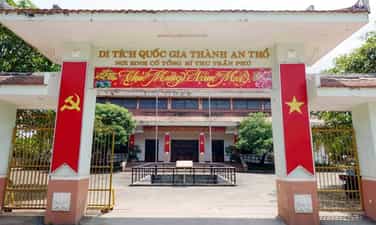
Thanh An Tho
An Tho Citadel is located in An Tho village, An Dan commune, Tuy An district, built in 1832 and completed around 1836, is the administrative center of the feudal government in Phu Yen. An Tho Citadel is located in the downstream area of Cai River in An Tho village, An Dan commune, Tuy An district, Phu Yen province. An Tho Citadel is one of the places marking many important historical events of Phu Yen province. An Tho citadel was built between 1832 and 1836 under the reign of King Minh Mang. The citadel has a square plan, with an area of about 6,400 square meters, four corners are built outward, surrounded by a moat. The water is about 15m wide, the wall is about 3.5m high. The four gates facing the four directions East, West, South, North correspond to the names of the four gates: Front, Back, Right, Left. Outside An Tho citadel, there are a number of auxiliary works. In the south there is the Ho Thanh dike to prevent flooding, inside the dike is the Shooting Range - where soldiers practice. Near the banks of the Cai River there is a land called Go Tuong, where the Tuong soldiers are stationed. Thanh Market, located near Huu Gate, is a place to exchange goods for the bureaucracy as well as for the people in the An Tho citadel area. After completion of construction, An Tho citadel became the administrative center of the feudal government of Phu Yen province. In 1888, Phu Yen's headquarters moved from An Tho citadel to Vung Lam located in Xuan Dai bay about 10km north of An Tho citadel but only stayed here for about 1 year then moved back to An Tho citadel. In 1899, the headquarters of Phu Yen was moved from An Tho to Long Binh village (now in Song Cau town). From 1899 onwards, An Tho citadel continued to serve as the capital of Tuy An district. By around 1939, Tuy An capital moved to another location, and the historical role of An Tho citadel seemed to have ended. During the period from 1901 to 1906, Mr. Tran Van Pho, comrade Tran Phu's father, was sent to Phu Yen to hold the position of Professor at Tuy An district. Mr. Pho brought his whole family to work and live in An Tho citadel. And it was also here on May 1, 1904 that witnessed the birth of an outstanding son of the Party, Comrade Tran Phu - the first General Secretary of the Communist Party of Vietnam. On the occasion of the 400th anniversary of Phu Yen's formation and development and the National Tourism Year of the South Central Coast - Phu Yen 2011, An Tho citadel relics were invested in and renovated, including a memorial display house for the late General Secretary. Tran Phu and some surrounding auxiliary works. An Tho Citadel was recognized as a national historical archaeological site on August 22, 2005. Source: Phu Yen electronic information portal
Dak Lak
5206 view
Rating : National monument
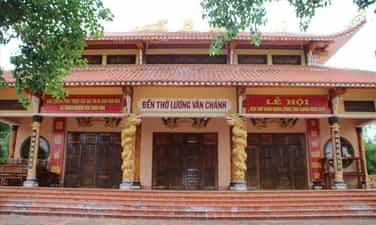
Luong Van Chanh Temple
Famous man Luong Van Chanh was from Bac Ha. During the reign of King Le The Tong, he was promoted to the position of Thien Vu Ve Do commander. In the year of Mau Dan - 1578, Luong Van Chanh was sent by Lord Nguyen Hoang to stabilize the land from Cu Mong pass to Ca pass. Thanks to his great merits, he was promoted to the position of General of the Fatherland, and later became a Tran Bien Quan. After that, he gathered people from Thanh - Nghe, Thuan Hoa and other places to explore wasteland, establish houses and villages in Cu Mong, Ba Dai and along the Da Rang river. He brought his experience of land reclamation and applied it to Phu Yen. Together with the people, he made this land rich and villages were gradually formed. This was the basis for Lord Nguyen to establish Phu Yen government in 1611. Mr. Luong Van Chanh died on September 19, Tan Hoi year 1611. Luong Van Chanh's grave is located on a high mound, facing the Ben Loi river, towards Chop Chai mountain. Luong Van Chanh Temple is located in open terrain, in front is Ben Loi River, behind is Cam Mountain. On the campus there is also an ancient Bodhi tree with lush branches and leaves, shading an entire corner of the temple, recognized by the Vietnam Association for the Protection of Nature and Environment as a Vietnamese Heritage tree in 2014. To express the admiration and gratitude of today's generation to our ancestors who have publicly established their careers; Demonstrating the moral principle of "Drinking water, remember its source", meeting the wishes and expectations of officials and people in the province and the whole country, Phu Yen Province has cast a statue of famous man Luong Van Chanh to worship at the temple of Phu Yen. His statue is cast in bronze with a height of 1.4 meters, sitting on a chair, holding a decree, placed right in the main hall of the temple, showing solemn respect. Every year, on February 6 and September 19 (lunar calendar), Phu Yen organizes the Luong Van Chanh Temple Festival with the participation of a large number of people and attracts many tourists to visit and learn. . Luong Van Chanh Tomb and Temple relics were ranked as National Historical Monuments on September 27, 1996. Source: Phu Yen Province Tourism Promotion Center
Dak Lak
9884 view
Rating : National monument

Dong Loc Junction Memorial Area
On December 9, 2013, Dong Loc Junction Relic Area was recognized as a Special National Historical Site. Dong Loc Junction relic area is a relic complex with many meaningful works, typically the following 12 items: 1. Dong Loc junction relic area has 3 entrance gates arranged on 3 routes towards the relic area, arranged according to the traditional three-entrance architecture including: Main door and 2 side gates. 2. Dong Loc Junction Victory Monument is an immortal symbol of the strength, determination to win, and the spirit of overcoming all hardships and dangers of the youth volunteer force, soldiers, and traffic workers. , police, militia... 3. The memorial stele of the National Youth Volunteer Martyrs. Registered nearly 4,000 heroic martyrs. The names of the heroic martyrs and young volunteers who sacrificed their lives at Dong Loc Junction will be remembered forever, for generations of children and grandchildren to admire, respect, and be proud of. 4. The grave site of 10 female heroic martyrs and young volunteers at Dong Loc intersection is 10 white graves register 10 young female volunteers of Platoon 4, Company 552. 5. The stele memorial for the heroic martyrs of the Transport sector who sacrificed their lives in Ha Tinh. Register and commemorate 842 Heroes and martyrs of the Transport sector who sacrificed their lives in the resistance war against the US to save the country in Ha Tinh area; 6. Transport industry symbol column. Located right in the middle of the three-way intersection: Lac Thien - Dong Loc, Khe Giao - Dong Loc, Ba Giang - Dong Loc. To honor the heroic victories of soldiers on the Transportation front; 7. Dong Loc Junction Bell Tower has majestic architecture, shimmering light, located on Mui Mac hill, and is considered one of the most beautiful bell towers in Vietnam today. 8. Dong Loc Junction Temple is located on Mui Mac Mountain (next to Dong Loc Junction Bell Tower). It is a place to worship the Gods and Spirits of the Heroic Martyrs and young volunteers who sacrificed their lives in the two national resistance wars, the Heroic Martyrs who sacrificed at Dong Loc Junction, 10 girls and officers. and people died at Dong Loc battlefield. 9. The statue of 10 girls at Dong Loc Junction recreates a realistic moment of 10 young volunteer girls on duty to level bomb craters and lead the way to the front line. They are arranged in different positions. 10. La Thi Tam Hill (Moi Mountain) is the place to witness the fierceness of the Dong Loc battlefield, witness the footprints, associated with the name of the daughter of Song La, Hero of the La People's Armed Forces Thi Tam. 11. Traditional house of the Vietnam Youth Volunteer Force, where the history of the Youth Volunteer Force appears most vividly and clearly. 12. Dong Loc Junction Traditional House There is a simulation table programmed with an electronic system, recreating the fierce and devastated battlefield scene of Dong Loc Junction during the war years, as well as the intention. the determination to open roads and traffic, the brave and courageous spirit of our army and people at this "death coordinate". Source: Ha Tinh province electronic information portal
Ha Tinh
8490 view
Rating : Special national monument

Thai Yen Temple
Thai Yen Temple was recognized as a National Monument on July 20, 1994. Thai Yen Temple is located in Thai Yen commune, Duc Tho district, Ha Tinh province, worshiping the Tutelary God Tam Lang Linh Ung (Snake God) and Chinh Dong Ngoc Nu (Mother). The temple was built in the 18th century (sometime before 1741). The temple is located on a land area of about 5,000 square meters at the beginning of the village, with a three-court structure: upper palace, middle palace, lower palace. In front of the temple is a semicircular lake with clear blue water - considered the dragon's eye, located in the village's dragon land. Passing through the large yard of the three-entrance gate, the middle gate is built with a Nghi Mon house with a structure of 2 pillars, 6 columns, the roof is covered with 4 winding dragons, the head raised high to the top of the roof. On the roof of the ritual gate is embossed a dragon's face stroking its mane, beard and fierce horns. The lower hall is made of ironwood with 4 trusses and 14 columns, the floor is tiled with red bricks, in front there are large Chinese characters embossed with pieces of porcelain on wood assembled together with the beams: "Van Co Anh Linh" ( middle room), "Chiem Nhu Tai" (right room), "Lai Nguyen An" (left room). In the middle of the room is a large incense burner made of lacquered wood and elaborately carved with gold. In front of the incense burner is a dragon sword stand and a sign with the two Chinese characters "Chinh Khi", two large cranes standing on turtle bodies on both sides; The two compartments on both sides hang two bronze bells, on the bell are embossed with 3 words "Thai Yen Tu" (Thai Yen Temple - left compartment) and 4 words "Vinh Phuc Tu Chung" (Vinh Phuc Pagoda Bell - right compartment) . The middle palace is adjacent and parallel to the lower palace, consisting of three rooms and two gables; Inside, there are many offerings such as incense burners, incense burners, candlesticks, and wooden vases. In particular, there are three massive gilded palanquins, elaborately carved with symbols, scimitars, nameplates, and symbols. The spirit master, dragon throne, and deity tablets are offered by the villagers. In the upper palace, in the hallway, there are two round statues made of jackfruit wood kneeling with arms folded in front of their chests supporting incense burners, with folk style (bulky belly, wearing long pants, short hair, big ears, wide face, biceps). tall, big nose, slanted eyes). The main door has four wings painted with dragon, glass, tortoise, and phoenix colors; The two armpit doors and one wing depict a crane standing on the back of a turtle swimming in a lotus pond. Inside the main hall above are the dragon thrones and tablets of the Tutelary Gods and gods of the village; Below is an altar with two rows of carved, painted and gilded tablets offered by many generations of villagers... Every year, in the spring, Thai Yen Temple holds a big festival, people in the commune organize cultural and sports festivals until the full moon of the first lunar month such as tug of war, football matches, volleyball, table tennis, and chess. generals, art competitions... Every two years, Thai Yen organizes a palanquin procession on the 7th day of the first lunar month. Source: Duc Tho District Electronic Information Portal
Ha Tinh
8943 view
Rating : National monument

Nguyen Bieu temple relic area
Nguyen Bieu temple was formerly located in Binh Ho village, La Son district, now Yen Ho commune, Duc Tho district, Ha Tinh province. Nguyen Bieu was an official, a general of the Later Tran Dynasty, and an outstanding and brave diplomat. According to history books, his hometown was in Noi Dien village, Ba Ho commune (changed to Binh Ho under the Le dynasty), Chi La district (later changed to La Son), Nghe An town, now Yen Ho commune, Duc Tho district, Ha province. Static. He passed the Thai student (PhD) degree at the end of the Tran dynasty and became a mandarin in the position of Do Ngu Su Palace. Nguyen Bieu is famous for being an upright person who dares to speak frankly and intervene in wrong things. In 1413, the Ming army attacked Nghe An, the country's situation at that time was very dangerous, Nguyen Bieu went as an ambassador to present a proclamation asking for the title according to the King's orders. The general of the Ming Dynasty, Truong Phu, sinisterly prepared a feast of human heads to subdue Nguyen Bieu, but he still calmly gouged out the eyes and ate them, saying, "Men are real, Northerners are good" (Men eat Northerners' heads). very delicious) and scolded the Ming Dynasty as invaders. Angry, Truong Phu tied Nguyen Bieu under Lam bridge so that the tide would drown him on July 1, the year of Quy Ty. After the victory over the Ming army, King Le Thai To built a temple to worship him in Noi Dien, and titled him Nghia Liet Hien, Uy Linh Tu Thuan Dai Vuong, or Nghia Si Dai Vuong; Later generations of King Le - Nguyen all had titles bestowed on him. During the reign of Hong Duc (1470 - 1497), King Le Thanh Tong ordered the establishment of Nghia Si temple in Binh Ho, gave a field for worshiping and allowed the people to use it at a ceremony hall and two heirs to take care of the worship, and then assigned it to the town. The mandarin returns once a year to worship. By the end of the 18th century, Nguyen Bieu temple was damaged by fire. When the Nguyen Dynasty ascended the throne, King Gia Long (1802 - 1820) ordained the temple, and local people rebuilt the temple to worship. In the year of the Snake in the 22nd reign of Tu Duc (1869), Nghia Vuong temple was restored and renovated with the current scale and architecture, including three lower, middle and upper palaces. In the three palaces, palanquins, incense burners and many offerings are displayed. There are also wooden signs engraved with the poem "Ngu Chi", a poem by Hoang Giap Hoang Trung, Nguyen Bieu's great-grandson, and many dialogues from officials and academics. Outside, the temple gate is built with two tall pillars. Inside there are two stone stele; Record his background, career, and a poem praising Nguyen Bieu. In 2011 - 2012, Nguyen Bieu temple was restored with a total investment of more than 7.6 billion VND, items such as semicircular lake, Nghi Mon, Tac Mon, stele shelter, lower palace, middle palace, upper temple. The palace, tomb area... have been beautifully renovated. About 100 meters from Nghia Vuong Nguyen Bieu temple is his spaciously built tomb. For many generations, Nghia Vuong Nguyen Bieu Temple in Binh Ho - Yen Ho has been a sacred symbol for the Duc Tho people. Nguyen Bieu Temple was ranked as a National Historical-Cultural Monument on August 3, 1991. Source: Duc Tho District Electronic Information Portal
Ha Tinh
6969 view
Rating : National monument

Dinh Le Temple
Dinh Le Temple is also known as Linh Cam Dai Vuong Temple, formerly belonging to Viet Yen Ha commune, Viet Yen district, now Tung Anh commune, Duc Tho district, Ha Tinh, worshiping the founding god of the Later Le dynasty, Linh Cam Dai Vuong. Dinh Le. Dinh Le is from Lam Son, Tho Xuan, Thanh Hoa, and is Le Loi's nephew. From 1418 to 1427, Dinh Le participated in many important battles of the Lam Son Insurgent Army, achieved many victories, and contributed significantly to the final victory against the invading Ming invaders. Winning the battle, Dinh Le was awarded the title of Private Commander by Le Loi. In April 1425, the Ming army followed the Ngan Pho river to attack the Do Gia base of the Lam Son insurgent army, but was counterattacked and had to flee through Tung Linh mountain to enter the La river and return to Nghe An citadel; Dinh Le's army intercepted and attacked here, killing more than 1,000 people. In March 1427, Dinh Le and Nguyen Xi were ordered to bring 500 Thiet troops to reinforce General Le Nguyen in Tay Phu Liet, expelling the Ming army to Mi Dong. Two generals riding elephants fell into the swamp and were captured by the Ming army. Dinh Le refused to submit and was killed. In 1428, after ascending the throne, Le Thai To posthumously awarded Dinh Le the title of Entering Internal Control with the title of Tu Do, the title Dinh Thuong Marquis, and the title Linh Cam Dai Vuong. In 1484, Le Thanh Tong family appointed him Grand Master of Ban Quoc Cong, and later promoted him to Hien Khanh Vuong. Remembering his contributions in this land, the people built a temple to worship Dinh Le at the place where he was previously stationed on Tung Linh mountain, on the banks of Tam Soa. Previously, Dinh Le temple was located about 400m from the current location. After this place was taken by the French as a military post, the temple was moved to a new location. The temple is currently located on a low, relatively flat hill. The Northwest and Southwest sides border the residential area, the Southeast side borders strategic road 28. The relic still has the upper palace, gazebo, gate and temple yard surrounded by a system of walls and entrance gates. The wall is built of bricks and mortar, in the middle there is a hole shaped like a lemon flower, the four corners are built with pillars, and lotus buds are placed on top. Tac Mon is like a screen blocking the entrance, the outside surface creates a yellow tiger relief, standing majestically with head and tail raised high. Go through the gate to the gazebo, built in 1937 in a double-match style with two floors, eight roofs, and four-sided doors. The date of the gazebo's restoration reads "Bao Dai Dinh Suu (1937). The upper palace is a four-pillar house with three compartments, two gables, four jackfruit wooden rafters in the four-pillar-stack-dau style (also known as the Ruong house). At the top are engraved four Chinese characters "Long live the Holy Palace". The middle hallway has a kneeling-style wooden incense burner carved with flowers and vines on both sides, and a dragon flanking the moon and face in front. The door is constructed in the "upper but lower" style, consisting of many doors joined together with wooden pegs on top. The remaining three sides are surrounded by brick walls. The middle space worships the tutelary god Dinh Le with a sacred throne, a royal tablet engraved with the title Linh Cam Dai Vuong, a wooden sword placed in lacquered wood inlaid with gilded wood, and a system of incense burners and gilded wooden offerings. On January 17, 2006, Dinh Le Temple was classified as a National Monument. Source: Duc Tho District Electronic Information Portal
Ha Tinh
9276 view
Rating : National monument