Tourist destination
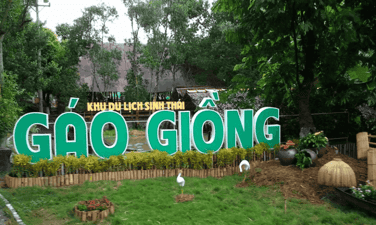
Gao Giong eco-tourism area
Gao Giong tourist area is an ideal place for you to take a sightseeing tour and enjoy garden life in the West. This is one of the few ecological areas that still retains almost all the wild characteristics of the Southern region and is known as "miniature Dong Thap Muoi". Gao Giong eco-tourism area is located in hamlet 6, Gao Giong commune, Cao Lanh district, Dong Thap province, only about 17 km from Cao Lanh city center. From Cao Lanh city, follow the route towards Tan Nghia commune, then continue to Gao Giong commune, you will see a sign leading to Gao Giong tourist area. Previously, Gao Giong was a deserted land, heavily contaminated with alum, with only a few species of flora and fauna living. But thanks to the investment and renovation process, Gao Giong has developed into a familiar resort destination for tourists from all over. The scenery here is still wild and quiet, very suitable for visitors to immerse themselves in nature and enjoy fresh air. The ideal time to travel to Gao Giong is from September to November when the West is in flood season. During the flood season, the water covers the fields, turning Gao Giong into an oasis amid the vast sky and water. The yellow of the Sesbania flower, the purple of the water lily mixed with the pink of the lotus petals, and the lush green of the Melaleuca forest emerge. In the fields, white storks diligently search for food, creating a breathtaking scene. The lotus fields - where thousands of red comb herrings gather here to dance and bustle all day long. On the herb feeding grounds, thousands of bold birds with red combs on their blue feathers leisurely pluck fresh stems. Sometimes they crow with beautiful dances. If you want to visit the bird garden, visitors can go on small boats down the green canal with village girls in Southern-style Ba Ba dresses or ride bicycles around the fields. But tourists often prefer to visit by waterway so that they can weave through the canals to admire the scenery, enjoy the feeling of floating on the water, weaving through each cajuput forest, listening to the welcoming sounds of birds singing. … Those who have been to Gao Giong tourist area have the overwhelming feeling of being lost in the land of birds. This is home to 15 bird species and hundreds of aquatic species. The birds pose gracefully, spread their wings and then land quickly, so visitors have to quickly take pictures to capture those beautiful moments. Not only that, Gao Giong is also covered by the vast green of thousands of hectares of forest with all the typical tree species of flooded areas such as: cajuput, gao, sesbania, reeds, wild rice, etc. You will feel excited when you see with your own eyes precious birds such as the copper-billed herring, teal, gong, mallard, heron... living and nesting. Most numerous is still a flock of tens of thousands of white storks, making this Melaleuca forest considered the largest stork garden today in the Dong Thap Muoi region. At dawn or dusk, Gao Giong Melaleuca forest is lively and bustling with the sounds of birds calling and flocks of white storks returning to their nests from all four directions. After hours of canoeing, you can climb up to the 18m high observation deck to see the surrounding panorama and admire the vast green of cajuput, rice, energy forests... Spread your arms wide, breathe the fresh air. peaceful, and you will feel like you are holding a beautiful natural picture in your heart, an indescribable feeling of peace. In Gao Giong, there are also many folk games that help Dong Thap tourists understand more about a part of Southern cultural life. If you come here in a group or group of friends, don't miss the opportunity to 'play hard, laugh freely' with the games. For those who like quiet, you can choose the elegant hobby of fishing to both get results and peacefully enjoy the wonderful atmosphere here. When visiting Gao Giong eco-tourism area, don't forget to go to the food court to enjoy all the Western specialties. Typical dishes include imitation worm leaves dipped in tamarind sauce, grilled mice, flexible fish cooked in sour sesban soup, grilled snakehead fish with lotus buds, cool vegetables, braised fish sauce dipped in coconut vegetables, steamed snails with pepper, pancakes... Especially The rice dish wrapped in lotus leaves is delicious and rich in the flavor of the lotus lagoon. Sitting in the middle of the lagoon having lunch is an extremely enjoyable experience. There is nothing better than delicious food, cool breeze, and the faint scent of lotus. The dishes will become a little more flavorful with a glass of sticky rice wine mixed with cajuput honey. If you have the opportunity to travel to Dong Thap, do not miss a visit to the Gao Giong eco-tourism area, this "green oasis" will give you typical experiences of the southern region of the river and downstream areas. will take you on a tour through the Melaleuca forest, relaxing with the sound of birds chirping or delicious garden dishes will be things you will never forget about this wonderful tourist area.
Dong Thap
8570 view


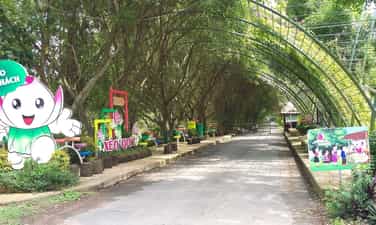
Xeo Quyt relic site
Dong Thap has many historical relics, of which Xeo Quyt is one of the meaningful tourist destinations, leaving many beautiful impressions in the hearts of visitors. Xeo Quyt relic area with an area of about 50 hectares, including 20 hectares of primary cajuput forest, belongs to 2 communes My Hiep and My Long, Cao Lanh district, Dong Thap province. The historical relic combined with the Xeo Quyt ecological area will give visitors the feeling of being lost in a primeval forest with wild natural scenery. Visiting Xeo Quyt tourist area in the dry season, you will weave along zigzag trails more than 1.5km long under cool cajuput trees to get deep into the base. During high water season, on dinghies, guerrillas in ba ba shirts, bandannas, and duck-eared hats take tourists through small, pristine canals to reach relics hidden in the vast melaleuca forest. If you go during the lotus blooming season, you will be able to see a beautiful natural picture typical of Dong Thap Muoi. Xeo Quyt was the Revolutionary base (from 1960-1975) of the Dong Thap Provincial Party Committee that led the people in the resistance war against the US. During the resistance war, Xeo Quyt suffered many bombs and bullet storms from the enemy. But with national spirit, courage, endurance of danger and strategic intelligence, the army and people of Dong Thap turned the situation around, overcame difficulties, and brought victory to their homeland and country. Recognized as a national historical site in 1992, Xeo Quyt is a tourist destination that contains many interesting things of pristine nature and is a place that preserves traces of the arduous struggle period of Dong Thap's army and people. . After sightseeing and having fun, the Xeo Quyt food court and restaurant with a strong rural feel will be an ideal stop for you to enjoy the famous specialties of this country, such as: Grilled snakehead fish with lotus, and mice. Grilled fields, sour eels, grilled frogs, fish hotpot... What could be more interesting than eating rice while enjoying and exchanging amateur music, then freely exploring and visiting the primeval cajuput forest and fishing? entertainment, or hang a hammock to lie down under the smooth green canopy of Melaleuca forest... With the strength of natural conditions, Xeo Quyt still retains its wild features and idyllic rural setting. Xeo Quyt is truly a very special stop and is suitable for those who want to temporarily get away from modern life, full of busy pressures and tensions, to find a quiet, rustic place. At the same time as a cultural and historical destination, Xeo Quyt is also a place that connects past eras, increasing pride and love for the homeland and country.
Dong Thap
8795 view


Tram Chim National Park
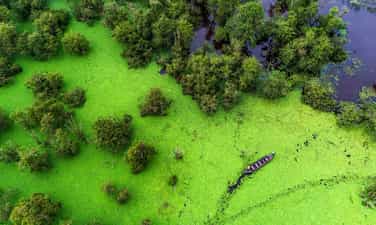
Tram Chim National Park is a land located in the territory of 7 communes (Tan Cong Sinh, Phu Duc, Phu Tho, Phu Thanh A, Phu Thanh B, Phu Hiep), Tram Chim town in Tam Nong district. Tram Chim National Park has a total area of more than 7,500 hectares and is a typical miniature model of the Dong Thap Muoi region, with a diverse ecosystem, where visitors discover the characteristics of the Mekong River Delta. This land of "six months the fields are dry and the grass burns, six months the fields are flooded with white water" is where rich vegetation grows with more than 130 different species. The fauna here stands out with a rich water bird system including 233 species, belonging to 25 genera and 49 families. Of these, 88% were found in the dry season, accounting for 1/4 of the total number of bird species discovered in Vietnam. And especially the Red-crowned Crane, the largest in the Crane family - an invaluable natural asset of Tram Chim National Park in Dong Thap. The fish system in Tram Chim National Park is equally rich, playing both an ecological balance and a food source for birds. Among them, there are a number of fish species in the Vietnam Red Book such as: Com fish, Tiger Cobra fish, Male Seahorse fish, Flying fish, Euc fish, Ho fish... Tram Chim National Park is located about 160km from the center of Ho Chi Minh City and the road is quite easy to travel. From Saigon, you just need to go straight along Trung Luong - Tan An - Tan Thanh highway. When you reach the My An - Moc Hoa intersection, you turn to Truong Xuan and drive a little further to reach Tram Chim town. Then you will see many signs leading to Tram Chim National Park. Just follow the signs and you'll get there. Located about 35 km away from Cao Lanh city center, the road to Tram Chim National Park is quite easy. You can refer to the following suggested travel routes. Starting at Cao Lanh city center (Cao Lanh City children's park, April 30 street) - follow Highway 30 (NH30) to the intersection near Thanh Binh district medical center - continue to turn right to Tram Chim following the road signs. From Tam Nong district of Dong Thap province, you run straight across Tram Chim bridge and then continue about 800m to reach the conservation center of Tram Chim National Park. Remember to look on the left side. The reasonable time to travel to Tram Chim is the floating water season from August to November of the lunar calendar (around September - December of the solar calendar) which is the tourist season to Tram Chim National Park. The landscape is flooded, lush green, dotted with pink lotus flowers and blooming water lilies. The source of produce becomes abundant and birds seem to gather here to party. Around this time, it is also the bird breeding season. Here, visitors have the opportunity to witness firsthand the life and proliferation of birds, which is an interesting thing. Thousands of birds compete to feed each other (typically the red sandpiper and gong coc), demonstrating sacred motherly love and bringing environmental education to the forefront for tourists from near and far, while at the same time having the opportunity to forever preserve the beautiful image of the good land where birds perch. This season is also an opportunity for you to participate in interesting activities such as: Rowing a dinghy to experience life in the flooded area, you will be able to personally carry out the livelihoods of flood zone residents such as spreading nets, laying thatch, placing shelters, or trying your hand at fishing at Tram Chim Tam Nong... especially, there is also the pleasure of hunting field mice, a specialty of this land. In particular, visitors can participate in harvesting sky rice, also known as ghost rice, a very special rice species because in the flood season, other herbaceous plants will be submerged by water. Only sky rice is the only one that grows and grows. Wherever the water rises, the rice will rise. This will be a memory of the ancient life of Dong Thap Muoi residents. In addition, in the dry season from December to May of the lunar calendar (around January to June of the solar calendar) is the season to watch the dance of red-crowned cranes in Tram Chim National Park. Because unlike many bird species in the area, red-crowned cranes only forage on the ground, so during the flood season in Dong Thap Muoi, they have to go looking for food elsewhere. Therefore, red-crowned cranes can only be seen in the dry season, most easily seen from February to May every year. You will have the opportunity to sit on a canoe (tac tong) weaving along the cool green canals, watching all kinds of birds flying around looking for prey, calling out to the noisy flock throughout the space. Flocks of hundreds of birds spreading their wings create a peaceful and charming scene. The boat follows the water, taking you to admire the beauty of fields of pink lotus, white lotus, heavenly rice, golden rice... stretching in the sunshine. A few robins, with bright red crests, dark green feathers, and fluttering tails, kept hiding and appearing in the grass as if they were playing hide and seek with tourists. The boat rowed through a small canal, weaving through the cajuput trees. Between the cajuput forests, a vast green grassland sways with the wind. The feeling of being in harmony with nature is wonderful. When you reach the lookout platform, the boat will stop completely so you can climb to the upper deck, enjoy the panoramic view of the immense green of Tram Chim National Park, relax with the gentle breeze, feel the closeness to nature and find strange peace. Another very interesting thing at Tram Chim is watching the royal soul. The sun is like a silver-coated ball surrounded by colorful halos that slowly sink to the horizon. The entire river area suddenly turned pink and radiant. The afternoon sun splashes on the water's surface with variegated colors created by a magical, multi-colored mixture: bright yellow, orange-pink, bright white... truly a masterpiece of nature. After the journey to explore Tram Chim National Park, you will have the opportunity to sit on a cool thatched hut in the middle of the forest or on floating rafts, enjoying delicious rustic dishes with country flavors such as: grilled snakehead fish, fish braised with water lily, steamed snails with pepper, crab hotpot, lemongrass steamed eel, crispy fried fish cakes, dried snakehead fish, catfish, grilled steelhead fish. If you have the opportunity to come here during the lotus blooming season, you will also have the opportunity to enjoy many attractive dishes made from lotus.
Dong Thap
9091 view


Tan Lap floating village
Don't misunderstand Tan Lap floating village, there is a village inside, this place is a large primeval melaleuca forest and mysterious paths leading into the forest. This is considered a suitable place for those who like to return to wild nature and explore the river culture of the Southwest region. The reason for the name Tan Lap Floating Village is because in the past, when it was not planned, during the flood season around the 7th lunar month every year, people here often raised the floor to follow the water, looking from a distance like a floating village. The village floats on the vast water surface. Therefore, when planning this tourist area, the name floating village associated with the location of Tan Lap commune was given to the tourist area. With an area of 135 hectares, there is a buffer zone of 500 hectares planned to build a typical tourist area of Long An in particular and Dong Thap Muoi wetlands in general. Traveling to Long An, visiting this floating village of Tan Lap, you will be immersed in a typical wetland with habitats of melaleuca forests, lotus - lily, water hyacinth, ghost rice typical of the area and the residence of many people. type of animal (bird, stork, fish...) The floating village is an eco-tourism area with a landscape that changes greatly with the seasons. If you wonder when Tan Lap floating village is most beautiful? The answer is to travel to the West during the flood season, which is from August to November of the lunar calendar every year. During the floating season, if you stand from above and look down, you will see Tan Lap floating village like a deep green island in the middle of a vast sea of water. All create an extremely vivid natural picture. Coming to Tan Lap floating village eco-tourism area, visitors can walk on the path through the melaleuca forest, take a boat down the Rung canal, and immerse themselves in nature on a distance of more than 3km around the melaleuca forest by cable boat. . After buying tickets, visitors will start weaving along the canals by small canoes among the melaleuca forests. The main canal leading into the center of Tan Lap Floating Village is called Rung Rach. It will be very peaceful when tourists sit in canoes floating on the forest creek, smell the incense of cajuput, watch the lotuses and lilies blooming in a corner of the river, watch the birds fluttering in the blue sky, occasionally leaning along. a tide. Coming to Tan Lap Floating Village, the interesting thing is to walk on a 5km long road with many branches through the deep green cajuput forest. Melaleuca here is well protected, creating a vast green patch emerging in the middle of the plain. This route is elaborately built from small woven panels 1 meter wide connected together, distributed into many branches, nestled in the Melaleuca forest. If you love 'virtual living', you definitely cannot miss this unique frame. Following the winding road, visitors will go from one patch of forest to another. Along both sides of the road are tall cajuput trees that cast a cool shade on the road. The light seeping into the path makes us feel like we are lost in a garden in a fairy tale. In the dry season, melaleuca leaves fall all over the road, so the excursion will have the rustling sound of footsteps stepping on dry leaves echoing in the deserted forest. It is that romantic feature that makes some people compare this to the "love street" of Tan Lap floating village. Wandering in Tan Lap primeval cajuput forest, you will encounter many species of insects, somewhere the sound of birds singing, the sound of frogs calling, hearing the smell of mud and moss, feeling like you are lost in another world full of adventure. save, mysterious. After a long walk, we reached the 18m high watchtower lying in the middle of the sky. Up this watchtower, visitors can only see a part of the Melaleuca forest. If you want to see the whole scene, you have to go up to the 38 m high watchtower. These watchtowers are both a place to watch for fire and a place for visitors to zoom out and enjoy the natural beauty of the Melaleuca forest. Also from this location, every morning or afternoon, visitors will witness flocks of white storks and flocks of jet black gongs with up to several hundred birds flying back after a day of looking for food. The next destination is the X-shaped Bridge made up of two interwoven roads between a vast field of guns. This area possesses an extremely attractive landscape, especially from 7 to 9 a.m. when the water lilies bloom and birds begin to chirp together to search for food. All create a joyful, musical harmony. Following the path, visitors will come to the "Bird Taming Area", where Tan Lap floating village preserves and nurtures birds that come here to nest and live in the natural environment. This service is only for tourists staying overnight at the hotel, because the custom of storks is that they often gather to reside on the island in the evening, when dusk has just fallen. The scenery on both sides of the entrance is surrounded by shady cajuput trees and vines. In particular, this place has an extremely rare Ma rice variety that is also being preserved very successfully in the area around this place. Going deep into the forest, you will meet Crescent Lake - where lotus flowers and water lilies bloom brightly. In the middle of the lake, there is a dune of soil discolored by alum contamination, looking like a "mini-desert" amidst the surrounding green oasis. According to experience, visitors must have good physical strength to come here because the lake is located quite deep inside the Melaleuca forest. In Tan Lap Floating Village there is also a folk games area. This area is like a small oasis, surrounded by lotus and water lily ponds spread over an area of 100,000 m2, clear blue water, with many types of fish growing abundantly. This is not only a place to experience some folk games such as seesaw, monkey bridge climbing... but also an ideal sightseeing and fishing spot to process them into your favorite dishes. This rustic and rustic hobby will bring visitors comfortable moments of fun and relaxation. If you have come to Tan Lap floating village, you should not miss the honey bee farming area here. Here, you will be introduced to the beekeeping process and how to collect honey by the artist. In particular, you will also be invited to try a refreshing drink made from honey.
Tay Ninh
7488 view


Lang Sen Wetland Reserve
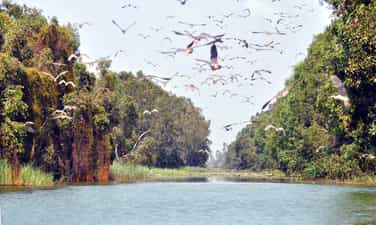
Nature has gifted Long An province with Lang Sen land, which has been recognized as the world's Ramsar Wetland Reserve and has become a unique destination on the Long An tourist map. Lang Sen's full name is Lang Sen Wetland Nature Reserve located in the low-lying terrain of Dong Thap Muoi on the area of Vinh Loi, Vinh Dai and Vinh Chau A communes in Tan Hung district, Long An. Lang Sen Wetland Reserve is a miniature, attractive Dong Thap Muoi, with an increasing number of domestic and foreign tourists and researchers coming to enjoy and learn. Natural lotus is the original species here, giving rise to the name Lang Sen, meaning the surrounding area has many wild lotuses growing. Being a large nature conservation area (more than 5,000 hectares), Lang Sen conservation area has a large number of natural landscapes such as: Melaleuca forests, islands, swamps, rivers, or even plains. grass (you have to come in the dry season to see the grasslands). Coming to Lang Sen Wetland Reserve, visitors can not only explore the rich and diverse ecosystem, see over 150 species of plants showing off their colors on vast grasslands flooded seasonally, with special images. characteristic of lung, chrysanthemum and especially melaleuca, lotus, water lily... but also have the opportunity to let your soul follow the fluttering paths of 148 species of water birds. There are over a dozen species listed in the Red Book. In addition to the storks, magpies, black ibises, red-headed cranes, etc., there is also the Red-crowned Crane, a bird listed in the World Red Book. Particularly, the core area of Lang Sen conservation area has 12 sub-areas surrounded by Vam Co Tay river and separate from residential areas. Under Canal 79 of this conservation area is the habitat of more than 78 freshwater aquatic species, including 27 endemic species of the Mekong River such as: Catfish, snakehead fish, tilapia fish, flexible fish... With a diverse terrain that is characterized by a wetland ecosystem of international importance for biodiversity and conservation, Lang Sen has been recognized by the Ramsar Convention as one of nine land conservation areas. Ramsar flood in Vietnam and 2,227th in the world. From Tan An city (Long An), follow Highway 62 about 90 km toward Canal 79 to reach Lang Sen Wetland Conservation Area (Ramsar Lang Sen). In any season, the natural scenery here is beautiful. The most ideal time to travel to Lang Sen is the Melaleuca flowering season and floating water season. Taking a canoe along the small canals in the reserve with the gentle scent of decades-old melaleuca forests and fields of lotus and water lilies, visitors feel lost in the wild world. Every year, during the flood season, this place is home to hundreds of thousands of birds. Each season the birds come home to nest, it is estimated that they can cover an entire patch of forest about 50 hectares wide. For a long time, mentioning Dong Thap Muoi is referring to a region rich in resources and products of the Southern region, especially during flood season in the West, people often immediately think of Dong Thap province, or else An Giang. Giang, but few people usually think of Long An. But in reality, the lowest and most characteristic area with the most products of Dong Thap Muoi in the flood season is Lang Sen Wetland Conservation Area. This geographical indication will help tourists know and find more about Long An tourism, to experience and explore. The place contains fascinating and mysterious stories about birds and fish, and is also a place that preserves a famous wilderness area of the Southwest since ancient times.
Tay Ninh
7050 view


Phuoc Loc Tho ancient village
Phuoc Loc Tho ancient village is located on provincial road 824, in hamlet 2, Huu Thanh commune, Duc Hoa district, Long An, where the region transitions from the Southeast to the Southwest, creating a unique identity. It has both the beauty of the Mekong Delta and the charm of the Southeast region. With 22 ancient wooden houses across three regions of Vietnam, and hundreds of precious antiques, in 2012, the Vietnam Book of Records established a record for owning the most ancient wooden houses with the richest carved patterns in Vietnam. Male. The main gate to the tourist destination "Phuoc Loc Tho ancient village" is stylized like an ancient city gate. Entering Phuoc Loc Tho village, the first impression visitors encounter is a large rockery and a gurgling stream day and night. Ancient houses ranging from 80 to 150 years old have been preserved and restored almost intact, keeping their ancient features. Harmonious arrangement, methodical planning in airy space in harmony with nature. The zigzag roads lined with rutted stones and green grass, on both sides are bamboo bushes, areca rows, and many flowers and landscapes... make visitors feel relaxed. The Hue houses in the ancient village have a royal style with gilded lacquer and carved dragons and phoenixes very delicately and meticulously in every small detail. The Western-style pillared houses are 5 rooms wide, 3 wings, and all are made of oak wood. Each beam, rafter, and column in the beam houses is elaborately carved with delicate carved lines. In Phuoc Loc Tho, there are 6 stilt houses of ethnic groups in the Southeast and Central Highlands regions such as wooden pillar bases in the shape of a familiar basket of ethnic people. This place also stores daily items of Central Highlands people. In the complex of Phuoc Loc Tho ancient village, the most famous is the "Cong" house with 104 columns, over 100 years old, very massive, designed according to the ancient architectural style of the North, the columns in the main room are inlaid with mother of pearl. Decorated with the four sacred dragons, unicorns, tortoises, phoenixes and the four precious apricot blossoms, orchids, chrysanthemums, and bamboos, the walls are elaborately carved with themes of fruits, birds, and animals, showing magnificence, splendor, and majesty. In addition to the collection of ancient houses, in Phuoc Loc Tho there are also antiques from the reign of Lord Nguyen and King Bao Dai such as dragon sieves painted with vermilion and gilded with gold or sets of ancient coins also displayed here. Besides, Phuoc Loc Tho is also a place to preserve daily life items of many ancient social groups from kings, military officers, landowners to people. Cultural spiritual objects of the Vietnamese people are made of a variety of materials such as wood, iron, bronze, and ceramics, diverse in age and rich in types. Including antique items with a modern style from the time when the French colonialists first came to colonize Vietnam, such as telephones, radios, gramophones, cameras, night lights, etc. At the octagonal quadrangular small house (the home of the great mandarins of the Nguyen Dynasty), there are a set of three bronze statues of the same age, vividly depicting Buddha Tathagata, Avalokiteshvara and Ksitigarbha Bodhisattva. There are seals engraved on the backs of these statues. Because of the ancient and unique features of Phuoc Loc Tho Ancient Village, this place has become the filming location of many historical films. Leaving the sightseeing area to the entertainment area of Phuoc Loc Tho ancient village, visitors will admire nearly 300 different types of orchids. In the ancient village complex of Phuoc Loc Tho there is also a pagoda modeled after the One Pillar Pagoda in Hanoi. The Ancient Village also serves a variety of dishes in a charming space. In particular, Long An tourists coming here will enjoy Long An specialties and fresh fish caught directly from Vam Co River.
Tay Ninh
6775 view


Tan Lap seaport
Tan Lap seaport, also known by another name, Long An international seaport, is one of the great prides of Tan Lap people in particular and Long An in general. The address of Long An seaport is located at DT19, Tan Lap commune, Can Giuoc district, Long An province. This is a beautiful location not only in trade and travel but also in tourism. Tan Lap seaport is located right at the mouth of Soai Rap river. Soai Rap is a distributary of the Saigon - Dong Nai river system. This river is also the natural boundary separating Can Gio district from three other districts, including Can Giuoc district. In addition, Tan Lap seaport is also located opposite Nha Be district and Can Gio district of Ho Chi Minh City. This place is only 14km from the East Sea. With a strategic location at the hinge of the East and Southwest, Tan Lap seaport is only 38km from Ho Chi Minh City along Highway 50, visitors can move here very easily. There are two main directions from Ho Chi Minh City to Tan Lap seaport. The first direction is to follow Au Co, Highway 50, Can Giuoc bypass, then go to Highway 50 and finally follow Provincial Road 19 to Tan Lap seaport. The second direction is to follow Phan Van Hon, National Highway 1A, Doan Nguyen Tuan, Road 234, Provincial Road 826 and finally follow Provincial Road 19 to Tan Lap seaport. Looking at the tourism aspect, Tan Lap seaport does not have familiar entertainment spots or tourist activities that tourists still see and experience in other places. However, the tourist attractions of this place are the scenery and cuisine. Located opposite the banks of Soai Rap River, Tan Lap beach has a cool, airy atmosphere suitable for relaxation and rest. Coming here, visitors will find a quiet moment, slow down to feel everything around them. The landscape at Tan Lap seaport also has its own romantic and charming features. Rivers and clouds make people's souls peaceful. Furthermore, the sunrise and sunset at this place are also a scene worth enjoying and admiring. Tan Lap seaport is definitely a new and exciting check-in location suitable for young people's virtual life. Another great point of Tan Lap seaport is the fresh seafood sold here. Seafood is weighed and stored in plastic bags. The price of seafood is also reasonable, it can even be said to be quite cheap. If you want to enjoy it right away, visit the restaurants right there. Fresh seafood is grilled or dropped directly into the hot pot to retain its unmatched sweetness and freshness. Visitors cannot miss the famous delicacies here such as grilled shrimp, tamarind-roasted crab, octopus dipped in vinegar, snail dishes and steamed clams with lemongrass. Tan Lap Seaport is a suitable destination for tourists who love new experiences, love backpacking or are simply seafood lovers who want to enjoy the best quality seafood. Wishing you a smooth trip and many wonderful memories.
Tay Ninh
6349 view


Cat Tuong Phu Sinh eco-tourism area
Traveling to Long An, you will see lush fruit orchards all year round, vast rice fields, enjoy fresh air from the immense melaleuca forests in Tan Lap floating village, and especially travel around the world at the world wonder park in the Cat Tuong Phu Sinh eco-tourism area. World Wonder Park is located at Cat Tuong Phu Sinh urban - eco-tourism area, Provincial Road 9, My Hanh commune, Duc Hoa, Long An. From the center of Saigon, if you want to come here, you go straight from Truong Chinh Street to Xuyen A Street. From here, you run past Gieng Nuoc Crossroads. At the next intersection, turn left onto Nguyen Van Bua Street, keep going straight until you reach DT9, then follow the signs on the road to get there. Cat Tuong Phu Sinh eco-tourism area is the first urban area combined with commercial tourism in Vietnam, attracting a large number of tourists, especially young people, to take virtual photos. You should go early in the morning, around 6-8am, or in the afternoon from 4-6pm to get the best pictures. Traveling to Long An, coming here you will feel like the world is shrinking at the wonder park and freely check-in with famous symbols from countries around the world such as: Sydney Opera House model, Italy's famous Pisa Tower, Taj Mahal Mausoleum - India, Eiffel Tower - France, Statue of Liberty - Symbol of New York, 9 onion-shaped spire towers of St. Basil's Cathedral in Russia,... just like the real thing. Just a few "divine shooting angles" and no one will think you are standing in Long An. The main material to create these wonders is fiberglass. They are arranged alternately, in the middle is a large lake with small fountains to create coolness. Admission is free, so you can take many extremely "European" photos at a very "bargain" price. The tourist area is more than 79 hectares wide, is a complex urban area with full internal amenities with an ecological lake of up to 7 hectares and many trees creating a peaceful scene that makes you feel comfortable, peaceful and clear. In addition to models simulating wonders in the world, at Cat Tuong Phu Sinh tourist area, there are many other attractions not to be missed such as the romantic An Tay Ho eco-tourism area or the Southern rural museum with rustic scenery, ponds, lakes, and gardens very close to each other. Or you can visit the childhood park for children, where there are large dinosaurs and many cartoon characters.
Tay Ninh
5628 view


Binh Chau primeval forest
Binh Chau National Forest is a nature reserve located in Ba Ria - Vung Tau province, about 150 km southeast of Ho Chi Minh City. The national forest has a large area, with an area of about 11,000 hectares, including land and sea areas. With pristine natural landscapes, this national forest is an ideal destination for those who love exploring nature and want to learn about the diverse tropical ecosystem. Binh Chau National Forest is famous for its rich flora and fauna. This is home to many rare animals and special plants, including primates, deer, monkeys and many rare plants. This creates a diverse and attractive living environment for researchers, scientists and nature-loving tourists. With a convenient location and impressive scale, this is an impressive natural tourist destination, where visitors can participate in a variety of activities such as walking, trekking, cycling, forest exploration and rafting. Immerse yourself in the peaceful beauty of nature. Binh Chau National Forest attracts a large number of tourists to visit because of its fresh, gentle air and diversity of animals. With a rich ecosystem, the National Forest is home to hundreds of diverse animal and plant species. Visitors have the opportunity to discover rare birds, see many primate species living here as well as learn about the diversity of insects. The forest is also the habitat of many rare and unique plants and trees, creating a beautiful natural landscape. Not only does it have biodiversity, Binh Chau National Forest also provides a peaceful space. When entering the forest, visitors will enjoy the fresh air, the sound of birds singing and the sound of gurgling water from streams and small rivers. This creates an ideal space for you to immerse yourself in the peace, greenness of nature and find balance in life. Exploring Binh Chau National Forest gives visitors an interesting and rewarding experience of biodiversity and natural beauty. This is a place to connect with nature, enjoy beautiful views and learn about the value of environmental conservation. Get ready to immerse yourself in the harmony between people and nature in this special forest. Visitors can refer to some of the most suitable and convenient times to visit this famous nature reserve: Spring (February - April): This is the time when forest plants and trees begin to grow green and flowers bloom, creating a lively, enchanting landscape. Temperatures range from 20°C - 30°C, cool and airy, making it the ideal season to explore the national forest. Summer (May - August): Summer in Binh Chau National Forest is quite hot and can be rainy. However, the rains increase the freshness and create a mysterious jungle scene. This is also a good time to participate in swimming and bathing activities. Fall (September - November): Fall brings cooler and cooler air, making it a great time to visit national forests. The trees turn bright yellow, creating a poetic and romantic scene. Choosing when to visit depends on personal preference, but visitors should monitor weather and climate conditions before planning for the best experience.
Ho Chi Minh City
5243 view


Bach Dinh
Bach Dinh is called by the French name Villa Blanche meaning white villa, located on the side of a large mountain in Vung Tau city at 4 Tran Phu Street, Ward 1, City. Vung Tau. The front facing the sea and the back leaning against the mountain give Bach Dinh a solid position. Bach Dinh is a 3-storey building, 19m high, 25m long, the entire house is whitewashed, with domed doors and tiled roof. When visiting the villa, visitors can see French architecture from shape to decoration with very artistic decorative edges. White Palace was built from 1898 to 1902, used as a resort for the Governor General of Indochina, Emperor Bao Dai and many Vietnamese Presidents. This is also where the French colonial government imprisoned King Thanh Thai from September 12, 1907 to 1916. There are 2 ways to get to Bach Dinh. If you go by car, there is a winding road running under the forest of bamboo trees leading up to the lobby. There is also a walking path through 146 ancient, discreet steps between two rows of aged porcelain. Bach Dinh has a strong French breath, coming here you can see the characteristics of French architecture. The basement of the villa is used for cooking, the ground floor is used as a place to receive guests. The ground floor is also decorated with ancient artifacts used for interior decoration such as: Twin vase with adoring birds, Royal sofa set dated Khai Dinh year 1921, pair of African elephant tusks 170cm long, set of 5-piece triptych Thai Phuc – Loc – Tho. Because of the bold French architecture, the upstairs has many windows, each window has a different view, looking out at the surrounding scenery is very interesting, standing from here the cool wind blows through the window. The airy floor is suitable for a place to rest. The raw materials to decorate Bach Dinh are mainly enameled porcelain. When walking around, visitors will see on each wall are the faces of beautiful European women, a pair of peacocks spreading their wings to show off sparkling silver dots, a pair of carp winding as if they want to turn into dragons... Every detail is sharp. enhances the beauty of Bach Dinh. In particular, visitors cannot help but be surprised by the 8 porcelain busts, in the style of ancient Greek art, surrounding 3 walls of the mansion. At dawn or dusk, the sunlight shines in, making the statue even more sparkling and magnificent. Bach Dinh not only attracts tourists by its architecture but also by its poetic scenery. When arriving here, visitors cannot help but be surprised as if they are lost in an ancient castle in the middle of a mysterious forest. In the rainy season, the forest surrounding Bach Dinh is endlessly green, each branch of the pine tree spreads out an umbrella to cover the path. During the falling leaves season, you can see plumeria flowers everywhere, the entire road to Bach Dinh is filled with red, white, and bright pink, both the road and the garden. With a prime location, from Bach Dinh, you can see the Front Beach, have a panoramic view of the sea, and visitors can feel the breath of Vung Tau city. Currently, Bach Dinh is used as a museum to display a collection of rare ceramics of the Kangxi period salvaged from ancient ships that crashed in the Hon Cau - Con Dao area, cannons and many other valuable artifacts.
Ho Chi Minh City
6127 view


