Tourist destination

Miss Cai Mon garden, Lach market
Rivers laden with alluvium and green orchards laden with fruit are the trademarks of the Western provinces. One of the provinces in the Southwest region that develops eco-tourism of fruit picking in gardens is Ben Tre. Visit Cai Mon fruit garden, Cho Lach district, you will be truly surprised at the greenness and richness that nature has bestowed on this land. Cai Mon - Cho Lach fruit garden is known as the "kingdom of fruits, seedlings and ornamental flowers" of Ben Tre province. This land attracts tourists because of the beauty of a pure Southern countryside and romantic village roads winding around lush green gardens, countless flowers and fruits... If you want to find Cai Mon orchard, ask for directions to Vinh Thanh commune, Cho Lach district, Ben Tre. From the center of Ben Tre city, cross Ham Luong bridge, follow Highway 60, go about 4 kilometers to Tan Thanh Binh - Mo Cay Bac intersection. Then continue to turn right, follow provincial road 882 to connect with national highway 57 for about 10 km more. According to elders in Cai Mon fruit village, this name has existed for a long time, before the name Vinh Thanh commune. The word "Cai" in Cai Mon means large canal. Cai means "little river" (this is the ancient language of the Funan people). Southerners consider big things to be Good, such as main roads, bookies, etc. "Mon" is a corrupted pronunciation of the word "Mun" (Khmer means honey). Writer Son Nam, who specializes in writing about Southern culture, said that in the past, on both sides of the canal in Cai Mon land there was a lot of honey because this was a land of luxuriant fruit trees, with flowers all year round. Full of branches, it attracts bees to nest and suck honey. Therefore, the name Cai Mon originates from such a meaning. Cai Mon fruit gardens are surrounded by four rivers of the Co Chien and Ham Luong streams, so the climate is mild all year round and the trees are luxuriant and lush. This place has become a rich garden with delicious fruits famous throughout the Mekong Delta such as rambutan, grapefruit, mango, longan, plum... and the specialty Cai Mon durian with yellow rice and flat seeds. Visitors can visit Cai Mon garden any time of the year, regardless of season. Every year, Ben Tre province organizes the Cho Lach delicious and safe fruit festival in the summer, usually on the occasion of Doan Ngo festival (5/5 of the lunar calendar), this is also an ideal time for tourists to love fruit. trees to visit and enjoy. Coming to Cai Mon - Cho Lach garden, you will be attracted and attracted to your eyes from the moment you step into the garden. The luxuriant fruit bunches and bent branches seem to want to "invade" the space of the leaves. Fruitful durian gardens, ripe red rambutan gardens laden with branches, strawberry gardens laden with fruit dangling in clusters, and mangosteens, mangosteens, oranges, tangerines, mangoes, grapefruits, longans... It's not wrong to say this place is the kingdom, the largest fruit granary of Ben Tre in particular, and the Southwest region in general. Only then can we see that nature is so favorable to the land of Cai Mon - Cho Lach, then we can see how patient and talented the farmers of this land are in order to take care of and create lush orchards. buckling branches like that. Not only can visitors take a walk in the garden, they can also enjoy fruit on the spot and have the option to buy it as gifts for relatives. In particular, following the gardener's footsteps, you will also be introduced and instructed on how to care for each type of fruit tree to have the most productive and quality fruit seasons. One very interesting thing when traveling to the West, visiting Cai Mon fruit garden, tourists who want to stay can stay at a homestay (in a homestay). These can be said to be interesting experiences for any tourist. Traveling to Cai Mon fruit garden, visitors can also try many local specialties of the Southern region such as pancakes filled with mussels or rice snails, shrimp miles,... Or listen to the melodious melodies of amateur folk music, sweet and profound. Experience a simple, rustic life when participating in production and living activities with people in the river countryside. Not only are there fruit gardens laden with fennel fruits, Cai Mon is also known as the land of many types of ornamental flowers such as marigolds, chrysanthemums, bougainvillea, dahlias, carnations, raspberry chrysanthemums, etc. Every year, Cai Mon flower village provides the national market with hundreds of varieties of ornamental flowers and precious ornamental plants of all kinds. Cai Mon is a land of "spiritual geniuses", producing many talented people for the country, including the famous Truong Vinh Ky, one of the world's famous scientists in the 19th century, whose stele house still exists today. Memorial welcomes visitors. On the opposite side is Cai Mon Church, one of the oldest and largest churches in the South, built in 1872; The 9-storey bell tower, 56.52m high with 06 bronze bells cast in France with a total weight of up to 4,000 kg... is a sight not to be missed. Many visitors to Cai Mon share the same opinion that this is a "good land for birds to perch on" and it is difficult to forget Cai Mon because there are people there who are very hospitable, honest, and incredibly kind.
Vinh Long
8235 view


Be village tourist area
Lang Be Ben Tre tourist area is located not far from Ho Chi Minh City, only about 75km, so it is very suitable for short trips. Located at number 81B/6B, An Thoi hamlet, An Khanh commune, Chau Thanh district, Lang Be tourist area is considered one of the extremely attractive entertainment and resort destinations, especially in the summer or late summer. week. The reason it is called Lang Be is because this famous eco-tourism area is closely associated with the raft fish farming profession of indigenous people. This place will definitely be an ideal destination with garden scenery, charming rivers typical of the West, many interesting entertainment activities and countless delicious dishes waiting for you to enjoy. Lang Be tourist area has a cool, pleasant climate all year round so you can come here at any time. However, according to the experience of many young people exploring the coconut land, the most suitable time is still summer (from June to August). Because this is the time when the weather is dry, sunny, almost no rain, extremely convenient for you to move, visit rivers and experience many other outdoor activities. Moreover, this is the fruit harvest season in the West, so you can also enjoy countless famous fruits such as mangosteen, durian, jackfruit, grapefruit, rambutan... in the gardens in the area. Lang Be tourism. Because Lang Be tourist area is located quite close to Ho Chi Minh City, you can travel here by bus or motorbike. If you take a bus, you should choose the bus companies running the Western bus station route to Ben Tre with high quality and reputation such as Thanh Buoi, Phuong Trang, Minh Tam... However, because the road to the tourist area is quite good. It's simple, so you can go by motorbike for more convenience and initiative. Departing from the center of Ho Chi Minh City, you move to the West along National Highway 1A - Long An Province - Tien Giang Province - Rach Mieu Bridge - Ben Tre Province - Ca Chuoi Bridge - Lang Be tourist area . If you follow the route starting from the foot of Rach Mieu bridge, you will turn onto the road towards Con Phung tourist area, continue moving until you see a sign, then turn right across Ca Chuoi bridge. From here, you just need to run straight a short distance to reach Lang Be tourist area. As soon as you set foot in Lang Be tourist area, you will immediately be surprised by the natural scenery that is so poetic and charming but has a strangely close and familiar feature. This eco-tourism area is located right next to the riverbank and was designed to look like a miniature Southern village with a very simple and rustic natural landscape imbued with the coconut land of Ben Tre. Walking around the tourist area, you will definitely fall in love with the simple village roads, thatched-roof houses on the water's edge, green grasslands and nipa palm trees swaying in the wind, bringing a feeling of relaxation and comfort. . Moreover, Lang Be tourist area also possesses a fresh, airy atmosphere, completely separate from the dust and noise of urban areas, so it is very suitable for you to enjoy a wonderful vacation in the countryside. Rare peace. Because this place is located near the famous island complex of Long, Lan, Quy, and Phung, on the way to sightsee, you can also combine visits to these destinations. One of the most exciting and popular activities in Lang Be tourist area is participating in folk games. There is a diverse list of games for you to explore, such as swinging on swing bridges, single rope swings, group rope swings, driving over monkey bridges, hitting ditches to catch fish, making clay explosives, and canoeing. , wind the coconut leaf trumpet... These games are guaranteed to give you the feeling of reliving your mischievous, adorable and unforgettable childhood. Although not as large and rich as Cai Mon or Vinh Kim fruit gardens, in Lang Be tourist area there is also a quite lush and lush fruit garden. If you travel here during the ripe fruit season (around June to August every year), you can not only visit and admire the garden but also pick and eat all kinds of delicious, fragrant fruits. If you want to buy it, please contact the resort's staff to weigh it and pay. As the land of coconut trees and many famous river products, Lang Be tourist area will definitely bring you impressive delicacies. Indeed, here serves all the famous specialties of Ben Tre cuisine such as coconut tofu salad, grilled chicken with salt and chili, fried giant fish, crayfish hotpot, coconut weevils, coconut rice... A small note: if you go in a large group, remember to book a table and order in advance. Because this will help the staff prepare the food in the most thoughtful way and as soon as your group finishes having fun and sightseeing, they will be able to eat right away without having to wait long.
Vinh Long
8150 view


Lan Vuong tourist area
Lan Vuong tourist area is an extremely interesting sightseeing and entertainment destination in Ben Tre. Lan Vuong tourist area is located on provincial road 887, in hamlet 2, Phu Nhuan commune, about 5km from Ben Tre city. From pristine fields, it has been designed to create a garden-variety Culture - Sports - Tourism Area that attracts a large number of tourists from near and far. Traveling to Ben Tre, coming to Lan Vuong, you will not only enjoy Ben Tre's specialties but also enjoy fresh air without noise and dust, immerse yourself in green nature with gardens, sweet fruits, Ornamental flowers and rowing boats are very charming and poetic. The entertainment games at Lan Vuong tourist area all have a rustic character typical of the Western river region: Fishing and casting nets to catch fish, boating, digging ditches to catch fish, wading in fields to catch crabs and snails. The large, airy space of a coconut countryside will certainly make visitors flutter. In addition, you can also visit the green-skinned grapefruit garden, the hybrid wild boar farm, the goat farm... Coming to Lan Vuong, you can freely enjoy fruits such as: An Phuoc plum, Taiwanese mango, jackfruit. precious, gooseberry, star fruit... In addition, visitors can shop for handicrafts or enjoy typical dishes of the Southern region at restaurants in the tourist area. Not only is it an entertainment destination, Lan Vuong tourist area is also a picnic and camping location for many households and groups. The cuisine at Lan Vuong Tourist Area is also quite special, not delicacies but just simple, rustic countryside dishes. These dishes are all made from ingredients found by tourists participating in fishing or catching fish activities and many typical Southern dishes such as grilled snakehead fish, shrimp boiled in coconut water, free-range chicken. ...in the thatched huts and long houses roofed with nipa palm leaves, they are close to nature and no less luxurious.
Vinh Long
8534 view


Vinh Kim fruit garden
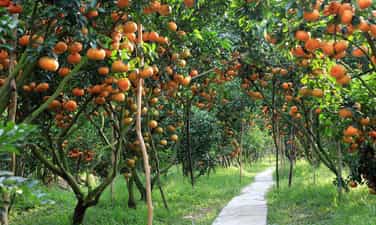
As one of the largest fruit gardens in the Southern region, in Tien Giang there are many famous fruit gardens such as fruit gardens inside the tourist area of Cu Lao Thoi Son and Con Lan Tien Giang. Among them, Vinh Kim Fruit Garden located in Chau Thanh district is still the most famous name and attracts a large number of people to visit every day. This place has a fresh, spacious and airy space, so it is extremely suitable for you to enjoy sightseeing, relax as well as enjoy many delicious and attractive fruits. Next summer is also the time when Vinh Kim Fruit Garden welcomes a large number of people to visit because this is also the time when fruits are in harvest season. Located about 70km from Saigon, if you travel to Vinh Kim Fruit Garden by motorbike, it will take you nearly 2 hours to get there. Depending on the vehicle you choose, the distance may be shorter or longer than 2 hours. After arriving in Tien Giang, you can ask local people for directions to the right place without worrying about getting lost. Below is the guide to Vinh Kim fruit garden that you should save before leaving. Dressed in a simple, rustic beauty, Vinh Kim Fruit Garden is the ideal destination for those who are looking for a peaceful, unhurried place to rest. The climate in the West is quite hot, but in return the green space inside Vinh Kim Fruit Garden has eased the harsh sun outside, creating an extremely cool place for you to comfortably rest and relax. At Vinh Kim Fruit Garden, many different types of fruits are grown such as Vinh Kim Lo Ren Star apple, durian, grapefruit, longan... Each type of fruit in harvest season radiates a fragrant aroma that makes anyone who orders it. When I come here, I can't help myself. Coming to Vinh Kim Fruit Garden, you will be "entertained" with a hearty, delicious and extremely attractive fruit party.
Dong Thap
7002 view


Missing the garden of Cai Be
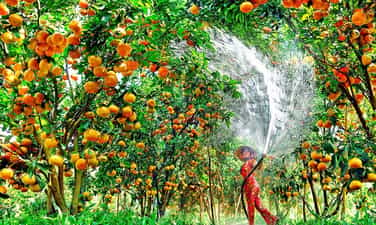
Cai Be garden is a large fruit growing area located along the banks of the Tien River and belongs to Cai Be town, Cai Be district, Tien Giang. Thanks to favorable natural conditions with fertile soil and a suitable climate for fruit trees to grow, the garden is always lush and full of branches. - Address: Trung Nu Vuong Street, Area 2, Cai Be, Tien Giang On a land area of about 1,500 hectares along the North bank of Tien River, there are many different types of fruit trees grown. In particular, the fruit trees here bear fruit all year round, with extremely attractive round and succulent fruit shapes. The sweet taste of the fruit is all thanks to the quality of the fertile alluvial soil that is deposited on the Tien River every year. Because they realize that the trend of exploring fruit gardens in the Mekong Delta is increasingly blooming, local people have launched tours that combine enjoying fruit right in the garden. They probably did not expect that the number of people responding would be so large. Many visitors are also interested in checking in at Cai Be garden to enrich their albums. If you are new to Cai Be Garden for the first time, you will probably be very confused and not know where to start. In fact, this garden is a large fruit growing area on the North bank of the Tien River, about 5km from Cai Be district, about 130km from the center of Saigon. If you depart from Ho Chi Minh City, you can travel according to the following plan. First we will move in the direction of National Highway 1A, then go straight on National Highway 1A through Long An, My Tho, Cai Lay to reach Cai Be district. After arriving at the district center, you should ask local people for the shortest route to Cai Be garden. To cover this distance it usually takes us about 3-4 hours by motorbike. According to the experience shared by many people, to relieve fatigue, we should visit My Tho to rest, eat and drink before continuing the journey to Tien Giang. However, it is best to choose the route on Ho Chi Minh City - Trung Luong highway, then continue in the direction of DT878 to National Highway 1A. This route we only have to travel about 110km. Cai Be garden owns a large area and accounts for 1/3 of the fruit tree area of the whole province. The garden is surrounded by canals and rivers, creating an extremely poetic space. It can be said that the most unique feature of this place is the diverse, colorful fruits hanging on the branches. When visiting, most people will feel like they are lost in the garden of Eden. The garden has Tien Giang specialties with strong Western imprints such as: Hoa Loc mango, Cai Mon durian, king orange, honey orange of all kinds... If you have enjoyed it, you will be aware of the differences between fruits. garden here compared to other places. After enjoying looking at the fruit trees with their branches, everyone can pick the fruit themselves right in the garden. Especially if you buy fruit right from the garden, the price is also extremely cheaper than in the city. Coming to Cai Be garden, you will admire a natural picture with bold characteristics of the river countryside, where we can immerse ourselves in the natural space and typical lifestyle of the river region. It is a rustic and simple life with gentle and simple people, erasing the hustle and bustle of urban life. At Cai Be garden, there is an area for families or groups of visitors to enjoy cuisine. Here we will enjoy many different specialties such as boneless snakehead fish, fried giant fish... with typical flavors of the region. Food prices here are considered reasonable, even quite cheap and not exorbitant. Fruit trees in Cai Be garden appear all year round so we can enjoy them anytime. However, the most ideal time to visit is around June - August. This is also the fruit harvest season, so the whole area will smell of the faint aroma of ripe fruit, which is extremely attractive. It can be said that coming to Cai Be garden, we will be immersed in the vibrant fruit harvesting atmosphere and love the sincerity and simplicity of the people of the West in particular and Tien Giang in general.
Dong Thap
6528 view


Cu Lao Thoi Son
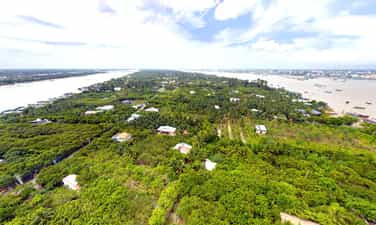
Located in the cluster of four sacred islands (Long, Lan, Quy, Phung), Cu Lao Thoi Son is also known as Thoi Son island or Lan island. This is an attractive garden tourist destination located in My Tho City, with charming river scenery and many sweet and fragrant fruits that will attract tourists to Con Lan. Thoi Son Islet is the largest of the four dunes on the My Tho River (a section of the Tien River) with an area of about 1,200 hectares with many interlaced ditches. Although located on the same river, Rong Islet (also known as Tan Long Islet or Long Islet) and Lan Islet belong to My Tho city, Tien Giang province; while Quy and Phung islands (the smallest islands) belong to Tan Thach commune, Chau Thanh district, Ben Tre province. The population here lives mainly by growing fruit trees (mostly longan and sapodilla), beekeeping, fishing and aquaculture. Coming to Con Thoi Son, you will experience a typical form of tourism of the river region, which is going down the boat down the winding canals between two dense rows of nipa palm trees. Besides, you can also stroll along winding stone paths, pass through lush fruit orchards, and sit in garden houses to drink honey tea and listen to amateur folk music. A particularly attractive feature is that you can ride a horse-drawn carriage around the orchards. A horse-drawn carriage tour will carry about 4 people and take you to tourist attractions such as traditional craft villages, fruit gardens,... Coming here, in addition to visiting and experiencing tourist services in Con, you can also enjoy Western specialties such as banh xeo, fried/grilled snakehead fish rolled with rice paper,...
Dong Thap
5746 view


Vinh Trang Pagoda
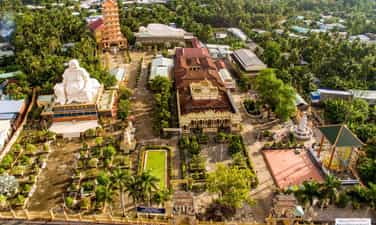
If anyone has once set foot in Tien Giang to enjoy the flavors of Thoi Son island, admire the nature reserve at Dong Tam snake farm but has not admired the beauty combining European and Asian architecture of Vinh Trang pagoda, it cannot be called a complete trip. Vinh Trang Pagoda is the largest Buddhist temple in Tien Giang province, ranked as a national historical-cultural relic in 1984. The pagoda was built in the early 19th century by Mr. and Mrs. Bui Cong Dat. In 1894, Venerable Thich Hue Dang from Giac Lam Pagoda (Gia Dinh) became abbot and organized the construction of a great pagoda and named it Vinh Truong Pagoda with the implication of wishing for the pagoda to be "Eternal to the mountains and rivers, eternal to the heavens and the earth". That's why people in the surrounding area still call it Vinh Trang Pagoda. In 1907, Venerable Tra Chanh Hau repaired the main hall, mixing both Asian and European architectural features. In 1930, Venerable Minh Dang completely restored the pagoda to its current appearance. As a pagoda with the most unique architecture in the South, the highlight of Vinh Trang Pagoda is the three-entrance gate with the art of assembling pieces of porcelain and porcelain. From the colors of ceramics, ancient artisans skillfully arranged many paintings illustrating Buddhist stories, folk tales, themes of four sacred animals, four precious animals, flowers, clouds, sky... with wonderful harmony like a painting. The soft scrolls inscribed with Buddha's names in skillful handwriting: Tran Tinh Mountain Mon, Vast Vow Mon, Pure Land Mysterious Mon... Including four consecutive items (front hall, main hall, ancestral house, back house), the pagoda has an area of 14,000m², 70m long, 20m wide, built of cement and precious wood, 1m high molded foundation, surrounded by solid walls. The front of the street is built in a harmonious European-Asian architectural style with slender columns, curved arches and colorful patterns. Going inside, we will see a shiny golden color applied to the carved images and Buddha statues. Most notable are the pair of dragon pillars in the main hall, which are large round pillars, made of precious wood, architecturally styled in the style of "upper and lower autumn". Looking from a distance, visitors will have the feeling that the pagoda is like a house with European architectural style with slender curved columns, with reliefs of the Eight Immortals riding animals with Renaissance patterns, Roman-style arches, French ironwork, and Japanese ceramic tiles. Inside the main hall and the ancestral house, there are bold Vietnamese architecture, the horizontal panels and wooden statues are skillfully and sophisticatedly carved with joyful and lively images. The space inside the pagoda is home to many fine art works of generations of artisans throughout the North, Central and South. For example, in the middle of the column is a set of blue and eight immortal beasts. This work was created around 1907 - 1908 by local artisans. Compared to the surrounding lamella sets, this set dates back to an earlier date, but has a higher artistic level. This is a rare relief from the early 20th century, proving that visual arts in the South developed quite early. The four pillars of Vinh Trang Pagoda all have dragon pillars hanging from them. The outer pair carved with four sacred animals was donated by Mrs. Le Thi Ngoi in Ba Tri (Ben Tre) in 1909. A special feature is that this pair of dragon pillars has a unique and unique layout: carved with a phoenix standing on a dragon's head. It can be said that the entire beauty of Vinh Trang Pagoda focuses on visual arts, of which statues make up the majority. In particular, at the pagoda there is also a set of statues of eighteen Arhats that are not inferior in terms of art to the statues of Arhats at Tay Phuong pagoda. These 18 statues are located on both sides of the main hall wall, carved from jackfruit wood, each statue is about 0.8m high, with a pillow width of 0.58m. The Arhats all ride animals, holding treasures in their hands. The description of this group of statues also has its own, very Southern appearance, but is successful in describing the typical emotions of each Arhat, proving that in addition to his craftsmanship, the author is also quite knowledgeable about Buddhist teachings. Researcher Truong Ngoc Tuong determined that the most beautiful statues of this pagoda were made by artist Tai Cong Nguyen and his students around the early 20th century. The largest is the Amitabha statue donated by Mr. Tong Huu Trung in Vinh Long. There is also a statue of Ho Dharma Protector promoting good and punishing evil... All represent the pinnacle of the art of round statue carving in the Mekong Delta region. Around the pagoda are ornamental gardens planted with many types of fragrant flowers and exotic grasses, lakes fragrant with lotus scent and ancient trees providing shade, creating a wonderful harmony between the natural scenery and architectural space, making the pagoda more ancient and solemn. Prominent in the middle of the garden is the 24m high Amitabha Buddha statue (pedestal 6m, statue 18m). The white statue depicts the Buddha standing and watching over sentient beings in all realms. The Buddha statue is considered by many locals to be the symbol of the current temple. About 80km from the center of Ho Chi Minh City, Vinh Trang is considered a famous ancient temple and a unique architectural work. It can be said that the beauty of the pagoda focuses on visual art and is also a reflection of the artistic history of the land of Tien Giang. Today, the pagoda has become a must-see tourist destination for domestic and foreign tourists when they have the opportunity to visit My Tho city. Moreover, it is also a place of research for many people when visiting this impressive temple.
Dong Thap
6701 view


Cai Be floating market
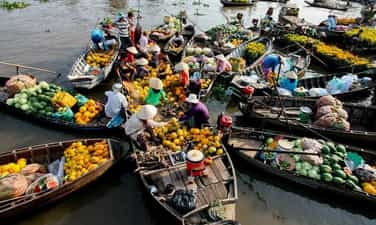
The floating market is the contiguous place of three provinces: Tien Giang, Ben Tre, Vinh Long, one of the three largest wholesale markets in the Southwest region, along with Cai Rang and Nga Bay floating markets, so Cai Be floating market is always crowded. entertainment, seafood to household appliances, drinks,... Visitors can go to the floating market by many means such as motorbikes, personal cars, passenger cars... but the most interesting thing is still going by motorbike. Traveling to Cai Be floating market by motorbike will be a new experience, bringing visitors many unforgettable memories. The road is nearly 80km long, you can move in the direction of Kinh Duong Vuong street to National Highway 1A and then through Vo Van Kiet. Next, you turn onto Provincial Road 875 to find the way to Trung Nu Vuong, then drive a little further and you will see Cai Be floating market. Here, if you want to see with your own eyes the crowded activities of boats and boats and see forms of underwater trading, you should go early in the morning, just before dawn. Morning is the time when the market is bustling, with the most trading and many types of agricultural products. You should pay attention to the market closing time at 8am to avoid being late. For those who like silence and peace, they should visit the floating market in the afternoon to see the activities of people on boats, one of the characteristics of the Southwest. In the afternoon, you should go around 4:00 p.m., when the sun is less sunny. You will have moments watching the sunset on the river. Sunset is also the time when the whole market lights up, bringing a bit of poetry and sadness. This is considered the most beautiful and sparkling time of this floating market area. The floating market in Tien Giang province is where boats come to exchange goods. This place still retains the typical cultural activities of the Mekong Delta market. The highlight is the transfer station for fruits and produce to all regions. Each boat is hung with a pole so that buyers can easily identify it and do not have to advertise. To visit this floating market, you can rent a boat to Cai Be floating market with about 10 to 15 seats, the price ranges from 500,000 - 800,000 VND. If you want to have an interesting experience here, you can rent a Western-style dinghy, with a cheaper price of 150,000 - 200,000 VND for 3 - 5 people. If you want to buy a package ticket to visit the floating market, traditional villages, fruit gardens and amateur music,... With many diverse goods, Cai Be floating market is famous for specialized fruits such as green-skinned grapefruit, Lo Ren star apple, Cai Be tangerine,... and has the largest amount of fruit in Tien Giang and is located in other provinces. Others come here to buy goods such as Vinh Long, Ho Chi Minh City, Ca Mau,... Today, due to people's needs, Cai Be floating market in Tien Giang not only sells fruit or agricultural products, but also dishes. Small boats weave between fruit boats, mainly selling drinks and breakfast to market-goers: wet cakes, noodles, porridge, noodle soup, vermicelli noodles, coffee, da tea... Tourists come and go. You will have the opportunity to experience relaxing moments amidst the river, sipping a cup of coffee. From about 13:00 to 16:00, when the water is low, the islands emerge, people on many neighboring islands, especially those in the area, flock to mud bath. Hundreds of boats running back and forth bustling the entire river. Cai Be floating market is one of the attractive Tien Giang tourist destinations visited by a large number of domestic and international tourists. Therefore, if you have the opportunity to come to Tien Giang, do not miss the opportunity to experience interesting things in this countryside.
Dong Thap
6315 view


Sa Dec ornamental flower village
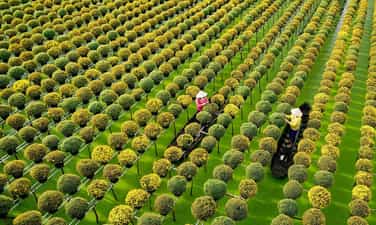
Not only possessing valuable historical and cultural relics and unique culinary arts, Dong Thap also leaves an unforgettable impression on tourists with Sa Dec flower village. Formed in the late 19th century, nestled poetically on the Tien River, this place was originally known as Tan Quy Dong flower village - a traditional craft village over a hundred years old. At that time, in this area there were only a few households growing flowers to decorate for Tet. Gradually, the number of households growing flowers increased. Annual work has become the main profession in Tan Quy Dong ward. The flower village later spread to other areas such as Sa Nhien canal, An Hoa ward, Tan Khanh Dong commune, etc. To date, the total area has reached 500 hectares with more than 2,300 households growing and 2,000 different species of ornamental flowers, turning this place into one of the largest flower beds in the Mekong Delta and the South. No matter what time of year you come, you can admire the flowers and take photos to your heart's content. However, people from near and far often choose to go to Sa Dec flower market in the spring. Because at this time the weather is cool and fresh, the flower pots mixed with spring colors seem to be full of life. If you live far away and want to visit the flower village, you need to pay attention to sightseeing and shopping before December 23 (or the 12th lunar month). Because after this date, gardeners almost always send flowers to other provinces and cities to sell. Coming here in December, you will have the opportunity to participate in the spring flower festival held annually at Sa Dec park. The festival has many interesting programs such as fairs, displays and exhibitions of ornamental animals, folk dance festival, Ba Ba shirt contest, culinary contest from flowers, art cockfighting contest, street performances, etc. Although it only takes place in a single day depending on the local schedule, this event has many unique activities for you to discover about flower growing and the unique cultural beauty of Sa Dec. When coming to Sa Dec Flower Village you need to note the following points. Sa Dec flower street is up to 3km long with many gardens stretching close together. Therefore, to fully explore this place, you should prepare a pair of walking shoes. If you intend to take Tet photos at Sa Dec flower village, Dong Thap, don't forget to wear ao dai and bring a camera in your backpack. The Western sun at noon or early afternoon is quite harsh, so prepare an umbrella, hat and sunscreen if you plan to have fun all day at the flower village. During the visit, be careful not to pluck flowers, break branches or otherwise affect ornamental plant pots. Because you buy them right at the place of planting, without incurring additional shipping fees, the price of flowers here is quite cheap, suitable for buying to decorate the house or as travel gifts for relatives.
Dong Thap
5433 view


Phuoc Kien Pagoda
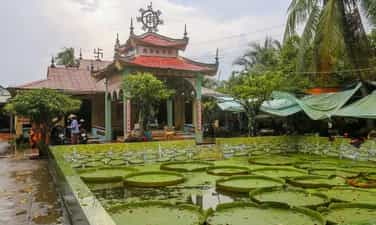
Among the many famous pagodas in Dong Thap province with ancient architecture and beautiful scenery, Phuoc Kien pagoda is not a beautiful pagoda but is still visited by many tourists and Buddhists because it owns a very beautiful lotus pond. special. When mentioning the lotus flower, people often think of its noble, delicate and fragile beauty. But the lotus flower in Phuoc Kien pagoda in Dong Thap is famous for its giant size, able to "carry" people while only slightly disturbing the water surface. If you have the opportunity to travel to Dong Thap, don't miss the opportunity to see this king lotus leaf. To get to the pagoda, you follow Highway 80, pass Nha Man market, turn left, go along the riverside, ask people about the wooden bridge to get to La Sen pagoda or Phuoc Kien pagoda. Phuoc Kien Pagoda is located in Hoa Tan commune, Chau Thanh district, Dong Thap province, established before the reign of King Thieu Tri. According to abbot Thich Hue Tu, in the past the pagoda was very large and majestic, possessing a spacious, pure and cool space. Phuoc Kien Tu was also a base for revolutionary activities. However, unfortunately in 1966, war bombs completely collapsed the temple. After 1975, the pagoda was rebuilt with a simple, uncomplicated architecture including: entrance gate, Guanyin worshiping tower and main hall. Bomb craters are used by monks in the temple as lotus ponds. It covers the traces of war and has a place for tourists to visit. In the lotus pond there is a strange and rare lotus species not only found in Vietnam but also in Southeast Asian countries. The lotus pond at Phuoc Kien Pagoda has a square shape symbolizing the earth, and the lotus leaf has a round shape symbolizing heaven. Huge lotus leaves, as big as stilts, with a curved rim nearly an inch wide, look very beautiful. If you don't see it with your own eyes, you will definitely doubt that this is just a lotus leaf made of plastic or that underneath the leaf there is steel support. It is known that this lotus species appeared in the temple's pond in 1992 and has existed until now. No one knows their exact name, so people often call them by many different names. Some people call it the king's lotus, sometimes it is called the lotus king, other times it is called the lotus, etc. Because of the strange lotus species, people often call the pagoda by the popular name "Lotus King Pagoda" or "Lotus Leaf Pagoda"... Research shows that this type of lotus originates from the Amazon region, its scientific name is Victoria regia. Lotus leaves are large, thick and have many thorns. This characteristic helps the tree adapt to its living environment and avoid attacks from underwater animals. King lotus leaves are special in that they can shrink with the seasons. In the dry season, the leaves are only about 1 meter long, but in the wet season, the leaves are large with a diameter of 3 to 4 meters. The edges of the leaves are about 3 to 5cm above the water surface, their shape resembles the strappy hats of Quan Ho village girls. During the flood season, large lotus leaves can easily hold a person weighing 70 - 80 pounds without only slightly shaking the water surface. In the dry season, lotus leaves are only about 1 - 1.5 meters long. Some people compare the giant lotus leaf to the strappy hats of Northern girls. The upper surface of the leaf is smooth and light green, while the lower surface is thorny and has many large veins, divided into squares that are light red when young and gradually darken as the leaf ages. The floating water season from September to October is the most suitable time for you to see the "king lotus". Because at that time, lotus leaves appeared many, large, thick, covering the entire pond surface. Because lotus leaves are very brittle and easily torn, if you want to stand up, you must first place a thin tin tray on top, then step slowly into the center. Tourists can visit the lotus pond for free, but to sit on it is free. When taking pictures of the lotus leaf, there are people living nearby who provide the service, put a wooden board on the leaf, and then take pictures. Interspersed with countless giant lotus leaves on the water surface are pure white lotus flowers blooming, dotted here and there are a few dark pink lotus flowers that are gradually withering. Lotus flowers bloom for 3 days and bloom twice a day, changing color continuously. The flowers bloom for the first time around 6 pm, radiating a fragrant scent until 12 am the next morning, then begin to close. At about 3 o'clock the flowers bloom again, and at about 4 - 5 p.m. they close their petals. From the initial pink-white color, each time the flower blooms it will get a little darker until it fades to a dark purple color. Not only famous for this special lotus species, Phuoc Kien Pagoda also attracts tourists with the remaining story about the magical turtle and magical crane. In 1948, someone brought a turtle to the temple. This turtle spent all day hanging around the monk who listened to the Buddha's chanting. In 1966, the devastating war left the pagoda devastated and the turtle was captured, but then crawled back to the pagoda on its own. In 1999, a crane appeared in the temple and it often perched on the turtle's back, but later, there was an idea to capture the crane and return it to the conservation area. From then on, people no longer saw the crane, the crane flew away, and the turtle also passed away. The abbot embalmed the turtle's body and wore a rosary around his neck, placing it in a glass cage in the temple.
Dong Thap
6326 view


