Tourist destination

Rach Gam - Xoai Mut historical relic site
Besides famous attractions such as Cai Be Floating Market, Tan Thanh Beach or Truc Lam Chanh Giac Zen Monastery... Dong Thap also has a long-standing historical site that few people know about, which is the Rach Gam Xoai Mut Relic Area. Rach Gam Xoai Mut victory relic site is located in Kim Son commune, Dong Thap. This place is located on the banks of the Tien River and about 12km from My Tho city. This is a commemorative work marking our people's victory against foreign invaders. Currently, this relic is located in a quite beautiful location, suitable for tourists to visit with a total area of more than 2 hectares. Don't miss this place in your Travel Guide! Rach Gam Xoai Mut victory relic area has the following areas: Exhibition house No. 1: of the Rach Gam Xoai Mut Victory Relic Area has an area of about 135 square meters. This is the place to display ceramic paintings and many artifacts related to the battle such as weapons of the Tay Son army and the Siamese army. Most of these artifacts were found below the riverbed where the fierce battle took place. Pavilion No. 2 is about 132 square meters and is home to a collection of 546 artifacts including weapons and vehicles used by both sides. Southern ancient house: This house is divided into 3 rooms, 2 wings, 48 wooden columns, yin and yang tiled roof. This place has an area of 225 square meters. The space inside the ancient house is used to recreate the lives of rich farmers in the South in the past. This ancient house has been restored and moved intact from Go Cong district. Monument to Nguyen Hue at Rach Gam Xoai Mut Victory Relic Area: At Rach Gam Xoai Mut Victory Relic Area, there is also a monument to national hero Nguyen Hue located right in the central area. The statue is made of bronze, weighs 20 tons, is 8 meters high and is placed on a pedestal simulating the shape of a warship. The statue is designed in a heroic sword-drawing posture. Not only that, next to the statue there is also a soldier holding a bow and an indigenous person rowing a boat, forming a perfect unity. The Rach Gam Xoai Mut victory relic site was also ranked as a national monument by the Ministry of Culture and Information on December 2, 1992 and by the Ministry of Culture, Sports and Tourism as a special national monument. In addition, after visiting this place, you can also visit many other extremely hot places such as Cu Lao Tan Phong, Con Quy... Don't forget to buy some Dong Thap specialties such as Ngu Hiep Durian, Trung Luong Plum or fish sauce as gifts for friends and relatives. If you are looking for a historical tourist destination, don't hesitate any longer and pack your suitcase to visit Rach Gam - Xoai Mut Dong Thap Historical Relic Area to experience it!
Dong Thap
2834 view


Nguyen Sinh Sac relic site
If you have the opportunity to travel to the West, a historical address you cannot help but visit is the Mausoleum of Pho Bang Nguyen Sinh Sac, the resting place of the father of the great President Ho Chi Minh. After many years have passed and been edited and rebuilt many times, the relic site of deputy leader Nguyen Sinh Sac has become a relic site preserving the historical and cultural values of Dong Thap. Although Nguyen Sinh Sac relic site is located in the center of Cao Lanh City, Dong Thap province, stepping inside the space is very quiet and peaceful. This is an extremely meaningful tourist destination in Dong Thap for people to visit with respect and gratitude for a Confucian who "loves the country and loves the people" - a noble, simple, yet extremely noble personality throughout his life, not greedy for fame and fortune, always taking care of the country and the people. Mr. Nguyen Sinh Sac was born and raised in Nam Dan, Nghe An province. In the year of Tan Suu (1901), he passed the Vice Ranking and in 1906 took the position of "Advocate of the Ministry of Rites" and then became Tri Phu in charge of Tri of Binh Khe district (Binh Dinh). During his time as a mandarin, he always stood on the side of the poor, punishing the evil tyrants and only served for a short time before being dismissed by the Nguyen Dynasty. After being dismissed, he went to the South and lived in Hoa An village in Dong Thap province to teach, dispense medicine to help the poor and live a pure life until his death. To commemorate his contributions, the government and people of Dong Thap built the mausoleum of Mr. Nguyen Sinh Sac for people inside and outside the province to visit and burn incense to commemorate him. The relic of Mr. Nguyen Sinh Sac is structured into 4 areas: the mausoleum area, the temple and the house displaying the life and career of Mr. Nguyen Sinh Sac; Uncle Ho's stilt house area and fish pond garden; Cultural space of the ancient Hoa An village model and area for organizing folk games and entertainment festivals. With a total area of more than 9 hectares, the overall relic site is a harmonious architectural complex, imbued with Dong Thap's ecological and cultural imprint, a place for Dong Thap people in particular and people across the country to gather here on holidays, the death anniversary of Mr. Pho Bang, traditional Tet, anniversaries, major ceremonies of the year... The main feature of the mausoleum is a striking white color, bringing a sense of relaxation to those who visit. The mausoleum's grounds have many rare fruits and flowers that people from all over the country brought back as gifts to express their gratitude. The relic is not only built very meticulously but also carries a lot of profound meaning. The tomb facing East is a stylized lotus petal shaped like a spread hand facing down, above are 9 innovative folk dragons, reaching out into 9 gables, symbolizing the people of the Mekong Delta who always protect and embrace the patriot's grave. Mr. Pho Bang's tomb is covered with marble, the ash gray tomb rests on the irregular hexagonal white ground stone tomb, gradually expanding to the sides and front. On the grave there is an agarwood top made of Ngu Hanh Son stone, fragrant smoke day and night. The mausoleum grounds have many types of ornamental plants and rare fruits that people from all over the country bring home as souvenirs, especially the nearly 300-year-old star fruit tree located on the left side of the tomb and the more than 300-year-old sop tree located on the right side of the tomb. In front of the grave is a 5-pointed star-shaped lotus pond, in the middle of the pond is a stylized white lotus stand 6.5 meters high, symbolizing the pure life of Mr. Pho Bang. With open space, many works paying homage to Mr. Pho Bang are arranged independently but connected, filled with pink lotus and the shadows of ancient trees along each walkway. The memorial area displays many artifacts and documents related to his life and career, especially his time in Cao Lanh. This place authentically recreates each stage of Mr. Pho Bang's life from his hometown and family; years of hard work to become talented; The place where mandarins - from the mandarins to the South - operated. Another highlight in the Relic Area is Uncle Ho's stilt house, which was restored to the prototype of Uncle Ho's stilt house in the capital Hanoi. Here, the artifacts are recreated and arranged authentically to help each visitor feel and imagine Uncle Ho's frugal life from his work corner to his resting place. This is also a way for Southern people who cannot afford to visit the capital Hanoi to still feel like they are visiting Uncle Ho's stilt house in the Presidential Palace when visiting the relic site. The relic also recreates the beauty of the familiar Hoa An village cultural space in the early twentieth century, on an area of over 22,000 square meters. This area has traditional houses of village households, Cai Tom canal, fruit gardens, coconut rows, monkey bridges, and winding village roads. Every year, Dong Thap province organizes the death anniversary of Deputy Nguyen Sinh Sac on the 28th day of the 10th lunar month, with more than 100 thousand visitors. Visiting the Mausoleum of Deputy Bang Nguyen Sinh Sac is not only a trip, but also a journey to one's roots, to commemorate and pay tribute to a predecessor who made great contributions to the country. This is also an opportunity for us to learn more about the history and culture of Dong Thap land.
Dong Thap
2683 view


Nguyen Dinh Chieu mausoleum and memorial house
Although not a very prominent destination compared to other tourist attractions, the Nguyen Dinh Chieu mausoleum relic area attracts tourists with the authenticity of history and culture over time. This will definitely be an ideal stop for tourists. Vinh Long is not only famous for its traditional craft villages. The historical relics here also make many tourists curious and want to visit once, especially the Nguyen Dinh Chieu relic site. This place possesses an architectural style imbued with the colors of the culture of the Vietnamese people, most prominently the lines of the patterns and couplets all containing deep and passionate patriotism. Join us to discover unique and interesting things here! Nguyen Dinh Chieu's mausoleum relic site - a place to honor heroic poets, prestigious doctors, and exemplary teachers. This is not only a historical destination, but also a place that attracts spiritual tourism enthusiasts. Every year, this mausoleum attracts thousands of visitors to commemorate and revere, creating a sacred atmosphere. Its exact address is Ba Tri Commune, Vinh Long province. This is not only the pride of the local community but also an ideal destination for those who want to explore the unique culture and history of Vinh Long. Nguyen Dinh Chieu's tomb relic site is characterized by its impressive scale, occupying a large area of up to 1.5 hectares. Starting in 1972, the construction process of the mausoleum officially began and over the years, thanks to continuous restoration stages, this place became increasingly majestic and majestic until the end of the twentieth century. The structure of the project includes many important parts such as the three-entrance gate, the new temple, the old temple, the stele house and the tomb area. This creates a diverse and stylish architectural space, while highlighting the greatness and solemnity of this relic. Before entering the solemn space of the mausoleum cemetery, your first impression will be the three-entrance gate with traditional style, bringing an atmosphere of nostalgia and reverence. Before entering the solemn space of the mausoleum cemetery, your first impression will be the three-entrance gate with traditional style, bringing an atmosphere of nostalgia and reverence. The stone stele statue, of impressive size, is not only a big highlight that you cannot miss when coming here, but also contains a meaningful praising essay about the merits of Nguyen Dinh Chieu and his biography. The new temple, built from 2000 to 2002, in the same architectural style, is an impressive work of art with a height of up to 21m. This temple not only creates stability with its reinforced concrete structure, but also shows sophistication and elegance through traditional highlights such as yin and yang tiles and decorative patterns on the walls. The new temple is not only a place to display images of leaders but also a sacred space to burn incense and worship. The upper floor of the temple has a portrait statue of the Poet, cast in bronze, accompanied by verses and words praising him from the people. This creates a space that is not only a place of reverence but also a place to explore and better understand the cultural heritage of Vinh Long. Although it has undergone a new construction process, we cannot ignore the old temple area, a project started in 1972 with uniform architecture with three-entrance gate and a total area of nearly 84 square meters. The unique feature of this temple is not only the roof decorated with details and stylized dragon and cloud patterns, but also the majestic altar where people come to worship. The two main columns are embossed with verses similar to those in the new temple, creating a spiritual and traditional space. Not simply individual buildings, each building in Nguyen Dinh Chieu's mausoleum area is immersed in a green space, with airy gardens surrounded by all kinds of ornamental plants. This creates a peaceful and quiet atmosphere, making those who visit feel relaxed. Nguyen Dinh Chieu, although not a descendant of Vinh Long, spent most of his life contributing to artistic labor in this locality. This poet created a strong influence, building love and respect from the community. Therefore, July 1 every year, his birthday, has become an important traditional cultural festival for the people of Vinh Long, to commemorate the famous poet of this Southern region. The festival is not only an opportunity to celebrate and honor the poet, but also a great occasion to explore unique culture and express deep gratitude to our ancestors. Participating in the festival, you will have the opportunity to hear stories about his life and career, and better understand a collection of his poems during the resistance period. Don't forget to write this address in your travel guide to make your upcoming trip to Vinh Long complete and enjoy every level of emotion that this architectural complex brings.
Vinh Long
2611 view


Uncle Ho's temple
The Uncle Ho Temple relic is located in hamlet 3, Luong Tam commune, established by people in the area in 1969 when President Ho Chi Minh passed away. 21 kilometers from Long My town, 40 kilometers from Vi Thanh city and 78 kilometers southwest of Can Tho city. Uncle Ho's temple area was built on a land area of nearly 2 hectares, with 3 items of very solemn and respectful architectural work completed, including: Memorial house, exhibition house introducing Uncle Ho's childhood and active life, and Association house. The memorial work of Uncle Ho's Temple was ranked as a national relic by the Ministry of Culture and Information, now the Ministry of Culture, Sports and Tourism, on January 7, 2000. Every year, on major holidays such as: May 19; September 2,... The Party Committee, government, unions and people of Hau Giang province held a very solemn flower and incense offering ceremony to commemorate Uncle Ho. From 1990 to 2010, an average of 35,000 to 40,000 people visited and commemorated his merits each year. On the occasion of festivals, many forms of cultural, sports and entertainment activities are organized for local people and neighboring communes of the province. This became a memorial to Uncle Ho; At the same time, it is the cultural and sports center of the people in the region. Uncle Ho's Temple is a special memorial project, born as a symbol of the whole society's gratitude to the revered father of the nation. This place is not only a place of worship, but also an important historical memory of Hau Giang province in general or Long My district in particular. If you have the opportunity to visit Long My, don't miss the chance to explore this place.
Can Tho
3002 view


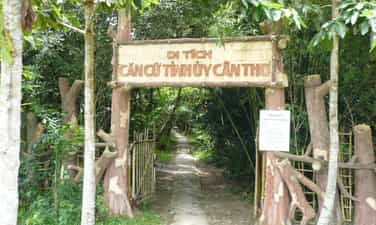
Can Tho Provincial Party Committee Base Relic Area
The Can Tho Provincial Party Committee Base relic in Phuong Binh commune, Can Tho city, was built on a land area of about 6 hectares and surrounded by trenches: Lai Hieu canal, Ca Cuong canal, Rach Cu canal, Ba Bai canal. Can Tho Provincial Party Committee Base was started construction in early February 1972, at the house of Ba Bai - a former landowner, so people used to call it "Ba Bai Base". From this base, the Can Tho Provincial Party Committee led and directed the army and people to attack the enemy with three frontal attacks, remove enemy posts, mobilize the masses to destroy "strategic hamlets", gain control and expand the liberated area, creating new strength for the province. On April 27, 1990, the Ministry of Culture and Information issued a Decision recognizing the Can Tho Provincial Party Committee base as a National Historical-Cultural Monument. Today, this relic has been beautifully renovated, this is the pride of the Party, government and people of Can Tho, and is a historical, cultural and educational tourist destination for patriotic traditions and love for people for young generations today and tomorrow. The Can Tho Provincial Party Committee base relic area was carefully restored and embellished, authentically recreating the working space of the Provincial Party Committee during the years of resistance. With items such as souvenir houses, bunkers, and artifact display areas, the relic gives visitors a vivid view of revolutionary life and activities. The space here is not only a place to visit but also a living museum, preserving the heroic memories of the nation. Memorial House: The Memorial House was built in 1995 on the occasion of the 20th anniversary of the liberation of the South, and is a place to display documents, photos, and artifacts related to the activities of the Can Tho Provincial Party Committee. This space is designed simply but solemnly, helping visitors feel the hardships and resilient spirit of revolutionary soldiers. Bunkers and trenches: The relic recreates a system of bunkers and trenches, built to protect the Provincial Party Committee from enemy raids. The bunkers are skillfully arranged, taking advantage of the natural terrain, providing a realistic view of the creativity and perseverance of the revolutionary forces. Artifact display area: The display area includes artifacts such as documents, weapons, and personal belongings of Provincial Party Committee comrades, helping visitors better understand life and work during wartime. Each artifact is carefully preserved and comes with detailed annotations to provide complete information. Ecological space: The relic site is surrounded by the typical river landscape of the West, with canals and trees creating a peaceful space. Visitors can combine visiting relics with ecotourism experiences, exploring the natural beauty of the Phung Hiep region. Visiting Ba Bai Base is a meaningful journey, helping visitors understand more deeply the heroic history of the nation. You will hear touching stories about the sacrifices and indomitable spirit of generations of ancestors. Every little corner, every artifact here contains a part of memory, a valuable lesson about patriotism and the will to fight for independence and freedom. Not only is it a historical relic, Ba Bai Base is also an ideal destination for those who love to explore natural beauty. This area possesses a typical flooded melaleuca forest ecosystem of the Southwest region. Visitors can take a boat through small canals, admire the green rows of cajuput trees, enjoy the fresh air and listen to the chirping of birds. The diverse ecosystem with many rare flora and fauna species is also a highlight of Ba Bai. If you are lucky, you can see water birds, fish or typical plants of the mangrove area. This is a great opportunity to take unique photos, capturing moments of immersion in nature. Coming to Can Tho, visitors cannot miss the opportunity to enjoy Western specialties. After visiting Ba Bai Base, you can visit local restaurants and eateries to taste fish sauce hotpot, grilled snakehead fish, pancakes, or dishes made from fresh river products. The rustic, authentic flavor of the cuisine here will definitely satisfy even the most demanding diners. The best time to explore Ba Bai Base and other destinations in Hau Giang is during the dry season, from December to April of the following year. At this time, the weather is dry, sunny, and convenient for moving and participating in outdoor activities. Avoid going during the rainy season (from May to November) because it can be difficult to travel by boat and the experience will not be complete. The Can Tho Provincial Party Committee base relic area is a meaningful historical destination, where heroic memories of the resistance war against the US are preserved. With carefully preserved spaces, meaningful educational activities, and distinctive river landscapes, the relic offers a unique experience for visitors.
Can Tho
2641 view


Hundred Pillar Ancient House
Long Huu Dong commune, Tay Ninh province is not only a land known for its specialty Cho Dao rice but is also home to many valuable historical and cultural relics. If you have the opportunity to travel to Tay Ninh and return to Long Huu Dong commune, don't forget to visit the Hundred Pillar House. The "unique" feature of the house is not only because the name originates from its architectural characteristics (the house has over a hundred pillars), but also because this is a "long" house of Hue, located in the middle of the Southern countryside. The hundred-column house is located on the left bank of Vam Co Dong river, in Long Huu Dong commune, Tay Ninh province. This house was built by Mr. Tran Van Hoa, who was then Huong Su of Long Huu village, Loc Thanh Ha district, Cho Lon province. Although it is called a hundred-column house, the truth is that the house has up to 120 columns, of which 68 main columns and 52 small auxiliary square columns. The hundred-column house has the style "Quoc", 3 compartments, 2 double wings with an area of 822m2 in a garden of 4,886m2. This house was started in 1901, in 1903 it was completed and in 1904, the decorative carving was completed by a group of 15 workers from My Xuyen village - a famous carpentry village of Thua Thien - Hue using mainly precious woods such as rosewood, ebony... the roof is covered with yin and yang tiles, the floor is made of 0.9m high boulders, the floor is tiled with hexagonal Chinese tiles. The house consists of two parts: the first part is the internal and external part, the second part is the living and living part. The last rice granary was completely dismantled (1952), now only the foundation remains. The main side of the house faces Northwest, around the house there is a large yard used to dry rice and flour. The hallways, porches and floors are tiled with Chinese tiles, the spacious space faces a large garden so it is always cool. The main door and windows have slats and wooden panels. The main structure of the Hundred Pillar House is the Xuyen Dinh style (also known as the Dab Trinh house or the Ruong house), with an eight-pillar style frame, positioned in the West - East, Early - Later direction. Parts of the main structure such as trunh and truong are threaded and curved like a ruong house in the Central region. The junction between the main part and the bamboo to support the roof of the house is stylized in the shape of a "pestle and mortar", symbolizing the harmony of yin and yang (so it is also called the mortar and pestle house style). This is a traditional house style that has many advantages because the frame is very sturdy. In particular, the architectural decoration at the Hundred Pillar House shows that the sculptural art of past artisans was at a high level through layout, theme expression as well as technical processing. The entire system of trusses and rafters is elaborately embossed and carved with the themes "clouds turning into dragons", "four times" like "strings turning leaves" typical of Hue. The internal and external rooms are where the highest concentration of aesthetic value of the building is concentrated, to which the ancients engraved brocade on every touch. It is a diverse and rich collection of classical themes such as "four sacred things", "four times", "eight results"; Motifs representing Phuc - Loc - Tho alongside Western themes such as roses, squirrels - grapes, and Southern elements such as custard apple, bowl bowl, star fruit, and mangosteen, have been meticulously expressed by artisans on bamboo bags, box frames, partitions, wind-leaf walls, altars, comfortable chairs, round tables, long tables, using the techniques of parasol carving, embossment, channel carving, embossing on parasol-carved backgrounds, extremely skillfully. ingenious. This unique architectural work contains more than 100 years of history and many precious artifacts. You will see antique wooden furniture or unique and highly valuable ceramic vases. If you love antiques or want to explore the difference in historical culture between the past and present, the Hundred Pillar House is an ideal destination during your trip to Tay Ninh. The Hundred Pillar House is an interesting destination in Tay Ninh that helps you expand your knowledge and have a memorable journey of discovery. For those who love history and ancient architectural works, the Hundred Pillar House is a place that you cannot miss on your journey to explore Tay Ninh. What are you waiting for, pack your suitcase and go explore now!
Tay Ninh
2741 view


Thuy Chau eco-tourism area
With today's busy life, it seems we only have a short break every weekend. And one-day ecotourism will be a great choice for those who love to travel but don't have much time. And one of the most youthful destinations you can add to your weekend travel list is Thuy Chau tourist area in Binh Duong. Thuy Chau eco-tourism area is considered a green land in the emerging land of Binh Duong. Currently, the total area of the tourist area has reached hundreds of thousands of square meters, all covered with green trees. Inside, there are a number of lakes and artificial waterfalls that contribute to bringing a cool, airy space like in Da Lat to visitors coming here. When traveling to Thuy Chau, you can freely check-in at different scenes. Whether you want a majestic or romantic style, this place has it all. In addition, you can participate in interesting entertainment activities to forget all the troubles of everyday life. Not simply a place for you to come and participate in the activities that the resort organizes, you can still comfortably prepare your own picnic activities. Overall, this is a tourist area highly appreciated by tourists for its thoughtfulness in organization to bring the most comfort to visitors. Although the landscapes at Thuy Chau tourist area are mainly artificial, when you come here and take pictures, you will be surprised with the naturalness of every line. You can rest assured because there are many projects and locations here that can help you own a great album from land to water. The first to mention is the artificial waterfall Thuy Chau, this is a waterfall with an area among the top "huge" artificial waterfalls in Vietnam, bringing a majestic scene no different from the waterfalls created by nature. In addition, another super artistic point is that the streams and rocky crevices are created lifelike, promising to bring you stunning photos. If you are a lover of romance, the romantic scene right at the entrance will keep you there and check in immediately with two rows of trees along the way to cool the path you walk. Sometimes, when you go to Thuy Chau tourist area during the falling leaf season, you don't need to go far and can still get photos like when traveling to Europe in the fall. With the cool air and green color of the trees, it is really difficult to distinguish this as an artificial tourist area. But no matter what, if you only have a short time on the weekend and still have beautiful and luxurious photos, this place deserves ten points for "view" photography. When you come here, you can freely participate in interesting underwater activities. If you are a lover of something close to nature, you can immerse yourself in the cool stream at Thuy Chau waterfall. If you are the type of person who loves modernity, go right to the swimming pool, and remember to take some classy photos. In addition, you can also organize a picnic with your family, friends and colleagues at Thuy Chau tourist area. What's better than being able to have a picnic and easily enjoy the atmosphere like in Da Lat with your loved ones in just one short day. Not only that, a place that can help you feel like you are going to a zoo combined with tourism is the freshwater crocodile lake. If you go to river resorts and you can sit on a fishing boat, then when you go to Thuy Chau you can also fish, but crocodile fishing. When traveling during the festival, you will enjoy other unique artistic performance activities in the bustling, crowded atmosphere of the holiday. As for food, if you go on a picnic with your family, you can prepare food in advance and bring it along. If you're traveling for fun, don't worry, the restaurant inside the tourist area is ready to serve the region's best dishes at affordable prices. Amidst the hustle and bustle of the city, a green paradise near the city center like Thuy Chau tourist area will be an ideal stopover for long, busy days. Relaxing and immersing yourself in the peaceful scenery, enjoying the fresh air, there's nothing better!
Ho Chi Minh City
2677 view


Ong Hoang Muoi Temple
Amidst the charming landscape of Nghe An, Ong Hoang Muoi Temple appears as a sacred spiritual destination, where the unique cultural and religious values of the Vietnamese people are preserved. Let's explore the history and activities when visiting this temple! Ong Hoang Muoi Temple is one of the most famous spiritual sites in Nghe An. This temple worships Ong Hoang Muoi - a saint in the Four Holy Emperor Palaces who people believe is very sacred. He is known to bestow talent, fortune, and blessings on the path of career, fame, and education. The temple has a history of 400 years with ancient architecture, rich in tradition with exquisite carved details, pure space, in harmony with the natural landscape. Every year, especially on the occasion of the 10th lunar month festival, tens of thousands of locals and tourists in Nghe An come to offer incense, pray for good luck and participate in unique folk cultural activities. Not only is it a spiritual destination, Ong Hoang Muoi Temple is also a place to preserve the typical cultural values and beliefs of the people of the North Central region. Ong Hoang Muoi Temple is associated with many sacred folk legends in Nghe An. According to the Four Palaces belief, Mr. Hoang Muoi is the tenth son of Father Bat Hai Dong Dinh, sent to earth to help the people and rule the country. The name "Hoang Muoi" implies respect for a person of dual talent and virtue, converging both literature and martial arts. In particular, the number ten was also considered by the ancients to be a symbol of completeness and perfection. Despite many restorations and embellishments, the temple still retains its unique ancient architectural lines, reflecting the talent and creativity of Nghe An artisans. Currently, the temple is preserving many rare documents and artifacts such as 21 ordinations, legends written in Chinese characters and a system of statues with great historical and aesthetic value. When visiting Ong Hoang Muoi Temple, you will feel the sacredness in the ancient space and have the opportunity to experience many unique spiritual cultural activities associated with the religious life of the people of Nghe An. Visitors can come to the temple to offer incense and worship on any day of the week. The temple is open from 5:30 a.m. to 10:00 p.m. every day, continuously serving local people as well as pilgrims from all over to worship. The temple space in the early morning is very peaceful, suitable for quiet prayer. In particular, on the 1st and 15th days of the lunar calendar every month, the atmosphere here becomes more vibrant than ever. People often come here in large numbers to pray for fortune, peace, and fame, creating a solemn and warm worship space. These days, the smoke of incense at the temple and prayers echo, creating a sacred spiritual cultural experience. The biggest festival of the year at Ong Hoang Muoi Temple takes place on the 9th and 10th days of the 10th lunar month, organized to commemorate his transformation day. The ceremony was carried out very solemnly, starting with the opening ceremony and the investiture procession from the village communal house to the temple. Next is the announcement ceremony with the presence of elders and ritual teams. Finally, there is the thanksgiving ceremony, which means to close the respectful worship cycle. The festival has a joyful and attractive atmosphere with many cultural and sports activities such as tug of war, human chess, pot banging, lion dancing, boat racing, and releasing flower lanterns on the Con Moc River. Within the framework of the 10th lunar month festival, you cannot miss the Hau Dong ritual. This is an indispensable highlight, especially for those who follow the Four Palaces belief. The ritual is performed by coppers and bronzes, with mystical performances, traditional music combined with flexible adoration texts. This ritual is not only spiritual but also rich in artistic value, helping viewers better understand the cultural identity of Vietnamese Mother Goddesses. People believe that in the moment of "entering the medium", he will bestow fortune and blessings on those who are sincere. Ong Hoang Muoi Temple was restored in 1995. The temple is located on an area of about 1 hectare, including many typical areas such as the three gates, the gate, the Trung Thien platform, the Co Lau, and the Cau Lau. Inside the temple there are three main shrines: the Lower Palace, the Middle Palace and the Upper Palace. The works are designed in the architectural style of the Nguyen Dynasty, using many precious wood materials and exquisitely carved images of dragons, unicorns, turtles, and phoenixes. Visitors here can stroll along the embankment, watch the flowing water, listen to the sound of wind chimes and enjoy the rare peaceful atmosphere. This is the time to quiet your mind, shake off the fatigue of everyday life, and connect with nature. In addition, you can combine with many nearby spiritual and cultural tourist attractions such as Kim Lien relic site, Thanh Luong tea island... Ong Hoang Muoi Temple is not only a meaningful spiritual site but also a unique tourist destination to explore local culture and history. The temple's antiquity and sacredness is what attracts tourists from all over to visit, perform rituals, offer incense and pray sincerely. Surely, you will have memorable experiences when visiting the temple.
Nghe An
3040 view


Thanh Chuong tea hill
Likened to an oasis with giant blue "upside down bowls", Thanh Chuong tea hill in Nghe An is a landscape that makes traveling enthusiasts passionately seek out when they have the opportunity to return to Nghe An. In the journey to discover the beauty of Western Nghe An, Thanh Chuong tea hill is the ideal destination for you to fully enjoy the wild and poetic features of nature. Thanh Chuong tea hill in Nghe An possesses an impressive scenery, not inferior to other famous tea hills such as Bao Loc tea hill, Moc Chau tea hill or Thai Nguyen tea hill. This place is likened to the green oases of Nghe An with enchanting beauty, and is also a virtual living paradise very familiar to tourists. Thanh Chuong Nghe An tea hill is located in Thanh Chuong commune, 50 km from the center of Vinh city, Nghe An province and about 70 km from Cua Lo beach. This tea hill has a total area of more than 4,200 hectares, stretching across the areas of Thanh Mai, Thanh An, Hanh Lam and Thanh Thuy communes. Tea in Thanh Chuong is considered one of the key economic crops, contributing greatly to the development of local people's lives. Recently, the impressive beauty of Thanh Chuong tea hill when planted on small oases, surrounded by the clear Cau Thau dam, has created a poetic landscape and turned this place into a familiar destination for many tourists. Stopping at Thanh Chuong tea hill in Nghe An, visitors will surely be surprised by the extremely beautiful nature, the green color covering a large space, full of vitality. The tea islands here look like turtle shells from afar and no two tea islands are the same, creating a very diverse beauty. Immersing yourself in the peaceful and poetic landscape of Thanh Chuong tea hill, visitors will feel like their soul becomes more peaceful and relaxed. For virtual life believers, this will be a true check-in paradise to transform into charming tea picking girls. Different from other tea growing regions in Vietnam, Thanh Chuong Nghe An tea hill is always green and beautiful in all four seasons, so you can visit this place at any time. If in the summer at Thanh Chuong tea hill you will feel the cool climate, relatively pleasant compared to the harsh sun of the Central region, then autumn is the time when the tea hills are green, the weather is cool, and the sunlight is gentle. Winter is the time when Thanh Chuong tea hill possesses a romantic scene with mist, bringing a charming lyrical look. In particular, in the spring, the scenery on the tea hills becomes full of vitality, the lush young shoots combined with the blue sky, reflecting the clear water create an area of unforgettable beauty. If you choose the time to check into Thanh Chuong Nghe An tea hill, you should choose to travel in the fall or spring, especially limiting rainy days because the road to the tea hill in the rainy season will be relatively difficult. Traveling to Thanh Chuong tea hill in Nghe An, the feeling of sitting on boats and weaving through green oases, admiring the vast scenery of tea hills or feeling the fresh and pleasant atmosphere is extremely wonderful. While admiring the scenery and breathing in the fresh air with the faint scent of tea in the wind, visitors will feel like their souls are open, temporarily forgetting the hustle and bustle of life. Tourists who want to take a boat to visit Thanh Chuong tea hill can rent a boat for prices ranging from 50,000 VND to 150,000 VND. Coming to Thanh Chuong tea hill, you certainly will not miss the opportunity to enjoy the especially delicious tea of this land. The sweet soup in Thanh Chuong has a very unique flavor with a rich, lingering taste. Diners who drink it once will remember it forever. Especially when enjoying it with Ha Tinh's specialty candy, the flavor is even more complete. Thanh Chuong is not only famous as a wonderful tea land, but also has many attractive specialties that make tourists fascinated. Therefore, when visiting Thanh Chuong Nghe An tea hill, in addition to exploring the beautiful scenery, do not forget to enjoy the famous specialties of the people here such as Cau Don goat, Thanh Chuong mud, eel soup, chicken soup cooked with mosquito net or buy Nam Dan soy sauce as a gift. Traveling to Thanh Chuong tea hill, you can also combine many other attractive ecotourism activities such as transforming into farmers of the tea area with tea harvesting, tea processing or tea care activities. You can also freely relax, check in and live virtually amid the vast scenery of the tea hills, bringing back memorable souvenir photos. Thanh Chuong Nghe An tea hill with its impressive beauty and unique scenery has become one of the attractive check-in locations for many tourists. Just admiring the charming green color of the tea islands, stretching as far as the eye can see or breathing the fresh air here is enough for a trip back to Nghe An.
Nghe An
2902 view


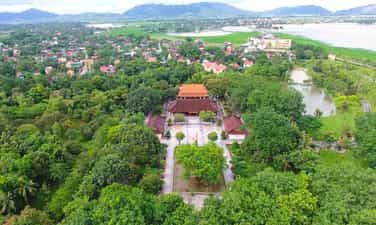
Kim Lien relic site
Returning to Uncle Ho's hometown, visiting Kim Lien Nghe An historical relic site - where artifacts about him are kept, you will love the great leader of the nation even more and love the beauty and historical cultural values of this land. Kim Lien historical relic site is one of Nghe An tourist destinations famous for Uncle Ho and is the pride of Nghe An people. The entire Kim Lien historical relic area includes 4 main clusters: paternal hometown of Lotus Village, maternal hometown of Hoang Tru village, Mrs. Hoang Thi Loan's grave and the exhibition and memorial area of President Ho Chi Minh. Each cluster of relics gives visitors indescribable emotions. 1. Relics of the grave of Mrs. Hoang Thi Loan - Uncle Ho's mother: The grave of Mrs. Hoang Thi Loan is located halfway up Dong Tranh mountain, Dai Hue mountain range, Kim Lien commune. The tomb was built in 1984 in the shape of a giant loom symbolizing the weaving profession that she did during her lifetime to support her children. The tomb is surrounded by marble and granite and above is a sloping roof covered with natural stones and many flowers. Visiting her grave, visitors can also see far away and see a part of the country of Nghe An. 2. Uncle Ho's Sen village: The cluster of relics of Uncle Ho's Sen village is located in Kim Lien commune. At the roof of the house where Uncle Ho used to live, the items are still preserved intact such as: two sets of wooden counters, black painted wooden trays, a standing cabinet, a bed, a food chest,... Although the items are old, they contain many great historical values, helping future descendants to better understand him. Coming to Uncle Ho's hometown of Sen village, visitors are really impressed with the fragrant scent of the blooming lotus pond, close rows of areca trees and a very peaceful space. 3. Hoang Tru village relic cluster: Hoang Tru village is Uncle Ho's maternal hometown, where he was born and spent his childhood. The relic cluster includes: Uncle Ho's family house, Mr. Hoang Xuan Duong's house (Uncle Ho's grandfather) and the Hoang Xuan family branch church. Uncle Ho's family's house is a 3-room thatched roof, surrounded by canopy, and on both sides are rows of green areca palms. The house still preserves many simple and simple memorabilia from ancient times such as: a wooden loom, a hemp hammock, a wooden table, a pen, etc. The artifacts are worn out and discolored over time, and through the explanation about the Kim Lien historical site, visitors feel even more excited when remembering Uncle Ho's childhood life. 4. President Ho Chi Minh's exhibition area and memorial house: President Ho Chi Minh's exhibition area and memorial house was built in 1970, located on the site of Sen village relic. This is the first museum in the country to display Uncle Ho's biography. Later, many relics, documents, and artifacts were added to express the feelings of compatriots, domestic comradeship, and international friends towards Uncle Ho. All help complete the Monument - Museum - Memorial model, helping to express the sacred feelings of the people towards Uncle Ho. Kim Lien relic site is not only a place to preserve memories of President Ho Chi Minh but also a place with profound historical and cultural value, helping future generations better understand his origins and thoughts. So if you have the opportunity to come to Nghe An, don't forget to visit here to learn about the remaining vestiges of the great leader of the Vietnamese people!
Nghe An
3107 view


