Relic point Vietnam
Việt Nam
Bang An Tower
Bang An Tower in Dien An commune, Dien Ban district, located close to 609 road (connecting Vinh Dien with Ai Nghia) is relatively intact. According to the researchers, Bang An tower was built around the tenth century , there is a unique architecture, absolutely unlike any tower, existing today across the country. Overall, Bang An tower is linga (penis), located in the middle of the spacious space. Linga symbolizes Siva, which is used as a place of worship and sacrifice of the Cham people. The tower is built in an octagonal shape, each edge is 4m long, 21m high. In front of the tower there are two stone animals: Lion and elephants. According to Cham cultural researchers, Bang An tower is a high -value monument in terms of architecture, related to religion and beliefs of the Cham people. Therefore, in 1989, Bang An tower was recognized by the Ministry of Culture as a national monument. In 1943, due to the destructive war, the tower was damaged in the lobby, the French engineers restored. But unfortunately did not master the technique, the French built bricks with cement (wide vessels), so it broke the unique architecture of the Cham people (between the bricks without the lake). With a unique architecture, located convenient and beautiful, Bang An tower is an ideal address for tourists to visit at home and abroad. Source of electronic portal of Dien Ban district, Quang Nam province.
Da Nang
4829 view
Rating : National relics.

The relics of Phuoc Tra base area (1973-1975)
Phuoc Tra is now a commune in Hiep Duc district, Quang Nam province. During the anti -American resistance war, this place was selected to place the base of the 5th Party Committee from 1973 to 1975. In order to promptly direct to deal with the enemy's conspiracy and tricks after the Paris Agreement (January 27, 1973), the Party Committee and the Command of Zone 5 decided to move the base from Oa (Tra My). About Phuoc Tra (Hiep Duc). Phuoc Tra is about 15km west of Tan An town, about 4km south of the provincial road, from here to radiate to the delta area with many convenient and fast roads both water and ministry. This is a large base area, including a hall, workplace of leaders and specialized agencies. There was also the 3rd Congress of the Executive Committee of the Party Committee of Zone 5 and many conferences of the Party Committee and the Command of the Zone set up a plan to attack and rebellion in the spring of 1975, in the spirit of of the Resolution of the Central Committee of the Communist Party of Vietnam in January 1975 to liberate the South. Here, the Quang Nam Provincial Museum has collected and displayed some artifacts and images in this base area in the period of 1973-1975. Phuoc Tra base area has been recognized by the Ministry of Culture and Information as a national historical and cultural relic (Decision No. 281/ Decision-Head of March 24, 1993) Source of Quang Nam Electronic Information Portal.
Da Nang
4474 view
Rating : National relics.

Ky Anh Tunnels in the anti -American era
Ky Anh (in Tam Thang commune) is the sandy area outside the Quang Tin province - the head office of the puppet government located in Tam Ky town - only 4-5km away from the flying bird. The North is a weekly base (Thang Binh), the South is An Ha base. In the situation of being surrounded, unfavorable combat terrain, revolutionary armed forces have no safe hiding places. From that fact, Tam Thang Commune Party Committee chose the plan to build a continuous underground tunnel system underground. The plan was started from May 1965 to the end of 1967, the completed basic in 9 villages, each village had an average of 2 km of tunnels, including a meeting, tunnel, warehouse In fact, the ambulance station ... different from Vinh Moc (Vinh Linh) or Cu Chi (Saigon), Ky Anh Tunnels are dug in the sandy area, so they have to dig down to the hard ground (or clay, or land The bond like laterite) will not collapse, meaning that it must have a thickness of over 2m. The most difficult are the sections through streams, lakes and houses. The place where the tunnel is arranged in secret, in addition to the discreet, unexpectedly, there must be people who cling to legal to protect the enemy's realm. Mothers have great merit in this such as: Pham Thi Tong, Le Thi Khuong, Chau Thi Thao, Tran Thi Ngan, Nguyen Thi Tuc, Pham Thi Ngoi, Ho Thi Hien ... Ky Anh Tunnels were born to create a great advantage for The movement of guerrilla wars, contributing to the armed forces to attack the enemy many matches, bring high efficiency, and support political struggles. Since the end of the war (1965-1975), the army and the people of Ky Anh attacked the enemy 1,052 battle, eliminating the battle round of 3,751 enemies, including 55 American names. Ky Anh Tunnels were recognized by the Ministry of Culture and Information as a national historical and cultural relic (Decision No. 985- Decision /Culture dated May 27, 1997) Source of Quang Nam Electronic Information Portal.
Da Nang
5005 view
Rating : National relics.

The tomb of Do Thuc Tinh
Located about 20km southwest of Da Nang center, on Highway 14B, there is a village named La Chau. This place is the homeland of the famous charm of Tu Duc period, Dr. Do Thuc Tinh. The tomb of Thuc Tinh is currently located in Huong Lam village, Hoa Khuong commune, Hoa Vang district. Do Thuc Tinh is the first and only doctor of Hoa Vang district in the feudal period, a patriotic official, an exemplary Confucianist, a celebrity of Quang. When he died, King Tu Duc pursued him as: "Voically martial arts talented General Cong Cong". His identity and career were recorded by the National History of the Nguyen Dynasty in the books of Dai Nam Chinh Chinh Bien and Great Nam Liet Chuyen Bien Chu Liet Truyen -1818 , he asked to return to his mother's hometown, three years later to work again. A Liem, rich in patriotism, loves people. When he returned to his position, he reorganized his life and produced, displayed a tiger trap, repaired the roads, provided tools, cattle, expanded reclamation, and residential tombs. The people of Dien Khanh enjoyed that grace and contemporary people called him "Do Phu" (the father of the Do family). In 1854, there was only a million men who went to the sutta to supervise the historian, but because the people made an application to save, the king changed him to Ham Village, to hold the old position. Soon after, there was a projection of him as an infantry foreigner, but this time the provincial government saw that the tomb of the hamlet was about to finish, please save it. The king again said: "Thuc Tinh is the lifeshi who needs to finish the first class in the district government, for the true market (Song) to still save it to encourage good officials." After finishing, the provincial officials went up, he was promoted to Hong Lo Tu Khanh. Afterwards, he took turns to the functions: Sat Khanh Hoa, Chinh Khanh Hoa's father, and then argued infantry. In August 1858, French ships fired cannons to raid Da Nang. In the fierce blocking of the Vietnamese army, the French army entered the South, and attacked Ha Gia Dinh in February 1859. Cam anger, Do Thuc Tinh immediately offered to the place to chase the invaders. The king praised as a loyalist, affirming, and Sung was wrong. Again for him 30 taels of silver and horses to go to two provinces, Vinh Long and Ha Tien, Tuyen only for the people, and recruited Nghia Dung; After that, will join forces with the governor Truong Van Uyen and Tuan Phu Phan Khac Than to discuss the army. Seeing him do some things, King Tu Duc prepared for him to negate the wall. Here, he would like to summon soldiers, accumulate food, choose a place to set up the station. I would like to hire foreigners (such as the Qing family) in Gia Dinh to make the water and face. The king looked at him and lured: "Thuc Tinh reviewed the situation, thought the strategy ... Although he still waited for the opportunity, could not rush and used it, but because the water worked like that was loyal, (Know) Deep plot. Love your family hard, let promote the lang, (but) the old title "In the middle of the stretcher, it is responsible for heavy responsibility, unfortunately he is sick, died at the Vinh Long army on January 26 Nham Tuat (February 21, 1862). La Chau, Hoa Vang district. In 2007, Mr. Do Thuc Tinh's grave was ranked as a national historical monument under Decision No. 45/2007/Decision -The Culture of Information and Culture of Culture and Information (now the Ministry of Culture, Sports and Du calendar). Source of Da Nang City Electronic Portal.
Da Nang
4855 view
Rating : National relics.

Tien Hien Church of An Hai and Thoai Ngoc Hau
Tien Hien Church of An Hai and Thoai Ngoc Hau (An Hai Tay Ward, Son Tra District) is known not only the church of a large village, with a long history in Da Nang, but this is also In the sacrifice of a famous historical figure of the hometown of An Hai. It is Thoai Ngoc Hau - Nguyen Van Thoai, a famous general in the South in the North, revered by the people of Chau Doc, An Giang as a god. He is from North My An village, Dien Phuoc district, Quang Nam town, now North My An ward, Son Tra district, Da Nang city. The real name is Nguyen Van Thuy, the taboo that changes is a voice. During his childhood, Nguyen Van Thoai and his family migrated to the South of the Lord Nguyen Phuc Khoat (1738-1765), living in Thoi Binh village, on the long islet, now in Vung Liem district, Vinh Long province. At the age of 16 (1777), joining Nguyen Anh Sang Bangkok (Thailand), returning home to lead the army to fight Tay Son, to be Kham Sai Cai Co, and then Kham Sai Trinh Cai Co, was promoted to the Marquis (so he later later. Often called Thoai Ngoc Hau). In 1789, as Deputy Business Administration was promoted to the Thuong Binh Tay Tay General. In 1799, he was sent to work in Vien Vien (Laos). After Nguyen Anh ascended to the throne (1802), he was promoted to the army to look after the Northern citadel, then led the Lang Son. Being assigned to work as a town, then he was appointed as the army to protect the Cao Mien. In 1818, it was supplemented as Vinh Thanh town (now Long Xuyen - Can Tho). Here, he and the local army designed and operated the people of Dong Xuyen canal (in Long Xuyen). This channel after completion is named Thoai Ha. In the first year of Minh Mang (1820), he controlled 80,000 workers working for 5 consecutive years (1820-1824) to dig the canal connecting Chau Doc with Ha Tien, leading the water to the west. This is a big project designed and commanded by him, bringing great results in the exploration of Hau Giang. Nguyen Van Thoai also has a solemn grave in An Hai, Chau Doc, turning the deserted land in the border into a rich and crowded population. Nguyen Van Thoai is a martial arts talent, an excellent diplomatic political activist, (twice being sent as a Cao Mien protection), when he went to the blanket, when he was sent to solve the border problem North (Lang Son), when returning to the southwest border. He is also a business, an economic activist with a strategic vision and a good organization. He died on the 6th of June of the Year of the Ox at the Chau Doc office, the body was buried at the foot of Thoai Son mountain. Remembering his merits and career, the people formed the mausoleum. Thoai Ngoc Hau Lang was recognized by the Ministry of Culture and Information as a national cultural and historical monument. In An Hai ward, Son Tra district, Da Nang city, Thoai Ngoc Hau temple was built very spacious. Tien Hien Church of An Hai and Thoai Ngoc Hau (An Hai Tay Ward, Son Tra District) is known not only the church of a large village, with a long history in Da Nang, but this is also In the sacrifice of a famous historical figure of the hometown of An Hai. It is Thoai Ngoc Hau - Nguyen Van Thoai, a famous general in the South in the North, revered by the people of Chau Doc, An Giang as a god. Tien Hien Church of An Hai and Thoai Ngoc Hau village was ranked national monuments in 2007. The industrial beer of Thoai Ngoc Hau 2m high, 1.2m wide with white stone, face to the west. Thoai Ngoc Hau's bust statue is 1.2 meters high, weighing nearly 1 ton, turning to the east, straight with the right stele. The main hall and post -impregnation of the church is about 160m2, designed and embellished in the ancient communal house. Ngoc Hau altar is located in the main hall center with statues and tablets. Source of Danang City Electronic Portal
Da Nang
4517 view
Rating : National relics.
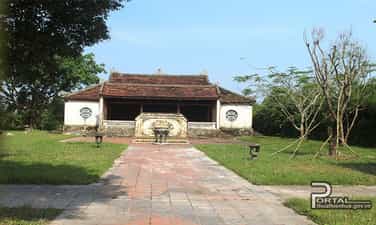
Nguyen Tri Phuong church and mausoleum
Nguyen Tri Phuong's church and mausoleum are located in Chi Long Village, Phong Chuong commune, Phong Dien district, Thua Thien Hue province. From Hue city center, follow National Highway 1A (30km North to Phong Thu commune, Phong Dien district) turn right along Provincial Road 6 about 15km to reach the monument. Nguyen Tri Phuong, real name is Nguyen Van Chuong, alias Ham Trinh, alias Duong Xuyen, born on July 21, Canh Than year (1800), hometown in Duong Long village (Chi Long), Chanh Loc canton, Phong Dien district, province Thua Thien (now Phong Chuong, Phong Dien). He served as a mandarin under the reigns of Kings Minh Mang, Thieu Tri, and Tu Duc, held many important positions in the royal court, was a Minister of the Nguyen Dynasty, and had many contributions to the expansion of Cochinchina and fighting the invading French colonialists. . He was injured during the French army's attack on Hanoi Citadel on November 19, 1873, then went on hunger strike and died on December 20, 1873 (ie the 11th day of the lunar calendar), at the age of 73. King Tu Duc had his body brought back for burial in his hometown and provided materials to build a church with his younger brother Nguyen Duy and son Nguyen Lam, both of whom had meritorious service in fighting the French colonialists. The church relics and Nguyen Tri Phuong's mausoleum were recognized as national relics in Decision No. 575-Decision/Culture and Information dated July 14, 1990 of the Ministry of Culture and Information (now the Ministry of Culture and Information). Culture, Sports and Tourism). Source: Thua Thien Hue Electronic Information Portal.
Hue
5514 view
Rating : National monument.
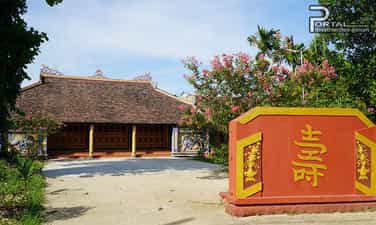
The Lai Thuong Communal House and Temple opened
The Lai Thuong communal house and temple are located on Bach Dang street, Phu Hiep ward (now Gia Hoi ward), Hue city, Thua Thien Hue province. The Lai Thuong Communal House - Temple was built on the land of The Lai village - an ancient village in Thuan Hoa, born over 500 years ago. Later, The Lai village split into two villages, The Lai Thuong and The Lai Ha. . Currently, The Lai Thuong village is located in Phu Hiep ward (now Gia Hoi ward), Hue city. Dinh The Lai Thuong faces West-South. In front is Dong Ba canal. The campus is 1,200 square meters wide, surrounded by a castle. The Lai Thuong Communal House is structured as follows: Tam Quan Gate with 4 tall, square pillars, embossed with parallel sentences in Chinese characters, 5m away from the pillars is a pair of cranes standing on the backs of turtles flanking a 1.8m high lantern, followed by is the courtyard. The communal house is built in the style of a three-compartment, two-winged house, 12m long, 9m wide, with 26 main columns and 4 porch columns. The main decorative theme is the four sacred animals, some flowers and leaves symbolizing the four seasons and the Bat Buu systems, all framed in boxes. The interior is divided into 2 parts: Harem and Front Hall (or Bai Duong). Temple of God The Lai Thuong has a three-entrance gate built in the style of an arched door. The Temple's architecture is in the style of a three-compartment, two-winged house, with 36 wooden columns, the main decorative themes are four sacred animals, tigers, and four-season flowers. The Lai Thuong Communal House and Temple is a cluster of relics containing many outstanding historical, architectural, artistic and socio-cultural values. This cluster of relics has been ranked as a national relic according to Decision No. 05/1999 Decision-Ministry of Culture and Information dated January 12, 1999 of the Ministry of Culture and Information (now the Ministry of Culture, Sports and Tourism). Source: Thua Thien Hue Electronic Information Portal.
Hue
5591 view
Rating : National monument.
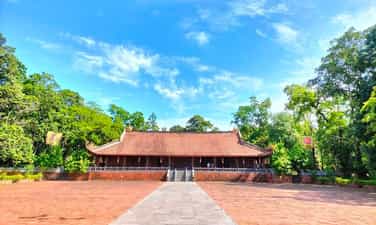
Lam Kinh historical relic site
Nestled in the heart of a land of outstanding people, Lam Kinh Historical Relic Area (Tho Xuan district, Thanh Hoa) has typical royal architecture and bold historical and cultural imprints, a testament to a period of time. brilliant development of the country. Located in Xuan Lam commune, Lam Son town, Tho Xuan district, 50km west of Thanh Hoa city, Lam Kinh historical relic site not only retains intact the works of the Later Le dynasty, but also preserves many precious antiques of a time considered the most prosperous in Vietnamese history. Lam Kinh historical relic site carries many sacred cultural values not only for the people of Thanh Hoa but for the entire nation. This is a unique artistic architectural work, bearing the mark of royal culture along with all the inscriptions and tombs, demonstrating each step of the brilliant development of the country's architecture. The temples and mausoleums are arranged according to Confucianism and feng shui perspectives, with harmony between hills, streams, and trees, creating a beautiful environment, balanced between natural landscape and architecture. . The ancient Lam Kinh citadel was built according to the terrain "located on the mountain facing the water", a gold standard in feng shui of Asian people. The north of the citadel is based on Dau mountain, the south overlooks the Chu river, has Chua mountain as a screen, the east is Phu Lam forest, and the west is protected by Huong mountain and Ham Rong mountain. The royal citadel, palace and temple of Lam Kinh citadel are still kept intact to this day, with a chessboard layout including the noon gate area, dragon yard, main hall, temple... The road leading to the royal citadel has a dug river called Ngoc River, this flow originates from Tay Ho, loops around the front of the citadel and Lam Kinh palace. Bach Bridge (Tien Loan Kieu Bridge) over Ngoc River is the main path leading tourists to visit Lam Kinh ancient citadel. The bridge has a bow shape, made in a unique architectural style called Thuong Gia Ha Kieu, meaning above the house, below the bridge. Cross the bridge about 50m to an ancient well, the well water is clear and full all year round, the North bank is paved with stone steps up and down, providing water for Lam Kinh palace. In the past, the well was filled with beautiful and fragrant lotus flowers, while keeping the water cool during the summer days Right behind the main hall are 9 Thai temples decorated solemnly and sacredly with a bow shape embracing the main hall. This is the place to worship the kings and queen mothers of the Later Le Dynasty, mainly the Early Le Dynasty, with a majestic and sacred scene all year round filled with incense smoke. In 1962, Lam Kinh Historical Relic Area was recognized as a National Historical Site, and in 1994, the Government approved a restoration project. In 2012, this place continued to be recognized as a special National Monument. SOURCE: VIETNAM NATIONAL TOURISM BUREAU
Thanh Hoa
2851 view
Rating : Special national monument

Ma Pi Leng
Ma Pi Leng (Ha Giang) is famous as one of the "four great passes" in the northern mountains of our country, along with O Quy Ho Pass (connecting Lao Cai and Lai Chau), Pha Din Pass (connecting Lao Cai and Lai Chau). Son La and Dien Bien) and Khau Pha pass (Yen Bai). Ma Pi Leng Pass, also known as Ma Pi Leng, Ma Pi Leng (meaning "horse's nose bridge") is known as the king of passes in the Northwest mountains, a dangerous pass about 20km long, in Pa Vi and Pai Lung communes, Meo Vac district and Ta Lung commune, Dong Van district. Ma Pi Leng peak is located at an altitude of 1,200m in the Dong Van Karst Plateau on the road named Hanh Phuc connecting Ha Giang city with Dong Van and Meo Vac districts. From the top of Ma Pi Leng, visitors can enjoy a panoramic view of the Dong Van Stone Plateau. Majestic mountain scenery with steep cliffs on one side and the deep abyss of the Nho Que River with emerald green water on the other. Tourists can come to Ma Pi Leng from January to March because this is the time of flower seasons such as plum, peach, mustard, April attracts the Khau Vai love market, September attracts the Khau Vai love market. The ripe rice season on Hoang Su Phi or November and December is the season of buckwheat flowers. SOURCE: VIETNAM NATIONAL TOURISM BUREAU
Tuyen Quang
5982 view
Rating : National monument
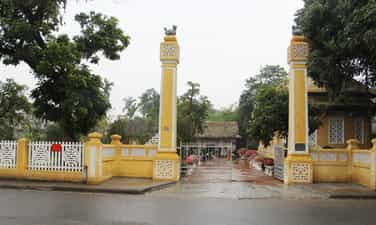
The mausoleum, church, and cemetery are named after Phan Boi Chau
The mausoleum, church, and cemetery named after Phan Boi Chau are at No. 53, Phan Boi Chau Street, Truong An Ward, Hue City, Thua Thien Hue Province. Phan Boi Chau - famous Vietnamese patriot, thinker, poet, and writer in the early twentieth century. After many years of traveling abroad to find a way to save the country, in 1925 Phan Boi Chau was arrested in Shanghai (China) and secretly brought to Hanoi by the French colonialists. Faced with the nationwide people's struggle movement demanding amnesty for him, the French colonialists had to put him under house arrest in Hue for 15 years (1925-1940). Mr. Phan's house on Ben Ngu slope: Mr. Phan's house was built between 1926-1927. The house was designed by him himself and built by Mr. Vo Liem Son - a teacher at Quoc Hoc School. The house has a horizontal square shape, three rooms with thatched roofs, symbolizing the three periods (North, Central, South), with relatively high and airy mud walls. The middle of the house is square, used as a place for speeches. There are separate rooms surrounding the room. Phan Boi Chau's mausoleum: The mausoleum was located by Mr. Phan Boi Chau in 1934, located right in front of the house and in the middle of the garden. After Mr. Phan passed away (October 29, 1940) with money from compatriots throughout the country, Mr. Huynh Thuc Khang built the tomb and church. The tomb is 7m long, 5m wide, has 5 steps 0.8m high, about 1m from the screen at the head of the tomb is a stele 1.8m high, 0.8m wide, on the stele there is the poem "Tu Minh" in Chinese characters were written by Mr. Phan in 1934. Mr. Phan Boi Chau Church: Built by Mr. Huynh Thuc Khang in 1941 along with the mausoleum area. The church was built on the right side of the house, formerly a 3-compartment house with brick walls and a tiled roof. The house is 7.5m long and 6m wide. Tu Duong: Tu Duong was built from April 1955 to 1956, designed by Mr. Ton That Sa, doctor Than Trong Phuoc was the Head of Construction. From the street is a large, massive tiled house, about 8m high, with a yin-yang tiled roof, facing the tomb of Phan Boi Chau. In front of Tu Duong, there is a sign with the words "From the path of predecessor martyrs and Mr. Phan Boi Chau". Currently, the Tu Duong throne has been partly used by the Thua Thien Hue Museum of History and Revolution to organize exhibits about Mr. Phan's life and career. Along with the main relics, in the garden area of Mr. Phan Boi Chau's house, there are also a number of other relics: Tomb of Tang Bat Ho, tomb of Mr. and Mrs. Phan Nghi De (son and daughter-in-law of Mr. Phan), stele house worshiping Au Trieu Le Thi Dan, wells... The statue of Mr. Phan is located on the right side of the garden. The statue was made by sculptor Le Thanh Nhon in 1973 with the participation of the Committee of Liberated Teachers and Intellectuals (under the Hue City Party Committee), the College of Fine Arts, Mr. Phan's family and other representatives. representatives, student officials and Hue students. The statue of Mr. Phan is the largest bronze statue in Vietnam, 3 meters high and weighing 4 tons of bronze. The statue is placed on a 2m high rectangular pedestal made of crushed stone. Cemetery named after Phan Boi Chau: The cemetery named after Mr. Phan Boi Chau is a 4,000m2 garden, near the Nam Giao herd, bought by Mr. Phan at the same time as the land to build a house on Ben Ngu slope. In 1934, he built a stele clearly defining the standards for those buried here. In the current cemetery, there are the graves of comrades Nguyen Chi Dieu, female historian Dam Phuong, Hai Trieu, Le Tu Nhien, Thanh Hai... The mausoleum, church, and cemetery named after Phan Boi Chau were recognized as national historical relics in Decision No. 575-Decision/Culture dated July 14, 1990 of the Ministry of Culture and Information (now the Ministry of Culture, Sports and Tourism) Source: Thua Thien Hue Electronic Information Portal.
Hue
5598 view
Rating : National monument.