Relic point Vietnam
Việt Nam
Xich Tho communal house
Xich Tho communal house was built at the time of the village's founding about 300 years ago, at the end of the Le Trung Hung dynasty. Due to the passing of time, the old village communal house was ruined and could no longer retain its magic. Around the end of the 18th century, Xich Tho communal house and pagoda were rebuilt synchronously on the current ground. After many renovations, the village communal house now has an area of 1,200 square meters, a curved roof with tiled roofs, and is built in the Dinh style, including 5 front halls and 3 back halls. In the middle of the front hall is the altar to worship Nam Hai village's tutelary god Vuong Pham Tu Nghi. According to legend, he was born in the reign of King Hong Thuan, Le Dynasty, around 1509-1516, in Nghia Xa, Niem Nghia ward, Le Chan district today. As a person with extraordinary health, learning a little and understanding a lot, proficient in literature and martial arts, he had merit in fighting the Ming invaders and assisting the Mac dynasty. Xich Tho Communal House still retains five of his deity titles through the dynasties: Duy Tan, Thanh Thai, Dong Khanh, Tu Duc, and Khai Dinh. In 1924, King Khai Dinh ordained him Phuc Than, recorded it in court ceremonies, and passed it on to places of permanent worship. Therefore, in addition to Xich Tho, now in the villages along the Lach Tray river, there are communal houses, temples or tablets worshiping him. In particular, Xich Tho village communal house still preserves 3 ancient statues made of wood, dating back about 200 years of tutelary god Pham Tu Nghi (Mac dynasty), Bach Xich Dai Vuong (pre-Ly dynasty), Bo Quoc (Tran dynasty). ). In addition, the communal house also preserves the post-god stone stele (genealogical stele) from the early 19th century, during the reign of King Thanh Thai, in recognition of those who made many contributions to the renovation of the communal house, pagoda, and communal lake island. Next to the village communal house is Hung Khanh pagoda. If anyone has the opportunity to visit the pagoda and hear the temple bell ringing next to the vast countryside and windy Lach Tray stream, they will find their soul very peaceful and relaxed. This is a pagoda with ancient beauty, preserving many historical and cultural values of Xich Tho. The pagoda also preserves many rare wooden statues that are nearly 200 years old and a stone Buddha statue dating back 500 years. The big bell (big bell) of Hung Khanh Pagoda, cast in bronze at Kieu Yeu canton from the 19th century, is still intact. On the body of the bell, there is a vivid inscription rich in cultural meaning. After 1954, peace was restored, Xich Tho communal house and pagoda became the learning place for Xich Tho children. From 1965 to 1975, Xich Tho communal house and pagoda were meeting places, gathering to see off the village's children who left to join the resistance war against the Americans to save the country. This place was also the evacuation point of many units during that period such as: Information soldiers of Military Region 3, Hai Phong Construction Company, Dong Tam International Automobile Repair Enterprise Vocational School... Through two great resistance wars of the country, the communal house and pagoda of Xich Tho village are truly the revolutionary base of the An Duong region, and have become a historical witness, a place to mark and remind many generations of people. homeland about heroic and proud years. In 2013, the complex of communal houses, pagodas, and stele commemorating Vietnamese heroic mothers and martyrs of Xich Tho village was recognized by the city as a historical resistance relic. SOURCE: Hai Phong City Electronic Information Portal
Hai Phong
5751 view
Rating : National monument
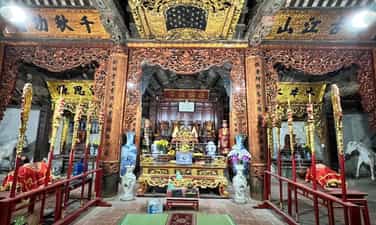
Dinh Tu Lam
Tu Lam communal house in Dong Minh commune, Vinh Bao district, Hai Phong city worships tutelary god Hoa Duy Thanh, a famous general of the Tran dynasty who participated in expelling the Mongol invaders in the 13th century. Regarding the background, the merits of the tutelary god are recorded in the table of legends kept at the communal house compiled by Dong Academician Nguyen Binh in the first year of Hong Phuc (1572) and local legend says: Hoa Duy Thanh from Linh Dong village, Vinh Lai district, Hai Duong town (now Bao Ha pine, Dong Minh commune, Vinh Bao district, Hai Phong), comes from a family of powerful aristocratic mandarins in the region, intelligent, healthy, knowledgeable in military techniques and martial arts perfect, admired by everyone. Hearing that the Mongol invaders invaded our country for the second time (1285), Hoa Duy Thanh spent his own money to recruit and train soldiers. When the royal court opened the exam to recruit talented people, he was the one who passed high and became a confidant general under the authority of the moderate Duke Tran Hung Dao, in charge of the elite army to protect King Tran from the siege. The enemy from the sea area of An Bang (present-day Hai Phong, Quang Ninh) safely entered the Chau Ai area (ie Thanh Hoa) according to the plan of Hung Dao Dai Vuong. During the third war against the Mongol invasion (1287-1288), Hoa Duy Thanh was ordered to bring protective troops to coordinate with the troops to pursue the enemy on the Bach Dang River, contributing to a famous victory in history. nation. Having wiped out the enemies, Hoa Duy Thanh returned to his hometown to live and was given the Tu Duong site by the king to use as his estate. When he died, the villagers built a temple right at the place where he used to train soldiers and horses. During the Le dynasty, Tu Duong temple was renovated to become Tu Duong temple and honored him as Tuong Canh. By the time of Khai Dinh. Tu Duong was renamed Tu Lam as it is today, because it avoids the king's name. The architectural decoration of the communal house is quite elaborate and meticulous. The stylized patterns of flowers and leaves, the themes of four sacred animals and four precious animals embossed on the beams, first verses, and seven porches are very skillful and lively. As for each dragon-shaped head, the technique of carving the canal is sophisticated, helping us determine the date of creation of the communal house around the 17th century (Le dynasty). Tu Lam communal house was recognized by the state as a historical relic in 1991. SOURCE: Hai Phong City Electronic Information Portal
Hai Phong
5423 view
Rating : National monument
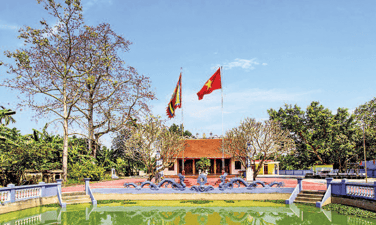
Dinh Van Cu
Van Cu Communal House was built in 1470, with initially quite simple architecture. During the reign of King Tu Duc (1848-1883), the communal house was built with 5 large and beautiful ironwood rooms. After it was destroyed, only the palace remained. In 2004, with the attention of authorities at all levels and socialization contributions, the communal house was restored. The communal house has simple architecture, located in a spacious and separate campus, in front is a lake, where water gathers, accumulating blessings for the land that will never run out of water. The site also preserves many precious relics. The entire hammock door system includes 5 layers of decoration in the central front hall and 3 back palace rooms that appear in the monument like a brilliant golden palace. The intricate and sophisticated carvings represent the nation's art. In addition, there are many other valuable relics such as mining examinations, dragon temples, incense burners, great characters, parallel sentences... enriching the treasure of national cultural heritage. According to the legend of Van Cu commune, Van Cu canton, An Duong district (Kien An province), Van Cu communal house worships two historical figures, Do Huy and Do Quang. The two brothers, along with their cousin Cao Tuan, made great contributions to helping King Dinh Tien Hoang quell the rebellion of 12 warlords and repel the Song Dynasty invaders. King Dinh appointed them the position of Governor of Dong Chau and Vice President of Hoan Chau. In the places they took office, the two men implemented many progressive policies, did many virtuous deeds, treated the people as children of the royal court, and came to peace in the continent. The music of the piano and music was constantly played, and the people loved and praised them. his merit. In October of the Year of the Cat (984), General Le Hoan and Queen Mother Duong Van Nga opened the regency curtain. Being important officials of the previous king's dynasty, the two men, along with other loyal officials such as Nguyen Bac, Dinh Dien... rose up to fight back. Because the soldiers were exhausted, the two men and the remaining soldiers got on the boat and retreated to Van Cu site to form a battle in Dong Da and Dong Truc to resist and then died in battle here. The villagers mourned and buried Do Quang in Dong Da and Do Huy in Dong Truc, and set up a pavilion to worship in the house where they were born. SOURCE: Hai Phong City Electronic Information Portal
Hai Phong
5411 view
Rating : National monument
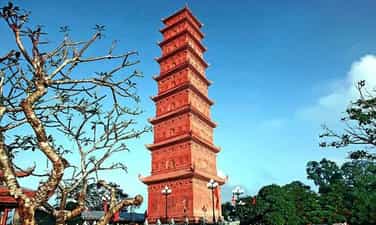
Tuong Long Tower
Do Son tourist area, Hai Phong is famous for its ideal beaches and charming scenery. But few people know that on top of Long Son (Ngoc Xuyen ward), the first of nine mountains running along Do Son peninsula, there is also a cultural and historical relic thousands of years old - Tuong Long tower. Tuong Long Tower (also known as Do Son Tower) was built during the reign of Ly Thanh Tong. This Buddhist architectural work was built on a land area of about 2,000 m2, located in Van Son ward, Do Son town. The four corners of the tower all lean to the center at 190 degrees. The inside of the tower is hollow and is where the Amitabha statue is placed. The building is built of bricks and stones of different sizes. In addition to bricks, there are also bricks covering the outside of the tower shell with unique decorative arts such as lotus flowers, chrysanthemums, and lemon flowers. This decoration represents typical Ly Dynasty art. According to the book "Dai Viet History", in the year Mau Tuat 1058, King Ly Thanh Tong, after traveling across Ba Lo beach, stopped here to build a tower. Later, he dreamed of a golden dragon and gave the tower the name Tuong Long, meaning "Seeing the golden dragon appear" to remember the good omen. Some people believe that Do Son seaport is one of the cradles that received the tower here to worship Buddha. In the past, this place may have been an observatory in the "transmitting light" system. Whenever there is an incident, coastal observation stations burn dry grass to send smoke into the sky, transmitting alarm signals to the capital. Through the remaining relics, it can be seen that Tuong Long tower was built at the same time as Bao Thien tower in Thang Long citadel (now the Hanoi Opera House area). According to Dai Nam Nhat Thong Chi", the old Do Son tower is 100 meters high, built on a 1000m2 area of land, has 9 floors, the door opens to the west. One meter is 0.45m long, so the tower is about 0.45m high. , located on a mountain 100m above the sea, so this tower was among the tallest towers in Vietnam at that time. Tuong Long Tower was renovated and restored many times during the Tran and dynasties Le, but in the 3rd year of Gia Long (1804), the Nguyen court demolished the tower to get bricks to build Hai Duong citadel. This proves that the ancient Tuong Long tower was extremely large and majestic. From the location of Tuong tower Long can see the sea with ships going out to sea to catch fish to bring back fresh seafood to serve tourists, see Do Son town with villages and green fields, and understand the ancients. Carefully choose the location to build the tower. SOURCE: Hai Phong City Electronic Information Portal
Hai Phong
5449 view
Rating : National monument
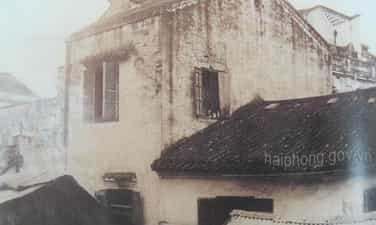
House number 1, lane 42 Me Linh
House No. 1, Alley 42 Me Linh, An Bien Ward, Le Chan District, Hai Phong is a secret agency of the Provincial Committee of the Vietnam Revolutionary Youth Comrades Association of Hai Phong in 1927 - 1929, a secret agency of Indochina Communist Party Committee of Hai Phong Province in the period 1929 - 1930. There was once the base of operations of comrades Nguyen Duc Canh, an elite soldier of the Party, a son of the working class. People and working people of Hai Phong. After attending a political training class organized by comrade Nguyen Ai Quoc in Guangzhou, in September 1927, comrade Nguyen Duc Canh returned home to work and was appointed by the Vietnam Revolutionary Youth Committee as comrades of the Association. Secretary of the Provincial Party Committee of Vietnam Revolutionary Youth Comrades Association of Hai Phong. In early 1928, he implemented proletarianization and opened training classes, wrote newspapers to enlighten the revolutionary masses, and fought against the oppression and exploitation of the French colonialists. In June 1929, the Indochina Communist cell was established. In September 1929, at the above location (1/42 Me Linh), a conference of outstanding communist youth voted to establish the Indochina Communist Party of Hai Phong. After the conference to unify the three Communist Party organizations in Vietnam (February 3, 1930), comrade Nguyen Duc Canh, as Northern Party Committee of Tonkin, returned to consolidate the Hai Phong Party Committee. Thanks to the correct policy of the Central Government, under the direct direction of the Northern Party Committee, the Hai Phong Party Committee was able to mobilize the masses to fight enthusiastically and continuously. In 1929, the Governor of Hai Phong propagandized, distorted and defamed the noble ideals of the communists. Comrade Nguyen Duc Canh wrote an article exposing the colonialist's distorted arguments, and at the same time Through this, we enlighten the masses to clearly see their sinister face and call on the masses to support the communists for the cause of national and class liberation. In this house, there are still some relics (restored) that comrade Nguyen Duc Canh used such as: desk, cabinet, wooden bed. Every year, the house at 1/42 Me Linh is cared for and renovated by the Party Committee and people of Hai Phong. That is the place that marked a period of secret activities of the Party. Comrade Nguyen Duc Canh, an eminent revolutionary soldier of the Party, the first Secretary, a glorious son of the working class and the people of Hai Phong, fell at a very young age. Today, at 124 Nguyen Duc Canh, there is also a memorial plaque for comrades. SOURCE: Hai Phong City Electronic Information Portal
Hai Phong
5126 view
Rating : National monument
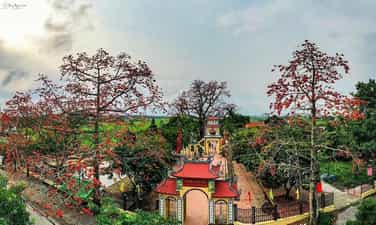
Mo Pagoda Relics
Mo Pagoda Relics - Hai Phong spiritual tourist destination located in Ngu Phuc Commune, Kien Thuy district, Hai Phong city Legend has it that Mo Pagoda worships Princess Quynh Tran, daughter of King Tran Thanh Tong, who also publicized this land when choosing this place to build a pagoda, recruiting people to reclaim land, and build together. build. The pagoda has an ancient beauty, quiet over the years, along with an ancient rice tree that has stood tall for more than 720 years, recognized as a Vietnamese heritage tree. In 1991, Mo Pagoda was recognized as a National Historical and Cultural Monument. SOURCE: VIETNAM NATIONAL TOURISM BUREAU
Hai Phong
5363 view
Rating : National monument
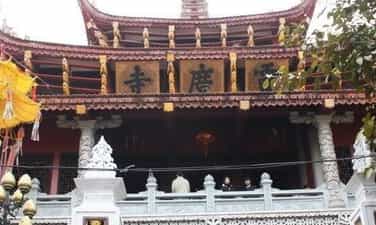
Red Pagoda relic area
The Red Pagoda relic area is located on Le Lai Street, Ngo Quyen district, Hai Phong city Red Pagoda is the common name of the ancient Linh Do Tu pagoda. The reason the pagoda is named Linh Do is because this is the place that villagers established in the high basin area near the riverbank, with the desire to worship Buddha and pray for Tathagata's salvation for the unfortunate souls drifting to the riverbank here. . According to the people of this place, the Red Pagoda is one of the most sacred pagodas in the city of red poinciana. The pagoda also attracts pilgrims and sightseeing visitors when it possesses ancient architecture with 3 floors, 20 roofs, 26m high - a unique architecture that is unique in the history of pagoda architecture in Vietnam. . SOURCE: VIETNAM NATIONAL TOURISM BUREAU
Hai Phong
5780 view
Rating : National monument
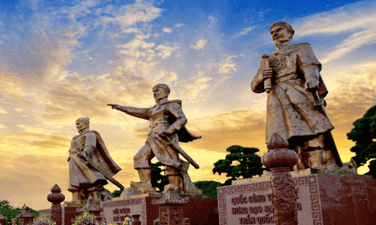
Bach Dang Giang relic area
Bach Dang Giang relic area in Thuy Nguyen, Hai Phong is 20 hectares wide, located in the Trang Kenh scenic complex recognized in 1962. Those three naval battles were, the battle of Ngo Quyen to defeat the Southern Han army in 938, the battle of Le Hoan to defeat the Song army in 981 and the battle of Tran Quoc Tuan to defeat the Mongol Yuan army in 1288. Great as that, but with remaining legacies is still not enough to show the magnitude of those victories. Recognizing these great values, since 2008, dedicated people have been determined to rebuild the complex that marks the sacred soul of the mountains and rivers of the South. The entrance to the relic is a pebble garden and a stone pillar about 5 meters high, all four sides are engraved with words, the middle side is engraved with the poem "Giang san is prosperous Bach Dang thau", the remaining three sides praise the merits of the three predecessors. in naval battles. The complex has many other areas such as Bach Dang Giang temple worshiping Ngo Quyen Vuong, who founded the Bach Dang stake battle, defeated the Southern Han army in 938, ended 1117 years of Northern domination, and opened Dai Viet civilization. Trang Kenh Vong De Temple worships King Le Dai Hanh, who in 981 recreated the stake of Ngo Quyen to attack Song Binh Chiem, bringing Dai Co Viet on par with Dai Han. The Trang Kenh shrine worships Quoc Cong Tiet Hung Dao Dai Vuong Tran Quoc Tuan, who defeated the Mongol army three times, culminating in the Bach Dang victory in 1288, opening up the brilliant East Asian civilization. All three temples are designed according to ancient architecture with a wonderful combination of wood and natural stone. The Temple of President Ho Chi Minh is the last place in the four sacred words of the Bach Dang Giang relic site. This is the first place in Hai Phong to build a temple to worship President Ho Chi Minh, the great leader of the nation, who is always in the hearts of all Vietnamese people. Truc Lam Temple of Trang Kenh, this is a pagoda modeled after Dong Pagoda in Yen Tu. The pagoda worships Buddha Tathagata, Dama and Bodhisattva, Buddha Emperor Tran Nhan Tong. At the foot of the pagoda are the Bach Ngoc statues of 18 Arhats and an ancient banyan tree over a hundred years old. The pagoda is one of the highest places in the Bach Dang Giang relic area, with a panoramic view of the spacious space, overlooking the Bach Dang river and the majestic Dong Trieu range. Especially on clear days, visitors can also see Yen Tu landscape. The Holy Mother Temple in the relic worships the First Mother of Heaven, the Second Mother of Thuong Ngan, and the Third Mother of Thoai Phu. In the temple there are also incense burners and statues worshiping Ngu Vi Ton Ong, Tam Vi Hoang, Duc Nam Hai Than Vuong and Mau Son Trang. In the relic area, there is also a museum displaying Bach Dang pile artifacts preserved in their original state; diagram of the battles on Bach Dang river; archaeological sites of ceramics from the Le and Tran dynasties..; Vietnamese history through the ages. SOURCE: VIETNAM NATIONAL TOURISM BUREAU
Hai Phong
5863 view
Rating : National monument
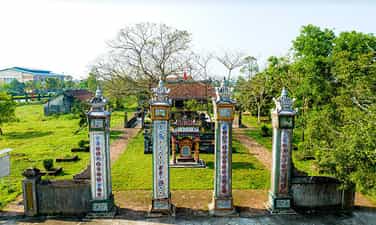
Thu Le Communal House
Thu Le communal house is located in Sia town, Quang Dien district, Thua Thien Hue province, 16km north of Hue city center, 1km from Quang Dien district capital. Thu Le village is one of the villages established quite early, before Nguyen Hoang's time to defend Thuan Hoa. After the village was established, 8 cultivators chose the central location of the village to build the Communal House. The communal house is located on a campus of about 1,000 square meters. From the outside are 4 tall square-shaped pillars, each pillar has a parallel sentence in Chinese characters. 5m away from the pillar is the stele house, semicircular lake, followed by the screen. The communal house consists of 5 compartments and 2 wings, with 48 large wooden columns. The communal house has no partitions and a door system on the facade, and the roof is covered with yin and yang tiles. The interior is divided into two parts, inside is the Harem with altars arranged, outside is the Front Hall with hanging diaphragms, parallel tureens and parallel sentences. On the left and right sides of the temple, there are two monks' houses. Currently, Thu Le Communal House still preserves: a stone plaque, an amulet stone, 57 ordinations, more than 400 pages of documents (geography), 16 parallel sentences, 3 horizontal paintings, two wooden crane statues. The outstanding feature of Thu Le communal house is the traditional beam house style, with sturdy wooden beams symbolizing the residents of Tam Giang lagoon. Every year there are two main festivals, Spring Te (January of the Lunar Calendar) and Autumn Te (July of the Lunar Calendar). With that historical, architectural and artistic value, Thu Le Communal House was recognized as a national relic according to Decision No. 61/1999-Decision/Ministry of Culture and Information, dated September 13, 1999 of the Ministry of Culture and Information. Culture and Information (now the Ministry of Culture, Sports and Tourism) Source: Thua Thien Hue Electronic Information Portal.
Hue
5893 view
Rating : National monument.
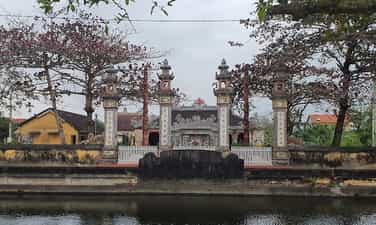
Dinh Da Le
Da Le communal house is located in Thuy Van ward, Hue city, Thua Thien Hue province, about 6km south of Hue city center. Da Le Communal House was built around the 7th year of Minh Mang (1826) and is a relatively ancient architectural work, awarded by King Khai Dinh with 4 words "My Tuc Kha Gia" meaning "Good customs worthy of praise". Da Le communal house campus is 2,158m2 wide. The layout of the communal house includes: semicircular lake - symbolic pillar - screen - Great communal house linked together along a vertical axis. The Dai Dinh building is made in the style of a three-compartment house with two wings, with an area of 221m2 (17m x 13m). The truss columns are made of wood, with a harmonious structure, including 28 large columns, of which the largest row of columns (master column) has 8 columns, the second row of columns (military column) has 16 columns, and the third row of columns (porch column) has 4 columns. The roof of Dinh Da Le is slightly horizontal, tiled, decorated with "Two dragons flanking the moon", the four corners of the roof have a "dragon return" symbol. The interior of the communal house has a wooden altar lacquered with gold and meticulously carved. On the ceremonial gates, the three panels are carved with typical motifs of Nguyen Dynasty art. Da Le Communal House still preserves 20 couplets and 6 horizontal paintings. Over time and war, Da Le communal house was restored many times. Through the renovations, some wooden structures were replaced with reinforced cement. Da Le Communal House is a typical architectural relic with value in terms of traditional wooden architecture, with Hue folk house style. Da Le Communal House is also the gathering place and many traditional festivals and cultural activities of the village take place. In particular, many important historical events took place here by local people responding to patriotic movements and national liberation movements. With the architectural, artistic and historical value of the monument, on January 19, 2001, the Ministry of Culture and Information (now the Ministry of Culture, Sports and Tourism) issued Decision No. 04/2001/ Decision - The Ministry of Culture and Information recognizes Da Le communal house as a national architectural and artistic relic. Source: Thua Thien Hue Electronic Information Portal.
Hue
5401 view
Rating : National monument.