Relic point Vietnam
Việt Nam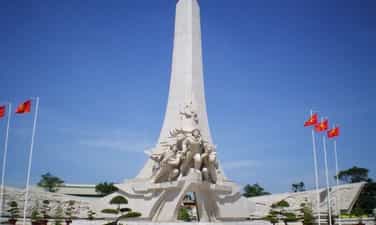
Dong Xoai Victory Site
Dong Xoai Victory Site Relic is located in Tan Phu ward, Dong Xoai city, Binh Phuoc province. In early 1965, after the Binh Gia victory and the collapse of the US "special war" strategy, the struggle movement of our people in the South had a new development. The Military Commission and the Regional Command decided to open the Phuoc Long - Dong Xoai Campaign. Dong Xoai was chosen as the key battlefield of the campaign. To prepare for the campaign, logistics were carefully prepared. The people actively contributed their human and material resources, focusing on ensuring workers, food, food... It can be said that in the days of preparation for the Dong Xoai Campaign, the entire Phuoc Long mountain forest did not sleep day and night. The sound of pestles pounding rice, the light of torches and umbrellas, the sound of footsteps, voices, and laughter of citizens... all have created a complete picture of all the people working in logistics, all the resistance fighters of the ethnic minorities in the forest. mountains of the Southeast region. Directly participating in the battle at the strategic direction of Dong Xoai were Regiment 1 (Q761), Regiment 2 (Q762), Regiment 3 (Q763) of the main force Division 9... Many soldiers wrote slogans on their hats, on the butt of the gun with the following content: "Determined to liberate Dong Xoai", "Severely injured, do not scream, slightly injured, do not leave the battlefield" or "Determined to finish Dong Xoai, if not finished, Dong Xoai will not return". The battle of Dong Xoai branch took place in 3 days, starting from June 9, 1965 to June 12, 1965, we completed the task of attacking and destroying Dong Xoai branch. The Dong Xoai victory along with the Binh Gia and Ba Gia victories contributed to the complete defeat of the US imperialist "Special War" strategy and "added a glorious page to the history of the struggle of the Democratic Front". The Liberation Nation of South Vietnam opposes the war of the American Empire's invasion. Dong Xoai Victory Site Relic was built in 2005 with a total area of 16,932.88 m2, including construction items: Victory monument, relief paintings, souvenir gallery, green tree system, fountain water... A part of the heroic history of the Phuoc Long - Dong Xoai Campaign has been recreated at the monument with the image of 3 soldiers in a coordinated combat position, rushing to fight, portraying the true fighting spirit. have a cold. Behind the monument, two bas-reliefs illustrate the spirit of the fiery Dong Xoai battle in the past by vividly recreating the panoramic view of all aspects of the preparation process, the progress of the attack, and the moment of the army's victory. and our people. With great historical values, the Dong Xoai Victory Site relic was decided by the Minister of Culture, Sports and Tourism to rank as a national historical relic on December 12, 2014. Source: Binh Phuoc Provincial Museum Electronic Information Page
Dong Nai
7188 view
Rating : National monument

So Tra historical site
Right on the campus of Regiment 726, Quang Truc commune, Tuy Duc district (Dak Nong), there is an old, white house, built in French architectural style. According to experts, this place was formerly the site of So Tea built by the French in Dak Nong. Around the 30s of the twentieth century, French colonialists entered the Central Highlands to open plantations, grow crops such as coffee and tea and hire ethnic minority workers. In 1962, the Plantation at that time was about 20 hectares large and there were about 80 workers working here. Among them, there are about 40 ethnic minorities working at the plantation. In particular, there were 12 political prisoners arrested to work here. Workers working at the plantation are paid 30 VND/month. There are people who don't take money and will exchange it for rice or salt. At the end of the year, you will be rewarded with beef. One day, workers at the tea plantation work from 7 a.m. to 5 p.m., and are given food and rest at noon. Around 1966, the plantation was dissolved. Through surveys, the historical site of So Tra was preserved quite intact with a structure built with reinforced concrete structures, following the French architectural style of the early 20th century. Currently, there are no specific documents about the process of building the house on which date, month or year. The area of the house is about 200m². The house is almost intact with 1 ground floor, 1 floor and 1 mezzanine. Inside the house there are 8 rooms and a fireplace built from the ground floor to the first floor and mezzanine for warmth when it's cold. Behind the room on the ground floor there is a secret escape hatch, but the mouth of the tunnel is covered. Up to now, although managed by Regiment 726, this secret tunnel has not been discovered. Near the construction area there are a number of fruit trees and ancient tea trees that, according to local people, are about 100 years old. Among them, 2 tamarind trees have been recognized as Vietnamese heritage trees in September 2022. So Tra historical site is recognized as a provincial historical site. Source: Dak Nong Electronic Newspaper
Lam Dong
6662 view
Rating : Provincial level relics

Phan Thiet Water Tower
Phan Thiet water tower located on the Ca Ty river was built nearly 90 years ago, designed by Prince Xuphanuvong (Laos), and is currently a symbol of Binh Thuan province. Phan Thiet Water Tower (also known as "Water Tower") was built by the French from 1928-1934 according to the urban planning policy of the contemporary government, serving to provide domestic water for the French Legation (now the headquarters of Binh Thuan People's Committee) and people in Phan Thiet city. The location for the water tower is located on the land of Long Khe village, on the left bank of the Ca Ty river, high and airy, about 350 meters from the Legation Palace. The design of the water tower was drawn by Prince Xuphanuvong (Laos, who was then an international student at Albert Sarraut School in Vietnam), approved by the Hanoi Department of Public Works and the project was put out for bidding. Among two French contractors and two Vietnamese contractors, contractor Ung Du (originally from Hue, working in Binh Thuan) won the bid. The water tower is built in a regular octagonal cylinder. The height from the base to the top of the tower is 32 m. The whole is divided into 3 parts, including: the tower body, the platform and the roof. The tower's body has an octagonal cylindrical shape, each side is 3.9 m wide, the higher it goes, the smaller it becomes. The diameter of the tower's base is 9 m long, the circumference is 31.2 m, and the floor area is 73.4 m2. Along the edges of the tower's body, from top to bottom, there are 5 ventilation boxes decorated with seal patterns corresponding to the 5 words: "Happiness", "Phuc", "Tho", "Kiet", "Loc" . The meaning is to wish all people joy, happiness, longevity, prosperity and prosperity. Particularly, the west side of the ventilation box with the word "Loc" is replaced by an iron door entering and exiting the tower. The platform, that is, the water tank, is also designed in an octagonal shape, 5 m high, 9 m in diameter, containing 350 m3 of water. Around the platform, there are 8 circles embossed with pieces of porcelain stylized with the four letters U.E.P.T, which stands for the French phrase "Usine des Eaux de Phan Thiet" (meaning Phan Thiet Water Plant). With its high architectural features, the building is also used as a flagpole. Master Nguyen Chi Phu, Deputy Director of Binh Thuan Provincial Museum, said that during the construction process, experts and workers strictly followed the technical design. Gravel must be washed 5 times to remove sand and dust. Foundry sand must also be washed 3 times to remove dirt. Cast iron must be rubbed with sandpaper to remove rust. Boards used for formwork must be planed smooth so that when removed, there is no need to add any additional plaster. Thanks to that, the project is sturdy and durable until today. After nearly 90 years of existence, even in the face of war bombs and harsh environments, especially through two historic floods in the years of Nham Thin (1952) and Quy Dau (1993), the water tower still stands majestically in the heart of the city. The city, becoming a sacred symbol, entered the poetry and music of the coastal land of Phan Thiet. On October 19, 2018, Phan Thiet water tower was decided to rank as a provincial monument by the Binh Thuan People's Committee. Source: Phan Thiet Tourism
Lam Dong
7342 view
Rating : Provincial level relics
Dinh Tan Loc
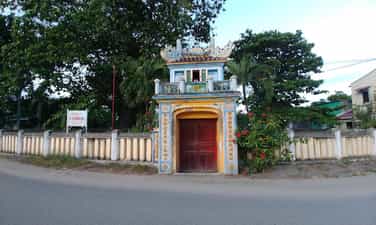
Tan Loc Communal House is located in Quarter 4, Tan Tai Ward, Phan Rang - Thap Cham City, Ninh Thuan Province. The communal house was built at the beginning of the village. According to the village elders, in the 11th year of Minh Mang, after Mr. Phan Van Nghi applied to establish Tan Loc village in Kinh Dinh, Ninh Thuan district, Tan Loc communal house at that time was called Dinh Dinh Thuy, and was newly built. at the end of the village using simple bamboo stick materials. In the year of Giap Dan (1853) under the reign of King Tu Duc, Dinh Thuy Communal House was moved to its present location. The communal house worships the Thanh Hoang God, Thien Y A Na and Chief Eunuch Bach Ma. According to the customs left by the ancestors, every year Tan Loc village organizes a grand ceremony at the village communal house in the second month of the lunar calendar and a traditional middle ceremony in the eighth month of the lunar calendar. Each sacrifice is divided into three parts, with very solemn rituals, from the Opening ceremony, to the taboo ceremony of the Ancient Sages and the Sacrifice ceremony at the Main Hall. Tan Loc communal house, Tan Tai ward, has been recognized by the Ministry of Culture and Information as a historical, cultural, architectural and artistic relic. Tan Loc Communal House was built on a land area of 1,950 square meters, surrounded by a fence. The front of the communal house faces the Dinh River, the back side looks into the distance with Ca Du mountain as a strong backrest. Tan Loc Communal House is an architectural complex including: from the outside are the ceremonial gate, screen, brick yard, about 15m away is the main hall, connecting the main hall with Kieu's house is a small yard that the elders often call the temple. Thien Tinh (sky well). Adjacent to Kieu's house is Tien Hien's house. On both sides of the main hall are the East and West houses, in front of the East and West houses are two small temples, the East temple worships the Five Elements, the West temple worships the Earth God, and on the two sides of Kieu house are two Tru houses. (kitchen) but only one room in the east remains, while the one in the west is ruined. In the East, between the East house and the Tru house, there is a small gate (also called the East gate) used to go to the well to get water. Tan Loc Communal House is a valuable architectural work and wooden sculpture. Architecturally, the communal house is a complex of many four-pillar houses assembled together. The presence of pierced and missing trusses makes the area of the communal house expand to the surrounding area. Decorative themes in the communal house are quite diverse, most of the classical motifs are used and have a profound philosophical nature such as: "Four Spirits": Dragon symbolizes power, Lan symbolizes the desire for Thai Binh, Quy not only symbolizes endurance and long life, it is also conceived as a union in the relationship between heaven and earth. Mother, Phung represents the eternal desire of the Vietnamese people in their relationship with the gods. With the eight treasures theme, there is the Sun Flower (heaven) symbolizing the sacred place where the gods reside. The sword represents the power of martial artists to eliminate evil and demons. Fan figs to eliminate evil spirits. The altar represents the nobility of the Taoist. The wine gourd symbolizes Ly Thiet Quai's search for "forgetfulness" to escape the evil bonds of life and the Nhu Y stick represents power... Over the past 100 years, due to the impact of nature, Dinh has built through many renovations. During those renovations, due to limited awareness, some architecture such as the East house and West house were completely renewed on the old foundation, but basically the main hall and the Tien Hien house still retained the original elements. so it still does not lose the majestic, ancient appearance of the communal house. Source: Ninh Thuan Tourism Promotion Information Center
Khanh Hoa
7533 view
Rating : National monument
Historical site of the Ngan Son - Chi Thanh massacre
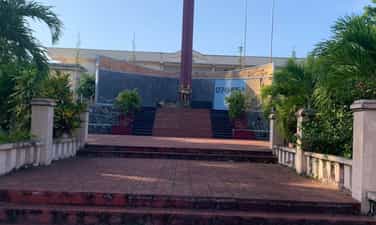
After the Geneva Agreements were signed, the US imperialists and their lackey regime Ngo Dinh Diem still deliberately violated the Agreements. In Phu Yen, on September 7, 1954, three companies of the 10th battalion of the Vietnam National Army (treasonous puppet troops) came to Ngan Son to take over. Company 1 was stationed on the national highway, company 2 was stationed east of the elementary school, company 3, commanded by Captain De, was stationed at the school. Captain De went behind the school, entered Mr. Banh Lien's house and saw a photo of President Ho Chi Minh on the altar and immediately took it down. Mr. Banh Lien's wife was sweeping the yard at that time and used a broom to hit this officer. He got into a fight with the homeowner. The whole family cheered together. Many people ran, and after a while people from the Ngan Son, An Thach, An Dan... regions came to protest against the Vietnamese Nationalist soldiers. Suddenly, Captain De (the book History of the Party and People of Chi Thanh town wrote that his name was Vo Duy De) ordered his soldiers to shoot directly into the crowd in the school yard. Nine people were hit by bullets and died on the spot, while ten others were injured. The people were extremely indignant, causing Vietnamese Nationalist soldiers to hastily withdraw into Chi Thanh. The Vietnam Labor Party's base operates secretly in Ngan Son to mobilize people to carry the dead and injured into Chi Thanh to continue fighting with the Vietnamese National government. At this time, the people of An Ninh, An Dinh, An Cu... communes also flocked to support the struggle. From Nha Thuong slope (now north of Truong Xuan quarter, Chi Thanh town), Vietnamese Nationalist soldiers placed machine guns and shot straight at the group of people from the direction of An Ninh. A series of people collapsed into the fields. People from An Dinh who came down were also shot dead by soldiers, many others also collapsed at Truong Giac Pagoda (now in the stadium area of Tuy An district). On the afternoon of September 7, 1954, 79 people died and 76 were injured. People's anger is increasing day by day. On September 7, 1954 (ie August 11, Year of the Horse), the people of Ngan Son - Chi Thanh in particular and the people of Phu Yen in general will never forget these landmarks: Truong Ngan Son - the first point massacre broke out; Nha Thuong slope and the district People's Theater area - where enemies frantically shot at the protesters. To commemorate the heroic spirit of struggle and sacrifice of the people of Tuy An district, the local government built a memorial in the center of Chi Thanh town. On June 18, 1997, the Ministry of Culture and Information issued a decision to recognize the place where the Ngan Son - Chi Thanh massacre took place as a National Historical Site. Source: Phu Yen online
Dak Lak
7036 view
Rating : National monument

Long Doi Pagoda (Doi Son)
Doi Son pagoda relic complex, Doi Son commune, Duy Tien district, Ha Nam province, ancient Son Nam town. The pagoda was built on top of Doi mountain, within 2 hectares of forest garden. According to written historical records and related legends, Doi Son Pagoda was originally a small temple that existed from the 10th to 11th centuries. During this period, the pagoda was associated with the name of the monk Dam Cuu Chi, who was the master of the temple. Replace the bamboo and thatch architecture of the past to build pagodas with bricks and tiles, a more sustainable material. In the 12th century, King Ly Nhan Tong, on his way through here, saw that the scenery was still there but the pagoda was in ruins, so he rebuilt the pagoda and erected the Sung Thien Dien Linh tower. Construction began in 1118 and was completed in 1121. From then on, Doi Son Pagoda became a great landscape and palace, one of the important Buddhist centers of the Ly Dynasty with the meaning of guarding the south of Thang Long citadel. Doi Son Pagoda has stood firm for more than 300 years. In the early 15th century, when the Ming invaders invaded our country, the pagoda and tower were completely destroyed. During the late Le, Mac, and Nguyen dynasties, Doi Son pagoda was continuously built and renovated, gradually restored with 125 compartments, built in the foreign internal style, including a hall of worship and heavenly incense. and the upper palace, two rows of corridors on both sides worshiping the Eighteen Arhats. During the resistance war against the French, this ancient pagoda was once again destroyed. After peace was restored in the North, the government and local people actively restored the temple. A major repair in 1958 completed the main works here. Through many ups and downs of history, the pagoda still retains its ancient and sacred features, imbued with the architectural and artistic style of the Ly Dynasty. This is a temple with a long history, reflecting a flourishing period of Buddhism in the nation's history and is the pride of the people here. One of the artifacts with outstanding historical and cultural value kept at Doi Son Pagoda today is the Sung Thien Dien Linh stele. The stele with unique carving art contains a lot of rare information for studying the history and culture of the Ly Dynasty. In particular, the Sung Thien Dien Linh stele is also the only stele that provides rare information about the Quang Chieu Light Festival in Thang Long citadel, the art of water puppetry, Buddhist rituals, and the repair of Dien Huu pagoda. (One Pillar Pagoda), the construction process of Sung Thien Dien Linh tower. Doi Son Pagoda is also one of the few pagodas today that still preserves many valuable Ly Dynasty art artifacts such as: Statue of Da Bao Tathagata, Vajra statue, statue of a human head and bird body (kinari) - works The product demonstrates the cultural interference between the two artistic architectures of Champa and Dai Viet during the Ly dynasty. Along with architectural items and a system of artifacts and worship objects, Doi Son Pagoda also preserves a rich, diverse and very valuable treasure of Han Nom heritage. This is a valuable source of material that has summarized the cultural quintessence of many dynasties, from folk knowledge to scholarly knowledge, and is a very unique asset with priceless value that few places can find. With a long history and many events, the pagoda also has strong archaeological value. In the excavation pit located between the pagoda's harem and the back house, the foundation, architectural materials and many Ly Dynasty artifacts such as decorative specimens, ceramics, crockery, and metal were found. The historical relic of Doi Son pagoda demonstrates the creativity in construction science, construction material production as well as exploitation techniques and taking advantage of natural conditions of generations of ancestors in feudal dynasties. with skillful construction techniques of wood, stone, and brick materials, creating architectural works of high artistic value. With the above typical historical and cultural values, on December 23, 2017, Doi Son Pagoda relic, Duy Tien district, Ha Nam province was signed by the Prime Minister and ranked as a special national monument. special. Source: Ha Nam Electronic Newspaper
Ninh Binh
7225 view
Rating : Special national monument

Ta Phu Temple
Ta Phu Temple is located in the center of Ky Lua market street, now in Hoang Van Thu ward, Lang Son city. Ta Phu Temple was built in the 4th year of Chinh Hoa (1683) to worship the mandarin of the Later Le Dynasty named Than Cong Tai, the Left Admiral of the Han Dynasty, who was instrumental in building and expanding Ky Lua market street. The main door of the temple faces west, located on high ground, creating a majestic and sacred look. The temple's architecture is in the Cong style, consisting of two buildings: the Dai Bai and the Hau Palace, connected together in a bamboo tube style. The column and truss structures are all made of wood, the walls are made of bricks, the roof is covered with yin and yang tiles, and are not decorated with elaborate patterns or motifs. The most valuable artifact in the temple is a stone stele erected in the year of the Pig, the 4th Chinh Hoa era (1683). The stele's title is: Respecting the Left Admiral Than Cong Tai as a teacher and father; On the side is written the words: Guests of the two countries. The content of the stele talks about the people of the two countries remembering the merits of Han Cong Than Cong Tai with Lang Son, with the merchants of Vietnam and China and the expansion of the trading market at Ky Lua market street. The stone stele is placed in the stele house inside the temple, the stele is crafted in a cubic shape, the stele body is square cylindrical, 2.1m high; The base of the stele has two floors, the upper layer is carved in the style of a collapsed mahogany leg supporting the stele's body, the lower layer is carved with lotus petals overlapping three layers running around. The top of the stele is gradually tapered upward, with a stylized two-petalled lotus flower hugging the top; Currently, only three sides of the stele can be read, one side is faded. It can be said that this is a well-balanced, artistically beautiful stone stele; There is historical value about the Han character Than Cong Tai worshiped at the temple and his merits. In 1993, Ta Phu Temple was ranked as a National Monument by the Ministry of Culture, Sports and Tourism. The temple festival is held from January 22 to 27 every year, attracting a large number of visitors and was recognized as a National Intangible Cultural Heritage in 2015. Source: Lang Son Provincial Museum Electronic News Page
Lang Son
7377 view
Rating : National monument
Tu Ly revolutionary base area, Hien Luong
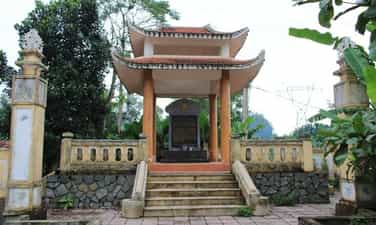
Here, during the pre-uprising period in August 1945, along with Hien Luong commune, Tu Ly and Hien Luong revolutionary base areas were formed, one of the province's four revolutionary base areas located in the Hoa and Hien war zone system. Ninh, Thanh (Quang Trung War Zone). At this base, the province's first military training class was held. From here, the revolutionary movement spread to surrounding areas. Going back in history, in February 1945, the Party Central Committee decided to establish the Hoa - Ninh - Thanh war zone. According to the Directive of the Party Central Committee, the establishment of base areas to quickly prepare for the uprising and welcome the Southern liberation army advancing through Hoa Binh by way of Phu Tho into the Tu Ly - Hien Luong area is one of the opportunities. Important conditions and conditions for the formation and development of the Hien Luong - Tu Ly revolutionary base area. Under the direct direction of the Northern Party Committee, the Provincial Party Committee decided to establish the Tu Ly - Hien Luong revolutionary base area. On February 10, 1945 (the 28th day of the Lunar New Year, Year of the Rooster), led by Mr. Dinh Cong Hau, comrade Vu Tho went to meet Mr. Dinh Cong Sac in Tinh Trang hamlet - Tu Ly commune to find connections to build a revolutionary base. . From here, Mr. Dinh Cong Sac's family became a place to contact, meet, discuss plans to build the Tu Ly - Hien Luong base area and open the first military training class for the province's armed forces. On the basis of the well-developed movement and having enough conditions to establish a base area, the Provincial Party Committee decided to open the first military training class at Mr. Xa Van Binh's house, Dong Lam village, Giang Seo village with 20 teams. National self-defense member of Hoa Binh town and Mai Da district. Under the protection and concealment of the people of Hien Luong - Tu Ly, the students who completed the course quickly returned to establish and develop self-defense teams to save the country, preparing for an uprising to seize power. The successful military class brought the prestige of the Viet Minh to a high level, spreading widely throughout all classes. The leaders were subdued, the people were excited and believed in the revolution. The revolutionary force in the base area grew stronger, making an important contribution to the victory of the uprising to seize power in August 1945 in the provincial capital, Cho Bo district, Suoi Rut, Vang street (Hoa Binh) and Moc Chau (Son La). In 1946, the forces of the Tu Ly - Hien Luong revolutionary base coordinated closely with other revolutionary forces of the province to completely destroy the Dai Viet Duy Dan Party that had come to occupy Muong Diem as its headquarters and plot to overthrow it. revolutionary government in Hoa Binh. To mark historical evidence, in Ma hamlet - Tu Ly commune and Rong hamlet - Hien Luong commune, memorial stele houses were built at the Tu Ly - Hien Luong revolutionary historical relic site. These are works of historical and cultural significance, a place to educate revolutionary traditions for generations of Tu Ly - Hien Luong regions to follow in their father's footsteps in protecting the achievements of the revolution, building, renovate the homeland. The relic site has been ranked as a national revolutionary historical relic. Source: Hoa Binh Electronic Newspaper
Phu Tho
5750 view
Rating : National monument

Phja Khao Temple
The Phja Khao temple project was built by local people on the top of Phja Khao mountain, Ban Thi commune, Cho Don district since 1933. This is a familiar place of spiritual cultural activities, long associated with daily life. of local people. Phja Khao Temple worships Saint Tran, who had the merit of defeating the Mongol invaders in the 13th century to maintain the peace of the country and people. Worshiping the mine workers who were killed by the French colonialists. In 2017, the temple was recognized as a provincial historical-cultural relic. Phja Khao peak has many lead and zinc mines, which are historical evidence of the exploitation of the French colonialists against Ban Thi mine workers, from 1909 - 1941. Here more than a hundred years ago, when the Indochina Mining and Metallurgical Company invested a lot of capital in the mine, especially building a cable car more than 3km long and a railway to transport ore. It is known that during its prosperity, the mine had up to 5,000 workers and 80 secretaries. By 1942, there were only 500 workers and 5 European managers. Within 27 years (1914 - 1941), France brought home over 350,000 tons of zinc ore. Phja Khao was a place that brought profit to the colonists, and was also a place where many complex elements gathered, where robberies and killings often occurred. On top of Phja Khao, about 15 meters from the relic site, is a deep abyss that, according to indigenous people, cannot be seen from the top of the abyss to the bottom because it is foggy all year round. That's where the French colonialists threw sick coolies (miners) or people who dared to protest down from the mountains. There are resorts of the French colonialists here, where mine management staff relax. The resort was built 100 years ago and is now just ruins, trees have grown over the walls, creating an ancient, mossy look. Peace returned here, there were no longer mines or resorts of the French colonialists. Phja Khao peak returns to the inherent peace and quiet of the mountains and forests. This place has become a biosphere reserve. The species reserve and habitat here are very diverse in flora and fauna. There are also langurs and cauldrons, species listed in the Red Book that especially need to be protected from extinction. Source: Bac Kan province electronic information portal
Thai Nguyen
6669 view
Rating : Provincial level relics
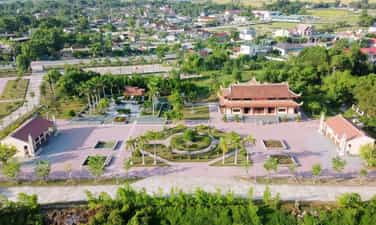
Hero Ly Tu Trong memorial area
Heroic Martyr Ly Tu Trong Memorial Area is located in Tan Long village, Viet Xuyen commune, Thach Ha, Ha Tinh. This is a project of the youth of the country and the people of the province to pay tribute to the heroic sacrifice of heroic martyr Ly Tu Trong - the first member of the Communist Youth Union. Heroic martyr Ly Tu Trong's real name is Le Huu Trong, born in 1914 in Ban May, Nakhon Phanom province - Thailand, originally from Thach Ha district, Ha Tinh province. He was born into a family whose parents were both patriotic overseas Vietnamese. Born in a situation of "losing his country and home", his family had to travel to Thailand to live, always carrying in his heart the longing for his homeland, which was being invaded by enemies. Since he was young, Le Huu Trong was hardworking, eager to learn and soon became enlightened about the revolution. He was one of eight children selected by Ho Tung Mau to take him to Guangzhou - China to study and work in the association. patriotic youth, here Le Huu Trong was renamed Ly Tu Trong by comrade Nguyen Ai Quoc. After returning home, work. In 1931, during a rally commemorating the first anniversary of the Yen Bai uprising held in Saigon, Ly Tu Trong shot and killed secret agent Le Grand to protect speaker Phan Boi who was giving a speech at Lareni Square. He was later captured by the enemy and sentenced to death when he was only 17 years old. Although he fell at a very young age, hero Ly Tu Trong left behind generations of Vietnamese youth a valuable legacy, which is patriotism, courage and youthful enthusiasm. Ly Tu Trong went down in history with his famous statement before the enemy's court, "The path of youth is only the revolutionary path, there can be no other path", which has become a guideline and a model. A shining example for Vietnamese youth to study and follow. On April 30, 2011, 80 years after his death, Anh's remains were found and brought back to be buried in his hometown. According to the earnest wishes of officers, soldiers, people of Ha Tinh and youth union members nationwide, the Secretariat of the Central Committee of the Ho Chi Minh Communist Youth Union has approved the investment project to build a memorial area. Ly Tu Trong in Viet Xuyen commune, Thach Ha district, Ha Tinh province. This is a tribute to the young communist man; has historical, cultural and spiritual significance; Traditional education for children nationwide. On October 20, 2011, on the occasion of the 97th birth anniversary of hero Ly Tu Trong, the Standing Committee of Ha Tinh Provincial Youth Union held a groundbreaking ceremony to build the Memorial Area. On October 20, 2014, the project was completed on the occasion of the 100th anniversary of Britain's birth. Source: Ha Tinh Province Historical Archives Center
Ha Tinh
6430 view
Rating : National monument