
 vn
vn en
en ja
ja ko
ko zh
zh






















List of relic sites (1435)
Lang Nac Cave
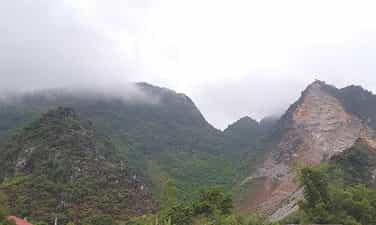
Archaeological relics of Lang Nac Cave - Lang Son. Lang Nac Cave, also known as Tiger's Mouth Cave or Pac Gac Cave, is an archaeological relic of special value in Lang Son province. The relic is currently located in Mai Sao village, Nhan Ly commune, Lang Son province. The cave is located in a limestone mountain range, about 100 meters above the valley floor, the cave entrance is about 18 meters wide and 16 meters high. In 1968, the relic was discovered by local people and reported to the cultural agency. Through many surveys, archaeologists have found thousands of relics, including prehistoric tools, pottery pieces and scraps dating back to earlier than the Bac Son culture. The discoveries at Lang Nac Cave are important in studying the history of prehistoric people's residence, showing that the land of Chi Lang was inhabited very early by humans. With outstanding archaeological values, Lang Nac Cave was ranked as a national archaeological relic in 2004. Today, the relic is still a valuable address in researching, preserving and introducing the long history of Lang Son land. Source: Dan Viet Electronic Newspaper
Lang Son
370 view
Rating : National monument
Wind Cave – Lang Son
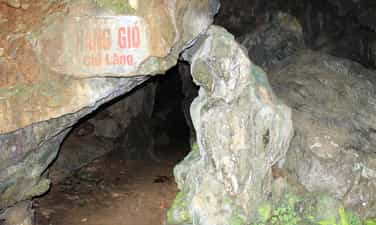
Lang Son Wind Cave (also known as Thong Gio Cave, the literal name is Mai Sao Phong Dong or Thuy Van Dong) is a national-level archaeological and scenic relic complex, famous for the wild and magical beauty of natural stalactites. The cave is located in Sao Thuong B village, Nhan Ly commune, Lang Son province. The cave has a total length of about 700 meters, 50 to 70 meters wide, including two main floors and a basement. The cave entrance is located halfway up the mountain, where cool winds blow all year round. Inside the cave is an interesting world of stalactites with many shapes such as lotus flowers, stone curtains, inclined waterfalls, stone bells, stalagmites and stone columns. Groundwater dripping down over time creates iridescent stalactites, along with clear, cool "wells of fairy water", making the space here even more magical. With unique natural beauty, Gio Cave is an attractive destination for those who love exploring caves and learning about the wonders that nature has created in Lang Son land. Source: Lang Son Newspaper and Radio and Television
Lang Son
378 view
Rating : National monument
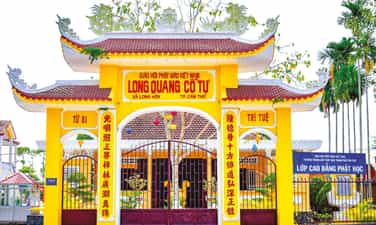
Long Quang ancient temple
Long Quang ancient pagoda is one of the typical ancient pagodas of Can Tho, opened in 1824, associated with the formation and development of Buddhism in the land of Binh Thuy. The temple is currently located in Long Hoa ward, Can Tho city, on the Binh Thuy river. Initially, the pagoda was named Long Truong Tu. Around 1875, the pagoda was renamed Long Quang, both inheriting the tradition of Long Truong and reminiscent of Linh Quang Ancestral Temple. A unique feature of Long Quang ancient pagoda is the system of worship statues made of sandalwood, created by Can Tho artisans, led by Tai Cong Kiem, in 1922. About 50 statues have vivid and sophisticated lines, especially the statues of Ho Phap, Tieu Dien and the Arhat statues. Not only valuable in architecture, art and sculpture, Long Quang ancient pagoda is also a place to hide, communicate and support revolutionary cadres during the anti-French and anti-American period. Today, the pagoda is still an ancient spiritual space, contributing to preserving the Buddhist cultural and historical values of Can Tho. Source: Can Tho Newspaper
Can Tho
441 view
Rating : National monument
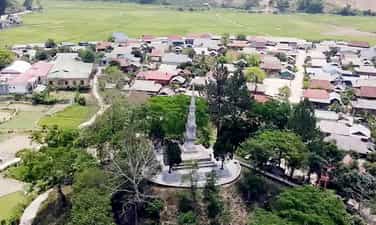
Muong Va Tower
Muong Va Tower is an ancient architectural and artistic work, bearing the cultural and Buddhist imprint of the Lao ethnic community in the Northwest region. The tower is located in Muong Va village, Muong Va commune, Sop Cop district, on an artificial hill between the village space and a large field. According to local legend, the tower was built about 400 years ago, along with a pagoda to serve as a place for religious and community activities. The pagoda no longer exists, but Muong Va Tower is still preserved by people for many generations. The tower is about 13 meters high, shaped like a pen reaching into the sky, consists of 5 floors, built of bricks and linked with lime and sand. The floors are decorated with many typical patterns such as leaves, chrysanthemums, twisted strings and elephant shapes, creating a beauty that is both elegant and majestic. The top of the tower is shaped like a lotus bud, clearly showing the influence of Buddhist culture. Through wars and natural disasters, the tower was damaged and has been restored and preserved many times. Today, the tower is a unique cultural symbol of the Lao people in Sop Cop, and is also a destination associated with traditional festivals such as Xen Muong and Khau Ho, contributing to preserving and promoting community cultural values. Source: Son La province electronic information portal
Son La
436 view
Rating : National monument
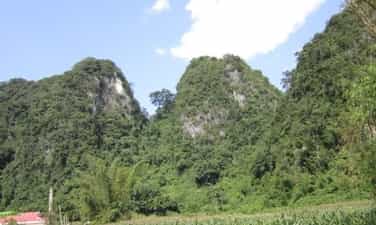
Keo Quang Cave
Keo Quang Cave is a national historical relic, associated with the activities of leader Nguyen Ai Quoc and the revolutionary movement in Cao Bang during the years preparing for the August Revolution. At the end of April 1942, after arriving in Gia Bang, Nguyen Ai Quoc opened a cadre training class at Keo Quang cave, now in Minh Tam commune, Cao Bang province. People named the cave Lenin cave. Here, revolutionary cadres learned about history, the struggle experience of the Communist Party of the Soviet Union and the basic principles of Marxism-Leninism. Although learning conditions are still difficult, students still actively study, practice and are imparted with valuable revolutionary experiences and ideas. The training class contributes to improving the political bravery and fighting spirit of local officials, creating an important foundation for the revolutionary movement in Cao Bang and the fight for national independence. With special historical values, Keo Quang Cave is ranked as a national historical and cultural relic, becoming a meaningful educational address for revolutionary traditions of Cao Bang. Source: Vietnam Historical and Cultural Relics information page
Cao Bang
426 view
Rating : National monument
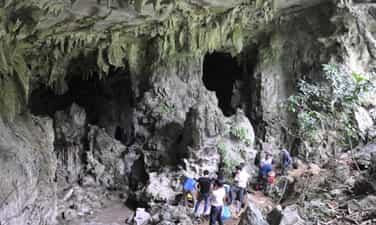
Bat Cave
Bat Cave is an outstanding scenic spot in Cao Bang province, known for its majestic, magical beauty and still retaining its natural wildness. The cave is located in the heart of a limestone mountain, nearly 1,000 meters deep, consisting of 3 chambers and 2 floors, with a stalactite system built over time creating many unique shapes. In the first compartment, visitors can see clear blue underground water and colorful stalactites. The second compartment stands out with stalactites shaped like terraced fields, called "fairy fields" by locals, along with silver waterfall-like stalactites and calm water flows. The third compartment is the central area, with a large space with vividly shaped rocks and stalactites. In particular, the second floor impresses with its stone "terraces" and shiny golden stalactites. With pristine landscape and unique geological formations, Bat Cave is an attractive destination for those who love to explore nature and the amazing beauty of Cao Bang. Source: Cao Bang Newspaper
Cao Bang
440 view
Rating : National monument
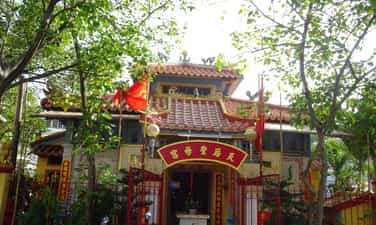
Thien Hau Palace
Thien Hau Palace, also known as Ba Thien Hau Pagoda, located in Bac Lieu ward, Ca Mau province, is a typical religious building, bearing the cultural imprint of the Chinese community in Bac Lieu and Ca Mau. The pagoda was built by Cantonese Chinese people to worship Thien Hau Thanh Mau, the sea goddess revered by seafarers and fishermen, with the wish that she would bless them with peace, smooth sailing, and favorable business. Thien Hau Palace was built spaciously in 1901, following traditional Chinese architecture. Many worship statues, stone pillars, decorations and patterns were crafted in China and then brought to Vietnam. After two renovations in 1970 and 2000, the monument still retains its ancient appearance and typical Chinese architectural features. Not only has architectural and artistic value, Thien Hau Palace also preserves many valuable artifacts and worship objects, notably the exquisitely carved set of "five things", belonging to a group of rare antiques at worship facilities in Vietnam. The grounds behind the pagoda also impress with ancient trees, with interwoven root systems creating a unique shape. Every year, traditional festivals take place here such as the Ky Yen ceremony on the nights of the 15th, 16th, and 17th of the twelfth lunar month and the worshiping ceremony of Ba Thien Hau on the 23rd of the third lunar month, attracting a large number of people and tourists to worship. Source: Ca Mau province relics
Ca Mau
436 view
Rating : National monument
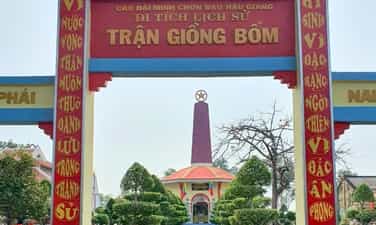
Battle of Giong Bom in 1946
Giong Bom Battle in 1946 - Tragic mark of the Southern resistance war The 1946 Battle of Giong Bom relic is located in the Ngoc Minh Holy See area, Phong Thanh commune, Ca Mau province. After the August Revolution in 1945, responding to the call for Southern resistance, the Cao Dai Minh Chon Dao force organized by Mr. Cao Trieu Phat chose Ngoc Minh Holy See as a base, gathering forces against the French colonialists. On April 6, 1946, the French army began to probe and was ambushed by Giong Bom's forces. In the following days, the enemy continuously used aircraft and infantry to attack. The climax was on April 13, 1946, about 100 French soldiers launched a raid on Giong Bom. With rudimentary weapons but resilient fighting spirit, Giong Bom's forces caused much damage to the enemy. However, due to the large gap in forces and weapons, 137 Giong Bom soldiers heroically sacrificed their lives, and many works at Ngoc Minh Holy See were destroyed. The Battle of Giong Bom was one of the major battles in the Southwest during the early days of the resistance war against the French, demonstrating the patriotism and will to protect the homeland of the Cao Dai Minh Chon Dao people. Every year, the death anniversary of the soldiers who died in the Giong Bom battle is held, becoming an occasion to commemorate and educate patriotic traditions for today's generations. Source: Department of Cultural Heritage
Ca Mau
431 view
Rating : National monument
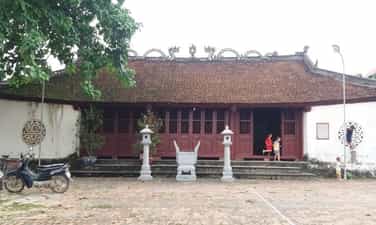
Safety zone II Hiep Hoa
Safety zone II Hiep Hoa - A mark of revolutionary history Safety Zone II Hiep Hoa in Bac Ninh province, is a particularly important revolutionary relic complex, associated with the activities of the Party Central Committee and the Northern Party Committee in the years preparing for the August Revolution in 1945. The relic includes 8 typical places such as Mr. Ngo Van Thau's house, Mr. Ngo Van Che's house, Mr. Ngo Van Dong's house, Soi Den, Van Xuyen communal house, Cho Van communal house, Xuan Bieu communal house and Y Son pagoda. Since the early 1940s, this place was chosen as a safe area, a bridge between the Viet Bac base and the midlands and plains. Thanks to the people's protection, many revolutionary leaders have returned here to operate, organize meetings, provide political and military training and build forces. In particular, many military training classes took place at Soi Den; At Mr. Ngo Van Dong's house, from April 15 to 20, 1945, the Tonkin Revolutionary Military Conference was held under the chairmanship of comrade Truong Chinh, setting out important policies to prepare for the General Uprising. The communal houses of Xuan Bieu, Cho Van, and Van Xuyen also marked rallies, propaganda, uprisings, and the early seizure of power in 1945. With special historical values, ATK II Hiep Hoa was ranked a special national monument in 2020 by the Prime Minister. This place is a red address for educating patriotic traditions, reminding of a period of vibrant struggle of the nation. Source: Department of Cultural Heritage
Bac Ninh
486 view
Rating : Special national monument
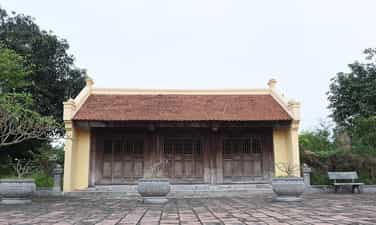
Phan Dinh Phung Church
Relics of the Temple of Former Doctor Phan Dinh Phung - Imprint of the hero Can Vuong. The relics of the Church of Former Doctor Phan Dinh Phung located in Dong Thai village, Tung Anh commune, Ha Tinh province, is a place to commemorate the typical leader of the Can Vuong movement at the end of the 19th century. The relic was ranked as a national historical relic in 2006. Phan Dinh Phung (1847–1895), from Dong Thai village, passed the Dinh Nguyen Doctor's degree and served as a mandarin under the Nguyen Dynasty. In 1885, in response to the Can Vuong Edict, he stood up to gather followers and lead the resistance movement against the French colonialists in the Ha Tinh region and the North Central provinces. For more than 10 years, he used Vu Quang as a base and stubbornly organized the resistance. He died on December 28, 1895, becoming one of the typical leaders of the Can Vuong movement. The church campus is about 3 hectares wide, including the entrance gate, adoration yard, lower palace, upper palace and two rows of left and right vu. The lower hall worships generals and insurgents who once stood side by side with Phan Dinh Phung. The upper palace is the main place of worship, made mainly of ironwood and jackfruit wood, still retaining many exquisite carved details. Inside there is a bronze statue of Phan Dinh Phung and worship objects such as a bronze crane, incense burner, a set of precious bowls and parallel sentences. About 3km from the church is Phan Dinh Phung's grave on Ne Son hill. The tomb was built of Thanh stone, in front there is a stele recording his life, career and contributions to the Can Vuong movement. Source: Ha Tinh Newspapers and Radio and Television
Ha Tinh
228 view
Rating : National monument
Dr. Truong Quang Trach Church
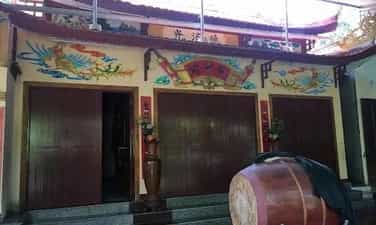
Dr. Truong Quang Trach Church - Saves the academic tradition. Dr. Truong Quang Trach Church is a historical and cultural relic associated with a typical academic celebrity of Ha Tinh region. The relic is currently located in Ha Huy Tap ward, Ha Tinh province, where traces of the life, career and studious tradition of the Truong Quang family are preserved. Truong Quang Trach was born in 1640 into a Confucian family. At the age of 20, he passed his Bachelor's degree; In 1670, when he was 30 years old, he passed the Third Rank of Dong Doctorate, and was listed on stele number 45 at the Temple of Literature - Quoc Tu Giam. After passing the exam, he held many positions, including Imperial Supervisory Institution and Cao Bang Governor. During his time as a mandarin, he was famous for being honest and resolute, daring to fight against corruption and flattery, and always promoting taking care of the people and the country. He died in 1677, when he was only 37 years old. After his death, the king ordained him, the people set up a temple and annually held sacrifices to commemorate him. This tradition has been preserved by families and people for many generations. The church currently has a compact but dignified architecture, including the entrance gate, church and surrounding grounds. Inside are placed dragon thrones, tablets, worshiping objects, horizontal panels, and parallel Chinese characters, expressing respect for the talented and virtuous doctor. In particular, the couplet "To the ancestors, honor the virtues of the millennium - Filial piety, respect the sages for great glory" conveys the wish for a good tradition to be passed down forever to future generations. Source: Ha Tinh Museum Electronic Information Portal
Ha Tinh
313 view
Rating : Provincial level relics
White Bridge Relics
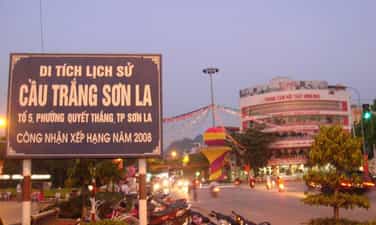
White Bridge Relics - historical evidence in the heart of Son La. The White Bridge relic is located in To Hieu ward, Son La province, across Nam La stream, on route 41, now National Highway 6. With an important location, the bridge once played the role of connecting traffic and providing support for the Northwest battlefield. During the Northwest Campaign in 1952 and the Dien Bien Phu Campaign in 1954, the French colonialists repeatedly bombed the bridge to prevent the transport and support of our army and people to the Dien Bien Phu battlefield. In 1963, Son La Traffic Department rebuilt the White Bridge in the style of an arch bridge, about 45m long, 7m wide, with railings on both sides. During the resistance war against the US, White Bridge continued to become the target of fierce attacks. US aircraft carried out 34 raids, dropping 874 bombs and hundreds of rockets, completely destroying bridges, bridge abutments and paths. After the war, the White Bridge was repaired and rebuilt many times to serve traffic and people's lives. Although its appearance has changed a lot, this place is still a testament to the years of arduous war and the resilient spirit of Son La's army and people in the cause of protecting the strategic traffic route. Source: According to Son La Geography
Son La
421 view
Rating : Provincial level relics
Black Y Tower Pagoda
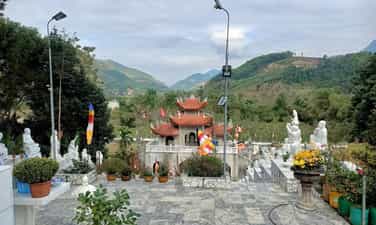
Hac Y Tower Pagoda is a typical historical and cultural relic located in Tan Linh commune, Lao Cai province, associated with the Hac Y relic complex and historical and religious vestiges dating back to the Ly - Tran dynasties. The most prominent highlight at the relic site is the Black Y Tower, a work in the architectural style of the Tran Dynasty with a unique curved roof, tower base and floors decorated with patterns of lotus flowers, water waves, papaya leaves, phoenixes, chrysanthemums... The motifs are crafted on sophisticated terracotta, demonstrating the artistic level and cultural interference of the ancients. The Hac Y area still preserves many vestiges such as Ben Lan communal house, Than Ao Den mountain and Dai Cai temple. Among them, Dai Cai Temple is located on the Chay River, a religious space associated with folk legends about the black-clothed god who helped the Hung Kings fight against enemies. Legendary stories and archaeological traces have created a mysterious and sacred look for the whole area. Not only has architectural and religious value, Hac Y also preserves traces of military works, citadels and places associated with the activities of ancient residents. This is a valuable source of information that contributes to understanding the history of the Northwest region. Source: Buddhist News Newspaper
Lao Cai
475 view
Rating : National monument

Chieng Khoi Lake
Chieng Khoi Lake - beauty among the Northwest mountains and forests. The lake has an area of about 40 hectares, located in the middle of a valley surrounded by mountains and green hills. The lake surface is clear and peaceful all year round, winding between mountains and forests, creating a poetic and peaceful space. Especially during the ban flower season, the white color covering the mountain slopes makes the scenery here even more attractive. According to Thai legend, in the past, Chieng Khoi was a dry land lacking water. The Khoi boy, with extraordinary health, moved mountains and released water from many directions here, creating a lake to help people have water for daily life and production. That story contributes to creating the legendary color of the landscape. Besides its landscape value, Chieng Khoi Lake also has a rich ecosystem with mountain forests, birds, fish and many types of forest trees. The lake space is fresh and quiet, suitable for sightseeing, resting and exploring nature. Coming to Ho Chieng Khoi, visitors also have the opportunity to learn about the traditional culture of the Thai people with Xoe dances, flute sounds, brocade weaving, pieu scarf embroidery and many unique ethnic dishes. The harmony between the blue lake surface, rolling mountains and forests and Thai cultural identity has created a unique appeal for Chieng Khoi Lake. Source: Vietnam Historical and Cultural Relics information page
Son La
466 view
Rating : National monument
Dong Son archaeological site
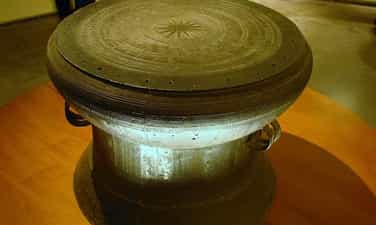
Dong Son archaeological site - a place where the quintessence of ancient Vietnamese culture is deposited. Located on the Ma River, in Ham Rong ward, Thanh Hoa province, Dong Son archaeological site is one of the most important sites of Dong Son culture, dating back more than 2,000 years ago. The site was discovered in 1924 when people accidentally found bronze artifacts on the banks of the Ma River. Through many surveys and excavations, a series of precious artifacts have been discovered such as production tools, weapons, ceramics, jewelry and especially bronze drums. These artifacts show that Dong Son residents have achieved high levels of metallurgy, agricultural production, handicrafts and spiritual life. In particular, Dong Son bronze drums are considered one of the typical symbols of ancient Vietnamese civilization, demonstrating sophisticated bronze casting techniques and the religious and festive life of ancient residents. Not only has archaeological value, Dong Son relics also contribute to clarifying the formation and development process of ancient Vietnamese culture in the Ma River basin, while affirming the position of Dong Son culture in the history of Southeast Asia. According to: Thanh Hoa Newspaper and Radio and Television
Thanh Hoa
449 view
Rating : National monument
Thien Long Uyen
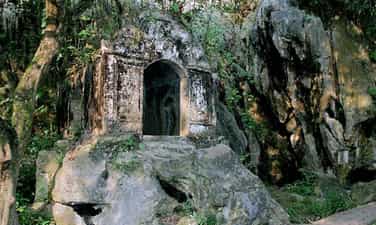
Thien Long Uyen - mysterious vestiges next to Silver Stone River. Located in Duc Son area, Hoang Que ward, Quang Ninh province, Thien Long Uyen is a land with many unique historical and cultural vestiges, associated with the space of Bach Dang victory in 1288. Under the Tran dynasty, this place was called Thien Lieu mountain, belonging to Ma Lieu site. Highlights are the ancient ghost steles carved directly on the cliffs, typically the Tam Bao Dia stele dated 1348 and the Thien Long Uyen stele. These documents contribute to reflecting the history and religious life of the land many centuries ago. Thien Long Uyen also owns a system of limestone mountains, caves and high points with wide views of Da Bac and Bach Dang rivers. Through archaeological surveys, researchers have discovered many wooden stakes, ceramic fragments and ancient traces along the river, opening up new research directions on the history of human residence and activities here. In particular, the location and topography of Thien Long Uyen has raised the hypothesis about the role of this area in the Bach Dang battle in 1288. Although further research is still needed, the existing vestiges have created a unique appeal for the land. Currently, the relic is being documented by Quang Ninh province to be directly integrated into the Bach Dang Special National Monument Complex. According to: Quang Ninh newspapers, radio and television
Quang Ninh
487 view
Rating : Provincial level relics
Pe Rang Ky Cave
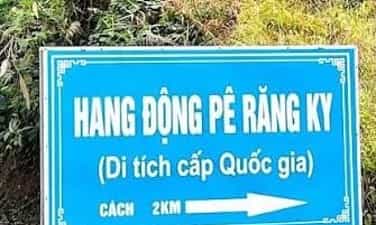
Pe Rang Ky Cave - a gem in the middle of the Tua Chua plateau. Located at the foot of Pin Pang mountain, in Pe Rang Ky village, Huoi So commune, Dien Bien province, Pe Rang Ky cave is a typical landscape amidst the majestic limestone mountains of the Tua Chua highland. In front of the cave is a lush natural forest, creating a wild and attractive landscape. The cave goes deep into the mountain about 800m, including three chambers with a system of stalactites, stalagmites, stone columns and stone bells with unique shapes. The first compartment stands out with large stone columns and winding stalactite bands. Moving to the second compartment, the space is larger, the stalactites shaped like mushrooms, pine trees, corals, Buddha statues or natural chandeliers create a shimmering, magical look. The third chamber impresses with its towering stone columns, amazing stalactite forest and a small clear lake in the middle of the cave. Not only attractive by its geological beauty, Pe Rang Ky is also located in the unique ecological space of the Da River lakebed, giving visitors an experience combining cave exploration and the Northwest mountain and forest landscape. With outstanding geological, landscape and ecological values, Pe Rang Ky cave is ranked a national scenic relic by the Ministry of Culture, Sports and Tourism. This is considered a "natural art museum", where visitors can admire magical sculptures created over millions of years. Source: Vietnam National Tourism Administration
Dien Bien
488 view
Rating : National monument
Tham Khen Cave
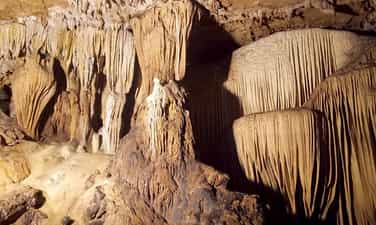
Tham Khen Cave - a wonder in the heart of Dien Bien limestone mountain. Located at an altitude of about 800m above sea level, Tham Khen Cave in Na village, Muong Dun commune, Dien Bien province, is an outstanding landscape with an interesting cave system in the middle of limestone mountains. In Thai, "Tham" means cave, "Khen" is the name of a bitter, sweet vegetable that grows in abundance at the entrance of caves. Tham Khen complex consists of two caves located not far from each other. The first cave is about 160m long, divided into three compartments, featuring stone columns, stalagmites and a system of stalactites in the shapes of elephants, dragons, phoenixes, turtles and many species of birds. In particular, in the last compartment there is a natural "skylight", bringing light down from the top of the mountain, creating a shimmering, magical space. The second cave is about 280m deep, including two chambers with many small niches. The stalactites here create images like silk strips, rivers, streams, ponds, terraced fields and successive layers of rocks. Some cliffs also emit different sounds when knocked on, creating a unique feature of the cave. Not only has landscape value, Tham Khen is also a limestone mountain and cave ecosystem with potential to serve scientific research, nature conservation and tourism development. With outstanding values, Tham Khen Cave is ranked as a national scenic spot by the Ministry of Culture, Sports and Tourism. Source: Department of Cultural Heritage
Dien Bien
505 view
Rating : National monument
Outstanding monuments
See all
Lang Le Bau Co relic site
Lang Le Bau Co relic site is located in Tan Nhut commune, Binh Chanh district, Ho Chi Minh City. Lang Le Bau Co is associated with the resistance war against the French invasion in 1948 with major battles that went down in history. Lang Le Bau Co relic was recognized as a city-level historical relic in 2003. The reason it is called Lang Le Bau Co relic area is because the name of Lang Le Bau Co relic area was given by local people. The hamlet was established next to the interlaced canals and rivers. Lang Le Bau Co is located inside a large field with many shrimp, crabs, and fish. Along with many species of birds such as mallards, storks, teal, nuthatches, gongs, partridges, herons, and red armpits come to feed here. Therefore, Tan Nhut people call it by the familiar and rustic name Lang Le Bau Co. Lang Le Bau Co relic is considered the gateway to move to the center of Vuon Thom base and attack the enemy headquarters in Saigon. Previously, Lang Le Bau Co relic area was originally a field of overgrown reeds. On April 15, 1948, the French colonialists sent 3 thousand soldiers and many modern weapons to simultaneously attack the Lang Le Bau Co area to destroy the Vuon Thom base. At that time, the revolutionary armed forces in Lang Le - Bau, because of their small force and rudimentary weapons, had the help of local people along with the advantage of terrain. After just over half a day of fighting, it turned to attack, causing the French army to suffer a large number of casualties. The victory at Lang Le Bau Co killed 300 enemies, captured 30 mercenaries, and destroyed many machines, military vehicles, and guns of all kinds of the enemy. However, on our side, there are many officers and soldiers who heroically sacrificed their lives at a very young age. On October 14, 1966, in Lang Le, the Republic of Vietnam Army Ranger Battalion was destroyed by tourist militia. Lang Le Bau Co relic site has great historical significance for the people of Saigon in particular and the whole country in general. Faced with hatred for the French colonialists, Lang Le Bau Co's army and people fought a war of great historical significance that opened the door for our side and the enemy. For our side, the battle opened the door to heroism in a strong resistance position. As for the enemy, they had to retreat into a strategic position and were destroyed. The French colonialists could no longer form a strategy to defeat the Viet Minh. Moreover, at Vuon Thom base, Lang Le Bau Co also took place a determined battle to protect our base and destroy all sabotage plans of the enemy. Lang Le Bau Co relic area, after the Dong Khoi movement in 1960, was also a logistics and springboard for the armed forces to liberate Long An - Saigon - Gia Dinh. To commemorate the sacrifices of our compatriots and soldiers, in 1988 Binh Chanh district built a historical building in Lang Le Bau Co land with an area of 1000m2. Source: Ho Chi Minh City Electronic Information Newspaper
Ho Chi Minh City
18004 view
Rating : City-level relics

Tan Hiep Prison Historical Relic
Tan Hiep Prison, also known as "Tan Hiep Correctional Center", is located in Quarter 6, Tan Tien Ward, Bien Hoa City. Tan Hiep Prison Relic was ranked as a national relic by the Ministry of Culture and Sports on January 15, 1994. Tan Hiep Prison is one of the six largest prisons in South Vietnam and the largest prison in the Southeast region, built in an important military position, northeast of Bien Hoa town. Ahead is National Highway 1; Behind is the North - South railway line. This is an isolated location, convenient for transportation, easy for protecting, guarding, receiving prisoners from other places and transferring prisoners to Con Dao, Phu Quoc... Tan Hiep Prison has an area of 46,520 square meters with 8 prisons, including 5 prisons for communist prisoners and patriots. The prison is surrounded by 4 layers of barbed wire with 9 bunkers, 3 watchtowers with a team of guards and a modern alarm system. It's called "Correctional Center" but inside is actually a gun warehouse, an interrogation and torture room with the most modern tools. Each prison only has an area of nearly 200 square meters but holds 300-400 people, sometimes up to a thousand people. In particular, there are "repentance" rooms and "tiger cages" that are very small and narrow and living conditions are extremely harsh, prisoners live like in a crematorium. The diet was extremely unhygienic. The prison guards bought rotten rice and rotten fish to fertilize the fields, and fried them in oil to feed the prisoners, leading to many people being poisoned. With the determination to escape the imperial prison, return to the Party and the people to continue fighting and liberating the nation, on December 2, 1956, with the agreement of the Eastern Inter-Provincial Party Committee, the soldiers Communists were "detained" in Tan Hiep prison under the direct direction of comrade Nguyen Trong Tam (Bat Tam) - in charge of the prison Party Committee and a number of other comrades who suddenly broke the shackles. was able to free nearly 500 comrades and patriots. This event caused a stir in the Pentagon. America - Diem hastily mobilized both main forces and security forces, civil guards defending the three provinces of Bien Hoa, Ba Ria, Thu Dau Mot and two special forces to encircle and capture the prisoners, but all were defeated. failure. Our comrades and compatriots who escaped from Tan Hiep prison received help and protection from local facilities and returned safely to base. Among the escaped prisoners were comrades: Bay Tam, Hai Thong, Ly Van Sam... who became the core nucleus of the Dong Khoi movement later. In 2001, to partly recreate the crimes of the US - Diem against our comrades and compatriots imprisoned at Tan Hiep prison and describe the entire Tan Hiep uprising on December 2, 1956. , Dong Nai Museum has collected images, documents, and artifacts displayed at the relic and made a model to serve the research and sightseeing needs of all classes of people. Every day, the monument is open to visitors. Source: Dong Nai Electronic Newspaper
Dong Nai
16493 view
Rating : National monument

Nguyen Huu Canh Temple
Nguyen Huu Canh temple, also known as Binh Kinh communal house, is located on the left bank of Dong Nai river, formerly belonging to Binh Kinh hamlet, Binh Hoanh village, Tran Bien canton, now Nhi Hoa hamlet, Hiep Hoa commune, Bien Hoa city. It was ranked as a national historical relic by the Ministry of Culture, Information, Sports and Tourism on March 25, 1991. Nguyen Huu Canh Temple was built around the end of the 18th century. Initially, the temple was small in scale, with walls made of boards and a yin-yang tile roof, about 400m south of the current temple. Documents say: the temple was first rebuilt in the fourth year of Tu Duc (1851); By 1923, the temple was rebuilt at its current location. Nguyen Huu Canh was born in 1650 in Gia Mieu, Tong Son district, Thanh Hoa province in a family with many famous generals in the dynasty. He was a man of both literature and martial arts, accomplished many great victories and was trusted, loved and respected by Lord Nguyen. In the spring of the year Mau Dan (1698), he obeyed Lord Nguyen's order to invade Dang Trong while it was still very desolate. Arriving in Dong Nai, he set up his headquarters at Cu Lao Pho (now Hiep Hoa commune); took Dong Nai land as Phuoc Long district, built Tran Bien palace, took Saigon land as Tan Binh district, built Phien Tran palace, the land expanded thousands of miles. He recruited immigrants to settle down, organized the administrative apparatus gradually and systematically, encouraged land reclamation, and promoted Cu Lao Pho to develop into one of the busiest and most dynamic port towns throughout the century. 18 and officially annexed the new land of the South into the Dai Viet map. After returning from the invasion of the South, the following year he again served Lord Nguyen Phuc Chu's command to lead an army to suppress King Chan Lap and maintain the southern border region. In April of the year Canh Thin (1700), after completing his mission, on the way back to Rach Gam (Tien Giang), he fell ill and passed away on the 16th day of the 5th lunar month, at the age of 51 years old. On the way to his hometown for burial, his coffin was stopped at the land where he once had his headquarters on Cu Lao Pho so that local people could have the opportunity to say goodbye to him one last time. At the mandarin's communal house, local people built a tomb to remember this event. When hearing the news of Nguyen Huu Canh's death, Lord Nguyen was extremely sorry and conferred on him the title of High-ranking official of the Town Chancellor with the title: Thanh Marquis Ceremony and had his tablet enshrined at the Thai temple. Source: Dong Nai Electronic Newspaper
Dong Nai
15080 view
Rating : National monument

La Nga victory relic
La Nga Victory Relic (at km 104-112 on Highway 20 to Da Lat, in Phu Ngoc commune, Dinh Quan district) was ranked a national historical relic by the Ministry of Culture on December 12, 1986. To cheer for the Viet Bac victory in the fall-winter of 1947 and also to deal a fatal blow to the enemy, the command board of squad 10 decided to organize a big battle, to show the enemy that the Vietnamese people were , Vietnamese people do not easily submit to any enemy; With a spirit of courage and ingenuity after nearly half a year of preparation, studying the terrain, and choosing a location: at 15:12 on March 1, 1948, the La Nga ambush battle began and ended at 15:12 on March 1, 1948. 15:57 on the same day, in just 45 minutes. The victory of La Nga delighted the people of Dinh Quan in particular and the people of Dong Nai in general. This is a victory that demonstrates the cunning and courage of our army and people, causing the enemy to be stunned and defeated. From this victory, our force grew stronger and stronger, contributing to defeating the enemy's plan to attack quickly and win quickly, forcing them into a passive position. The scenic complex of Chong Rock, Mai Waterfall, La Nga River and La Nga Victory Monument is an interesting tourist complex of Dinh Quan. The amazing beauty of Hon Ba Chong, Da Voi Mountain, Hon Dia, along with the natural pagoda at the foot of the rocky mountain are typical clusters that create a harmonious beauty for the Da Chong scenic area. Dinh Quan Da Chong Complex is also a place that retains traces of prehistoric life. Here, under the stone roofs, along the streams and on the slopes along the valley, many production and daily life tools of the ancients made of stone, bronze and terracotta were discovered. During the 30-year resistance war. Dinh Quan is an important part of War Zone D. Da Chong witnessed the formation, development, stationing, and combat deployment of revolutionary forces. Today, a part of the land of Da Chong Dinh Quan scenic area has been used and built into the Dinh Quan District Cultural and Sports Center. In the near future, Da Chong Dinh Quan scenic area will be invested in and renovated, contributing to making the natural landscape more beautiful and becoming an attractive eco-tourism destination. Source: Dinh Quan District People's Committee
Dong Nai
14910 view
Rating : National monument

Chot Mat ancient tower
Chot Mat Tower Historical-Cultural Relic, located in Xom Thap hamlet, Tan Phong commune, Tan Bien district, Tay Ninh province, was recognized by the Ministry of Culture and Information (now the Ministry of Culture, Sports and Tourism) as historical - cultural relic on July 23, 1993. Also one of the last three ancient towers remaining in the South of our country. Having undergone many restorations in 1938, 2003 and most recently in 2013. Despite undergoing restorations, the Chot Mat ancient tower relic site has given itself a new look but still remains retains the spirit of ancient architecture. The entire Tower is built of brick and slate with the top of the tower tapering upward, from the ground to the highest point of the tower is estimated to be 10m. In addition, this ancient tower is located on a high mound in the middle of the field, so from a distance it looks like a pen rising gradually. In 2003, the People's Committee of Tay Ninh province decided to approve the investment project to restore, embellish and preserve Chot Mat tower relics and carried out the restoration, restoration, display and opening of the excavation pit in 2003. into use. On November 27, 2019, the Provincial People's Committee issued a Decision regulating the decentralization of management, protection and promotion of the value of historical and cultural relics and scenic spots in Tay Ninh province. Decision to assign the People's Committee of Tan Bien district to directly manage 4 relics, including the National Historical-Cultural relic Thap Chot Mat. In particular, the Chot Mat Tower Historical-Cultural Relic in Tan Phong commune, Tan Bien district was chosen to be part of the tourism development link of Tay Ninh Province. This is a tourist destination worth exploring, contributing to tourism development in Tan Phong commune in particular and Tan Bien district in general. Source: Tay Ninh province electronic information portal
Tay Ninh
14777 view
Rating : National monument

Hoc Mon District Palace
Hoc Mon District Palace is located at No. 1, Ly Nam De Street, Hoc Mon Town, (next to the District People's Committee headquarters) and is the place where many outstanding fighting events have been recorded throughout the long history from 1885 to the Southern days. Complete liberation of the People of 18 Betel Garden Villages. After defeating Chi Hoa Fort, the French colonialists built a 3-storey wooden house here to use as a military post. When Tran Tu Ca took office as Governor of the Palace, he used the Station as the Palace of Binh Long district. Originally a cunning drunkard of the French colonialists, Tran Tu Ca was led by a group led by Mr. Phan Van Hon (Quan Hon) and Nguyen Van Qua (Chanh Lanh Binh) of nearly 1,000 insurgents who came to burn the District Palace, captured and head cut off in the middle of the market. That was February 8, 1885, At Dau Tet. Afterwards, Hoc Mon District Palace was rebuilt with a blue stone foundation, brick walls, and a defense system from the upper floors to the fence. The architecture is similar to the Military Fort, so the locals call it Hoc Mon Fort. Tran took over from Tran Tu Ca as Governor of Ngon district, moving to Tra District and then Tho District. This was a long period of time when the people of the Hoc Mon region suffered from many cruel and despicable scenes from the French colonialists and their oligarchic henchmen mentioned above. With the indomitable tradition of Hoc Mon people. On June 4, 1930, around 6 a.m. in front of the District Palace, hundreds of Hoc Mon people protested demanding "abolition of poll tax, reduction of license and market taxes, and granting land to poor farmers." Tra District invited the leaders into the Palace to negotiate, but they cunningly arrested them, including Mr. Le Van Uoi (Secretary of Tan Thoi Nhi Commune), who was the leader of the protest. People were undaunted and fiercely demanded that Tea District release those detained. The protest group became more and more crowded, the fighting spirit spread somewhat, causing Tra District to give in. On the one hand, they released the detained people, on the other hand, they called the officials in Saigon for help. 2 hours later, the struggle was led by two men, Blachole and Nobbot, who opened fire on the protest group, causing many casualties. But the most impressive historical event at Hoc Mon District Palace was the Southern Uprising on November 23, 1940. Hoc Mon Fort is very solid, built of green stone like a fortress, about 15 meters high, has a gun emplacement and a defense system with battlements guarded by a platoon of green soldiers. On November 22, 1940, France reinforced one more platoon to deal with the situation. On the afternoon of November 22, 1940, Mr. Do Van Coi's army broke into the town, disguised as civilians, ambushed behind the Station waiting for orders to rob the Station. Another army wing has the task of destroying bridges, cutting down trees blocking roads, and occupying offices and houses... The army wing from Phuoc Vinh An, Tan Thong, Tan An Hoi, Tan Phu Trung is led by Mr. Pham Van Sang and Dang Cong Binh commanded, started from Ben Do hamlet, attacked the house, killed 1 person, collected 4 guns, and took control of the situation here (Tan Phu Trung). Immediately this army was ordered to pull back to Hoc Mon. The Long Tuy Thuong army was commanded by Mr. Bui Van Hoat. The army of General Long Tuy Trung was commanded by Mr. Do Van Day and Le Binh Dang. At around 24:00 on the night of November 22, 1940, the sound of artillery fire had not yet been heard in Saigon. After consulting, the army commanders united to attack the enemy's post. Immediately the troops headed straight to Fort Hoc Mon, where District Chief Bui Ngoc Tho resided. Two insurgents named Nghe and Kinh volunteered to enter the front gate and sacrificed their lives. Insurgents from all directions rushed into the Fort like water bursting its banks. Faced with the power of the insurgents and the masses, the soldiers in the Station no longer had the spirit to resist and fled in disarray. The insurgents completely occupied the inside of the station, but upstairs, the enemy still stubbornly used guns to shoot sporadically, at the same time calling Saigon and Thu Dau Mot for emergency help. Because he was eager to capture the name of Tho District, comrade Do Van Day climbed up to the upper floor of the Station by clinging to the gutter. Halfway up, he was hit by bullets, the comrade fell and died later. The battle was at a standstill when enemy reinforcements arrived. Unable to hold out, the insurgents withdrew from the town, dispersed to the villages, the armed forces withdrew to Ben Do hamlet (Tan Phu Trung) and then moved to My Hanh hamlet (Duc Hoa). Although the attack on Hoc Mon Fort (later called Hoc Mon District Palace) failed, it left a deep impression in the hearts of all civilians admiring the courage of revolutionary soldiers in the fight against colonialism. steal the country. During the historic Ho Chi Minh campaign, at 7:00 a.m. on April 30, 1975, Hoc Mon town was completely liberated, the National flag fluttered above the District Palace, where District Chief Nguyen Nhu Sang and his gang sai has been running away since last night. Today, Hoc Mon District Palace is chosen as the District Museum, where many documents are displayed, illustrating the ups and downs of historical periods as well as the revolutionary fighting spirit of the army and people in Hoc Mon district over the past two years. resistance war against French colonialism and American imperialism. A monument placed in front of the Hoc Mon District Palace relic represents the indomitable sacrifice of the army and people of 18 Betel Garden Villages, recognized as a national historical and cultural relic. Source: Hoc Mon District People's Committee
Ho Chi Minh City
14104 view
Rating : National monument

US Embassy building
The US Embassy relics, also known as the "White House of the East", are the origin of sinister military and political plots aimed at long-term annexation of Vietnam. The relic site is a 5-storey building built Built in modern architecture, located at the corner of Mac Dinh Chi - Le Duan Street, Ben Nghe Ward, District 1, Ho Chi Minh City, on a plot of land nearly 5,000 square meters. Previously, the US embassy was located at 39 Ham Nghi Street. At around 10:00 a.m. on March 30, 1963, the US embassy on Ham Nghi Street was hit with explosives by the F21 Commando team, collapsing three floors: 1, 2, 3, so the US decided to rebuild it. Construction began on the building in 1965, most of the materials and construction machinery were transported from the US, under the control of American engineers. According to the design, the building is surrounded by 7,800 Taredo stones that can withstand mines and artillery shells. The main door is equipped with thick steel, the other doors are blocked by a special thick bulletproof layer. All doors use automatic systems, including iron doors blocking the way to the upper floors. Inside the building there are 140 rooms with 200 staff serving day and night. In addition, next to the building is also built an additional row of houses called the "Norodom" area exclusively for C.I.A. employees. When inaugurated, the building had only 3 floors. At the end of 1966, two more floors and a terrace were built to serve as a landing place for helicopters. Surrounding the building is a 3m high wall, at both ends of the wall close to Le Duan Street, 2 high blockhouses are built, guarded day and night. The Embassy was completed in September 1967 with a defense system such as a fortress with 60 guards, a bomb shelter, and a radar screen system to control the facade. Immediately after the building was completed, on September 24, 1967, thousands of students flocked to the gate of the US Embassy to fight for "America to stop bombing the North", "America to go home" and issued a notice denouncing the US for "trampling and seriously violating the right to self-determination of the Southern people". But the outstanding event that happened at the US Embassy was the battle of the City Rangers during the General Offensive and Uprising in the Spring of 1968. The target of attacking the US Embassy was added on January 24, 1968 by Ngo Thanh. Van is in charge of general affairs. Ranger Team 11 took on this important mission, including captain Ut Nho (military region reconnaissance captain) and soldiers: Bay Truyen, Tuoc, Thanh, Chuc, Tran The Ninh, Chinh, Tai, Van, Duc, Cao Hoai Vinh, Mang, Sau and 2 drivers: Tran Si Hung and Ngo Van Thuan. Another equally humiliating event for the US Embassy was the chaotic escape that occurred on April 29 and 30, 1975 by the US and its accomplices. Faced with the rapid attack of the Vietnamese army and people in the historic Ho Chi Minh campaign, over 1,000 Americans and more than 5,000 pro-American Vietnamese jostled, pushed, and kicked each other to compete for a place on the terrace of the building. building to be rescued by helicopter. This relic was granted a certificate of recognition by the Ministry of Culture on June 25, 1976. Currently, the US Embassy building has been demolished and a new consulate in Ho Chi Minh City has been built, but next to it is a memorial stele forever remembering the achievements of the special forces soldiers who died in the battle. . Source: Ho Chi Minh City Youth Union
Ho Chi Minh City
13999 view
Rating : National monument

Tomb of Mai Xuan Thuong
Mai Xuan Thuong was the leader of the Can Vuong movement against the French at the end of the 19th century in Binh Dinh. Mai Xuan Thuong was born in the year of Canh Than, 1860, died in the year of the Pig, 1887, from Phu Lac village, Phu Phong district, Tuy Vien district, Binh Dinh province (now Phu Lac village, Binh Thanh commune, Tay Son district, Binh Dinh province). His father, Mai Xuan Tin, was the chief father in Cao Bang. His mother, Huynh Thi Nguyet, was the daughter of a noble family in the village. Mai Xuan Thuong is inherently intelligent and eager to learn. At the age of 18 (1878), he passed the Baccalaureate at Binh Dinh Examination School. At the age of 25 (1885), he passed the bachelor's exam. Responding to King Ham Nghi's Can Vuong edict, Mai Xuan Thuong returned to his hometown of Phu Lac, recruited insurgents, set up a base on Sung island to raise the Can Vuong flag against the French, then Mai Xuan Thuong brought his forces to join the army. The insurgent army was led by Dao Doan Dich and was appointed by Dao Doan Dich to the position of Military Salary Officer (in charge of food for the insurgent army). From then until 1887, the Can Vuong movement in Binh Dinh developed strongly and spread to Quang Ngai, Phu Yen... attracting tens of thousands of people from all walks of life to participate. On September 20, 1885, Dao Doan Dich died and assigned all his forces to Mai Xuan Thuong. He chose the Loc Dong mountain area (now in Binh Tuong commune, Tay Son district) as his headquarters and organized a flag worshiping ceremony, calling on scholars, literati, and people to join the movement to fight against the French. During that ceremony, insurgents from many regions in Binh Dinh province agreed to honor him as the Marshal leading the uprising and raised the slogan: "First to kill the left, later to attack the West". In early 1887, the French army under the command of Lieutenant Colonel Cherrean and the royal army led by Tran Ba Loc along with Minister Trira launched a major attack on the headquarters of the Can Vuong movement in Binh Dinh, the battle The fighting between the insurgent forces and the French enemy was extremely fierce, the fight was unequal, and in the end the insurgent force was pushed back. In March 1887, after a fierce battle in Bau Sau (An Nhon town, Binh Dinh province), Mai Xuan Thuong was seriously injured, the insurgents withdrew to Linh Dong secret area. On April 21, 1887, Tran Ba Loc surrounded and captured the Linh Dong secret base and captured a number of insurgents, including Mai Nguyen Soai's mother. On the night of April 30, 1887, Mai Xuan Thuong sent a suicide squad to break into Tran Ba Loc barracks, relieve the captured people, and he and a group of 50 subordinates crossed the mountain into Phu Yen and continued to resist. battle, but when she reached Phu Quy Pass (boundary between Binh Dinh and Phu Yen), she was captured by Tran Ba Loc's ambush and taken to be beheaded at Go Cham (East of Binh Dinh Citadel). The mausoleum of patriot Mai Xuan Thuong is located on a high hill of the Ngang mountain range (in Hoa Son village, Binh Tuong commune, Tay Son district, Binh Dinh province) about 50km northwest of Quy Nhon city; The mausoleum was built on a land area of 1988m2, inaugurated on January 22, 1961. Overall, the mausoleum is designed in the style of an ancient mausoleum, surrounded by low walls. The Lang gate (three gates) is made up of 4 square pillars, the top is tied in the style of a gourd and a vase, bearing the architectural appearance of a communal house or temple gate of the late 19th century. In the middle of the Mausoleum is Mai Xuan Thuong's tomb, rectangular in shape in the East - West direction; At the head of the grave is a stone stele engraved with an inscription recording the biography and career of Mai Xuan Thuong: The relic was ranked at the National level by the Ministry of Culture and Information on April 20, 1995. Source: People's Committee of Tay Son District, Binh Dinh Province
Gia Lai
13698 view
Rating : National monument

Mac Dynasty Citadel in Cao Bang (Na Lu Citadel, Ban Phu Citadel, Phuc Hoa Citadel)
During the period when the Mac dynasty had its capital in Cao Bang, in order to prevent the Le dynasty from attacking, the Mac dynasty restored and repaired Na Lu citadel (now in Hoang Tung commune, Hoa An) and Ban Phu citadel (now in Hung Dao commune). ), Phuc Hoa citadel, in addition to building many other citadels in Cao Bang, making Cao Bang a political and military center in the far Northeast border region at that time. Na Lu citadel and Phuc Hoa citadel are two citadels built before. According to the records of Be Huu Cung in Cao Bang Thuc Luc, Na Lu citadel and Phuc Hoa citadel began in the reign of Tang Y Tong in the year Giap Than, the 5th Ham Thong era (874). Based on the presence of many ancient tombs with stone inscriptions containing the names, addresses, and hometowns of the citadel builders who died here during the Ham Thong Dynasty, it can be confirmed that these two citadels were built during the Tang Dynasty. Na Lu Citadel was built over many different dynasties. When the Mac dynasty came to Cao Bang, it was rebuilt with bricks. Na Lu citadel has a nearly rectangular shape, has a total area of about 37.5 hectares, a length of about 800 m, a width of about 600 m, the citadel has 4 gates. Ban Phu citadel in the capital of Nam Binh, Nam Cuong country of Thuc Phan in the past in Cao Binh (Cao Bang), the Mac dynasty renovated the royal palace in the inner circle of the old capital of Nam Binh and called it Ban Phu citadel or Royal Palace. In the ancient capital of Nam Binh of the Nam Cuong country and the Mac dynasty, Ban Phu citadel still has clear traces. The capital city of Nam Binh consists of two citadels, to protect the citadel, the outer ring has a circumference of about 5 km, including a low hillock area, around the foot of the hill is covered with vertical canvas like a wall, convenient for navigation. Build defense lines. The western wall of the citadel runs parallel to the bank of the Bang River to the beginning of Bo Ma village, connecting the southeast wall of the citadel, flowing in front of Ban Phu, following the foot of the hill to meet National Highway 4, the northeastern side running along the foot of the hill close to the outside of National Highway 4. , up to the top of the mound is the northwest side, continue running along the foot of the hill, out to the river bank and meet the west wall, forming a closed citadel. When the Mac Dynasty established the capital, it repaired and built a number of additional works, in which Ban Phu Citadel (inner citadel - the king's working place) was built higher on the old citadel walls from the Thuc Phan period. The citadel is located on a flat land. Along with rebuilding the capital, the Mac dynasty also built a system of posts and ramparts quite thick around the capital and a number of important border points, forming a system of protecting the capital and protecting the border. gender. Phuc Hoa citadel (Phuc Hoa district) was built in a square style, about 400 m in each direction, including two citadel rings, the distance between the two rings is 80 m. Currently, the southern wall has been completely destroyed. Phuc Hoa Citadel has 2 main gates: The North Gate is open to the national highway to Ta Lung Border Gate today, people often call it Pac Gate, this gate is built in a rectangular style, 8 m wide, 5 m high. , including two gates made of thick, very sturdy wood; The second gate is in the south, opening to the river bank. Both gates were flattened long ago, and now there are no traces left. Near the citadel, in the northwest suburbs along the riverbank, there are many traces of brick kilns. People said that during the process of labor and exploration, many intact brick kilns were found in this area. Through research and surveys, it has been shown that in Cao Bang, the Mac dynasty renovated, embellished and built many citadels and fortresses, including repairing, embellishing and rebuilding Ban Phu citadel, Na Lu citadel, and Phuc citadel. Hoa. These fortifications have formed a quite solid system of protecting the capital. Up to now, of the ancient citadels built by the Mac Dynasty during the capital period in Cao Bang, some of the citadels built of earth only have traces left, but the citadels built of stone are still very clear. Source: Cao Bang Electronic Newspaper
Cao Bang
13356 view
Rating : National monument

WARRIORS' MEMORIAL AREA AT THREE GIONG FORCES, NATIONAL HISTORICAL MONITOR
Nga Ba Giong relic is a revolutionary historical relic located in Hamlet 5, Xuan Thoi Thuong commune, Hoc Mon district. Surrounded by three roads: Phan Van Hon, Nguyen Van Bua and Provincial Road 19. Nga Ba Giong relic site is a memorial site for historical events in two wars against foreign invaders. Recognized as a national historical site in 2002. Giong Junction (also fully known as Giong Bang Lang Junction) is located in Xuan Thoi Tay village, part of 18 old betel garden villages formed from 1698 to 1731. For a long time, Giong Junction is a place with a folk name that has entered the history of the hometown of 18 betel garden villages of Hoc Mon - Ba Diem. Legend has it that in the past, this place was a relatively high land and a place where many linden trees grew, so this place got its name from there. After the Southern Uprising (November 23, 1940) failed, the French colonialists increased their repression and fierce terror against the revolutionary movement in the Hoc Mon - Ba Diem region. They set up three shooting ranges in Hoc Mon to kill Party leaders and patriotic comrades from their hometown of Hoc Mon and surrounding areas. Giong intersection is the third shooting range to record the heinous crimes of the French enemy and his henchmen against the people of Hoc Mon. Learning from the experience of 2 previous shooting ranges (1 at the old theater in the center of Hoc Mon District, 1 next to the well behind Hoc Mon Hospital today), they executed public shootings, forcing people to come and watch for the purpose of intimidation. revolutionary spirit of Hoc Mon people. But that firing squad backfired. The Hoc Mon people witnessed with their own eyes the cruelty of the French colonialists and the noble sacrifices of the communist soldiers, so their patriotic fire flared up even more fiercely. . For this third shooting range, they did not dare to build it near the center of the District anymore, but moved it to the Giong Junction area as a desolate, sparsely populated area to avoid people's resistance. Here, they built a shooting range with a solid mound of land 12m long, 2.2m high, in front of which were planted 6 shooting posts, each 1.7m high, the shooting direction facing the field (Ba Tram Lac). In 1941, here they secretly executed many times without letting the people see, hundreds of communist soldiers and patriots were killed by them. With the extremely sacred historical significance of Giong Junction, the place that marked the barbaric crimes of the French invaders, the place that demonstrated the indomitable fighting will and noble sacrifices of our comrades and compatriots later on. the Southern Uprising (November 23, 1940); After the complete liberation of the South (April 30, 1975), Hoc Mon district quickly restored and embellished the Nga Giong Junction revolutionary historical relic site to educate traditional generations of youth. This place has become a tourist attraction and a place to organize traditional festivals during major annual holidays of Hoc Mon district and the city, especially the anniversary of Southern Uprising Day (November 23). Currently, with the consent of the city, the district is renovating and building Giong Junction into "Giong Junction Martyrs' Memorial Area". Source: Hoc Mon electronic information portal
Ho Chi Minh City
13199 view
Rating : National monument